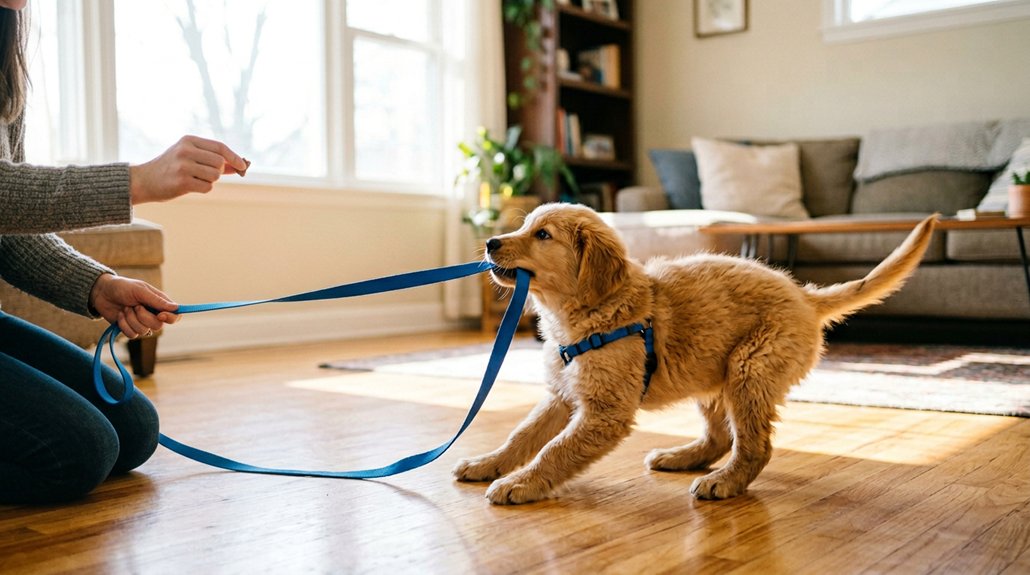
When your puppy won’t listen, start by understanding potential causes like fear or distractions. Establish clear, consistent commands that everyone uses, and create a distraction-free environment for training. Use positive reinforcement with immediate rewards to strengthen good behavior. Keep training sessions lively and integrate them into daily routines. Be patient and adapt approaches based on the puppy’s responses. For more nuanced strategies, explore further ways to resolve training challenges.
Key Takeaways
- Recognize the puppy’s potential fear or anxiety and address these emotional barriers to improve listening.
- Use consistent command language and include the puppy’s name to capture attention effectively.
- Create a distraction-free environment to enhance focus and reduce external interruptions during training.
- Implement immediate positive reinforcement with high-value treats to encourage desired behaviors and strengthen command association.
- Gradually expose the puppy to new stimuli and environments to build confidence and adaptability in listening.
Recognize Why Your Puppy Isn’t Listening
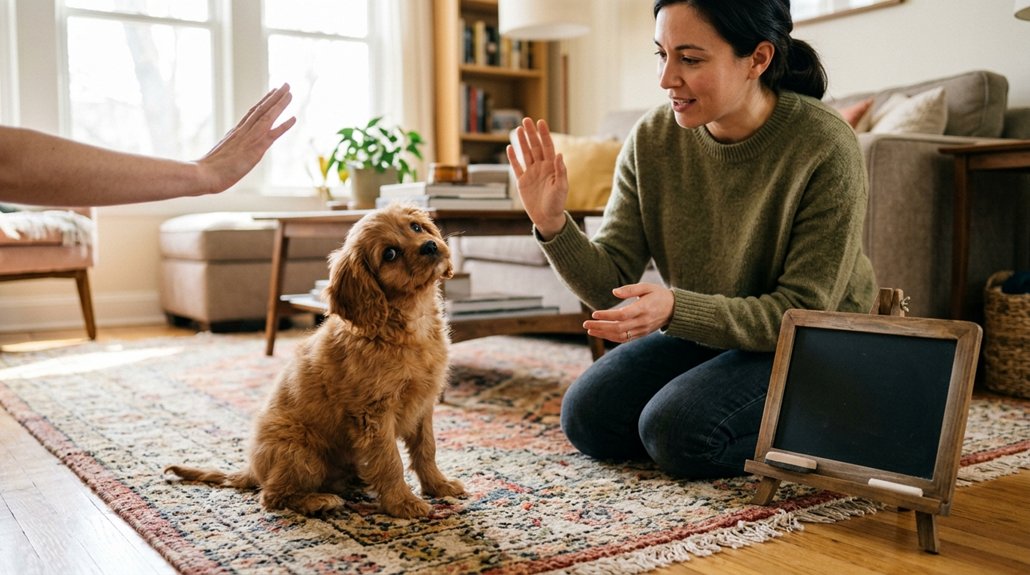
Understanding why your puppy isn’t listening begins with recognizing the reasons for their non-compliance. Often, fear factors play a significant role; your puppy might avoid commands due to anxiety, creating a need for gentle reassurance. Command confusion arises when inconsistent language from you makes it tough for them to grasp expectations. Be mindful that environmental distractions can easily lead to attention diversion. A passing car or a chirping bird might just be more interesting than you at that moment. Additionally, puppies often engage in choice perception. They assess situations and may sometimes opt to ignore commands if they think it’s optional. Patience and situational understanding are key. Recognizing these aspects builds a stronger foundation for effective communication.
Establish Clear and Consistent Training Commands
Once you’ve identified the reasons behind your puppy’s lack of attentiveness, it’s time to focus on consistency within your training commands. Effective training hinges on uniformity and command clarity. Here’s how you guarantee your pup understands you:
Consistency and clarity in training commands are key to improving your puppy’s attentiveness and understanding.
- Use specific command words like “SIT” consistently, avoiding variations like “SIT DOWN”.
- Encourage all family members to adopt the same language with uniform training commands.
- Repeat commands successfully at least three times to help your puppy retain them.
- Start each command with the puppy’s name to captivate their attention.
- Maintain a clear and singular tone to minimize distractions.
Design a Distraction-Free Environment for Training
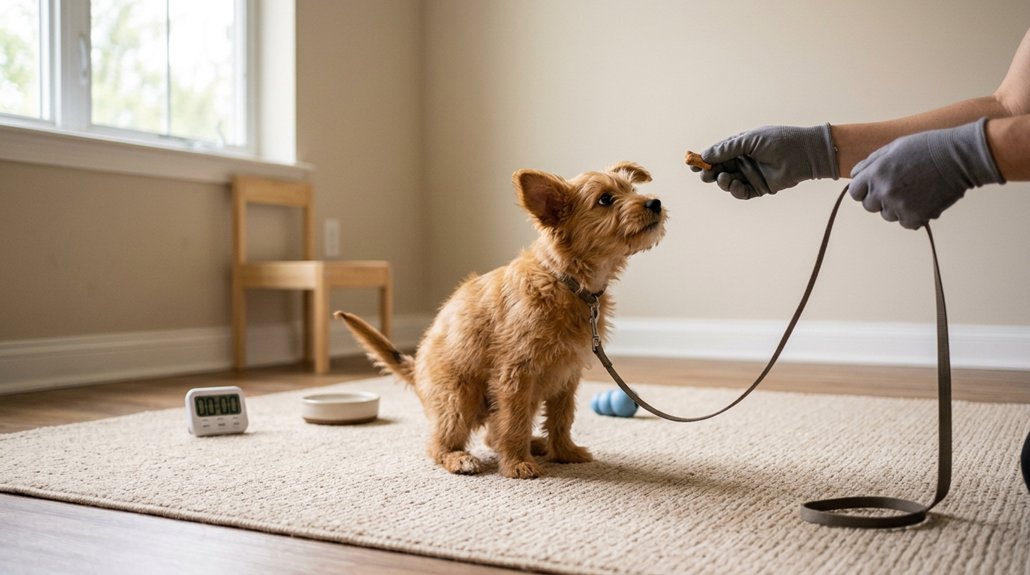
When it comes to training your puppy, eliminating distractions is essential to fostering effective learning. Start by creating a quiet environment, free from external noises and visual clutter, helping your puppy focus on your commands. Use confined spaces, like a room or a pen, to limit your puppy’s movement and reduce temptations, ensuring that toys and other diverting objects are not within reach. Opt for training sessions when your puppy is calm and less excitable, perhaps after a walk or play session, to encourage better concentration. Gradually introduce distractions only after your puppy has mastered commands in this controlled setting, aiding the shift to more dynamic environments. This focused approach builds a strong foundation for your puppy’s successful training.
Apply Positive Reinforcement Techniques
To effectively apply positive reinforcement techniques, start by rewarding your puppy immediately after they exhibit the desired behavior, strengthening their connection to the command. Use high-value treats like small pieces of chicken or cheese to motivate them and guarantee they quickly respond to your cues. With patience and consistency, you’ll foster a supportive learning atmosphere where your puppy feels confident and enthusiastic to learn.
Reinforce Desired Behavior
You’ll find that employing positive reinforcement techniques is one of the most effective methods to encourage your puppy’s desired behaviors. Mastering timing techniques and using reward variety is key. Quick action is essential—reward your puppy within seconds of the desired behavior to make a strong connection. Use high-value treats, praise, or toys to keep things interesting and maintain enthusiasm. A consistent reward system clarifies expectations, strengthening the learning process. Here’s how to apply these strategies:
- Quick Rewards: Make sure rewards are immediate.
- Varied Treats: Keep your puppy guessing with different rewards.
- Consistent Cues: Use the same reward for specific behaviors.
- Enthusiastic Praise: Amp up the verbal encouragement.
- Playful Interaction: Incorporate toys for fun learning.
With patience, your puppy will listen and learn effectively.
Reward Quick Responses
A successful training session hinges on the immediacy of rewarding your puppy’s quick responses. You’ll want to reinforce behaviors promptly to help your pup connect actions with commands. Using high-value rewards increases motivation. Here’s a quick guide:
| Aspect | Approach |
|---|---|
| Timing | Immediate reinforcement is essential |
| Reward Frequency | Aim for three successful repetitions |
| Reward Variety | Use favorite treats and toys |
| Consistency | Be consistent with reinforcement |
Enhance Training Success With Your Presence
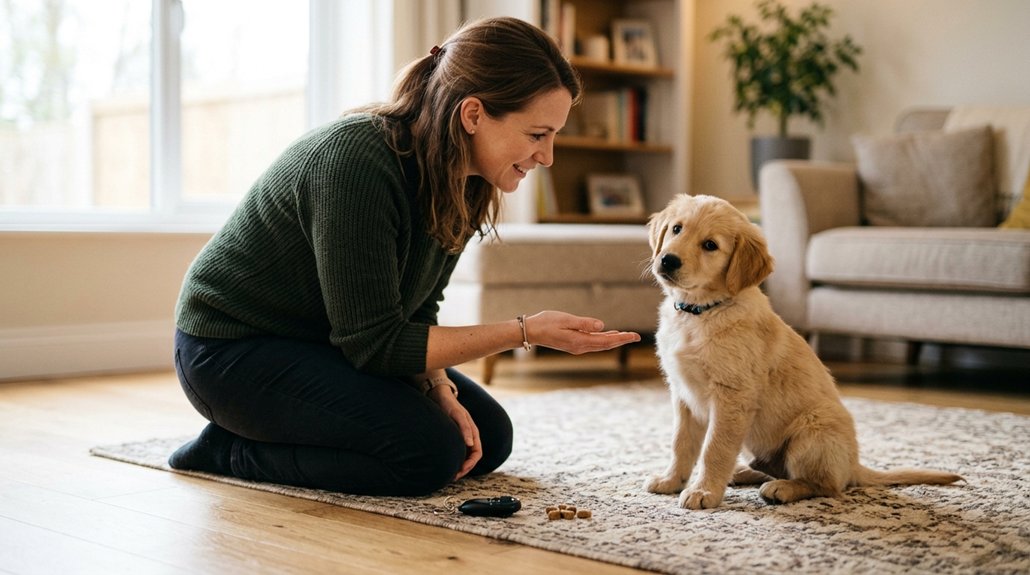
When you’re training your puppy, being physically present is key to optimizing their learning. By staying close, you can immediately offer feedback and encouragement, nurturing their attentiveness and strengthening your bond. Make certain you’re in a distraction-free space, using eye contact and positive interaction to make the most of each training session.
Maximize Interaction Opportunities
Proximity plays an essential role when maximizing interaction opportunities with your puppy. Your presence reinforces commands and enhances your pup’s attention. Transform training into playful bonding moments rather than mundane tasks. Here’s how you can immerse yourself in interactive challenges that boost learning and responsiveness:
- Engage in interactive play: Sprinkle commands throughout playtime to strengthen learning.
- Incorporate commands in daily activities: Use feeding or simple routines to reinforce your puppy’s understanding.
- Employ high-value treats: They’re game-changers, motivating your pup to engage and listen.
- Mix up environments: Frequent, positive interactions in various settings help generalize commands.
- Keep sessions short and fun: Maintain your puppy’s enthusiasm and focus with brief, enjoyable training blocks.
Channel your patience and expertise for successful training outcomes.
Encourage Proximity During Training
Building on the interactive opportunities, staying close to your puppy during training can be immensely rewarding. When you maintain physical proximity, you reinforce your presence, which increases their focused learning on your commands. Being nearby allows for immediate correction or guidance, which enhances their understanding of expected behaviors. This approach utilizes proximity benefits by reducing environmental distractions, making it easier for your puppy to learn effectively.
Training in a smaller, controlled space where you’re near your puppy promotes a sense of security. This sense of security boosts their compliance with commands. Your presence also provides reassurance, fostering your puppy’s confidence and encouraging a more responsive demeanor. Consistently staying close enhances the bond, reinforcing learning success with practical and patient training methods.
Foster Dog-Human Engagement
Creating a strong dog-human engagement hinges on your active presence during training. You’ll find that proximity and attentive interaction greatly boost your puppy’s focus. Start by using engagement strategies like calling their name before issuing commands. Playing bonding activities guarantees they’re tuned into you. High-value treats motivate them, associating your presence with positive rewards. Maintaining consistent tone and body language in commands builds trust, laying a foundation for successful training.
- Capture attention by being physically close to your puppy.
- Use engaging communication, like their name, to regain focus.
- Reward with high-value treats to strengthen command associations.
- Confirm command consistency in tone and body language.
- Incorporate clear communication from all involved in training for cohesive learning.
Implement these techniques with patience, creating a harmonious training environment.
Evaluate and Adapt Training Methods
As you’re starting on the journey of training your puppy, it’s essential to continually evaluate and adapt your methods to guarantee effective learning. Begin by adjusting training techniques and observing puppy behavior closely. Consistent commands and reinforcement across all family members prevent confusion. To enhance focus, minimize distractions and use higher-value treats during sessions. Observe your puppy’s responses to commands, noting shifts in tone or arousal, and adjust your approach accordingly. Incorporate positive interrupters to redirect unwanted behaviors, helping them refocus on appropriate actions. Gradually expose your puppy to new commands and environments. Through positive reinforcement, you’ll strengthen their confidence and compliance effectively.
| Observe & Adjust | Enhance Focus | Build Confidence |
|---|---|---|
| Monitor behavior | Minimize distractions | Gradual exposure |
| Consistent commands | Higher-value treats | Positive reinforcement |
| Positive interrupters | No interruptions | New environments |
Resolve Training Challenges With These Solutions
When tackling training challenges with your puppy, it’s important to approach solutions with both patience and consistency. Start by incorporating effective socialization strategies, introducing new environments gradually to minimize fear or confusion. Use sensory stimulation; expose your puppy to different textures and sounds for confidence-building. Consistency in command language is essential, ensuring everyone uses the same cues, preventing misunderstandings. Implementing a positive interrupter can redirect your puppy’s attention to desired behaviors seamlessly. To enhance your puppy’s responsiveness, reward immediately with high-value treats, making a clear association between command and reward.
- Gradual Exposure to New Stimuli
- Consistent Command Language
- Utilizing Positive Interrupters
- Immediate High-value Treat Rewards
- Adjustments to Training Environment
These tailored strategies lend themselves to effective training and a happier, well-adjusted puppy.
Frequently Asked Questions
How Do You Discipline a Puppy That Won’t Listen?
Discipline your puppy by using positive reinforcement to encourage good behaviors instead of punishment. Establish boundaries with consistent commands from everyone. Be patient; build their confidence by reinforcing correct actions in controlled environments using treats as motivation.
What Is the 3-3-3 Rule for Puppies?
The 3-3-3 rule’s like a roadmap for puppy communication. Initially, your puppy’s stressed, but training techniques help. By three weeks, routines help trust build. Three months in, they’re confident. Be patient and practical.
What Is a Red Flag Puppy’s Behavior?
Red flag puppy behavior includes consistent non-compliance, indicating possible communication issues during training. Aggressive tendencies might signal the puppy feels threatened, requiring patience and practical adjustments to overcome these puppy training challenges effectively.
What Month Is Hardest With a Puppy?
Around 5-6 months is often the hardest with puppies, as 40% of them experience increased training challenges. You’ll notice escalating behavior stages, so maintain patience and apply consistent training to navigate this tumultuous time effectively.
Conclusion
Think of training your puppy as tending a delicate garden. Sometimes, your little sprout takes longer to blossom, not because it won’t but because it’s learning to absorb what you offer. Like a gardener using the right amount of sunlight, soil, and water, apply consistency, patience, and positivity. Remember when your first flower bloomed despite the challenges? Your puppy, too, will flourish in time, reflecting the care and commitment you invest in them.