
Your dog might need more mental stimulation if you notice sudden changes in eating or sleeping habits, destructive behaviors like chewing furniture, excessive barking, or restlessness. These signs indicate unmet mental engagement and can affect your dog’s well-being. Incorporate brain games, varied play routines, and interactive toys to boost mental health, reduce anxiety, and enhance the bond with your pet. Explore engaging activities and strategies for a happier, more content canine companion.
Key Takeaways
- Sudden changes in eating or sleeping patterns may indicate a need for more mental stimulation.
- Destructive behaviors like chewing non-toy items suggest insufficient engagement and boredom.
- Excessive barking often signals unfulfilled mental stimulation needs.
- Signs of restlessness, such as pacing, suggest unspent energy requiring mental engagement.
- Attention-seeking behaviors, like nipping, indicate a need for interactive activities and challenges.
Spot Sudden Eating or Sleeping Habits

When you notice sudden changes in your dog’s eating or sleeping habits, it might be indicative of a need for more mental stimulation. Altered eating patterns—whether it’s increased food consumption or a significant decrease in appetite—could imply boredom or anxiety due to insufficient mental engagement. Similarly, sleeping changes like sleeping more than usual or struggling to settle can signal a lack of environmental interaction. Research suggests dogs mentally engaged through enrichment activities tend to maintain stable sleeping patterns, minimizing emotional distress. Monitoring these patterns helps you identify potential boredom or anxiety, both of which risk leading to further behavioral issues. Recognizing these changes early allows you to implement cognitive activities that enhance your dog’s well-being and mood stability.
Recognizing Signs of Restlessness and Energy Surplus
When your dog exhibits signs of restlessness, such as pacing or difficulty settling down, it likely indicates unspent mental energy that requires addressing. Evaluating their energy levels involves observing behaviors like excessive jumping, running, or vocalizations, which often suggest boredom and the need for additional stimulation. Introducing problem-solving games or interactive toys can help manage and channel this energy constructively, enhancing your dog’s well-being.
Identifying Restless Behavior
Some dogs display restlessness by frequently pacing around the house, a clear indicator of surplus energy in need of release through physical or mental activities. Observing your dog’s pacing patterns can reveal much about their need for stimulation. They might also exhibit attention-seeking behaviors like nipping or nudging you persistently. These signs suggest an increased need for engagement and are your dog’s way of communicating their mental and physical activity requirements.
Inability to settle down for sleep and hyperactive behaviors, such as jumping or running during excitement, further highlight their struggle with unspent energy. Recognizing these behaviors is essential; they might also signal underlying stress or anxiety. Addressing them with structured play or mental challenges is important for their overall well-being.
Evaluating Energy Levels
An understanding of your dog’s energy levels offers essential insights into their need for mental and physical engagement. Conducting a thorough energy assessment helps identify signs of restlessness or surplus energy. Frequent pacing could mean an unbalanced activity level, indicating they need more interactive play or training for mental stimulation. Difficulty in calming down and fidgety behavior during sleep time suggests an overactive mind that benefits from varied physical activities. Signs like excessive jumping or running around point to unspent energy, best managed by introducing new walking routes or diverse exercises. Increased attention-seeking, such as nudging or persistent barking, highlights boredom and the necessity for engaging mental challenges. Striking the right activity balance effectively reduces restlessness and fulfills your dog’s energy needs.
Why Excessive Barking Means Boredom

Although dogs communicate primarily through barking, excessive barking often indicates boredom, signaling unmet needs for mental stimulation. Understanding barking triggers is essential to identifying boredom signs in your dog. When left unchallenged, dogs might engage in chronic vocalizations as they’re yearning for interaction and stimulation. This habitual barking can aggravate anxiety and stress, reinforcing the cycle of boredom. To mitigate this, consider increasing your dog’s physical activity and incorporating mental challenges. Activities like regular training sessions and interactive games are effective in redirecting their energy, helping to diminish unnecessary barking. By addressing these needs, you’re not just reducing barking but fostering a calmer environment for both you and your dog, promoting overall well-being.
Spotting Destructive Behaviors in Your Dog
You might notice your dog chewing on furniture or digging holes, behaviors that often point to unmet mental stimulation needs. Such destructive habits, along with excessive barking or whining, indicate frustration and a lack of engagement. Addressing these signs early can prevent ongoing damage and improve your dog’s overall well-being.
Identifying Destructive Chewing
One prominent indicator of insufficient mental engagement in dogs is destructive chewing, where they often target non-toy items like furniture and shoes. This behavior commonly signals your dog’s need for more mental stimulation. High-energy breeds are especially prone to chew destructively out of boredom or frustration. If you notice chewing marks or shredded materials at home, it is crucial to implement chew prevention strategies. Offering engaging alternatives, such as mentally stimulating toys or activities that tap into their natural instincts, can greatly mitigate this issue. Additionally, destructive chewing can stem from attention-seeking behavior, especially when your dog feels neglected. By providing varied enrichment and interactive playtimes, you’ll address these needs, leading to a happier, more satisfied canine companion.
Recognizing Digging Behavior
A significant factor that often leads to destructive digging behavior in dogs is inadequate mental and physical stimulation. You might observe your dog exhibiting digging patterns that align with their natural exploration instincts, which, if excessive, suggest a lack of engaging activities. Dogs don’t just dig for fun; they’re often seeking mental enrichment or responding to frustration. When your pet starts digging holes in your yard or persistently scratching floors and furniture, it’s a sign they need more mental challenges and physical activities. Providing interactive toys and games can positively redirect this behavior by engaging their minds. Establishing a routine with varied physical exercise paired with mental tasks can effectively curb your dog’s destructive digging tendencies, ensuring their energies are healthily channeled.
Understanding Excessive Vocalizations
Many dogs vocalize excessively as a signal of underlying issues that often relate to boredom and inadequate mental stimulation. Understanding the vocalization triggers is vital in determining the root of the problem, often revealing unmet needs for physical and mental engagement. Conduct a behavioral assessment to spot these triggers and address them effectively through targeted interventions. Consider the following strategies:
- Increase interactive play sessions to channel their energy constructively.
- Introduce puzzle toys to challenge and stimulate your dog’s mind.
- Enroll them in training classes that focus on obedience and agility.
- Ascertain regular social interactions with other dogs or people.
Monitoring your dog’s vocalization patterns can help in adjusting their routine effectively to prevent attention-seeking behavior due to neglect or frustration.
Engage With Brain Games and Puzzles
If you’re concerned about your dog’s mental well-being, engaging them with brain games and puzzles can offer substantial benefits. Brain games like hide and seek tap into your dog’s natural instincts, providing mental challenges that alleviate boredom. Puzzle challenges, including interactive toys and KONGs filled with treats, offer prolonged mental stimulation by requiring problem-solving skills as your dog works to access their rewards.
Puzzle boards and treat-dispensing toys are effective in engaging cognitive skills, serving as outlets for pent-up energy and reducing destructive behaviors associated with boredom. Introducing short training sessions or teaching new tricks enhances mental stimulation, fosters communication, and builds confidence. Regularly rotating different toys and games guarantees fresh engagement, preventing routine and boredom issues.
Build a Daily Routine for Mental Enrichment
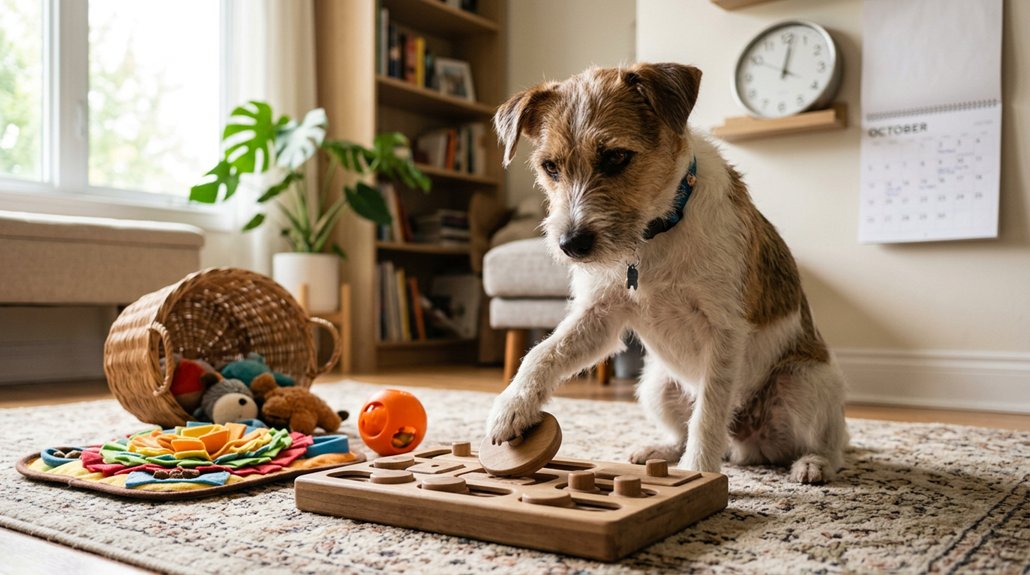
When establishing a daily routine for mental enrichment, prioritizing varied and structured activities can effectively sustain your dog’s mental health and well-being. Consistently incorporating daily training sessions, although brief, enhances cognitive engagement. Aim for 5-10 minutes multiple times a day to reinforce commands and boost confidence. Enhance your dog’s mealtime experience by using interactive feeding methods. Opt for food puzzles or slow feeders to engage foraging instincts, adding a stimulating layer to eating.
- Rotate interactive toys and puzzles on a weekly basis.
- Change walking routes regularly to integrate novel stimuli into exercise.
- Include social encounters with other dogs to further mental enrichment.
- Implement multifaceted activity levels to prevent boredom and sustain attention.
Employing these evidence-based strategies will considerably enrich your dog’s daily life.
Choosing Toys and Training for a Happy Dog
Incorporating interactive toys and structured training sessions into your dog’s daily life can greatly enhance mental stimulation and prevent unwanted behaviors. Utilizing KONGs and puzzle boards engages your dog’s mental faculties, offering entertainment and reducing boredom-related behaviors. Opt for treat-dispensing toys like treat balls to encourage problem-solving skills and physical activity. Short, daily training sessions, about 5-10 minutes, are effective training techniques for mental enrichment and improving communication with your furry companion. Rotate your dog’s toys regularly to maintain novelty and interest, preventing disengagement. Additionally, using interactive feeding tools during mealtime can transform routine eating into a stimulating challenge that taps into natural foraging instincts. This holistic approach guarantees a mentally vibrant and content canine.
Frequently Asked Questions
How Do I Know if My Dog Is Getting Enough Mental Stimulation?
You’ll know your dog isn’t getting enough mental stimulation if you notice behavior changes like difficulty focusing, excessive barking, or destructive actions. Boredom signs include attention-seeking behaviors and destructive habits pointing to potential cognitive needs.
What Is the 3-3-3 Rule With Dogs?
The 3-3-3 rule outlines phases of adjustment in adopted dogs. Initially, they exhibit canine anxiety and stress-related dog behavior. Over three months, they gradually settle, with reduced anxiety and increased comfort in their new environment.
Who Gets Custody of a Dog in a Breakup?
In a breakup, dog custody is determined by who’s been the primary caregiver. Courts consider the dog’s best interests, documented ownership, and any pet agreements. Establishing a visitation schedule guarantees their welfare beyond considering them mere property.
Why Does My Dog Cry When I Leave?
Your dog cries due to separation anxiety. It often signals a need for effective coping strategies to address this behavior. Providing mental stimulation and interactive toys can reduce anxiety levels and encourage a more relaxed demeanor when alone.
Conclusion
Imagine your dog’s mind as a flourishing garden—it needs regular tending to stay vibrant. Just like weeds can choke plants, boredom and restlessness can stifle their well-being. By spotting shifts in eating, sleeping, or behavioral patterns, you’re already a step towards nurturing their mental landscape. Incorporate brain games, establish routines, and offer stimulating toys; these act like sunlight and water. You’ll cultivate not just a happier dog, but a healthier, more balanced companion. Your vigilance nurtures their wellness.