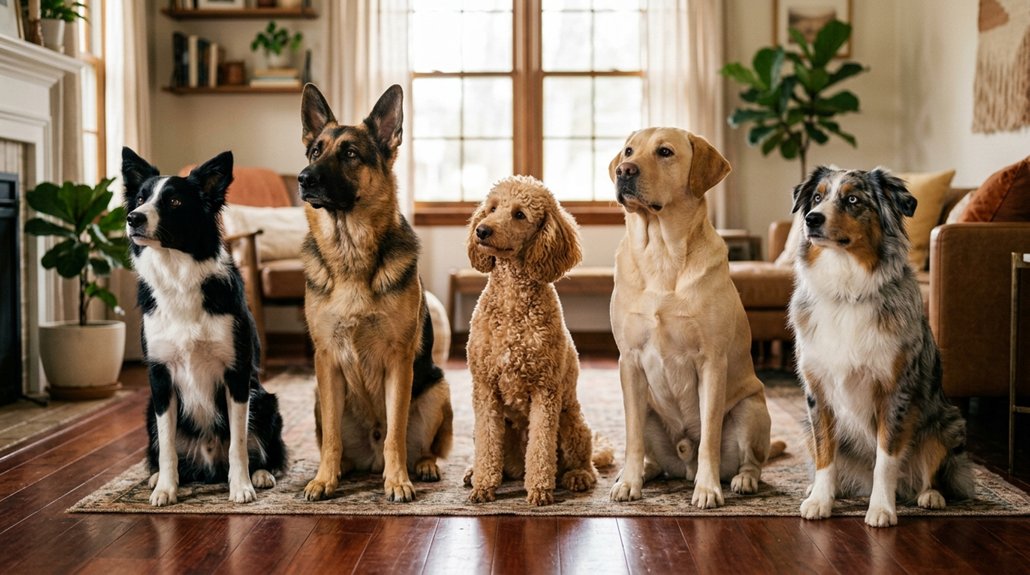
You’re exploring the fascinating traits of intelligent dog breeds, defined by their work obedience, instinctual behaviors, and problem-solving skills. Genetic factors influence these cognitive strengths, while environmental enrichment plays an essential role. Breeds like Border Collies and Poodles excel in mastering commands rapidly, showcasing superior adaptive abilities. Understanding these breeds’ unique capabilities, such as German Shepherds’ versatility and Golden Retrievers’ trainability, offers insight into their advanced intelligence. Discover more about nurturing these remarkable companions.
Key Takeaways
- Intelligent dog breeds excel in obedience and command mastery, often learning commands in fewer than five repetitions.
- Genetic influences and environmental factors together shape cognitive capabilities in smart dog breeds.
- Enhanced memory, problem-solving skills, and adaptability are key traits of the most intelligent dog breeds.
- Border Collies, Poodles, and German Shepherds are top intelligent breeds due to advanced learning and adaptive abilities.
- Mental stimulation and obedience rates above 90% are crucial for the well-being of intellectually advanced dog breeds.
Understanding the Traits of Smart Dog Breeds
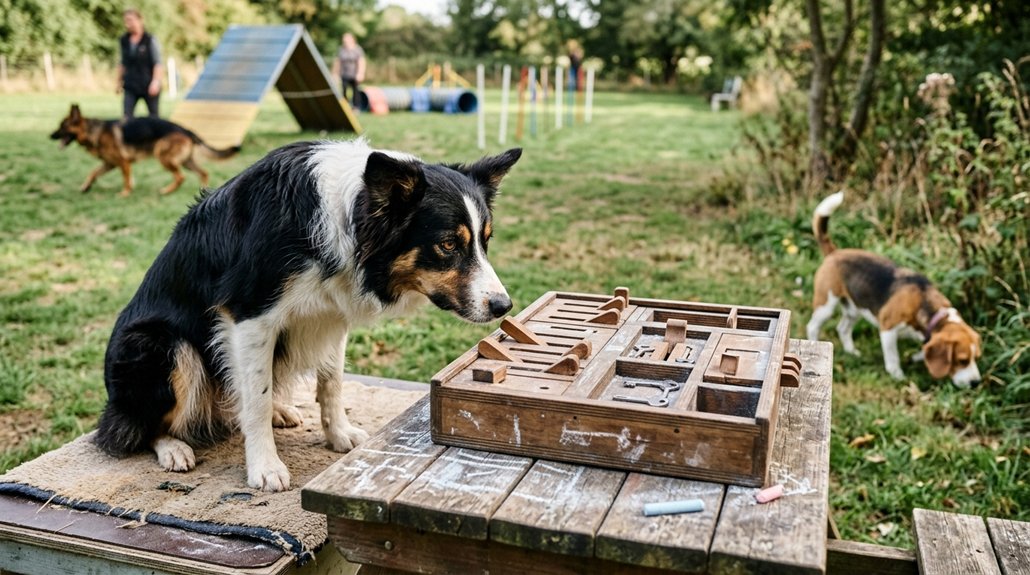
When evaluating the traits of smart dog breeds, it’s crucial to contemplate their capacity for work obedience, instinctual behavior, and problem-solving abilities. Genetic influences considerably impact these capacities, as evidenced by breeds like the Border Collie, whose herding instincts are ingrained and optimized by selective breeding. However, it’s not just nature; environmental factors also play an important role. Dogs exposed to a stimulating environment, with ample opportunities for mental challenges, often demonstrate heightened cognitive abilities. Additionally, the ability to master commands quickly and maintain high obedience rates underscores their intelligence. Observing adaptive problem-solving underscores how these dogs interact with their surroundings, revealing a dynamic interplay between inherited traits and external stimuli critical for cognitive development and behavioral refinement.
Meet the Top 10 Smartest Dog Breeds
You’ll find that the top 10 smartest dog breeds possess remarkable trainability and cognitive prowess, often reflected in their problem-solving abilities and social intelligence. Observational analysis shows that breeds like the Border Collie and Poodle not only exhibit high obedience but also adapt quickly to environmental stimuli. By examining these traits, you can better understand how intelligence manifests uniquely across different breeds, enhancing their roles in diverse human contexts.
Breeds With Exceptional Trainability
Although numerous dog breeds exhibit cognitive abilities and trainability, certain breeds consistently stand out for their superior intelligence and adaptability in learning new tasks. The Border Collie impresses with its ability to learn behavioral cues using efficient training techniques, grasping commands rapidly. Similarly, Poodles showcase remarkable memory retention, perfect for obedience training. German Shepherds exhibit an extraordinary response to commands, adapting well to roles demanding precision. Golden Retrievers effortlessly combine friendliness with trainability, thriving in service contexts. Shetland Sheepdogs and Labrador Retrievers present problem-solving prowess, quickly adapting to varied tasks. Here’s a snapshot of their abilities:
| Breed | Trainability Traits |
|---|---|
| Border Collie | Swift command acquisition |
| Poodle | Memory and quick learning |
| German Shepherd | Versatile and loyal |
| Golden Retriever | Keen to please |
| Shetland Sheepdog | Problem-solving proficiency |
Unique Problem-Solving Abilities
Building upon the concept of trainability, it’s fascinating to observe the intrinsic problem-solving abilities that define the top echelons of canine intelligence. Border Collies, at the pinnacle, showcase an unparalleled cognitive task performance, rapidly mastering commands in under five repetitions. Poodles, with their superior memory retention, excel in problem-solving strategies, dominating agility events. German Shepherds are versatile, with advanced cognitive capabilities that make them invaluable in complex police and military assignments. Shetland Sheepdogs display cleverness and adaptability, thriving in dynamic herding environments. Observational analysis highlights Australian Cattle Dogs’ intelligence and robust work ethic, solving challenges effectively while requiring both mental and physical engagement. Each breed’s unique problem-solving faculties underscore their status as leaders in cognitive prowess within the canine world.
Social Intelligence Traits
Utilizing their advanced social intelligence traits, the top ten smartest dog breeds offer remarkable insight into canine cognitive capabilities. These dogs are adept at interpreting social cues and exhibit high emotional awareness, enabling them to respond effectively to human signals. Breeds like the Border Collie and Poodle excel in understanding and reacting to nuanced human emotions, demonstrating an impressive ability to connect with their owners. Golden Retrievers and German Shepherds stand out due to their instinctive loyalty and protective nature, thriving in social settings. Labrador Retrievers and Doberman Pinschers showcase obedience mastery, swiftly interpreting owners’ commands. Additionally, Shetland Sheepdogs and Rottweilers display acute social skills, forging profound bonds with humans and engaging seamlessly within varied social environments.
Unique Qualities of Intelligent Breeds
Intelligence in dog breeds manifests through distinct capabilities, each offering unique advantages in various tasks and environments. Behavioral adaptability is a key trait in breeds like the Border Collie and Poodle, which enables them to comprehend commands in fewer than five repetitions. This efficiency reflects their working and obedience intelligence, emphasizing high task performance reliability.
Observationally, adaptive problem-solving allows breeds such as the Australian Cattle Dog and Shetland Sheepdog to develop self-taught behaviors, enhancing their autonomous challenge navigation. In addition, instinctive capabilities are pronounced in breeds like the German Shepherd and Rottweiler, instinctually performing herding, guarding, or assisting tasks with minimal training. These instinctual and learned responses highlight an evolutionary advantage in environmental interaction and task execution.
The Importance of Mental Stimulation for Intelligent Dogs
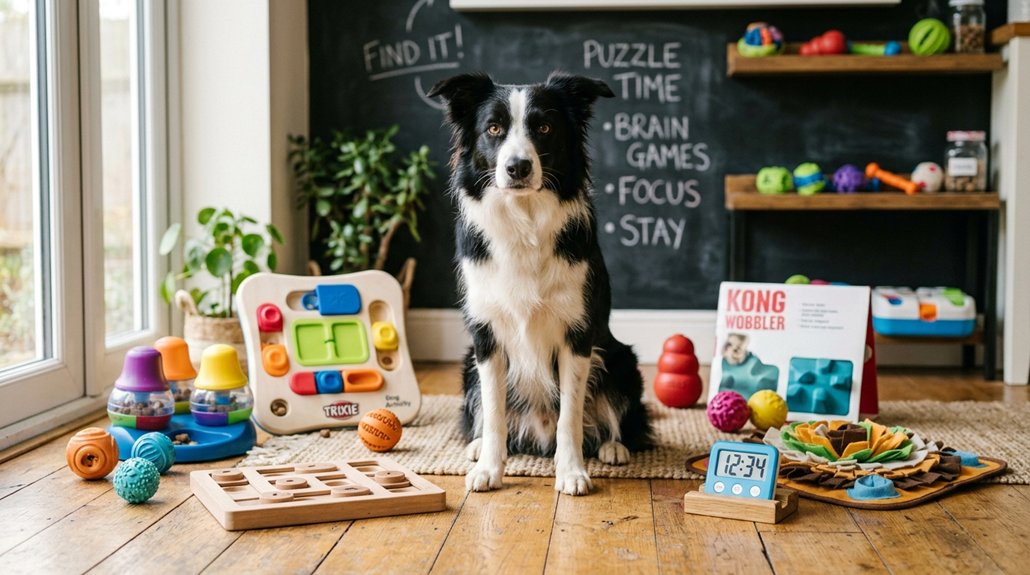
You’ll find that engaging thoughtful activities are imperative for intellectually advanced breeds like Border Collies, as they harness cognitive faculties effectively. If not mentally challenged, these breeds may exhibit behaviors typical of elevated stress or boredom, such as destructiveness. By incorporating daily interactive challenges and mindful exercises, you sustain their cognitive engagement and mitigate behavioral issues.
Engaging Mindful Activities
While canine intelligence is an evolutionary trait that provides adaptive advantages, it simultaneously demands consistent cognitive engagement to prevent the onset of ennui and detrimental behaviors. Conducting mindful exercises like cognitive games is essential for breeds such as Border Collies and Poodles. These activities promote mental acuity and diminish the likelihood of destructive behaviors. Cognitive games, including puzzle toys or advanced training, cater to their intrinsic problem-solving proclivities. Observational analysis suggests that these challenges—ranging from regular obedience training to agility drills—enhance memory retention and adaptability. Dogs, especially those showcasing advanced cognitive abilities such as Australian Cattle Dogs, thrive when their intelligence is engaged. Structured scent work or interactive hide-and-seek further facilitates cognitive health, reinforcing the dog-owner bond through shared pursuit.
Avoiding Boredom Behaviors
As cognitive capabilities flourish in highly intelligent dog breeds, the imperative of mental stimulation becomes a proven deterrent against ennui and subsequent maladaptive behaviors. Breeds like Border Collies and Poodles, with their exceptional capacity for rapid learning, necessitate boredom prevention strategies to avert destructive activities. Observational data suggest that engaging toys and puzzle games foster behavioral enrichment by activating problem-solving faculties and enhancing memory retention.
Without these, intelligent dogs may exhibit undesirable behaviors, such as excessive barking or chewing, indicating cognitive deprivation. Ethological studies highlight the role of consistent mental challenges to sustain an obedience rate over 90%, essential for their psychological well-being. Hence, integrating dynamic training sessions and multifaceted enrichment activities is paramount for nurturing their inherent acumen.
Daily Interactive Challenges
Many intelligent dog breeds benefit immensely from daily interactive challenges that cater to their advanced cognitive needs. Observing breeds like Border Collies and Poodles reveals how interactive puzzle toys and cognitive agility games stimulate their problem-solving abilities and stave off behavioral issues linked to boredom. For dogs such as the Shetland Sheepdog and Australian Cattle Dog, whose ethological background involves herding and complex tasks, mental acuity remains essential. These activities, which challenge their intellect while satisfying natural drives, also reinforce bonds between you and your dog. When these breeds learn new commands in fewer than five repetitions, it highlights a kinesthetic and cognitive synergy that necessitates consistent mental exercise, ensuring they’re both content and intellectually fulfilled.
Training Your Clever Canine Companion
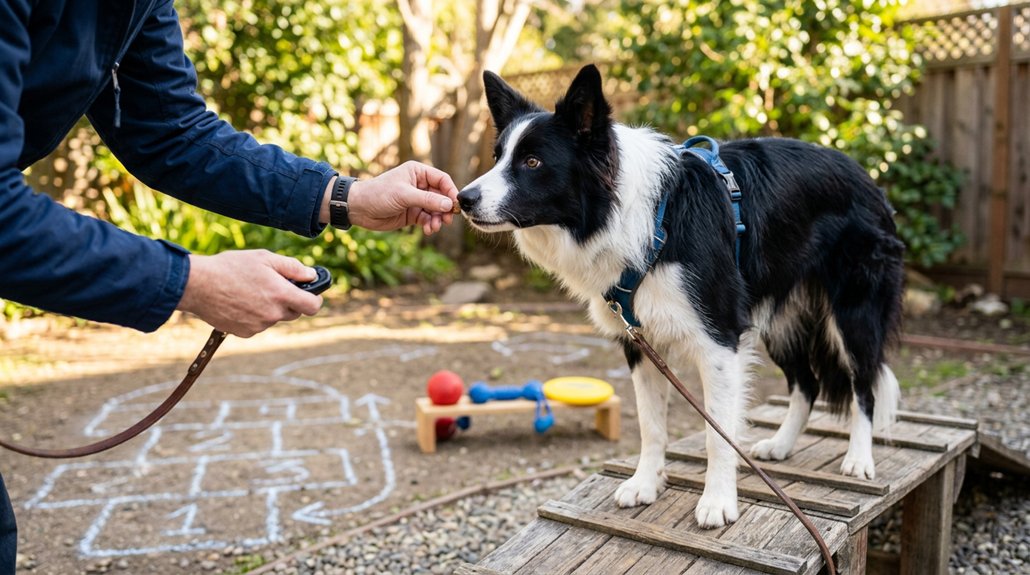
Understanding the nuances of training intelligent dog breeds requires an appreciation of their cognitive capabilities and instinctual behaviors. Advanced training techniques cater to their unique canine learning styles, enhancing engagement and skill acquisition. Utilizing positive reinforcement, breeds like Border Collies learn commands swiftly, often mastering them in just five repetitions. Puzzle toys and agility courses offer essential mental stimulation to avert boredom-induced behavioral issues. Structured environments benefit German Shepherds and Golden Retrievers, where clear cues and consistent commands lead to obedience rates surpassing 90%. Observations reveal these breeds excel at problem-solving independently, negotiating barriers sans direct training. Successful strategies ought to integrate socialization and interactive play, ensuring your intelligent companion remains engaged and responsive—a significant approach for energetic, high-intelligence breeds.
Choosing the Right Smart Breed for Your Lifestyle
Selecting an intelligent dog breed requires an analytical assessment of several factors, including the physical exercise and mental stimulation you can consistently provide. Breeds like Border Collies demand high exercise requirements and mental challenges, while Poodles offer quick learning and adaptability. Compare these with your lifestyle needs: active, family-oriented, or independent-thinking. Remember, a smart breed’s cognitive engagement prevents behavioral issues.
| Breed | Key Characteristics |
|---|---|
| Border Collie | High exercise, problem-solving focus |
| Australian Cattle Dog | High activity, training needs |
| Poodle | Quick learner, adaptable |
| Golden Retriever | Obedience, family-friendly |
| Shetland Sheepdog | Active, suited for engaged individuals |
Assess your family dynamics and consider breed comparisons based on both exercise requirements and temperament. Meeting individual dogs is essential to guarantee compatibility with your personality.
Frequently Asked Questions
What Dog Breed Has the Highest IQ?
You’d find Border Collies leading dog intelligence rankings due to their impressive canine problem-solving abilities. With high adaptability and memory retention, they exhibit advanced ethological behaviors, making them exceptional at following complex tasks and commands efficiently.
What Dogs Are Usually Not Allowed in Apartments?
Imagine a beagle’s echoing bay reverberating through thin walls. Apartments often restrict high-noise breeds like Beagles, energetic ones requiring space and exercise like Border Collies, and those with assertive temperaments like Rottweilers, per lease agreements and owner experience considerations.
What Is the #1 Smartest Dog?
You’re probably curious about the smartest dog, aren’t you? The Border Collie tops canine intelligence tests due to its remarkable Border Collie traits such as exceptional problem-solving, memory recall, and innate ability for complex task execution.
What’s the Hardest Dog to Train?
You’re likely to find Afghan Hounds the hardest to train due to their behavioral challenges and independence. Using specific training techniques and understanding their ethological tendencies can mitigate these challenges and encourage more successful responses to commands.
Conclusion
In choosing a smart dog breed, remember the adage, “Know thyself,” as each intelligent breed possesses unique ethological traits requiring specific mental stimulation. Observing these breeds reveals their knack for problem-solving and adaptive learning behaviors, making them fascinating companions. Training isn’t just about commands; it’s a mutual journey of understanding and trust. Match their intelligence with your lifestyle needs, ensuring a harmonious coexistence where both species can thrive and evolve together, demonstrating the science of mutual companionship.