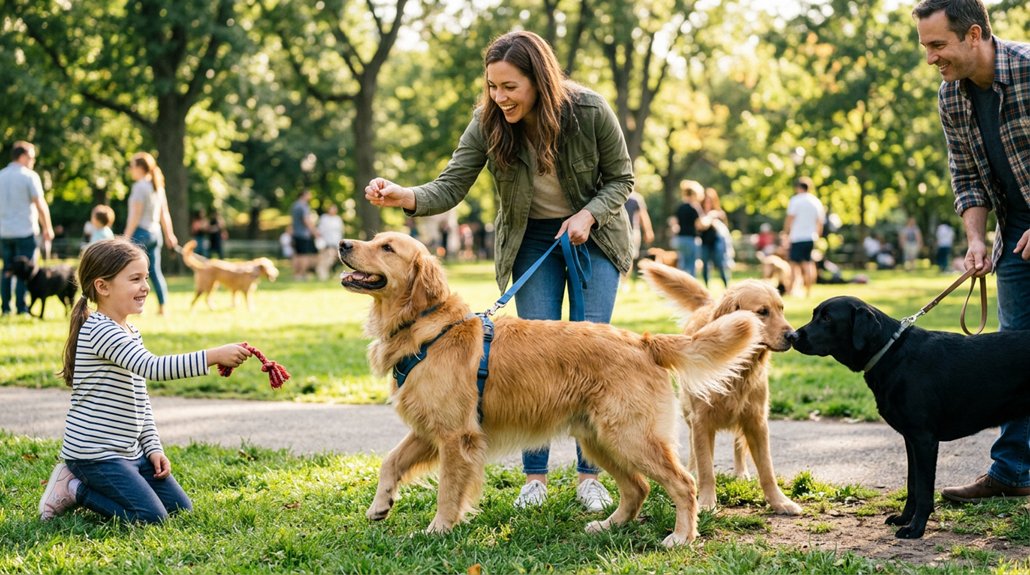
To properly socialize your dog, start early by gradually exposing them to diverse sounds, sights, people, and places. Maintain a calm demeanor, use a loose leash, and reward positive interactions with treats and praise. Monitor for signs of fear or aggression and adjust your approach accordingly. Utilize structured environments like puppy classes for safe learning. Continuous exposure and positive reinforcement are key to building confidence in your dog. Discover further insights to enhance your dog’s socialization journey.
Key Takeaways
- Begin socialization early, introducing puppies to new experiences from three weeks to fourteen weeks old for best results.
- Use gradual exposure to diverse sounds, sights, and people to build a dog’s confidence and adaptability.
- Implement positive reinforcement, such as treats and praise, to encourage calm and social behavior in new situations.
- Observe and respond to signs of fear or aggression using counter-conditioning and controlled exposure techniques.
- Engage in ongoing socialization with structured activities like puppy classes and playdates to maintain social skills throughout a dog’s life.
Essential Dog Socialization Concepts
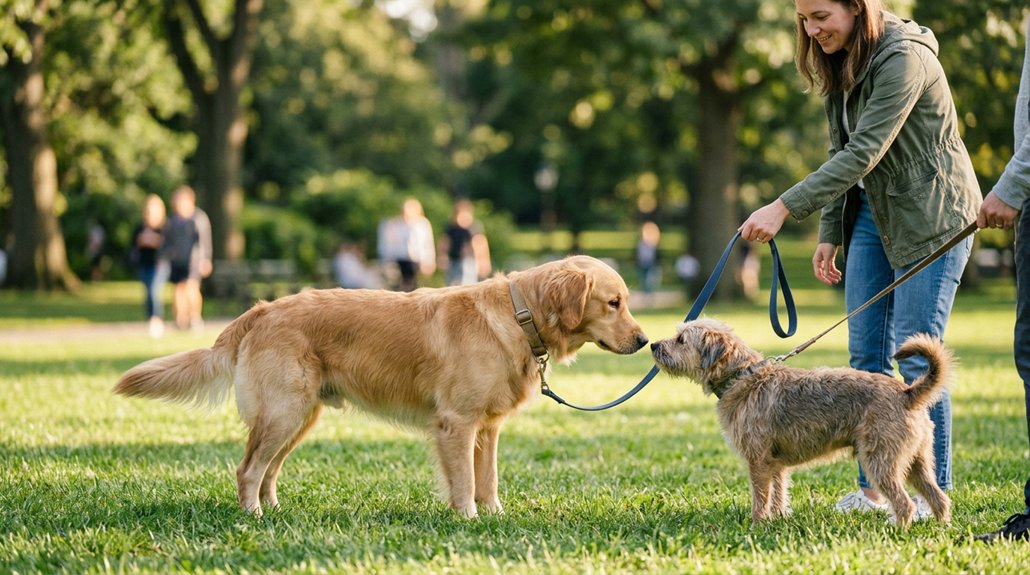
When it comes to setting the foundation for a well-adjusted dog, essential socialization concepts play a pivotal role. Understanding socialization benefits, you’ll find that gradual exposure to diverse sounds, sights, and people prevents overwhelming your dog and minimizes the risk of future anxiety. Your involvement is vital; a calm demeanor and a loose leash help your dog feel relaxed and confident in new scenarios. Guarantee positive social interactions using reinforcement methods like treats and praise to encourage calm behavior, reinforcing the idea that these new experiences aren’t threats. Remember, ongoing socialization throughout your dog’s life maintains their adaptability and social skills, allowing them to confidently face unfamiliar environments and situations. Your active participation is key in nurturing a sociable, adaptable companion.
Kickstart Puppy Socialization Early
To give your puppy the best start in socialization, begin introducing them to new experiences as early as three weeks old, continuing this exposure until they’re around fourteen weeks. During this critical phase, carefully plan puppy playdates and participate in socialization games, ensuring your new companion meets a variety of people and pets in controlled settings. Always confirm vaccination completion before interactions to prevent health risks.
Engaging your puppy in socialization games not only boosts their confidence but also prepares them for future situations. Utilize puppy classes as structured environments to safely promote interaction and learning. Consistently use positive reinforcement, such as treats and praise, to calm nervousness and establish positive associations with new experiences, fostering a well-adjusted and happy adult dog.
Let Your Dog Discover New Sounds and Places
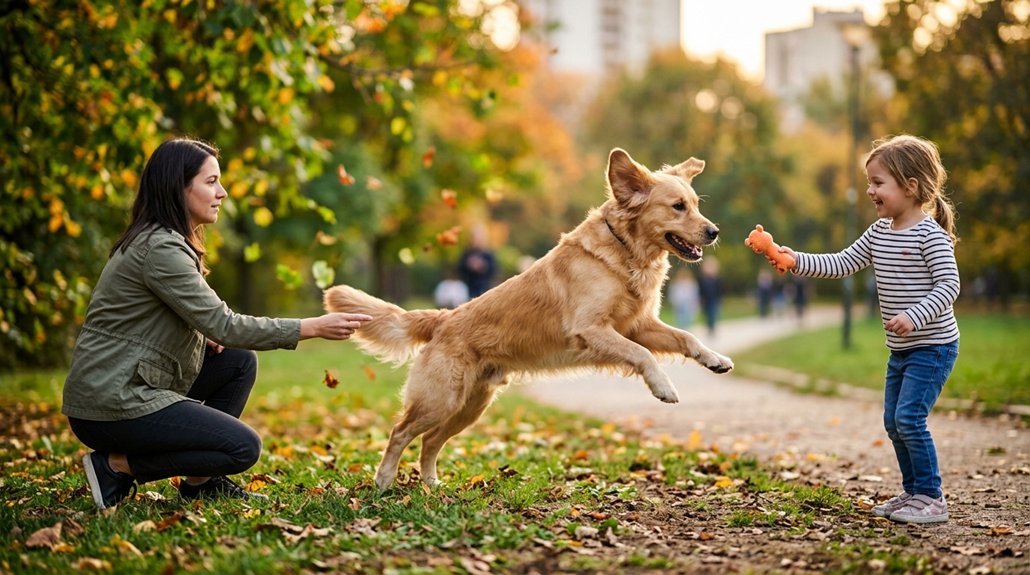
To effectively socialize your dog, gradually expose them to various everyday sounds like kitchen appliances and children’s laughter to help prevent sound-related anxiety. Take them to diverse environments such as parks, pet-friendly stores, and urban areas, allowing them to experience a variety of sights and scents. Always monitor their reactions closely, stepping back if signs of discomfort appear, and use positive reinforcement to foster calm, confident behavior in new situations.
Gradual Sound Exposure
Exposing your dog to a variety of sounds gradually is essential for building their confidence and adaptability. Begin with sound desensitization techniques by introducing softer noises, such as a distant telephone ringing or kids laughing outside, as part of your noise exposure strategies. Let your dog become comfortable with these sounds before increasing their volume or intensity. It’s important to monitor their reactions—relaxed behavior indicates progress while signs of fear require slowing down. Reward your dog’s calmness with treats and praise to reinforce positive associations. Consistent exposure to everyday sounds like kitchen appliances will boost long-term adaptability and reduce anxiety. With patience and positive reinforcement, you’ll help your dog become comfortable with new auditory experiences, ensuring a well-rounded, confident companion.
Diverse Environment Experiences
Integrating diverse environmental experiences into your dog’s routine is key for nurturing adaptability and confidence in various situations. Begin by gradually introducing your pup to everyday sounds—kitchen appliances, children playing, or traffic. Escalate this exploration with visits to dog-friendly locations like parks and pet stores, where you can safely expose them to varied interactions. Encourage surface adaptability by letting your dog traverse grass, concrete, and wood surfaces. This variability fosters a resilient mindset, particularly when combined with exposure to different weather conditions such as rainy and sunny days, enhancing your dog’s weather resilience. Each new experience should be approached positively, reinforcing calm behavior with treats and praise. Remember, patience is crucial, and adapting to diverse stimuli is a gradual process.
Monitoring Dog Reactions
While helping your dog adjust to new sounds and places, it’s essential to monitor their reactions closely. Pay attention to dog body language, such as stiffness, yawning, or avoidance, to gauge comfort levels. Sound sensitivity can be mitigated by gradually introducing noises, like kitchen appliances or children playing. Use treats and praise to reward calm behavior, fostering positive associations. Begin with lower-volume environments and increase gradually.
| Sound/Environment | Desired Behavior | Action if Discomfort Occurs |
|---|---|---|
| Kitchen Appliance | Relaxed demeanor | Lower volume; use treats |
| Children Playing | Curious investigation | Increase distance slightly |
| New Neighborhood | Confident exploration | Reduce duration, try again |
Safely Introduce to New Faces
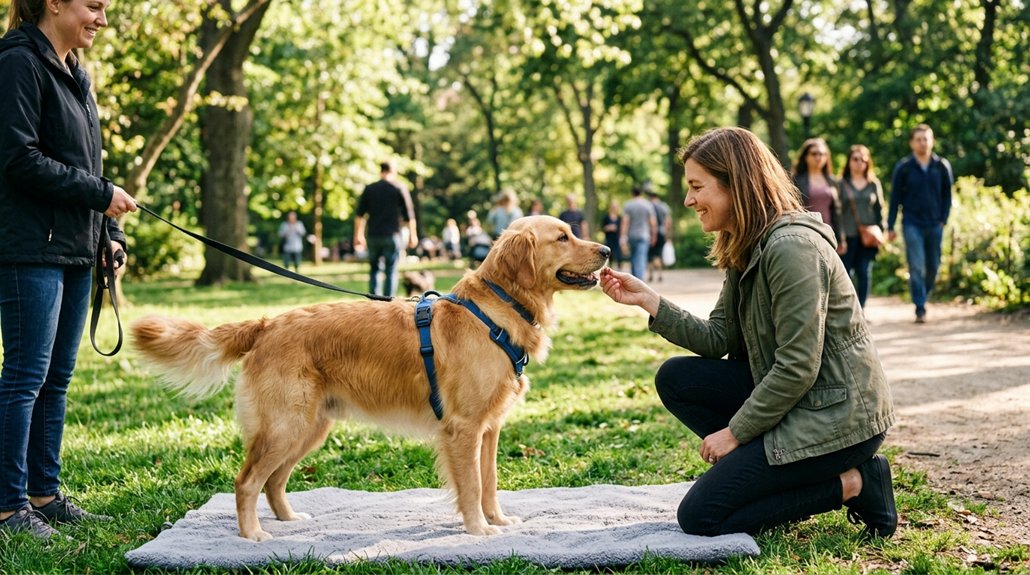
To help your dog become comfortable around new faces, begin by introducing them in a controlled and relaxed environment. Guarantee the atmosphere is calm, where new people can interact non-threateningly with your dog. Utilize positive reinforcement, offering treats and praise whenever your dog remains calm. This approach encourages confidence and reinforces good behavior.
Observe your dog’s body language closely. If your dog shows signs of discomfort, such as tension or fear, give them space and slow the introduction. Advise new acquaintances to avoid direct eye contact or abrupt movements, which might startle your dog. Regular repetition of these introductions is essential. Each positive experience with a new face helps solidify your dog’s social skills and adaptability, making future encounters easier.
Reinforce Social Skills Positively
Building your dog’s social skills positively is key to their overall development and well-being. Contrary to socialization myths, beginning early with treats and praise is essential for rewarding calm and friendly behavior. It’s not just about exposure; gradual and structured socialization activities, including interactive play in supervised playdates or puppy classes, focus on creating positive interactions. Monitoring body language is important—make sure your dog isn’t overwhelmed, removing them if needed. Slowly introduce different environments, sounds, and situations, reinforcing calmness to build confidence. Desensitization techniques involve exposing your dog to stimuli incrementally and rewarding calm responses. Over time, these strategies can reinforce positive associations, ensuring your dog develops well-rounded social skills effortlessly and becomes an adaptable companion.
Overcoming Fear and Aggression in Socializing
When addressing fear and aggression during socialization, recognizing the early signs and understanding the underlying causes can be pivotal. Pay attention to behaviors such as a stiff body or avoidance. Use counter conditioning and behavioral modification by gradually exposing your dog to new experiences using controlled exposure techniques. Keep encounters positive by rewarding calm behavior with treats. Follow these steps:
| Technique | Action |
|---|---|
| Controlled Exposure | Introduce from a safe distance |
| Desensitization | Practice “down/stay” during observation |
| Loose Leash Practice | Maintain calmness by avoiding tension |
Remove your dog if anxiety or aggression escalates to prevent reinforced fear. If issues persist, consult a professional for tailored strategies, ensuring safety and smooth socialization.
Implement Strategies for Adult Dog Socialization
To effectively socialize an adult dog, start by closely observing their behavior and comfort levels during interactions. Introduce new environments gradually, beginning with low-stress situations and using a positive reward system, like treats and praise, to reinforce calm behavior. By progressively exposing your dog to new people, sounds, and environments while monitoring their responses, you’ll build their confidence and adaptability.
Observing Behavior and Comfort
Understanding your dog’s behavior and comfort is essential for successful socialization. Pay close attention to your dog’s body language to discern their comfort signs, like a wagging tail or relaxed posture. When introducing your adult dog to new people or environments, carefully monitor for stress indicators such as tense muscles or avoidance behaviors. Use the table below as a quick reference:
| Situation | Body Language Cues |
|---|---|
| Meeting new people | Tail wagging, calm demeanor |
| New environments | Relaxed ears, open mouth |
| Loud noises | Flattened ears, backing away |
| Unfamiliar surfaces | Hesitant paw placement |
| Overstimulated | Pacing, yawn, or lip licking |
Incorporate positive reinforcement—treats and praise—when your dog demonstrates calmness in new situations. Consistently observe comfort thresholds, provide breaks, and adjust activities accordingly, ensuring a positive socialization experience.
Gradual Environment Introductions
A methodical approach to introducing your adult dog to new environments can greatly mitigate stress and encourage positive social behaviors. Begin environment exploration by choosing less crowded areas, allowing your dog to gradually expand their comfort zones without feeling overwhelmed. Observe their body language closely; signs of anxiety like trembling or pacing mean it might be time to retreat. Introduce them slowly to various stimuli, such as different sounds and textures, ensuring they’re manageable within your dog’s current comfort levels. Consistency is key—establish a predictable routine for these outings to help bolster your dog’s confidence and adaptability. As they familiarize themselves with diverse settings, they’ll be more comfortable and relaxed, promoting happier, healthier social interactions.
Positive Reward Systems
Once your dog becomes more comfortable with gradual environment introductions, positive reward systems further refine their social skills. Implementing reward versatility guarantees you’re catering to your dog’s unique preferences. Some dogs respond better to treats, others to toys or praise—observe and adapt. Consistently use positive reinforcement whenever your dog exhibits relaxed behavior in unfamiliar situations. This strategy encourages calmness and reinforces their comfort with novel stimuli.
For each successful social interaction, offer immediate positive reinforcement. This strengthens the association between good behavior and rewards, boosting your dog’s confidence in new environments. Remember to monitor their reactions; focus on rewarding relaxed behavior to prevent anxiety. By tailoring your approach, you’ll effectively encourage socialization, leading to a well-adjusted and adaptable adult dog.
Troubleshooting Socialization Challenges
While socializing your dog, you may encounter challenges that require patience and strategy to overcome. Fear triggers can lead to socialization setbacks, so it’s essential to recognize and respond to your dog’s comfort levels. Observe their body language closely. If fear or aggression surfaces, slow down. Avoid thrusting them into overwhelming situations. Instead, use desensitization techniques by exposing them gradually to fears from a safe distance while rewarding calm behavior with treats and praise. Consistent positive reinforcement is key. Whenever setbacks occur, adjust your approach based on their individual responses. If challenges persist, seek professional guidance. A trainer can craft a tailored plan, addressing specific behavioral issues and building confidence effectively. Patience and adaptability are your best tools.
Frequently Asked Questions
What Is the 3-3-3 Rule With Dogs?
The 3-3-3 rule helps you understand dog behavior and puppy development. Expect adjustment over three days, weeks, and months. Be patient; your dog will settle, reveal its personality, and form bonds, aiding effective training and socialization.
What Is the 7 7 7 Rule for Dogs?
The 7 7 7 Rule involves exposing your dog to seven different people, environments, and sounds in their first week home. It enhances adaptation, promoting effective canine communication and confidence, especially at puppy playgrounds, encouraging well-rounded behavior.
How Do You Say “I Love You” in Dog Language?
Imagine your dog leaning into you, wagging its tail softly; that’s its way of saying “I love you.” In canine communication, these affectionate gestures, like gentle nudging, signal deep trust and fondness. It’s pure love.
Is It Ever Too Late to Socialize a Dog?
It’s never too late to socialize an adult dog. Late socialization can still yield positive experiences by focusing on behavior modification techniques. Use patience, and gradually introduce new situations, reinforcing with treats and encouragement for effective results.
Conclusion
Successfully socializing a dog demands dedication and diligence. Delight in discovering their sensitivities and stimulate safe, soothing scenarios. Swiftly start with sounds, spaces, and strangers to strengthen skills and stymie stress. Carefully cultivate camaraderie through well-timed treats and thoughtful training. Troubleshoot trials and tailor techniques to triumph over tough times. Embrace the enduring endeavor, ensuring your dog enjoys enriching encounters, evolving into a confident, congenial companion. Always advocate for patience and positivity in this profound pursuit.