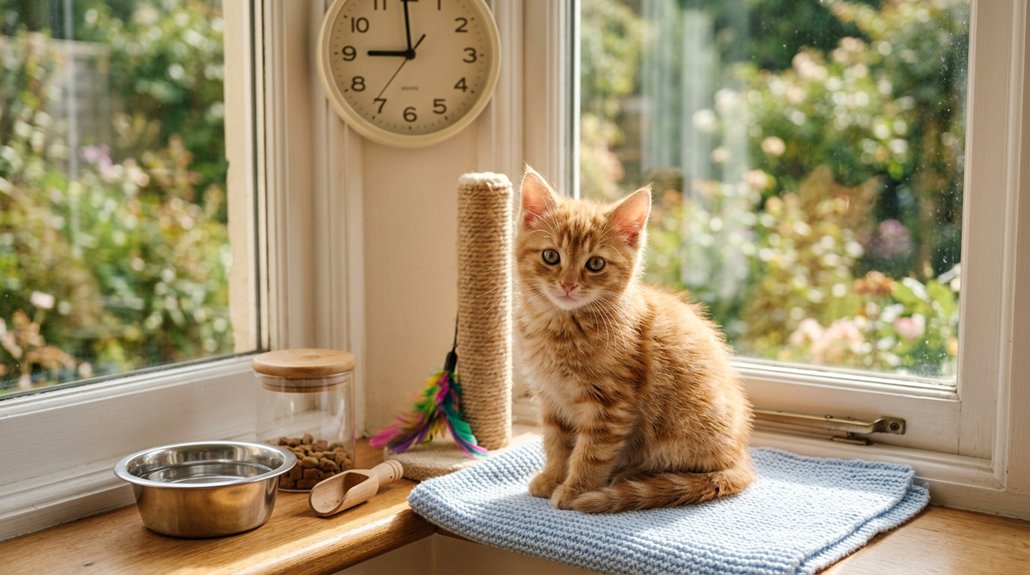
To build a healthy routine for your kitten, focus on nutrition, play, rest, and veterinary care. Feed high-quality, kitten-specific foods and maintain a consistent feeding schedule with social interactions. Engage in daily interactive play to support their physical and mental development. Ascertain your kitten has a cozy spot for midday naps, and follow up with regular veterinary visits for vaccinations and health monitoring. Explore further to master each component of their care routine.
Key Takeaways
- Offer a balanced diet with high-protein kitten-specific foods, serving 3-4 small meals daily.
- Engage in interactive play sessions twice daily to promote physical and mental development.
- Establish a consistent veterinary care routine, starting check-ups at 6 to 8 weeks.
- Create a restful environment for napping, ensuring minimal disruptions to boost health.
- Discuss spaying options with a veterinarian, considering spaying between 6 to 9 months for health benefits.
Fuel a Healthy Start With High-Quality Nutrition
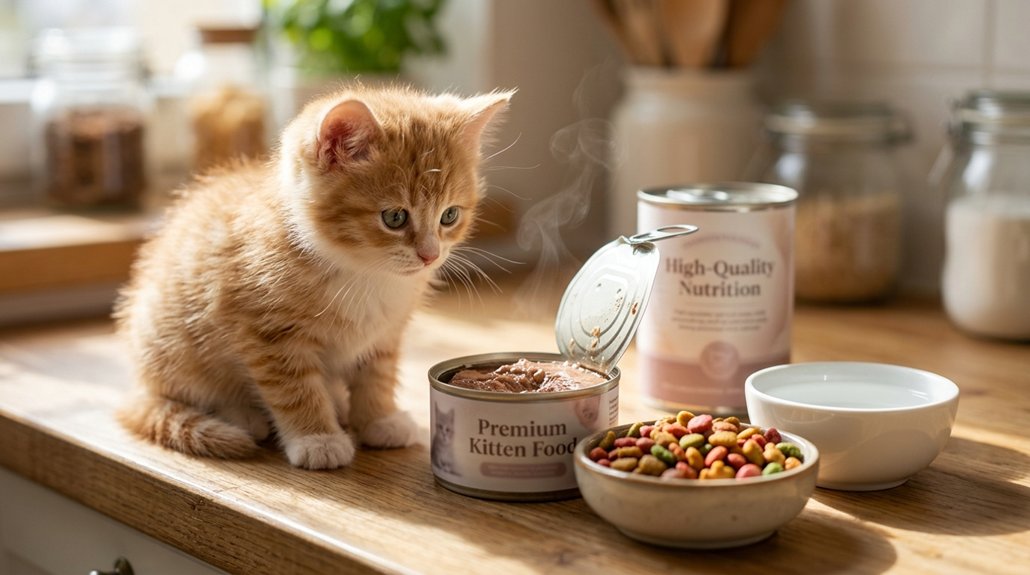
Confirming your kitten receives high-quality nutrition from the beginning is crucial for their development and well-being. Kitten feeding should emphasize a diet higher in protein and calories than what’s suitable for adult cats, addressing their unique growth needs. Follow nutritional guidelines set by AAFCO by selecting kitten-specific foods. Offer both wet and dry options; wet food aids hydration, aligning with a natural diet, while dry kibble maintains dental health and feeding ease. Ideally, serve 3-4 small meals daily, providing them with 250-280 calories, adapting to individual activity levels. Always guarantee access to fresh water, essential for proper hydration, with approximately half a cup for every 5 pounds of body weight. This meticulous care guarantees your kitten’s robust development.
Unleash Energy Through Engaging Morning Playtime
Begin your kitten’s day with 10-15 minutes of interactive play, ensuring engaging toys like feather wands and laser pointers are readily available. This not only allows your kitten to safely enhance their natural pouncing skills but also channels excess energy, reducing the likelihood of unwanted behaviors. A consistent morning play routine supports healthy physical and mental development, while strengthening your bond with your kitten.
Fun-Filled Toys for Interaction
Playtime is essential for kittens, providing an outlet for their boundless energy and aiding in the development of good behavior. Interactive toys such as feather wands and laser pointers offer sensory stimulation, encouraging your kitten’s hunting instincts and active engagement. A 10-15 minute morning session with these toys releases pent-up energy, promoting calmness and positive behavior throughout the day. To keep playtime intriguing and mentally stimulating, regularly rotating toys maintains novelty and prevents boredom. Incorporating puzzle toys that dispense treats not only provides physical activity but enhances cognitive skills and problem-solving abilities. Always supervise playtime to guarantee safety, avoiding toys that pose choking hazards. This approach assures your kitten enjoys play safely while nurturing their development.
Enhance Pouncing Skills Safely
Interactive play with varied toys not only stimulates your kitten mentally but also effectively channels their energy through activities that mimic natural hunting behaviors. Focus on enhancing your kitten’s pouncing techniques by engaging them in 10-15 minutes of active play each morning. Use toys like feather wands and laser pointers to facilitate instinctual pouncing. Incorporate a mix of soft balls and crinkle toys, providing diverse challenges to refine their skills.
Consistency is key, so establish a reliable morning routine that promotes bonding. Monitor your kitten’s reactions to adjust playtime intensity for peak playtime safety. Offer positive reinforcement, like treats or affection, to motivate active participation. Such structured playtimes guarantee your kitten’s energy is well-managed and their pouncing becomes both safe and skillful.
Make Midday Meals Social With Training
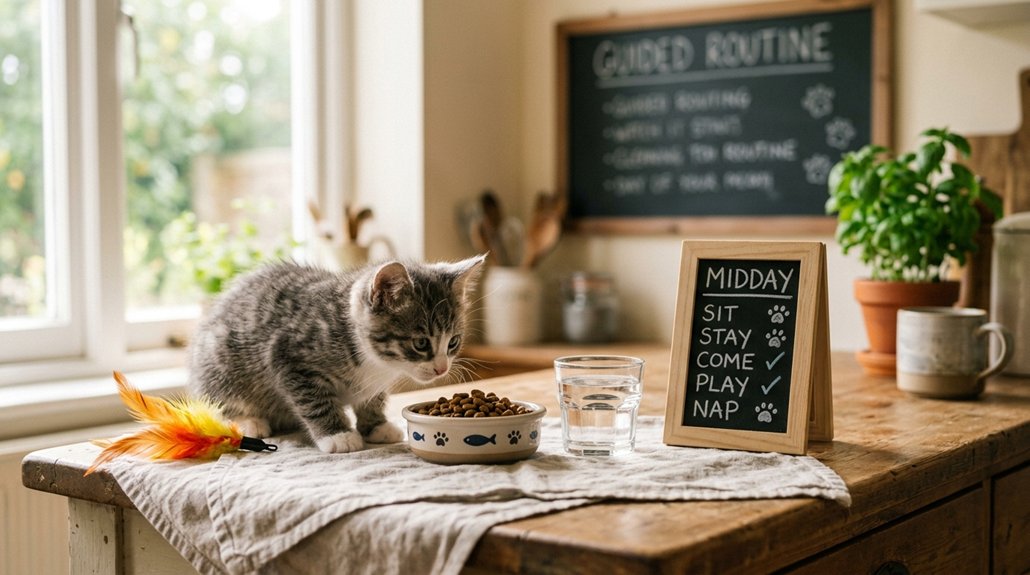
You can foster connection and teach name recognition by calling their name during meals and rewarding them with praise or treats. Here are steps to enhance this important time:
- Dedicate 5-10 minutes for socialization.
- Divide meals into smaller portions for balanced energy.
- Use gentle handling to build touch tolerance.
- Maintain consistency in routine for stability.
Create a Cozy Afternoon Break for Your Kitten
To guarantee your kitten’s afternoon break is both cozy and beneficial, focus on essential midday napping needs by providing a tranquil environment with a comfortable bed or blanket. Incorporate calm playtime activities, such as interacting with soft toys, to gently stimulate your kitten without interrupting their rest rhythm. Additionally, promote ideal hydration practices by making fresh water available, supporting a balanced routine that fosters healthy growth and development.
Midday Napping Essentials
As kittens require an impressive 18-20 hours of sleep daily, guaranteeing a proper midday napping environment is crucial for their growth and energy rejuvenation. This sleep duration considerably impacts their physical and mental development, enhancing the napping benefits for your furry companion. To maximize these benefits, create a cozy napping area that contributes to their well-being:
- Safe Space: Select a quiet area away from household noise to guarantee uninterrupted sleep.
- Comfortable Bedding: Offer soft bedding or a blanket that provides warmth and security.
- Consistency: Develop a midday napping routine that tunes into their natural tendency to sleep after play and meals.
- Disturbance-Free: Minimize disruptions to bolster their immune system and health.
These steps will support a harmonious and healthy kitten routine.
Calm Playtime Activities
When nurturing a kitten, it is crucial to create an afternoon routine that balances gentle stimulation and relaxation to support their growth and emotional health. Start by introducing interactive toy ideas, like wand teasers or small balls, engaging your kitten’s curiosity for 10-15 minutes. This play encourages energy expenditure without overstimulation. After active play, shift to relaxation techniques. Designate a cozy space with soft bedding and safe toys, promoting a tranquil environment. Enhance this setting with calm music or soft sounds to help your kitten unwind. Monitor their behavior for signs of tiredness, allowing rest or naps when needed. Establishing a consistent routine with a mix of play and cuddle time fosters comfort, bonding, and enhances well-being.
Optimal Hydration Practices
Securing ideal hydration is essential for a kitten’s development and health, as they require constant access to fresh water. Providing a variety of water sources encourages natural drinking behavior. Monitor hydration signs to spot dehydration early—lethargy and a dry mouth needing prompt veterinary attention. Here’s how you can support your kitten’s hydration:
- Maintain clean water bowls: Make sure they’re spotless and placed in quiet areas to reduce stress while drinking.
- Incorporate wet food: This not only supplies hydration but mimics a natural diet, enhancing overall health.
- Schedule breaks: Offer small meals and water during regular rest periods for maximum hydration.
- Monitor intake: Keep an eye on their drinking behavior to catch any issues early and guarantee their well-being.
Plan Energizing Evening Meals and Play Sessions
For many kitten owners, crafting a balanced evening routine is essential for their pet’s well-being. Schedule your kitten’s evening meal two to three hours before bedtime, aiding evening digestion and satisfying their hunger. Incorporating playful interactions post-dinner helps expend energy through toys like feather wands or laser pointers.
| Evening Activity | Purpose |
|---|---|
| Mealtime | Support digestion and satiety |
| Playtime | Mimic hunting behavior |
| Calm Reinforcement | Foster peaceful nighttime routine |
Ensure play sessions last 15-20 minutes, promoting restfulness afterward. Monitor energy levels; if your kitten remains too active, adjust play duration for ideal balance. Post-play, calmly reinforce with treats to instill tranquility. These strategies foster a peaceful end to your kitten’s day, enhancing their health and sleep quality.
Ensure Kitten Health With Routine Veterinary Visits
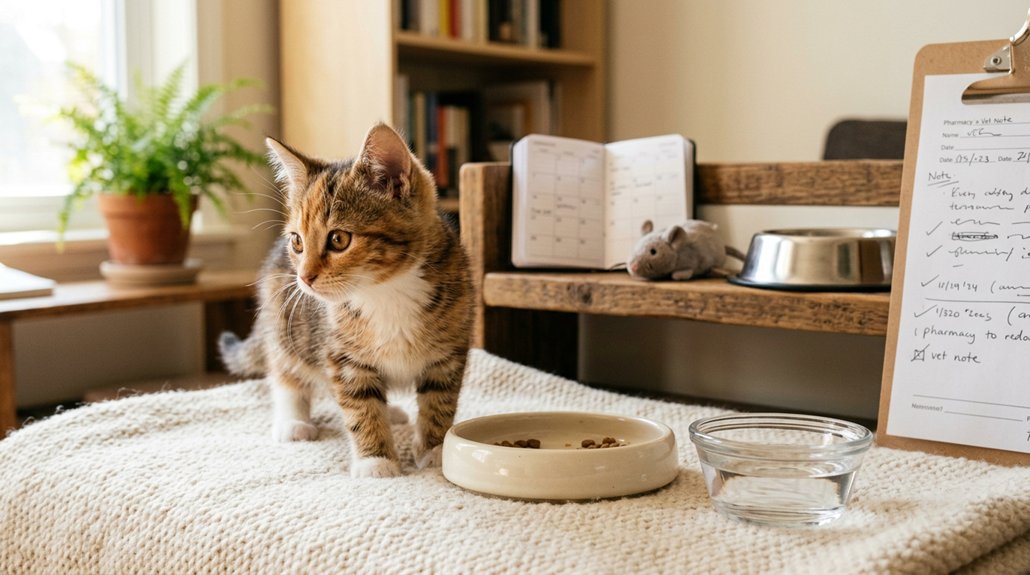
Starting your kitten’s veterinary care at the right time is vital for their well-being. Begin kitten check-ups at 6 to 8 weeks old to set a firm foundation of preventative care. It’s important to adhere to vaccination schedules, incorporating core vaccines like FVRCP and Rabies. Regular check-ups enable detailed health monitoring, which helps track growth and development, while also allowing for the early detection of health issues.
Consider discussing spaying options, ideally between 6 to 9 months, to promote long-term health and improved behavior. Maintain a health chart to facilitate organized growth tracking and make sure no detail is overlooked. Here are steps to guarantee success:
- Schedule timely vet visits
- Follow vaccination schedules
- Monitor growth consistently
- Discuss spaying options
Frequently Asked Questions
What Is the 3-3-3 Rule for Kittens?
The 3-3-3 rule for kittens involves three phases: initial acclimation over three days, trust-building and environmental exploration in three weeks, and socialization maturation in three months. Incorporate health checkups and socialization tips to guarantee healthy development.
What Should a Kitten’s Daily Routine Be?
Guarantee a kitten’s routine includes a feeding schedule with 3-4 meals of high-protein food. Implement playtime activities like morning and evening sessions to release energy and develop socialization skills for balanced growth and behavior.
What Is “I Love You” in Cat Language?
“I love you” in cat language involves slow blinking, gentle purring, affectionate head-butting, rhythmic kneading, and tail positioning. Understanding cat communication and feline behavior helps you recognize these acts of trust, love, and connection with your feline friend.
What Is a Cat’s Worst Enemy?
A cat’s worst enemy is stress, often exacerbated by common hazards like poor nutrition and environmental threats. You must manage feline stress through proper diet, socialization, and eliminating toxic dangers, ensuring your cat’s overall health and well-being.
Conclusion
Nurturing your kitten’s routine is like crafting a masterpiece; each brushstroke—be it nutrition or play—paints a vibrant picture of health. Prioritize high-quality nutrition and invigorating play to release their spirited nature. Midday training enriches their mind while cozy afternoon rests recharge their tiny engines. As evening falls, let engaging meals and play sessions be the soothing lullabies. Regular vet visits are your safety net, ensuring every detail of their health tapestry is intact, weaving a life brimming with energy.