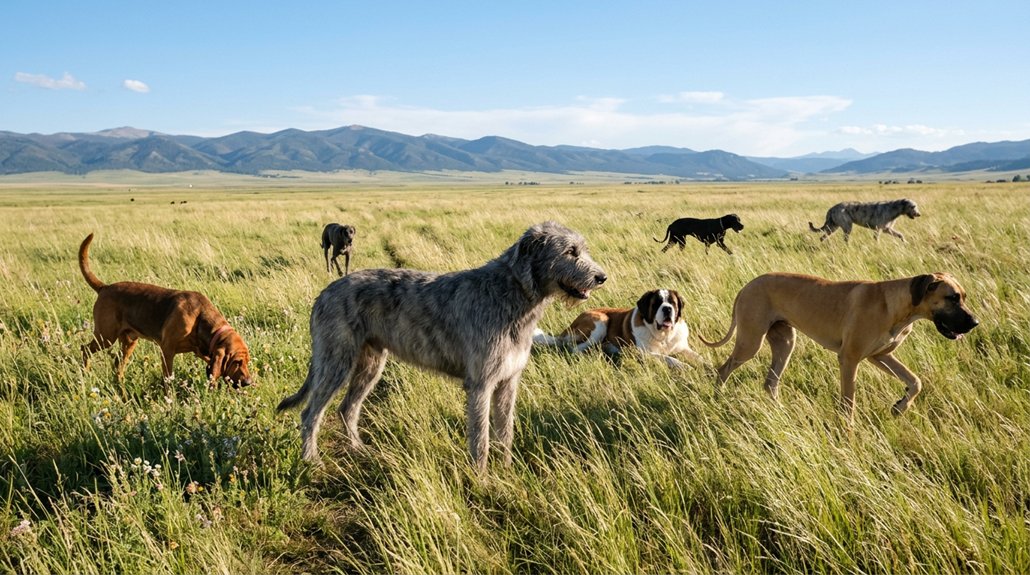
If you’re considering large or high-energy dog breeds, it’s crucial to provide ample space for their well-being. Breeds like Australian Shepherds, Belgian Malinois, and Rhodesian Ridgebacks thrive with abundant room for exercise and mental stimulation. Spacious environments support their natural instincts and prevent frustration-related behavioral issues. Large spaces also help maintain their physical health and minimize obesity risks. Understanding these spatial needs guarantees a harmonious living experience. There’s plenty more to explore about accommodating these dynamic companions.
Key Takeaways
- Large dog breeds like Anatolian Shepherds need expansive environments to exercise and fulfill natural protective instincts.
- High-energy breeds such as Australian Shepherds and Belgian Malinois thrive in large yards for vigorous exercise routines.
- Bullmastiffs benefit from ample outdoor space for relaxation and regular outdoor access suits their gentle personality.
- Rhodesian Ridgebacks require spacious, fenced areas for high-energy activities, maintaining physical and mental health.
- Active breeds like Boxers need large outdoor areas for family activities to reduce risks of behavioral issues.
Why Large Dog Breeds Need Spacious Environments
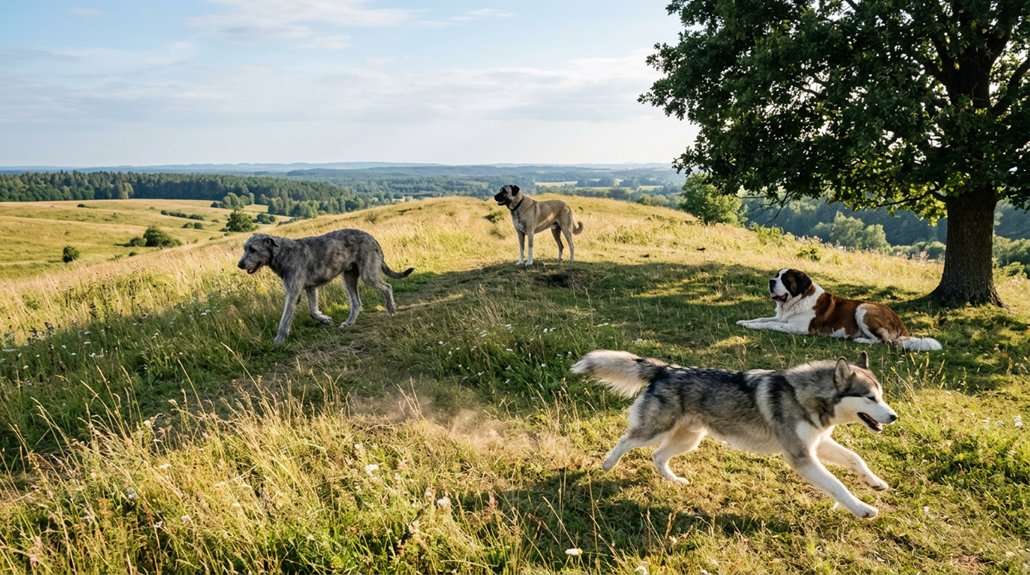
While you might find smaller dogs content in more confined spaces, large dog breeds like the Anatolian Shepherd and Bullmastiff require spacious environments for ideal well-being. These breeds often experience frustration and anxiety in limited areas, which can lead to behavioral issues stemming from inadequate physical activity. You’ll notice that ample space allows them to exercise fully, satisfying their high energy needs and reducing the chances of destructive behaviors. Moreover, access to larger areas directly impacts physical health, helping prevent obesity and associated health problems. This spatial requirement supports their natural instincts—exploring and patrolling—as seen in breeds like the Boxer and German Shepherd, ensuring they maintain their physical health and mental satisfaction. For optimum care, prioritize providing them room to roam freely.
High Energy Breeds: Understanding the Space Requirements
In addition to large dog breeds that benefit from spacious environments, high-energy breeds exhibit similar spatial needs driven by their innate vigor and activity levels. Breeds like Australian Shepherds and Border Collies thrive in large yards or open fields, facilitating their natural exercise routines. Pointers and Vizslas, known for athleticism, require extensive areas to engage in both physical and mental stimulation, preventing boredom and mischief. High-energy dogs such as Boxers and Bull Terriers need ample outdoor space for play to avert behavioral problems. Furthermore, breeds with instincts for herding or hunting, like the Rhodesian Ridgeback, require room to express these drives. Ultimately, regular activity in spacious areas is essential for the happiness and health of these breeds.
Anatolian Shepherds: Room to Roam
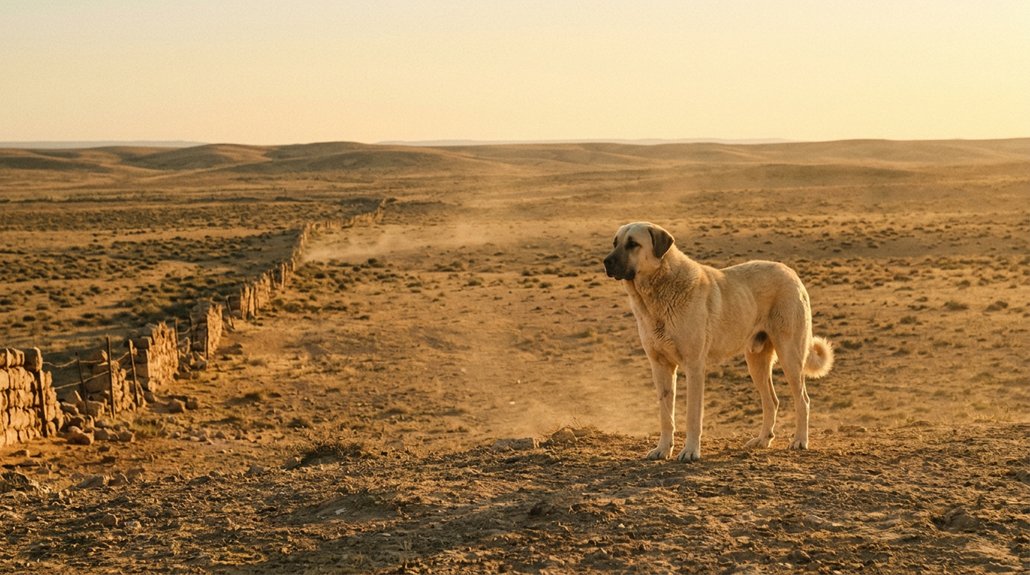
You should know that Anatolian Shepherds, given their herding instincts, require wide-open spaces to engage in their natural behaviors. Their active lifestyle mandates an environment where they can roam, explore, and patrol large areas. Without sufficient room to move freely, these dogs risk developing frustration and destructive habits.
Herding Instincts Demand Space
Anatolian Shepherds, with their powerful herding instincts, necessitate expansive environments to thrive both physically and mentally. Their strong herding behavior and territorial instincts require at least an acre of land. Such space enables them to engage in boundary checks, reducing frustration and potential behavioral issues like restlessness or destructiveness. These instinctual behaviors are essential for their well-being.
| Key Needs | Description | Benefits |
|---|---|---|
| Herding behavior | Expansive area for boundary patrolling | Prevents behavioral issues |
| Territorial instincts | Large territory for patrolling duties | Fulfillment of protective role |
| Physical activity | Space for running and exploring | guarantees mental and physical fitness |
Providing this space allows Anatolian Shepherds to flourish, assuring they can fulfill their roles as natural guardians and herders.
Wide-Open Spaces Essential
Understanding the space requirements of Anatolian Shepherds highlights the importance of their environmental needs. These dogs are natural herders with strong roaming requirements, thriving in expansive outdoor spaces that enable them to patrol and remain mentally engaged. A confined environment, like a small yard or apartment, is inadequate and likely to trigger frustration and undesirable behaviors. The Anatolian Shepherd requires a large backyard where it can jump, run, and participate in outdoor activities that align with its heritage. Extensive daily exercise is essential to maintain physical health and mental stimulation. These dogs excel in settings that allow them to monitor large territories, which satisfies their instinctual drive for observation. Providing broad areas to roam guarantees your Anatolian Shepherd’s well-being and happiness.
Active Lifestyle Requirements
For individuals considering an Anatolian Shepherd, it’s crucial to recognize their active lifestyle requirements driven by their instinctual need for space and movement. This breed flourishes with outdoor activities and needs vast areas to roam, unsuitable for small yards or apartment living. Their natural herding instincts make them excellent at patrolling large territories, preventing frustration and boredom.
Adequate Room | Outcome
— | —
Large backyard | Healthy behavior
Small yard | Negative behavior
Apartment living | Increased frustration
Daily outdoor activities | Mental stimulation
Limited space | Boredom risks
These shepherds benefit immensely from social interactions that replicate their environment’s dynamic nature, promoting mental and physical well-being. Without a spacious setting, they may develop negative behaviors, highlighting the importance of substantial territory for their overall health and happiness.
Australian Shepherds: High-Energy Living
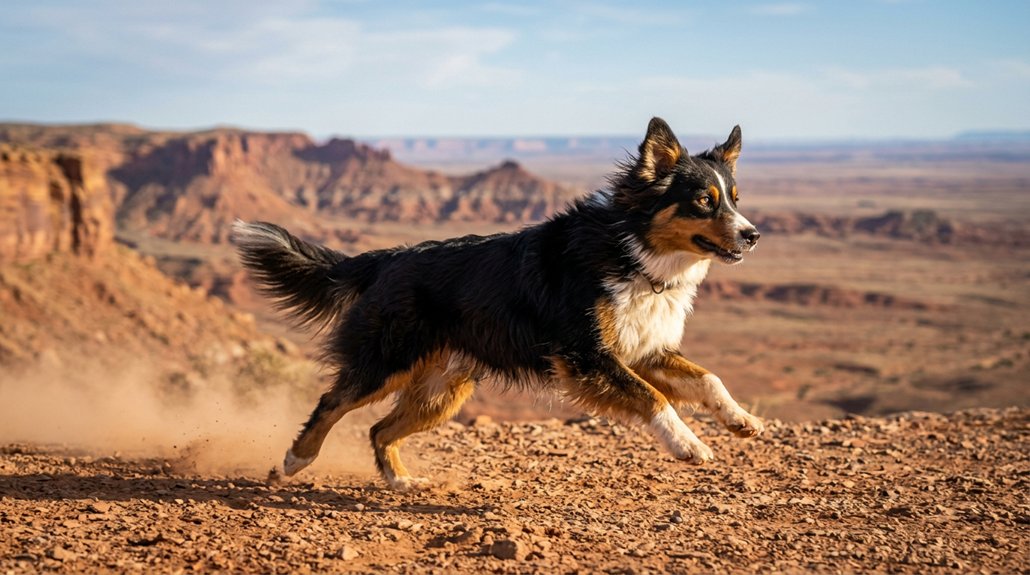
Though Australian Shepherds might charm you with their striking looks and alert personalities, their high-energy nature demands careful consideration of their living environment. These intelligent dogs thrive on structured training techniques and backyard activities tailored to their herding instincts. Without ample space, they risk becoming bored, leading to potentially destructive behavior. Ideally, engage their minds with agility training, herding tasks, and vigorous exercise for at least one hour daily. Their instinct to herd can sometimes manifest as attempts to guide children or smaller animals, underscoring the need for a spacious environment. Rural settings or homes with large yards offer Australian Shepherds the freedom to explore and play, ensuring their mental and physical needs are met thoroughly and effectively.
Belgian Malinois: Keeping Them Active
Australian Shepherds, with their remarkable energy, have marked the importance of a spacious environment to satisfy their herding instincts. Similarly, the Belgian Malinois is a breed that thrives on activity and requires space for effective exercise routines. This highly intelligent and energetic dog demands at least 1-2 hours of vigorous daily exercise to maintain ideal health. Engaging in activities like agility, tracking, and obedience is crucial for mental stimulation and prevents boredom-related destructive behaviors. A large, secure area to roam freely is essential, given their strong herding instincts. Inadequate exercise and confinement can lead to behavioral issues, underscoring the necessity of a spacious living environment to keep Belgian Malinois active and content. As a responsible owner, provide stimulating challenges.
Keeping Wandering Bloodhounds Engaged
Bloodhounds, renowned for their unparalleled scent-tracking abilities, require strategic engagement to prevent wandering. These breeds have an instinctual drive to explore, often leading them across extensive terrains while following a scent. To mitigate this, providing ample outdoor space is imperative. Regular exercise and play in a secure, expansive yard minimize boredom, deterring potential escape behaviors. Integrating scent games into their routine effectively channels their tracking instincts, ensuring mental stimulation. Consider activities like hide-and-seek with scented objects or organized tracking tasks. These engage Bloodhounds using their natural skills, reducing tendencies to roam. As a precautionary measure, microchipping is advisable should your Bloodhound follow an intriguing scent too far from their territory. Engage them thoughtfully to keep their wandering nature in check.
Boxers: Space for Playfulness
When considering a Boxer, you must prioritize a spacious environment to accommodate their boundless energy and propensity for vigorous play. These dogs thrive with an active family that can match their enthusiasm for outdoor activities and offer interactive play sessions. Without sufficient space and activity, Boxers are prone to boredom-related destructive behaviors, underscoring the necessity of a large play area.
Energy Requires Large Play Area
Because Boxers are inherently high-energy dogs, they thrive in environments that offer ample space for play and exercise. Their boxer behavior demands an expansive outdoor setting where they can indulge in playtime activities like chasing games and fetch. This robust play not only serves as an outlet for their excess energy but also enriches their mental stimulation through exploration. Their playful nature benefits greatly from a spacious backyard, enabling Boxers to express natural exuberance and prevent boredom-related behavioral issues. The need for a large play area isn’t just about physical fitness; it’s essential for their overall well-being. Providing a stimulating environment with generous space guarantees Boxers remain happy and healthy, preventing issues linked to insufficient exercise and allowing for vigorous activity and interaction.
Active Family Compatibility Needed
For families considering a Boxer, ensuring ample outdoor space is essential for their boundless energy and well-being. Boxers thrive on family activities that involve running, chasing, and playing. A minimum of one hour of exercise is vital daily. By engaging in outdoor games with children, Boxers not only strengthen family bonds but also prevent indoor boredom, which might lead to destructive behaviors.
- Family Activities: Boxers excel in games like fetch or tug-of-war, enhancing the familial bond.
- Indoor Exercises: On days when outdoor play isn’t possible, interactive toys or agility training indoors can suffice.
- Risk Mitigation: Providing sufficient play areas reduces the risk of behavioral issues caused by unspent energy.
Adequate space is necessary for ensuring Boxers remain well-adjusted and content.
Bullmastiffs: Comfortable Outdoor Lounging
Bullmastiffs, renowned for their imposing size and gentle disposition, are canine companions that demand ample outdoor space to truly thrive. Understanding the bullmastiff temperament, it becomes evident that despite their formidable build—often exceeding 120 pounds—they possess a surprisingly laid-back character. Their primary preference leans toward lounging rather than engaging in high-energy pursuits. Consequently, backyard essentials include a spacious environment allowing free movement and comfortable settling. Ensuring a generous outdoor area is vital in accommodating their physical needs, promoting contentment and well-being. Regular access to this space fosters a lifestyle that supports their innate relaxed demeanor. Therefore, having a sufficiently sized backyard is non-negotiable for Bullmastiffs to thrive, ensuring their serene, tranquil nature is nurtured effectively.
Rhodesian Ridgebacks: Space Considerations for Happiness
Just as Bullmastiffs benefit from ample space, Rhodesian Ridgebacks also demand environments where they can truly stretch their legs and satisfy their vigorous energy levels. Originating as a lion-hunting breed, their exercise needs are significant and require access to spacious, fenced outdoor areas. These environments not only meet their physical demands but also address their socialization importance, helping to prevent boredom-related issues.
- Regular Exercise: Engage in daily activities like brisk walks or runs to keep them stimulated.
- Spacious Yard: A large fenced yard is essential for their unrestricted play.
- Social Interaction: Facilitates mental health, reducing anxiety and frustration.
Confined spaces aren’t suitable, as lack of room leads to adverse behavior, impacting their well-being negatively. Adequate space guarantees a happy, thriving Ridgeback.
Frequently Asked Questions
How Can Apartment Dwellers Accommodate Large and High-Energy Dog Breeds?
You can optimize space management by organizing living areas efficiently. Implement exercise alternatives such as interactive toys, scheduled walks, or dog parks visits. These methods accommodate large, high-energy breeds in apartments, ensuring physical activity and mental stimulation.
What Indoor Activities Can Help Compensate for Limited Outdoor Space?
Don’t worry about limited space; indoor agility courses and puzzle games effectively stimulate your dog mentally and physically. These activities enhance their cognitive development, ensuring they remain engaged and happy in confined living environments.
Are There Specific Toys Recommended for Dogs With High Energy Levels?
Absolutely, high energy toys like treat-dispensing puzzles and interactive play equipment, such as agility kits, are scientifically designed to satisfy dogs’ mental and physical needs effectively, enhancing their focus and reducing excess energy through structured stimulation.
How Can Training Help Manage a Dog’s Space-Related Needs?
Ironically, giving a dog more space doesn’t always solve behavioral issues. Training techniques combined with behavioral enrichment guarantee a dog’s energy is properly channeled, minimizing destructive tendencies and maximizing contentment in any environment. You’re the real master here.
What Are the Signs a Dog Needs More Space to Roam?
You’ll notice behavioral signs indicating a dog’s need for space, such as restlessness, excessive barking, or destructive behavior. Elevated energy levels and specific roaming requirements signal unmet space preferences, necessitating more room for mental stimulation and physical activity.
Conclusion
To summarize, accommodating ample activity areas for agile, active, and adventurous dog breeds like Anatolian Shepherds, Australian Shepherds, and Belgian Malinois is indispensable. Providing proper play spaces for persistent pups such as Boxers and Bullmastiffs enhances their happiness and health. Meanwhile, managing the meandering minds of Bloodhounds and Rhodesian Ridgebacks with spacious settings fosters their fulfillment. Remember, rewarding routines in robust environments are essential for the well-being of these wonderful, whiskered wanderers.