
To guarantee your Bulldog thrives, focus on their unique brachycephalic needs. Maintain daily exercise with short walks, consistent grooming by cleaning wrinkles and ears, and a structured feeding schedule with high-quality puppy food. Employ positive reinforcement and early socialization in training. Bulldogs are gentle and affectionate, requiring attention and interaction. Manage resource guarding and encourage exploration at their pace. With these strategies, you can enhance your Bulldog’s health and happiness, and there’s more valuable information awaiting you.
Key Takeaways
- Bulldogs require daily wrinkle cleaning and structured feeding to maintain health.
- Early training and socialization within the first 20 weeks shape a well-tempered Bulldog puppy.
- Positive reinforcement and crate training ensure effective Bulldog behavior management.
- Bulldogs are gentle and affectionate, ideal as loyal family pets.
- Daily exercise and consistent grooming, including regular baths, keep Bulldogs healthy and happy.
How to Keep Your Bulldog Happy and Healthy
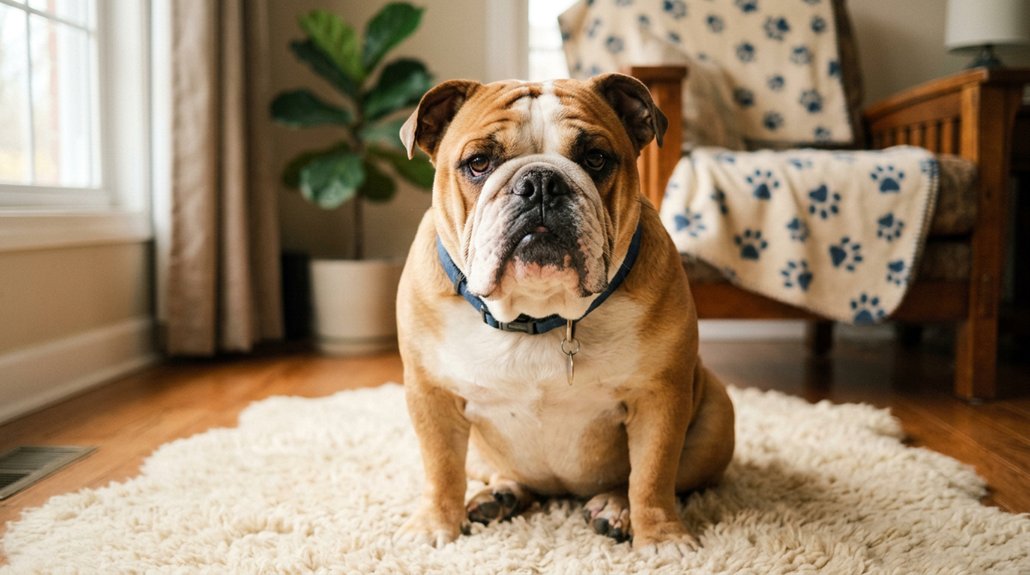
To keep your Bulldog happy and healthy, it’s essential to focus on their unique needs, stemming from their brachycephalic structure. Bulldog exercise should include short walks and indoor playtime, targeting around one hour daily. It’s vital to avoid intense activities, ensuring their breathing remains comfortable. Pay attention to bulldog nutrition by adhering to a structured feeding schedule with high-quality puppy food. This supports efficient digestion and encourages good potty habits. Consistent grooming, such as daily wrinkle cleaning, prevents skin infections, while maintaining dental hygiene and keeping tail pockets clean boosts overall health. Finally, frequent ear cleaning is necessary to avoid potential issues. Implementing these strategies promotes well-being, allowing your Bulldog to enjoy a vibrant life, tailored to their specific needs.
Training Tips for Your Bulldog
Although Bulldogs are renowned for their charming personalities, their stubborn nature demands careful attention when it comes to training. From the outset, focus on positive reinforcement techniques to encourage desired behaviors consistently. Reward them with treats or praise when they obey basic commands like “Sit,” “Stay,” and “Leave-It” during the vital first 20 weeks of their life. To manage resource guarding, apply the trade-up method with “Drop It,” easing anxiety over releasing prized objects. Incorporate crate training, which is essential for minimizing chewing and preventing accidents. Introduce the crate as a safe haven, ensuring positive associations. Implement a structured potty training schedule, giving your Bulldog breaks after meals and play to foster reliable potty habits as they mature into disciplined adults.
Step-by-Step Guide to Raising a Bulldog Puppy
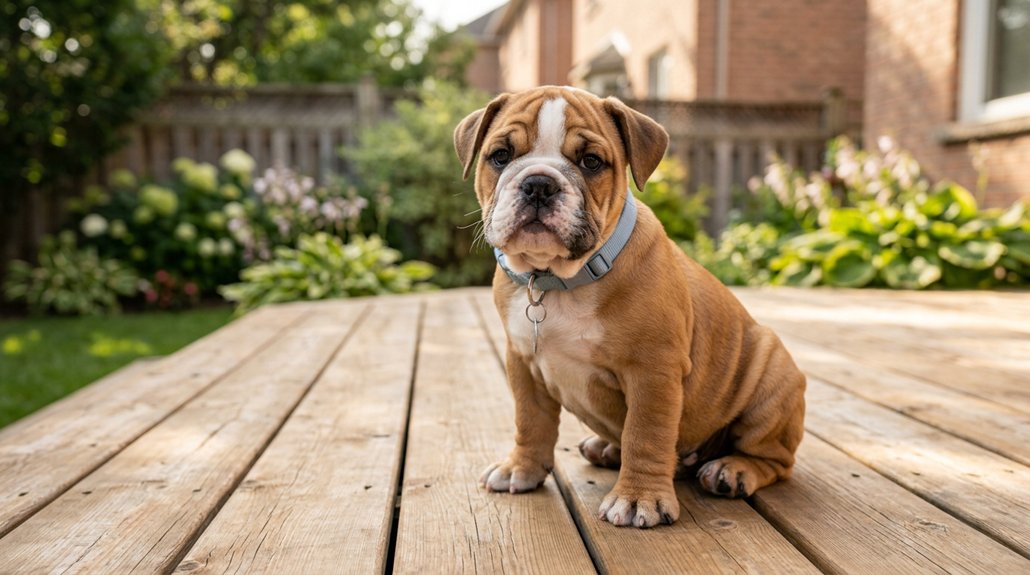
When you welcome a Bulldog puppy into your home, begin their journey by focusing on early training and socialization, capitalizing on the important learning window of their first 20 weeks. Start with socialization techniques by introducing them to diverse environments, people, and friendly dogs. Encourage exploration at their own pace to nurture a well-rounded temperament. Concurrently, crate training is essential; it establishes a safe haven, discourages destructive behavior, and complements potty training. Offer positive reinforcement as your puppy acclimates to the crate, ensuring routines are consistent. Potty training involves scheduled outdoor trips every couple of hours, coupled with specific cues. Teaching basic commands like “Sit,” “Stay,” and “Leave-It” enhances obedience. All these efforts contribute to raising a confident, well-adjusted Bulldog.
Bulldog Health and Grooming Essentials
Caring for your Bulldog’s health and grooming is a fundamental aspect of responsible pet ownership. Prioritize bulldog skin care by cleaning their skin folds daily to fend off infections. Regular biweekly baths with a mild antibacterial antifungal shampoo aid in maintaining their skin’s health due to their inclination toward skin conditions. Brush their coat daily to minimize shedding and guarantee it remains healthy. For their ears and nails, incorporate weekly cleanings and trimming to round out their grooming regimen.
Equally, focus on dental hygiene by brushing their teeth daily to combat dental diseases, a prevalent concern in Bulldogs. Regular veterinary check-ups are essential, as Bulldogs are prone to issues like brachycephalic obstructive airway syndrome or hip dysplasia. Monitor their health vigilantly to prevent complications.
What to Expect From Bulldog Temperament

After establishing a robust health and grooming routine, understanding your Bulldog’s temperament offers insight into a fulfilling companionship. Bulldogs, with their gentle and affectionate nature, are ideal family pets, showcasing key bulldog personality traits like loyalty and protectiveness. These dogs form deep bonds with their families, often showing a desire to be closely involved in daily activities. Despite their calm demeanor, they may display a stubborn streak, necessitating consistent training and positive reinforcement for effective obedience.
Bulldog social behavior thrives on early socialization to guarantee they’re comfortable in different situations. This early exposure helps them interact warmly with children and other pets. Remember, Bulldogs crave attention and affection, making them enthusiastic participants in family life, solidifying their status as cherished companions.
Frequently Asked Questions
What Kind of Toys Are Best Suited for Bulldogs?
You’ll want to choose toys that emphasize durability and engage them through interactive games. Look for tough chew toys and puzzle feeders, as these encourage mental stimulation and suit bulldogs’ powerful jaws and playful nature.
How Can I Help My Bulldog Adjust to a New Home Environment?
Start with gradual initial introductions to each room, offering environmental enrichment like chew toys and interactive puzzles. Establish a consistent routine to ease stress and provide a cozy, designated space for your bulldog to relax.
Can Bulldogs Live Comfortably in Apartments?
Yes, bulldogs can thrive in an apartment lifestyle. They’re low-energy and have minimal space requirements. While it’s tempting to think they need more space, regular walks and mental stimulation guarantee they’re comfortable and healthy in smaller areas.
What Are Some Common Myths About Bulldog Behavior?
You might believe bulldog aggression myths and think they’re naturally hostile, but it’s not true. Another misconception is their intelligence; they’re actually quite smart with the right training and can learn commands effectively despite their stubbornness.
How Do Seasonal Changes Affect Bulldogs?
When seasons change, your bulldog’s health may face hurdles, like a leaf caught in the wind. Watch for seasonal allergies causing discomfort. Make certain they’re hydrated, keep an eye on itching, and consult your vet if needed.
Conclusion
Caring for a bulldog is like tending to a delicate balance between strength and serenity. With the right training, dedication, and attention to their unique needs, your bulldog will thrive. Keep their health in check, and provide consistent grooming and enriching activities. Understand their temperament, and you’ll have a loyal companion. Remember, a happy bulldog is a reflection of your efforts—consistent care guarantees they’re not just pets but cherished family members.