
When choosing the best dog breeds for first-time families, consider friendly and adaptable companions like Golden Retrievers, Cavalier King Charles Spaniels, or Basset Hounds. Each offers a great mix of friendliness, patience, and low maintenance. French Bulldogs and Labrador Retrievers are also excellent due to their easygoing nature and minimal grooming needs. These breeds are both child-friendly and suitable for various living spaces. Discover why these breeds fit perfectly with your busy lifestyle and family dynamics next.
Key Takeaways
- Golden Retrievers are friendly, affectionate, and highly trainable, making them excellent for first-time families.
- Labrador Retrievers are adaptable, gentle, and great with children, ideal for novice dog owners.
- Cavalier King Charles Spaniels offer deep affection and adaptability, suitable for various family dynamics.
- Basset Hounds’ calm nature and low maintenance needs fit first-time dog owners.
- French Bulldogs require minimal grooming and are easygoing, perfect for busy families with limited space.
Identify Your Family’s Needs
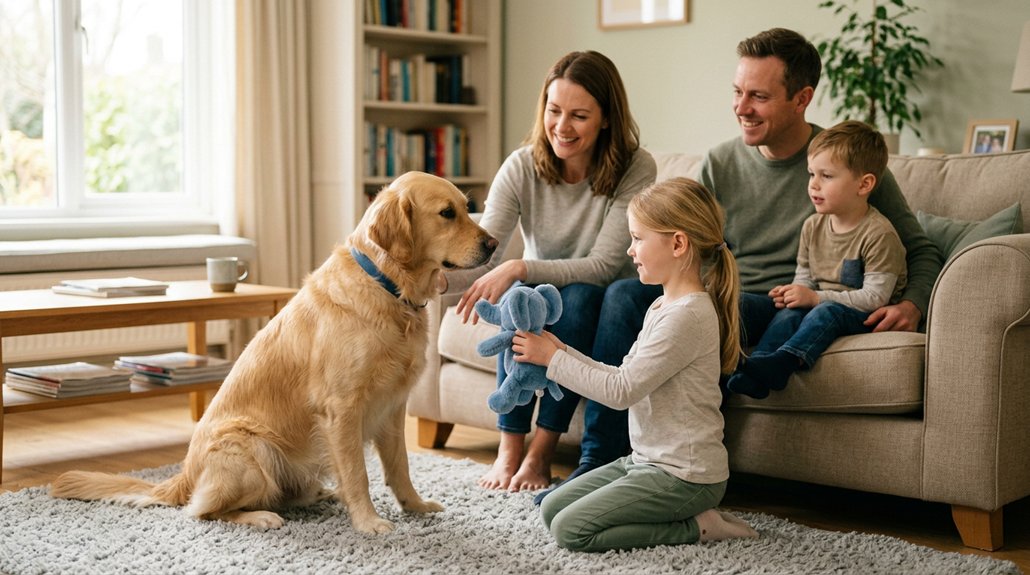
When considering the addition of a dog to your family, it’s important to identify your unique needs and circumstances. First, evaluate your family’s daily routine to understand how dog ownership fits into your lifestyle. Your time availability greatly affects the attention and care you can provide. Consider the ages and activity levels of your children; matching a breed to their energy guarantees harmony. Assess your living space—larger dogs need more room, while smaller breeds adapt to confined areas. Budget is vital; different breeds have varying needs for veterinary care, food, and grooming. Finally, identify traits you value, like friendliness with kids or low grooming demands. Aligning these aspects with a compatible breed guarantees a happy family addition.
Essential Factors Before Bringing a Dog Home
After identifying your family’s needs, let’s explore important aspects to address before welcoming a dog into your home. First, assess your family’s lifestyle and daily schedule. Determine how much time can be realistically devoted to dog care, training, and exercise. Dog training essentials are crucial, so consider what’s needed to guarantee the pup integrates smoothly. Family safety tips are essential, especially if you have young kids, as some breeds interact better with children. Next, evaluate your living space—smaller breeds might thrive in apartments, while larger breeds need room to move. Research various breed characteristics to match your family’s energy levels and grooming preferences. Finally, create a budget for food, vet care, toys, and potential training classes, understanding costs vary by breed.
Top Dog Breeds for First-Time Families
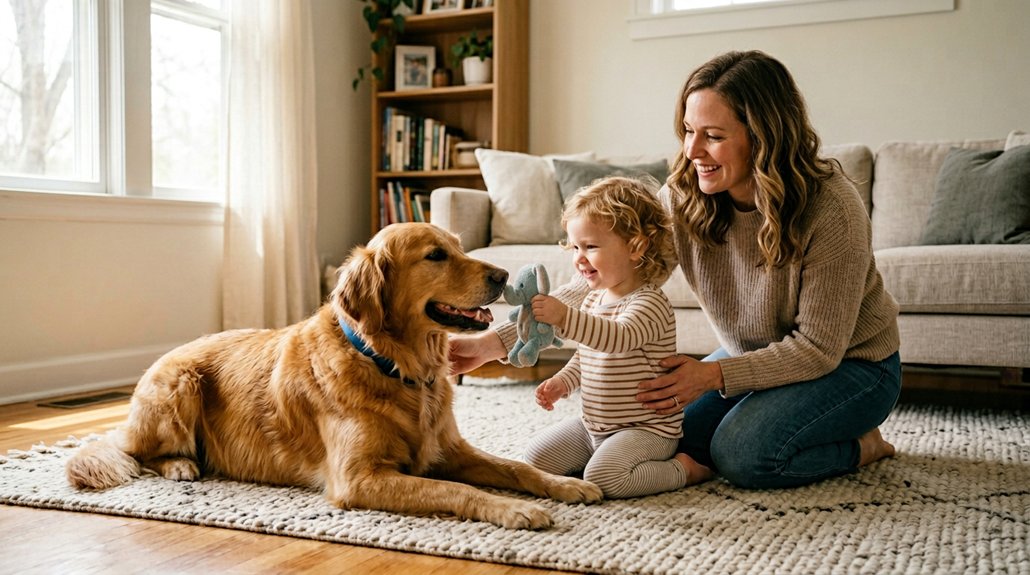
When considering a dog breed for your family, focus on characteristics that match your lifestyle, like temperament and care requirements. Breeds such as Golden Retrievers and Cavalier King Charles Spaniels combine friendly nature and affection, making them perfect companions for children. If you’re looking for lower maintenance, Basset Hounds and French Bulldogs offer an easygoing attitude with minimal grooming needs, fitting seamlessly into busy households.
Ideal Family-Friendly Breeds
| Family Situation | Ideal Breed |
|---|---|
| Active families | Golden Retriever, Beagle |
| Apartment living | Cavalier King Charles Spaniel |
| Busy households | Labrador Retriever, Pug |
Key Temperament Traits
As you explore the best dog breeds for first-time families, understanding the key temperament traits of these breeds is essential. Labrador Retrievers, with their gentle and friendly dog personality traits, make them excellent companions, easily adapting to the energy of children. Similarly, Cavalier King Charles Spaniels exhibit an affectionate temperament, offering a balance of companionship and independence. Golden Retrievers are known for their loyalty; their trainability and patience are crucial family compatibility factors, as they are both protective and approachable.
French Bulldogs, on the other hand, have a laid-back demeanor and minimal exercise requirements, seamlessly fitting into hectic households. Finally, Basset Hounds, with their calm nature, form deep family bonds and enjoy leisurely activities, making them a smart choice for first-time dog owners.
Maintenance and Care Needs
Choosing the right dog breed for your family involves understanding the maintenance and care needs of each potential pet. Here’s how different breeds match up regarding grooming requirements and exercise needs:
- Golden Retrievers: These friendly dogs require regular grooming and substantial exercise, perfect for families with active lifestyles.
- Labrador Retrievers: Adaptable and trainable, labs need moderate exercise and minimal grooming, fitting well with a busy schedule.
- Cavalier King Charles Spaniels: Affectionate and small, they enjoy moderate exercise and have manageable grooming needs, ideal for apartment living.
- French Bulldogs: With low exercise and grooming needs, they’re a low-maintenance option for families with tighter schedules.
Considering these factors guarantees you choose a breed that aligns with your family’s lifestyle.
Best Breeds for Apartments
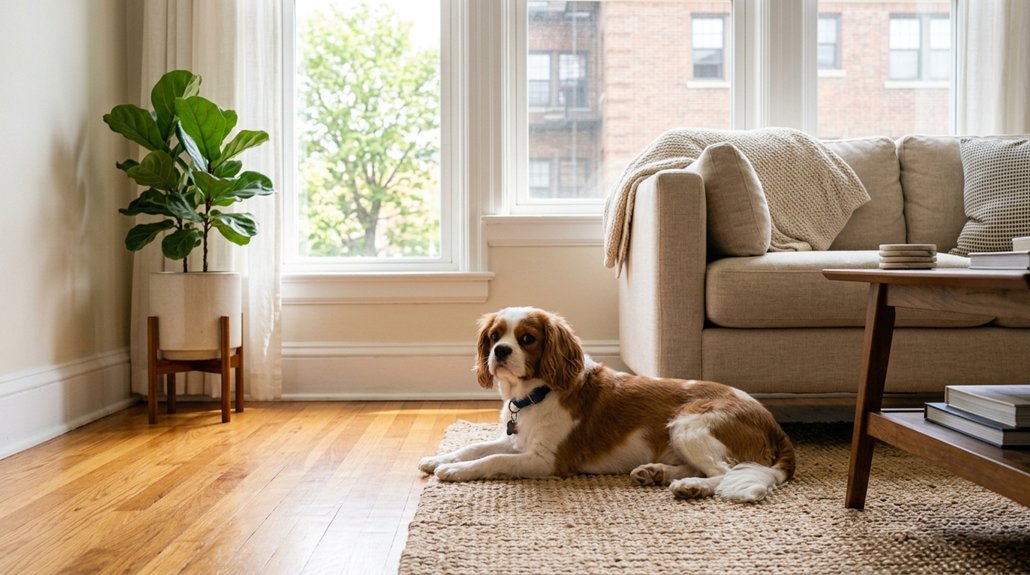
Finding the perfect dog breed for apartment living involves understanding attributes like size, energy levels, and adaptability to confined spaces. Apartment friendly breeds like French Bulldogs, Pugs, and Chihuahuas are top picks due to their compact size and minimal space needs. When considering dog size, smaller breeds offer the advantage of easy maneuverability in tight areas. Breeds with lower energy levels, such as Basset Hounds and Cavalier King Charles Spaniels, fit seamlessly into smaller homes, requiring only moderate indoor play to stay content. Consider non-barking breeds like Greyhounds and Shih Tzus to reduce noise disturbances. For those with allergy concerns, hypoallergenic breeds like Poodles and Maltese are excellent, while Dachshunds and Italian Greyhounds adapt well to limited indoor spaces.
Gentle and Friendly Dogs for Kids
You’ll find that selecting a dog with the right temperament is essential for fostering a healthy relationship between your kids and their new furry friend. Breeds like Cavalier King Charles Spaniels and Golden Retrievers excel in bonding quickly with families, providing affectionate companionship and gentle interactions, which are critical for nurturing children’s emotional development. These breeds not only adapt well to different family dynamics but also guarantee a harmonious environment that supports your child’s growth and well-being.
Ideal Temperament for Families
When considering the best dog breeds for families with children, it’s important to prioritize temperament, as gentle and friendly dogs make the most harmonious companions. Integrating such dogs into your family requires understanding specific dog personality traits and using effective family integration strategies. Here are some breeds that excel in family environments:
- Cavalier King Charles Spaniel: Known for their affectionate nature, these dogs bond deeply with kids.
- Labrador Retriever: Their friendly and patient demeanor, along with trainability, makes them perfect for children of all ages.
- Golden Retriever: Loyalty and gentleness define these dogs, forming strong family bonds.
- Poodle: Available in various sizes, they are intelligent and gentle with children, ensuring positive interactions.
Selecting these breeds enhances family harmony through their loving temperaments.
Promoting Healthy Child-Dog Relationships
Selecting the right dog breed for your family isn’t just about temperament; fostering healthy relationships between children and their canine companions is equally essential. Gentle breeds like the Cavalier King Charles Spaniel and Basset Hound create a serene atmosphere perfect for nurturing child dog interactions. Meanwhile, friendly breeds such as Golden Retrievers and Labrador Retrievers excel in building trust through loyalty and patience with children. Encouraging children to engage in social activities with these breeds promotes empathy and responsibility.
| Breed | Interaction Type | Energy Level |
|---|---|---|
| Cavalier King Charles | Peaceful and nurturing | Low |
| Basset Hound | Gentle companionship | Low |
| Golden Retriever | Playful and loyal | Medium |
| Labrador Retriever | Active and trusting | Medium |
| French Bulldog | Affectionate and calm | Low |
Proper training and early socialization guarantee that interactions remain friendly and positive.
Breeds That Bond Quickly
While choosing a dog for your family, focusing on breeds that bond quickly with children can guarantee a harmonious household. Some breeds offer ideal social interaction and emotional support for kids:
- Golden Retrievers: Renowned for their loyalty and gentle nature, they make excellent companions, fostering strong family bonds.
- Cavalier King Charles Spaniels: These affectionate, small dogs thrive in family settings, enjoying cuddles and playtime without demanding constant attention.
- Labrador Retrievers: With their friendly, outgoing demeanor, they facilitate quick bonding, providing companionship and playful interaction.
- Beagles: Known for their social and joyful disposition, they engage actively with kids and adapt easily to family routines.
Selecting any of these breeds guarantees your children receive emotional support and enriching social interaction.
The Easiest Dogs for Busy Families
For busy families seeking the perfect canine companion, some dog breeds offer a perfect blend of ease and adaptability. French Bulldogs and Basset Hounds stand out with their low exercise demands and calm demeanor. If you’re looking for friendly dog training tips, consider a Labrador Retriever. They’re not only highly trainable but also require only moderate, quick exercise, making them ideal for bustling homes. Cavalier King Charles Spaniels offer affection without needing constant attention, providing a pleasant balance. Surprisingly, Greyhounds, despite their racing heritage, need minimal exercise and thrive with short play sessions. Finally, Pugs boast charming personalities and adapt easily, with low grooming needs, perfectly suiting the chaotic schedules of busy families.
How to Handle Common New Dog Challenges
Once you’ve chosen an easy-going breed that matches your busy family lifestyle, you’ll want to tackle some common challenges that can arise with a new dog. Here’s how to handle issues like dog anxiety and chewing:
- Establish a Routine: Consistent feeding, walking, and training times help your dog adjust, reducing anxiety and fostering security.
- Use Positive Reinforcement: Praise and treats are powerful tools in encouraging good behaviors, strengthening your bond.
- Provide Chewing Solutions: Offer appropriate toys to divert chewing from household items. Early boundary setting is key.
- Gradual Socialization: Introduce your dog to various people, pets, and environments slowly to reduce anxiety and promote adaptability.
Patience and persistence are vital. Your dog might take weeks to settle and learn, but these strategies guarantee a smoother change.
Why You Need a Vet’s Advice
Before welcoming a new furry friend into your home, consulting a veterinarian is an invaluable step in ensuring a smooth adjustment and ongoing well-being for your pet. Through veterinary consultations, you’ll discover vital insights on breed health, addressing specific concerns and care tailored to your family’s lifestyle. A knowledgeable vet can outline ideal vaccination schedules, protecting your pup from preventable diseases. Regular check-ups allow early detection of potential health issues, ensuring timely intervention and care. Additionally, your vet can advise on behavioral training strategies and recommend resources to help you build a strong bond with your new pet. Pre-adoption consultations can also assess if a breed’s temperament matches your family’s dynamics, making them an essential part of responsible pet ownership.
Frequently Asked Questions
What Is the Best Family Dog for First Time Owners?
For first-time owners, consider Labrador Retrievers. Their gentle temperament and easy training make them ideal companions. They’re patient with kids and adaptable. Labradors don’t demand excessive exercise, offering the perfect combination of loyalty and manageability.
What Is the 7 7 7 Rule for Dogs?
The 7-7-7 rule emphasizes dog training basics through critical stages. In the first week, create a calm space. Next seven weeks focus on puppy socialization tips. Seven months establish consistent training, strengthening bonds and reinforcing behaviors.
What Is the Best Dog for First Time Parents?
Coincidentally, you’ll find that the Labrador Retriever is a great choice for first-time parents. Its gentle temperament, easy training, and friendly nature make it perfect for young families seeking an adaptable and loving pet experience.
How Do You Say “I Love You” in Dog Speak?
In canine communication, saying “I love you” involves understanding barks, wagging tails, and physical touch like gentle nudging or licking. When your dog follows you around or offers toys, they’re expressing genuine affection and attachment.
Conclusion
As you begin welcoming a dog into your family, it’s vital to make informed choices that suit your lifestyle. Did you know that 67% of U.S. households own a pet, with dogs leading the pack? This underscores the growing trend of families finding joy and companionship in dogs. Remember, consulting a vet guarantees the health and well-being of your new furry friend. By considering your family’s needs, you’re on the right path to a rewarding pet experience.