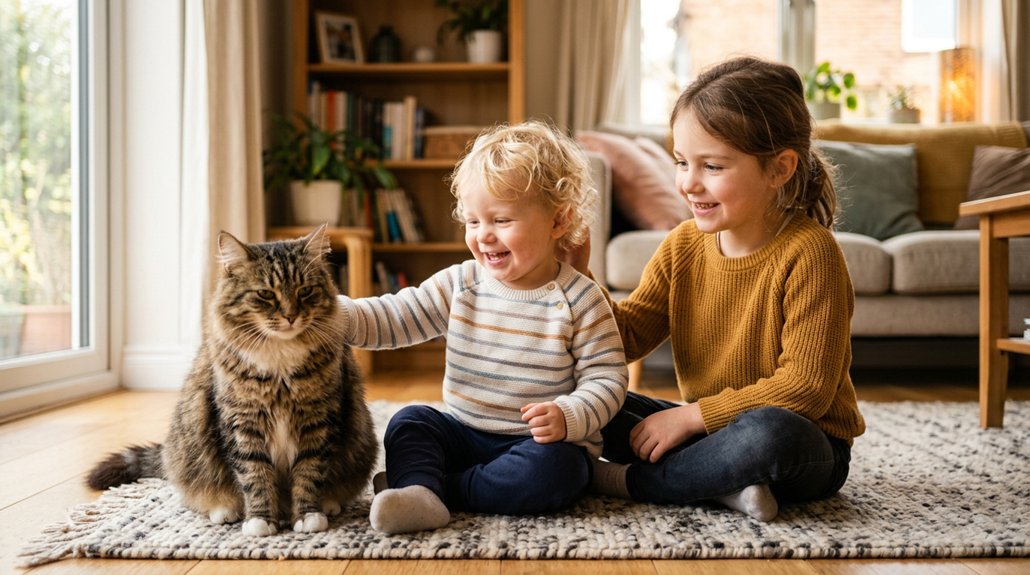
When selecting a cat breed for families with kids, consider breeds like Maine Coons and Scottish Folds for their gentle temperament and adaptability. Ragdolls and Abyssinians are resilient and tolerate child interactions well. If allergies are a concern, Sphynx or American Shorthairs are low-allergen options. Maine Coons, known as “gentle giants,” and Ragdolls, with their affectionate nature, are top picks. Explore different breed traits to find the perfect feline companion for your dynamic family setting.
Key Takeaways
- Maine Coons are gentle and adaptable, ideal for interactive family settings and handling.
- Ragdolls exhibit affectionate behavior, easy integration into family life, and promote engaging play.
- Sphynx cats, hairless and social, are perfect for allergy concerns and family bonding.
- Abyssinians encourage active play and exploration, fostering dynamic interactions with children.
- Scottish Folds, with sweet temperaments, adapt well to various family dynamics and routines.
How to Choose the Best Cat Breed for Your Family
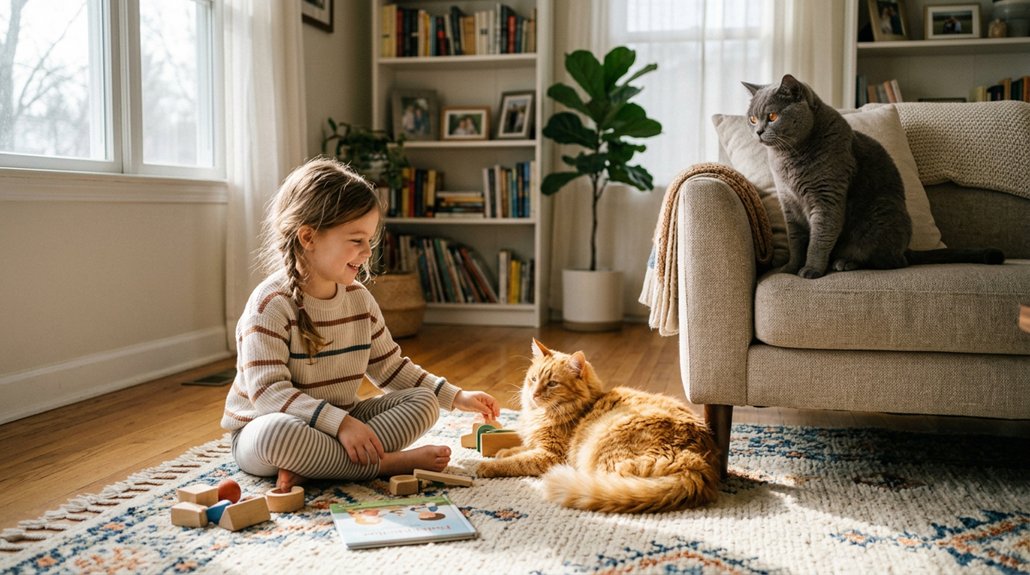
When selecting the best cat breed for your family, how do you balance temperament, activity levels, and care requirements? Start by considering grooming considerations, as breeds like Persians need regular hair maintenance, whereas American Shorthairs are less demanding. Next, evaluate breed personality; Ragdolls are typically affectionate and bond well with children, while Abyssinians thrive in active households due to their playful nature. Understanding your family’s lifestyle assists in aligning with a breed’s activity level, ensuring a harmonious environment. Consider a breed’s resilience and suitability to handle interactions with kids—larger breeds might endure rough play better. Regardless of your choice, always supervise child-pet interactions to mitigate any potential stress-related behavioral issues, ensuring ideal well-being for both your feline and family.
Maine Coon: Gentle Giants for All Ages
After understanding the importance of matching a cat’s traits with your family dynamics, let’s explore the remarkable qualities of Maine Coons. Renowned as “gentle giants,” these cats combine size with an affectionate nature, perfect for family environments. Their tufted ears and paws are hallmark features, enhancing their charm in social interactions. Maine Coons possess advanced cognitive abilities, responding well to training techniques, and can learn basic commands, adding a dynamic element to family life.
| Trait | Description |
|---|---|
| Sociability | Highly interactive with people/pets |
| Communication | Unique chirps and trills with kids |
| Intelligence | Capable of learning commands |
Health considerations should include monitoring Maine Coons for heart conditions, ensuring they remain healthy members of your family. Their patience and gentle demeanor towards children make them ideal companions, fostering sustainable family dynamics.
Siamese: The Vocal Family Companion
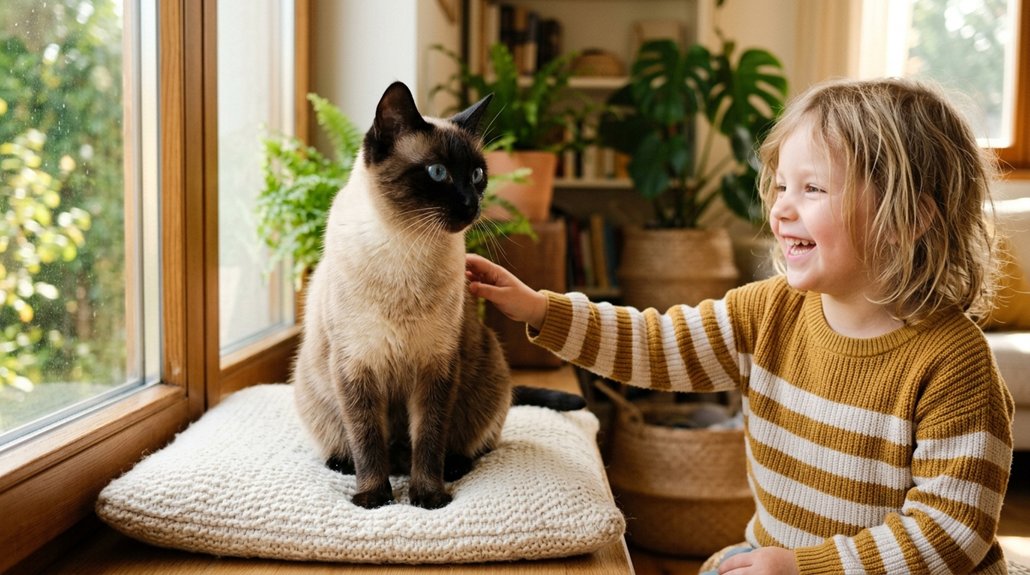
As a family companion, the Siamese cat is renowned for its unparalleled loyalty and affectionate temperament, often developing a preferential attachment to a specific person within the household. This breed’s proclivity for vocal communication is notable, utilizing a repertoire of phonations to convey its needs and enhance child engagement during playtime. Additionally, Siamese cats benefit from interactive stimuli and engaging play activities, which not only satiates their energetic behavior but also promotes healthy mental and physical well-being, essential for a harmonious family environment.
Loyal and Affectionate Nature
Loyalty and affection define the Siamese cat, making them an ideal match for families seeking a devoted and interactive companion. You’ll notice that their social bonding tendencies are remarkable. Siamese cats exhibit personality traits such as an innate desire to connect with their human family, forming close, almost familial ties. Their striking blue eyes aren’t just for show; they enhance their social cues, constantly seeking engagement.
These cats are highly vocal, using their extensive vocal range to forge a robust communication bond. It’s not just about making noise; it’s about ensuring their emotional needs are heard. While initially wary of strangers, they quickly adapt, often coexisting harmoniously with other pets. Their propensity for companionship requires health considerations centered around mental stimulation and emotional well-being.
Engaging Playtime Activities
Understanding the Siamese cat’s loyal nature naturally leads to exploring their vibrant playtime activities. With elevated levels of energy, Siamese cats revel in creative playtime, utilizing interactive toys like feather wands and laser pointers to stimulate their instincts and promote exercise. Scientifically, this energetic engagement can prevent obesity, a common health concern in cats. They’ve shown remarkable aptitude in interactive games such as fetch, where children can participate actively, strengthening bonds and nurturing empathy. Mental stimulation is paramount, so puzzle toys are ideal, challenging their cognitive faculties and inciting curiosity. These games not only entertain but also fortify social skills, as children learn to communicate efficiently with a responsive pet, ensuring a dynamic, fulfilling home environment.
Vocal Communication Traits
While observing the intricate vocal communication of Siamese cats, one can appreciate their distinct auditory repertoire, which includes everything from emphatic meows to melodic chirps. These vocalization patterns aren’t merely expressive; they’re essential social interaction tools that enhance family dynamics. By vocalizing, Siamese cats convey needs, foster companionship, and capture attention, embodying a species-specific auditory symphony. Engaging these cats requires active participation from owners, as they’re wired for interaction. This vocal nature assists in forming strong human-animal bonds, teaching children about empathy and responsibility as they learn to interpret these vocal cues. Careful consideration of their need for auditory engagement can aid in preventing vocal stress, promoting a harmonious environment for both the feline communicators and their human counterparts.
Ragdoll: The Perfect Family Cat
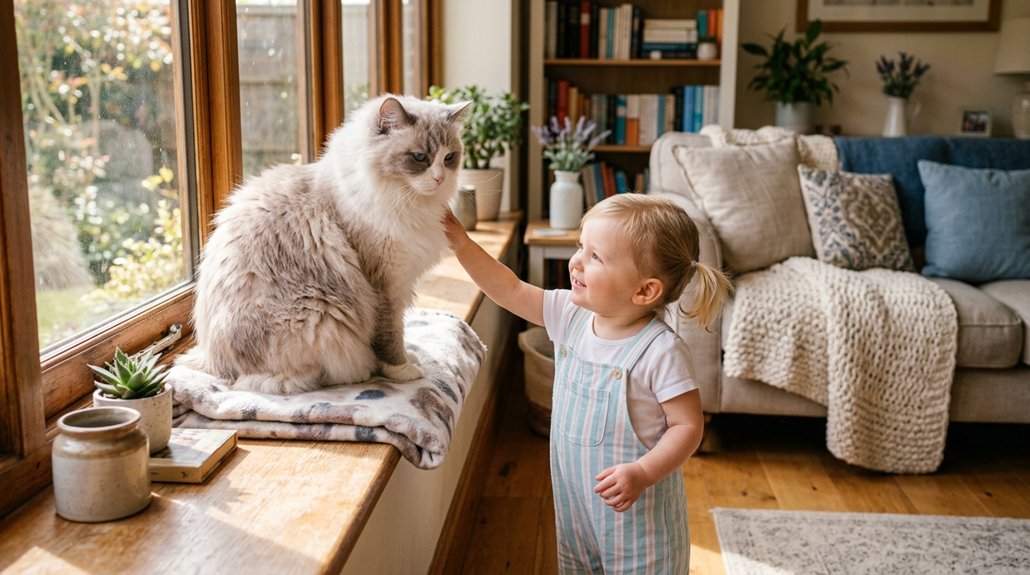
Why are Ragdolls considered the quintessential family cat? Their Ragdoll characteristics, like a gentle demeanor and affectionate nature, make them perfect companions for kids. They’re known for following their owners around, which enhances emotional bonds within families. Ragdoll upbringing is minimal compared to other breeds; their inherent placidity simplifies their integration into family life. They’re interactive—often learning games like fetch—providing delightful engagement.
Imagine the joy:
| Scene | Emotion | Family Benefit |
|---|---|---|
| Cuddling time | Comfort | Bonding through warmth |
| Play sessions | Laughter | Developmental play |
| Daily greetings | Love | Consistent affection |
| Longevity | Security | Long-term companionship |
With a lifespan of about 17 years, Ragdolls form enduring ties with families, fostering cherished memories.
Abyssinian: The Energetic Explorer
When selecting a feline companion for an active family, the Abyssinian stands out as an ideal candidate due to its robust energy levels and engaging behavioral characteristics. Renowned for their high activity levels, Abyssinians excel in offering dynamic interaction for families with children. Consider integrating activity ideas like fetch or puzzle feeders to stimulate their intellectual prowess. This breed’s natural curiosity means they’ll explore their environment with enthusiasm, often acting as adventurous explorers within the home.
To maintain an Abyssinian’s well-being, guarantee sufficient physical and cognitive stimulation. Their playful nature fosters a robust social bond with children, thriving in busy households. With a lifespan averaging 15 years, Abyssinians provide enduring companionship, making them a scientifically sound choice for active, family-centered environments.
Sphynx: Attention-Loving and Engaging
The Sphynx cat, with its distinctive hairless appearance, stands out as a remarkable addition to family life, especially for those concerned about allergies due to low shedding. This breed’s social behaviors and playtime preferences make them exemplary companions. They thrive on interaction, frequently engaging in games that stimulate their cognitive development. Their mischievous nature guarantees endless entertainment for your entire household.
| Feature | Attribute | Benefit |
|---|---|---|
| Appearance | Hairless | Reduces allergy concerns |
| Social Behavior | Highly interactive | Strengthens family bonds |
| Playtime Preferences | Energetic and curious | Engages and amuses kids |
| Intelligence | Trick-trained potential | Enhances mental stimulation |
Moreover, Sphynx cats forge deep emotional connections, enhancing familial ties. Their ability to learn new tricks opens avenues for unique play sessions, fostering therapeutic activity that encourages unity and joy within your home.
Scottish Fold: Sweet and Adaptable
You’ll find the Scottish Fold’s phenotypic feature of folded ears contributes to a calm and approachable demeanor, ideal for family settings. Their docile temperament and adaptability make them exceptional companions for children, fostering a nurturing environment that supports social-emotional growth. Be mindful of their need for frequent interaction, as prolonged isolation can lead to stress-related health issues.
Laid-Back Family Companions
While selecting a feline friend for your family, Scottish Folds stand out due to their unique genetic mutation that causes their adorable folded ears. This breed thrives in calm environments, adapting well to various family dynamics. Scottish Folds are the epitome of laid-back companions, known for their relaxed demeanor and love for playful interactions. They enjoy human companionship, often favoring cozy cuddling sessions on laps, which are perfect for forming strong familial bonds.
Their low-maintenance nature makes them ideal for busy households. With moderate grooming needs, they easily fit into bustling family schedules. Health-wise, it’s crucial to monitor joint health, ensuring that their flexibility is maintained. Here’s a quick overview:
| Characteristic | Aspect |
|---|---|
| Ears | Folded |
| Temperament | Sweet, adaptable |
| Environment Preference | Calm environments |
| Interaction | Enjoy playful interactions |
| Grooming | Moderate needs |
Great With Children
Renowned for their sweet and adaptable demeanor, Scottish Folds are often ideal for families with children due to their exceptional tolerance and patience. This breed’s unique genotype causes their iconic folded ears, enhancing their appeal without compromising their robust constitution. Scientifically, these cats possess a calm disposition, which facilitates playful interactions and promotes family compatibility. Their attachment to human companionship guarantees they’re the perfect pet for environments bustling with activity. While they’re genetically predisposed to coexist peacefully with children, it’s essential to monitor their health; folded ears require regular inspection to prevent infections. Scottish Folds thrive in families that value their sociable nature and provide continuous engagement, preventing the stress associated with isolation. Consistent stimulation and interaction guarantee they remain happy and healthy.
American Bobtail: Smart and Fun
The American Bobtail, a breed celebrated for its intelligence and affectionate nature, offers a unique companionship for families. These felines excel in playful interactions with children, encouraging family bonding through their energetic games and activities. Their ability to form strong attachments is complemented by their curiosity and mental agility, making them ideal for homes with kids enthusiastic for a lively companion.
Not only are American Bobtails intelligent, but they also adapt well to various environments—ranging from apartments to sprawling homes with yards. This adaptability guarantees that, with ample attention and engagement, they thrive and maintain their health. Furthermore, their trainability extends to walking on leashes, promoting active lifestyles for families. With a lifespan of around 15 years, they promise enduring joy and companionship.
Manx: Friendly and Bond-Oriented
Among the cherished feline companions, the Manx cat stands out for its unique taillessness and exceptional bond-oriented nature. It’s precisely this tailless feature that reduces risks during play, promoting safe interactions with kids. With manx characteristics like a friendly, affectionate demeanor and a propensity for forming strong familial bonds, they thrive on companionship, embodying loyalty and playfulness. Their dog-like traits, such as fetching, guarantee children remain engaged and entertained. Given their average lifespan of 14 to 16 years, they offer enduring companionship. Regarding manx care, it’s essential to provide regular physical activity and social engagement to maintain their health. Their bond-oriented nature and playful behavior make them ideal for family environments, enriching daily interactions.
Frequently Asked Questions
What Is the Most Kid Friendly Cat Breed?
When considering the most kid-friendly cat breed, the Maine Coon tops the list due to its playful personalities and affectionate nature. A Maine Coon’s adaptability guarantees your family experiences reduced allergenic responses and stress-related health issues.
What Is the 3-3-3 Rule With Cats?
The 3-3-3 rule is a whimsical guide for your cat’s adjustment period. Initially shy, they’ll charm you with curiosity in three weeks and fully bond in three months. Feline socialization tips guarantee healthy, happy changes.
What Annoys Cats the Most?
Cats get most irritated by loud noises and sudden movements due to their sensitive hearing and need for a calm environment. These stressors can lead to heightened cortisol levels, impacting their health and causing persistent anxiety.
How Do Cats Say Goodbye?
When cats say goodbye, they’re often an open book. Through body language like slow blinking, vocalizations, and scent marking, they display feline emotions, signaling trust, affection, comfort, or distress, akin to sharing their heart with you.
Conclusion
When it comes to choosing the perfect feline companion for your family, remember the adage: “Different strokes for different folks.” Each cat breed offers unique traits that cater to various lifestyles. Whether it’s the Maine Coon’s gentle demeanor or the Abyssinian’s energetic playfulness, understanding these characteristics guarantees a harmonious household. Consider health factors like grooming needs and potential genetic issues, and you’ll build a lifelong connection with a pet that complements your family’s dynamics and well-being.