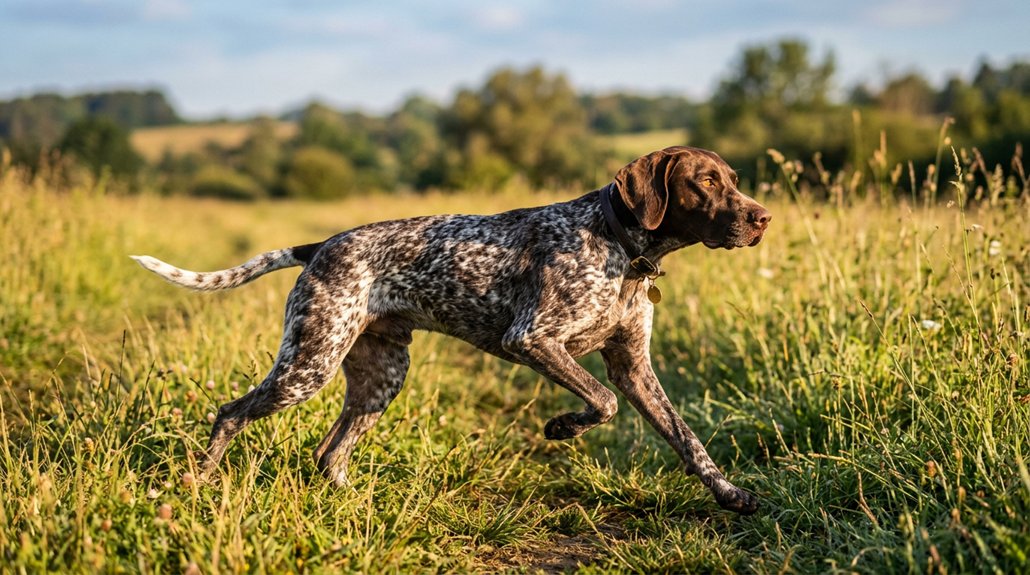
German Shorthaired Pointers are energetic, intelligent, and playful companions, requiring daily exercise and mental challenges. Socialization from a young age fosters a friendly temperament, while consistent, positive training helps manage their strong prey drive. Proper grooming, like ear cleaning and coat upkeep, alongside a nutritious diet, supports their well-being. Choosing between adoption or purchasing involves weighing lifestyle compatibility and commitment. For a deeper understanding and to meet your GSP’s needs effectively, let’s explore further.
Key Takeaways
- German Shorthaired Pointers are energetic, requiring 1-2 hours of daily play and social interaction for well-being.
- Positive reinforcement and early socialization from 7-16 weeks build a confident, well-adjusted GSP.
- Regular grooming and health check-ups prevent ear infections and identify potential issues like hip dysplasia.
- A balanced diet rich in proteins and fats supports their high energy needs and promotes healthy growth.
- Adoption or buying should match your lifestyle, considering GSPs’ high energy and affectionate temperament.
Understanding Your GSP’s Energetic Personality
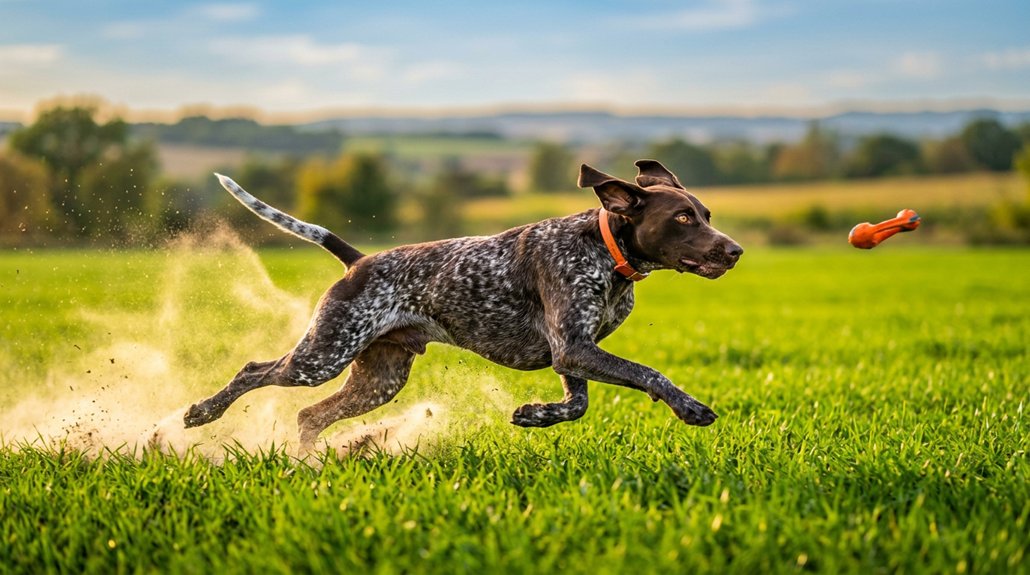
Owning a German Shorthaired Pointer means you’re in for an energetic journey. These dogs have high energy levels, demanding 1 to 2 hours of energetic playtime daily to stay healthy and ward off destructive behaviors. You’ll need to embrace their playful personality and strong prey drive with behavior management strategies. As social creatures, they’ll thrive on family interaction, so include them in your activities. Consistent training, focusing on impulse control, will help manage their chase instincts. They’re quick learners, thanks to their enthusiasm to please, so structured routines blending vigorous physical activities and mental exercises are key. By addressing their exercise needs and fostering a positive environment, you’ll reveal the full potential of your lively GSP.
Grooming and Health Care Essentials for GSPs
With your German Shorthaired Pointer’s lively disposition well-managed, it’s important to guarantee they’re also looking and feeling their best through proper grooming and healthcare practices. Invest in grooming tools like a quality brush for their short, dense coat; this minimizes shedding and keeps skin care ideal. Regular ear care is essential—inspect and clean their ears frequently to prevent infections. Keep their nails trimmed for hygiene and comfort. Be mindful of diet adjustments, providing balanced diets rich in proteins and fats for high energy. Regular health screenings are vital to catch early signs of issues like hip dysplasia or eye conditions. Finally, tailor exercise routines to their needs, especially avoiding activity immediately after meals to prevent gastric torsion.
Positive Training Techniques for Your GSP
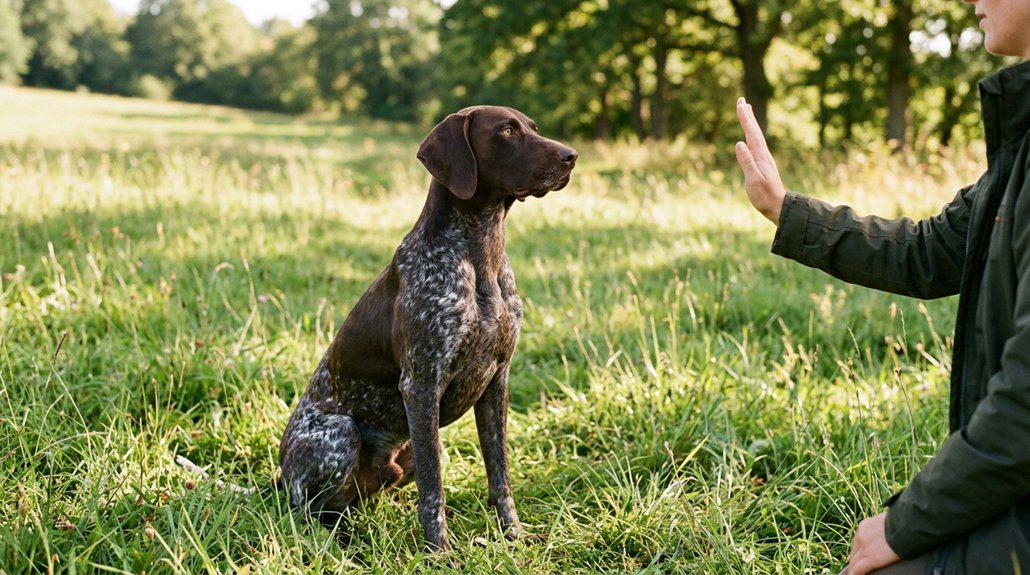
Training your German Shorthaired Pointer (GSP) requires a balanced blend of patience and positive reinforcement. Their enthusiasm to please and intelligence make positive reinforcement, like treats and praises, highly effective. Clicker training can further enhance your communication with them, clarifying and rewarding desired behaviors. It’s essential to establish structured routines to emphasize consistency’s importance, particularly important as they mature from 6 months to 3 years. Reward strategies play a significant role in building their confidence while maintaining their engagement. Focus on teaching impulse control to channel their high energy positively, preventing destructive behaviors and keeping them mentally stimulated. Gradually expose them to new stimuli to strengthen their resilience and guarantee a well-adjusted, confident GSP.
Meeting the Nutritional Needs of Your Active GSP
Understanding your German Shorthaired Pointer’s nutritional needs is essential for maintaining their energy and health. An ideal diet rich in animal-based proteins and healthy fats will support their active lifestyle, and establishing a consistent feeding schedule can promote proper growth and digestion. Be sure to monitor their intake, adjusting as necessary, while timing meals to avoid the risk of bloat after exercise.
Optimal Diet for Performance
When it comes to fueling your German Shorthaired Pointer’s active lifestyle, a well-balanced diet rich in animal-based proteins and healthy fats is essential. Your GSP’s diet should include high energy snacks that provide quick bursts of energy, especially during intense training sessions. Meal portioning is also critical—too much or too little can affect performance and health. Regular monitoring of their weight will guide you in adjusting portions to maintain peak body condition.
It’s important to include high-fat and high-protein foods to boost endurance and recovery, especially for sporty activities like hunting. Remember, always allow a break after heavy exercise before any meals. Waiting about an hour can prevent bloat, a serious risk for deep-chested breeds like the GSP.
Feeding Schedule and Tips
Establishing a consistent feeding schedule is essential to meeting the nutritional demands of your active German Shorthaired Pointer. GSPs need a high-protein, high-fat diet to fuel their energy levels, especially those formulated for performance. Puppy feeding should involve multiple smaller meals daily—more than twice—until they’re six months old to promote healthy growth and digestion. Meal frequency is significant during these early months. Always measure portions based on age, weight, and activity level, and consult your vet for tailored guidance. Remember, wait at least an hour after vigorous exercise before feeding to prevent bloat. Invest in high-quality, age-appropriate dog food to support their health and well-being, ensuring your GSP is not just active but genuinely thriving.
Exercise Requirements for a Fit German Shorthaired Pointer
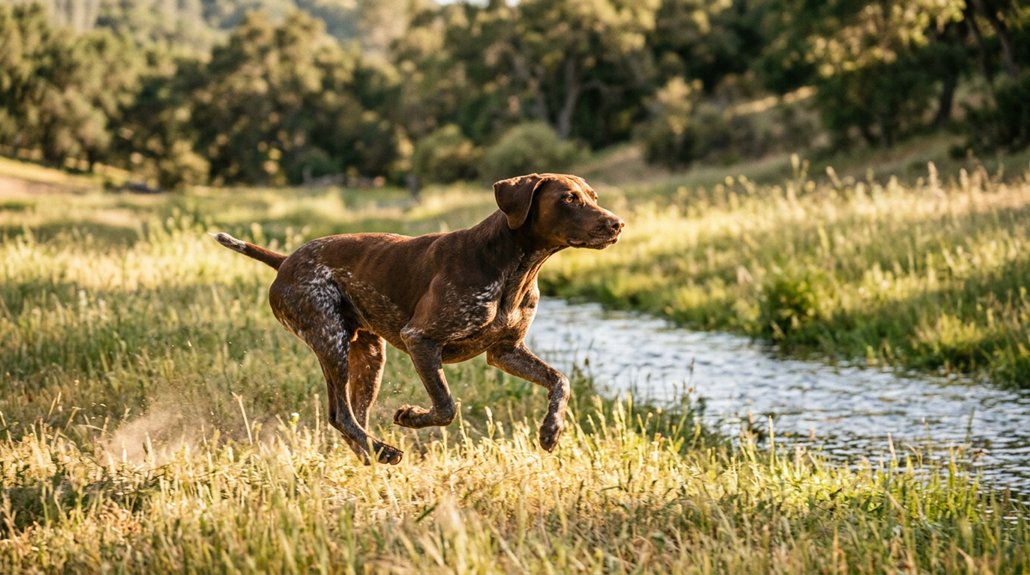
To keep your German Shorthaired Pointer (GSP) fit and happy, at least 1 to 2 hours of vigorous daily exercise is essential. Regular exercise routines provide necessary energy outlets for this active breed, preventing boredom and potential destructive behavior. Ideal activities include running, hiking, swimming, and structured play. These not only cater to their physical needs but also engage their sharp minds. An open, fenced area is great for letting them run freely, offering a safe space to expend all that boundless energy. Be mindful of weather conditions, ensuring it’s safe for your GSP to exercise, especially in extreme temperatures. Consistency is key, so incorporate these activities into your daily schedule to keep them healthy and content.
Getting Ready for Your New GSP Puppy
Bringing home your new German Shorthaired Pointer puppy involves more than just excitement; it’s about preparing an environment where both safety and stimulation go hand in hand to cater to their energy needs. Make sure you have the essentials ready, like high-quality food, toys, and grooming supplies, to support their health and happiness from day one. Start socializing her early by introducing different sights and sounds, which will help build her confidence and adaptability, setting the stage for a well-rounded companion.
Preparing Your Home
While welcoming a new German Shorthaired Pointer (GSP) puppy into your home is an exciting experience, it’s important to prepare your living space to guarantee your puppy’s safety and comfort. Start by puppy proofing your home; create safe spaces by removing small objects and toxic plants that curious pups might chew. Installing baby gates or barriers helps define secure areas, providing your GSP with a hazard-free environment. Designate a cozy spot with a comfortable bed, toys, and access to fresh water to help your new friend settle in. Clear any outdoor spaces for vigorous activities, ensuring safe, fenced areas are available for playtime. By setting up these spaces, you’ll create a welcoming environment tailored to your GSP’s needs.
Essential Puppy Supplies
As you prepare for your new German Shorthaired Pointer puppy, having the right supplies is essential to guarantee a smooth shift into its new home. Here’s a practical list of puppy gear and training tools you’ll need:
- Nutrition Essentials: Choose high-quality food and water bowls, ensuring your pup’s health and growth needs are met.
- Outdoor Necessities: A sturdy leash and collar are must-haves to integrate exercise and enforce trained recall, important due to the GSP’s strong prey drive.
- Cozy Comforts: Provide a comfortable crate or bed as a secure space to encourage positive sleeping habits and assist with crate training.
- Mental Stimulation: Opt for interactive toys and chew items to curb high energy levels, fostering mental engagement and preventing unwanted behaviors.
Early Socialization Steps
How can you guarantee your German Shorthaired Pointer puppy grows into a confident and well-adjusted adult dog? Early socialization is key. Start with puppy playdates to help Macey learn positive interaction with other dogs. Introduce various exposure experiences by taking her to different environments, meeting diverse people, and hearing various sounds. This helps prevent fearfulness. GSPs, like Macey, should be gradually exposed to gun noises, reinforcing calm responses with positive retrieval games. Monitor interactions with other animals, due to their strong prey drive.
Consider this socialization plan:
| Week | Focused Activity | Key Experience |
|---|---|---|
| 8-10 | Puppy Playdates | Fun with other puppies |
| 11-12 | New Environments | Park visits, car rides |
| 13-14 | Exposure Experiences | Diverse sounds, people |
| 15-16 | Gun Noise Introduction | Positive retrieval games |
These steps guarantee a friendly, resilient adult GSP.
How to Confidently Socialize Your GSP
Getting started on socializing your German Shorthaired Pointer (GSP) is all about timing and guaranteeing that each experience is positive. Initiate socialization early, ideally between 7 to 16 weeks, using varied socialization techniques to foster confidence in your pup. Frequent puppy playdates introduce them to different environments and friendly dogs, reinforcing good behavior. Here’s how to confidently socialize your GSP:
- Expose your pup to diverse sounds—hammering, dropping objects—incrementally to prevent overwhelm.
- Pair potentially intimidating noises—like gunshots—with fun activities, such as retrieving games, for a positive connection.
- Monitor interactions to guarantee they’re enjoyable and constructive, especially if noise-shy dogs are present.
- Introduce Macey to new people regularly to cultivate a balanced temperament.
Approach each step with patience, promoting a friendly, confident GSP.
Adopting vs. Buying Your German Shorthaired Pointer
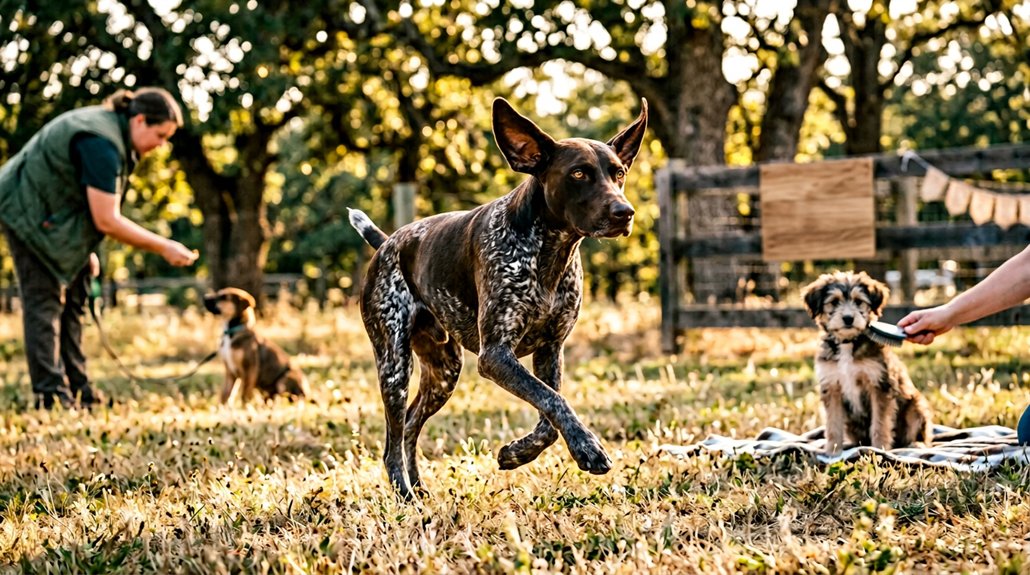
While deciding between adopting and buying a German Shorthaired Pointer (GSP), it’s essential to weigh the benefits each option offers. Adopting from a shelter or rescue can bring shelter benefits, like giving a dog in need a home and often receiving one with an established temperament. This can mean less effort in training readiness. On the flip side, breeder considerations include access to health guarantees and insights into puppy temperament and pedigree, which can set the stage for a healthy start. Breed-specific rescue options, like German Shorthaired Pointer Rescue, offer guidance matching a dog to your lifestyle assessment, guaranteeing compatibility. Ultimately, whether you adopt or buy, make sure you’re equipped to meet a GSP’s high energy needs.
Frequently Asked Questions
What Is the Lifespan of a German Shorthaired Pointer?
You can expect a German Shorthaired Pointer to live around 10 to 14 years. With proper health care, they can enjoy a full lifespan. Breed genetics play a role, so regular vet check-ups can help manage potential issues.
How Does a GSP Interact With Small Children?
Picture a gentle breeze on a summer day; that’s how a GSP interacts with small children. Their playful demeanor and gentle nature make them perfect companions, but remember, teaching respect between them guarantees harmony.
Are German Shorthaired Pointers Good With Other Pets?
Yes, they can be good with other pets if you focus on early socialization and careful pet introductions. Be patient and consistent, ensuring interactions are positive and supervised, gradually integrating them into the household’s dynamic.
What Are Common Behavioral Issues in German Shorthaired Pointers?
You might notice your German Shorthaired Pointer showing excessive barking or destructive behavior due to separation anxiety. Their strong hunting instinct can also lead to chasing smaller animals. Proper training and mental stimulation can help mitigate these issues.
How Do GSPS Handle Being Left Alone at Home?
While it’s true some fear separation anxiety, you’ll find that GSPS can adapt with proper training. Gradually increasing alone time helps, ensuring they’re occupied and comfortable. Consistency and patience reinforce positive behavior during your absence.
Conclusion
Preparing to welcome a German Shorthaired Pointer into your home is a thrilling journey. These energetic dogs have endless love and enthusiasm to share. Did you know that GSPs can run up to 30 miles per hour? This highlights the importance of meeting their exercise needs through ample playtime and activities. By understanding their temperament, grooming, and nutritional needs, you’ll nurture a loyal and healthy companion. Remember, whether adopting or buying, your conscientious efforts will pay off in a joyful partnership.