
Your cat should learn rules that guarantee a peaceful home and strengthen your bond. Establish boundaries, designating zones for scratching and limiting counter-surfing. Use positive reinforcement and rewards like treats or affection to encourage good behavior and train commands for safety. Gradual introductions to people and environments are key for social interaction. Interactive play provides mental stimulation. By mastering these basics, you’ll create a harmonious environment and uncover more strategies to enhance your cat’s habits.
Key Takeaways
- Cats should learn to use designated scratching posts to maintain household harmony and satisfy their natural instincts.
- Establish rules for counter-surfing and food access to reduce undesirable behaviors and avoid temptations.
- Encourage proper litter box use by maintaining cleanliness and offering rewards for consistent usage.
- Teach basic commands, like “come” and “stay,” for improved communication and control in social interactions.
- Reinforce boundaries against rough play to ensure safety and promote appropriate behaviors using interactive toys.
Establishing Rules for a Harmonious Cat Household
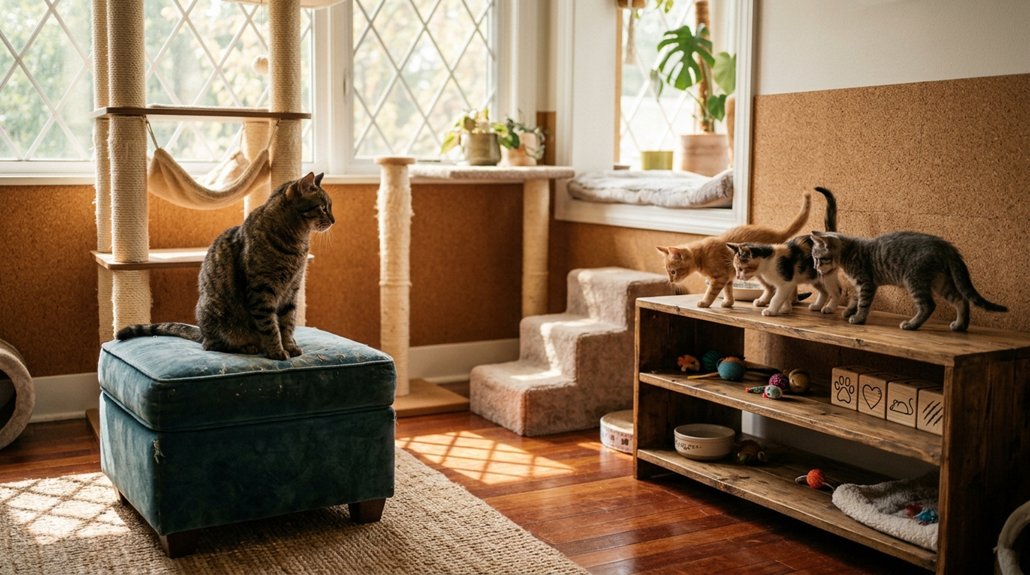
To create a harmonious cat household, it’s vital to establish clear boundaries from the outset. An important aspect is understanding cat communication and territory awareness. Designate specific zones for scratching to respect feline instincts and limit confusion. This helps your cat understand its environment and reduces stress. Consistently enforce these boundaries, maintaining strict access rules to prevent counter-surfing by limiting food availability to mealtimes.
Ensure all household members adhere to these guidelines, eliminating inconsistent patterns that could confuse your cat. An aligned approach fosters security and diminishes behavioral issues. Regularly evaluate and adapt these rules according to your cat’s behavior and any environmental changes. This systematic process aids in establishing a stable and harmonious home where your feline feels understood and secure.
Mastering Positive Reinforcement for Better Behavior
When effectively applied, positive reinforcement becomes a cornerstone in shaping desired cat behaviors without compromising the human-feline bond. It’s essential to discern your cat’s reward preferences—be it tiny treats, play, or affection. Tailoring rewards enhances motivation and supports training patience, significant in achieving success over time. Integrating a consistent marker like a click or specific word immediately post-behavior reinforces the association with the reward, which boosts learning efficiency.
Sessions should be concise, around five minutes, to avoid feline boredom or frustration. Gradually reward incremental steps toward the target behavior—a method known as shaping. This strategy helps secure correct responses and further encourages learning. By carefully implementing positive reinforcement, you’ll nurture better behavior and a stronger, more harmonious relationship with your cat.
Instilling Scratch Post and Litter Habits
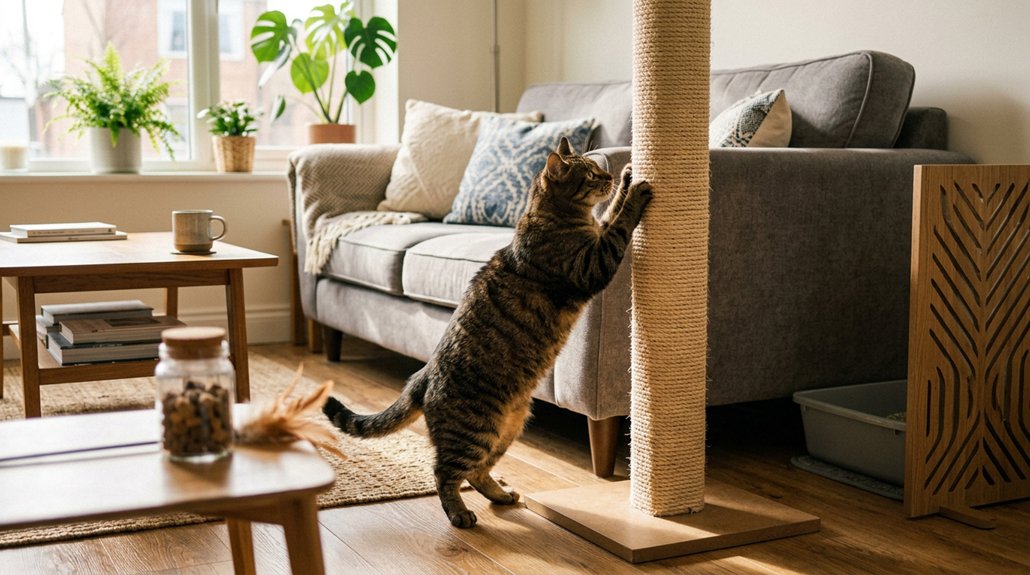
To prevent furniture damage and promote healthy scratching, place scratching posts in accessible areas your cat frequents, rewarding them with treats when they use this alternative. Make sure litter boxes outnumber cats by one and keep them in quiet, low-traffic zones to encourage consistent use. Regularly clean the litter to prevent avoidance and unwanted toileting, maintaining a healthy and comfortable environment for your cat.
Encouraging Proper Scratch Post Usage
While encouraging your cat to use a scratch post effectively might seem challenging, it’s essential for their well-being and your furniture’s longevity. To align with your cat’s scratching preferences, post placement is vital. Strategically place multiple posts near areas where your cat tends to scratch furniture to encourage proper usage. Opt for posts with varied textures and heights to cater to their individual preferences. Positive reinforcement, such as treats or praise, immediately after your cat uses the post, will also bolster desirable behavior. Gradually introduce the post using catnip or toys to attract their attention.
- Place posts near frequent scratching sites to deter furniture damage.
- Reinforce post usage with immediate rewards.
- Choose posts with diverse textures and heights to boost appeal.
Establishing Reliable Litter Box Habits
Establishing reliable litter box habits is imperative for both your cat’s comfort and maintaining a clean home environment. First, guarantee the litter box is in a quiet, accessible location, as privacy is essential for your cat’s ease. Provide one litter box per cat, plus another extra, to avoid territorial disputes. Prioritize a consistent cleaning routine: scoop daily and change the litter regularly to prevent odors that deter use. Understanding your cat’s litter box preference, from texture to scent, is critical; select clumping, unscented options if favored. Initially, place a scratching post near the litter box to foster familiarity and positive associations. By adhering to these practices, you encourage consistent and successful litter box use, promoting hygiene and harmony.
Implementing Positive Reinforcement Techniques
Positive reinforcement is a proven method for teaching cats essential habits. To instill scratching post and litter box habits, start with clicker training. When your cat uses the scratching post or litter box correctly, reward it immediately with treats or affection. This repetition strengthens habit building through association. Short, frequent training sessions—about five minutes—maintain engagement and consistency.
Here are key steps to integrate positive reinforcement:
- Use Clicker Training: Mark the desired scratching or litter behavior with a clicker or verbal cue.
- Provide Immediate Rewards: Reinforce actions with treats or affection to build positive associations.
- Create a Stress-Free Environment: Introduce scratching posts and litter boxes gradually to encourage natural exploration.
Redirect unwanted behaviors to reinforce designated areas effectively.
Training Cats to Respect Boundaries Like Countertops
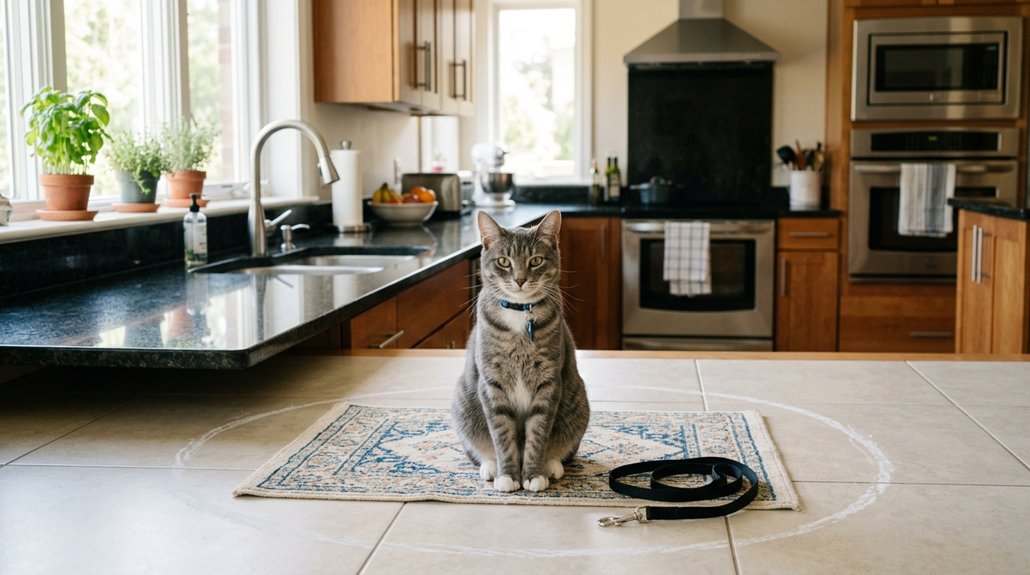
To train your cat to respect countertop boundaries, focus on using positive reinforcement techniques like rewarding them when they stay off the surfaces. Establish consistent boundaries by removing any temptations like food and provide alternative activities such as scratching posts nearby. Integrate short, daily training sessions that emphasize rewarding desired behaviors to effectively communicate that countertops are off-limits.
Positive Reinforcement Techniques
One effective way to train your cat to respect boundaries like countertops is through positive reinforcement techniques. Using treat motivation, you can encourage your cat to avoid off-limit areas. Keep training sessions short, around five minutes, to guarantee your cat’s attention and alleviate boredom. Consistency is essential; reinforce boundaries regularly to solidify desired behavior. Implement a marker, like a clicker or keyword, to signal your cat is performing correctly. Gradual reinforcement with treats, praise, or playtime helps reduce countertop climbing.
- Use treat motivation strategically during training to reinforce positive behavior.
- Maintain training consistency by having short, focused sessions.
- Redirect your cat to appropriate surfaces, rewarding them for engaging with alternatives.
Creating Consistent Boundaries
While consistency is key in training cats, establishing clear boundaries is just as essential for preventing confusion. Boundary enforcement strategies are necessary for areas like countertops that should be off-limits. Implement feline behavior modification by redirecting your cat’s attention to suitable alternatives, such as scratching posts or designated play areas nearby. Environmental setup plays a significant role; removing tempting items from countertops minimizes attractions, effectively deterring unwanted behavior. Regular, brief training sessions—five minutes at a time—are beneficial for reinforcing these boundaries through repetition and clarity. Consistency in these strategies aids in forming long-term habits. Focus on gradually introducing boundaries to guarantee your cat comprehends which areas are restricted. Clear, consistent communication with your feline helps cultivate respect for household boundaries.
Rewarding Desired Behaviors
Training cats to respect boundaries such as countertops hinges on rewarding desired behaviors effectively. Utilize positive reinforcement to encourage your cat to choose alternate areas over countertops. Offering different treat types and praise reinforces behavior, acting as key motivation factors. Clicker training is beneficial: use it to mark when your cat opts for a designated space, promptly offering a reward. Consistently rewarding your cat for staying on the floor helps establish boundaries.
Consistency across household members is critical; identical rules prevent confusion. Over time, reduce treat frequency but maintain verbal praise to satisfy motivation needs. Here’s a quick guide:
- Use clicker training to mark and reward positive behavior.
- Gradually lessen treats, focusing on verbal praise.
- Confirm family enforces consistent rules.
Guiding Your Cat’s Social Interactions
To foster stress-free social interactions for your cat, it’s essential to introduce them slowly to new environments and individuals. Gradual introductions can minimize stress and anxiety. Teach your cat to respond to commands like “come” and “stay” during social encounters. Command responses aid in guiding behavior, ensuring more positive interactions.
Consistently enforce rules against rough play for safety with humans and other animals. During playtime, interactive toys can teach appropriate social behaviors and respect personal space. Monitor for signs of discomfort, such as hissing or swatting, and intervene calmly to redirect focus.
| Key Aspect | Description |
|---|---|
| Gradual Introductions | Reduces stress and helps ease cats into new settings |
| Command Responses | Guides behavior and fosters positive encounters |
| Playtime Benefits | Encourages appropriate interaction with others |
Choose Effective Rewards to Motivate Your Cat
Identifying effective rewards is essential for motivating your cat. To guarantee effective training, tailor rewards to align with your cat’s treat preferences. Cats are individuals, and what motivates one may not work for another. Introducing reward variety—ranging from food to play or petting—keeps your cat engaged. When selecting treats, consider:
- Food: Use small, high-value treats to maintain engagement without harming their waistline.
- Toys: Engage their senses, offering interactive toys that stimulate play.
- Social Interaction: Reward with petting or grooming to reinforce positive behavior.
Establish a consistent marker, like a clicker, to signal desirable actions immediately. Observe your cat’s reactions closely and adjust your strategy to maximize the effectiveness of positive reinforcement techniques.
How to Overcome Training Hiccups With Your Cat
Despite your best efforts, training hiccups with your cat can occur, often leaving you feeling frustrated. To address these, employ short training sessions—no longer than five minutes. This keeps your cat’s focus and engagement sharp, reducing resistance. Gradually introduce new behaviors and respect your cat’s choices to maintain a positive training experience.
| Strategy | Purpose |
|---|---|
| Short sessions | Maintain focus, prevent burnout |
| Positive reinforcement | Encourage desired behavior, reduce anxiety |
| Counter-conditioning | Replace fears with positive associations |
Using positive reinforcement guarantees your cat associates actions with rewards, aiding overcoming resistance. Consistently mark desired behaviors to clarify expectations. If avoidance behaviors emerge, apply counter-conditioning to replace negative experiences with positive ones. Such training strategies foster clearer communication, leading to successful training outcomes.
Progressing From Basic Training to Advanced Skills
When starting the journey from basic training to advanced skills for your cat, understanding the fundamentals is vital. Begin with commands like “sit” and “stay” using clicker training and positive reinforcement. Once mastered, gradually introduce advanced commands like “high five” or “fetch.” Trick progression should be broken into manageable steps, considering your cat’s learning pace. Conduct consistent, short sessions—around five minutes each—to keep focus and interest. Tailor your approach to your cat’s motivation cues and natural inclinations for best results.
Incorporating interactive play and enrichment activities enhances engagement and mental stimulation. Observing your cat’s behavior during training is key for effective skill development.
- Use motivation cues to understand your cat’s preferences.
- Integrate interactive play for mental stimulation.
- Keep sessions short—about five minutes.
Frequently Asked Questions
What Is the 3-3-3 Rule for Cats?
The 3-3-3 Rule explains cat behavior during its shift to a new environment. Initially, it hides (three days), starts adjusting (three weeks), and fully settles with increased feline adaptability (three months). Understanding this enhances human-animal bonds.
What Is “I Love You” in Cat Language?
“I love you” in feline communication involves slow blinks, soft purring patterns, and grooming behaviors. Don’t think cats don’t express love; watch for high tails and cute nibbling, reflecting profound trust and affection towards you.
What Color Cat Is Least Desired?
Black cats are often least desired due to superstitions and negative stereotypes. Despite this, they possess wonderful traits. Tabby cats, with their distinctive patterns, are more favored. Remember, color doesn’t define the loving companionship cats offer.
What Did Albert Einstein Say About Cats?
Albert Einstein’s insights juxtaposed feline intelligence and human nature. He admired cat behavior for teaching authenticity and self-being beyond comprehension. Valuing their enigmatic essence, he felt, reflected on how complexity often defies simple understanding, inspiring creativity.
Conclusion
In the grand theater of life, imagine your cat as a budding actor on the stage of your home. Just as performers learn their scripts, your feline must master its role in the household. Guide it with patience and consistency, reinforcing desired behaviors like scripts memorized over time. Utilize rewards as applause, motivating it toward peak performance. Overcome the occasional misstep with gentle redirection, ensuring your shared stage remains harmonious and well-managed.