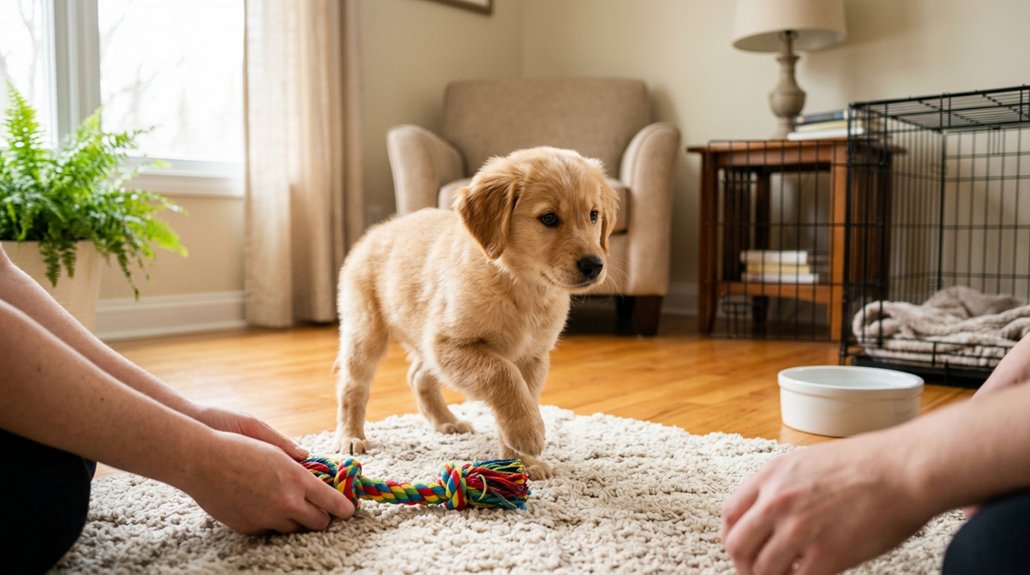
To avoid overwhelming your puppy, pay close attention to their body language and reactions. Maintain a calm environment with structured routines for meals, play, and rest. Gradually introduce new experiences, using positive reinforcement to build confidence. Monitor for signs of distress like trembling or excessive vocalization, and adjust accordingly. Handle them gently, fostering trust and empathy. By doing so, you’ll help guarantee a confident, well-adjusted pup who continues to thrive. Discover more strategies for nurturing your puppy.
Key Takeaways
- Maintain a quiet environment and limit large gatherings to prevent overwhelming stimuli for your puppy.
- Establish consistent routines for meals, walks, and training to create stability and reduce anxiety.
- Gradually introduce new experiences from a distance, using desensitization and positive reinforcement to assess comfort levels.
- Carefully monitor your puppy’s body language for signs of distress and adjust experiences or interactions as needed.
- Provide safe spaces like sleeping crates near family to reduce feelings of isolation and increase comfort.
Recognizing Signs of Puppy Overwhelm
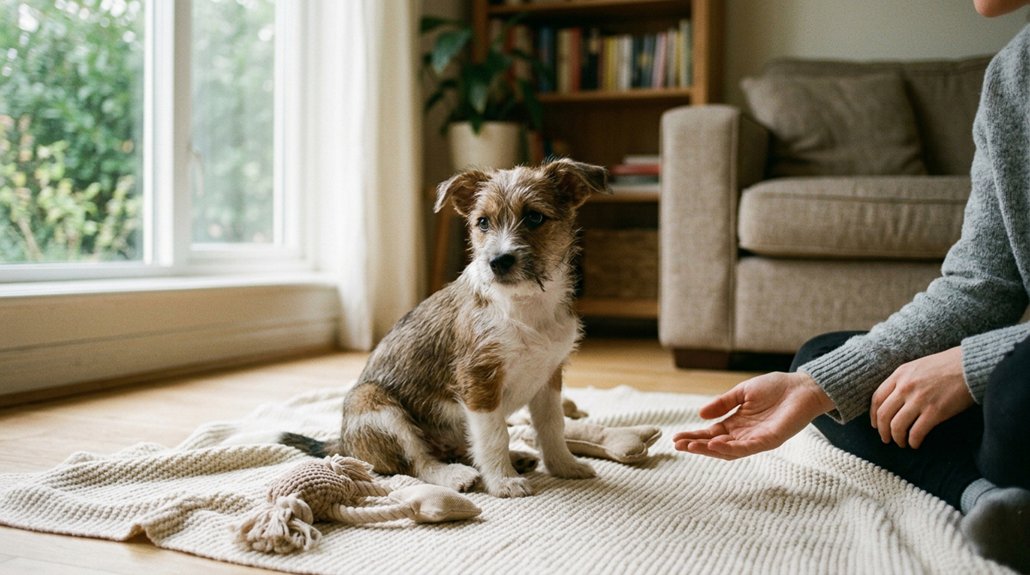
As a puppy owner, it’s essential you know how to recognize when your furry friend is feeling overwhelmed. Understanding puppy body language is your first step. Pay attention to anxiety triggers like excessive vocalization, which often signals distress. A pup’s trembling or shaking can indicate they’re struggling with stimuli in their environment. Behavioral changes such as hiding or reluctance to play suggest they’re anxious or overstimulated. Additionally, watch for excessive salivation or drooling—these can be stress responses. Unplanned accidents, like urinary or fecal mishaps, might occur if stress impairs their ability to control themselves. Being observant and empathetic to these signals guarantees you can address your puppy’s discomfort promptly, helping maintain their well-being and emotional health.
Creating a Safe and Calm Environment
When bringing a new puppy home, it’s vital to focus on creating a safe and calm environment to foster their well-being. Start by limiting large gatherings—keeping the atmosphere quiet helps manage overwhelming shifting sounds and unfamiliar activities. Consistent schedules for meals, walks, and training are essential in providing predictability and stability, which reduce anxiety. Position your puppy’s sleeping crate close to family members, offering security and minimizing feelings of isolation. Consider utilizing multiple crates around your home; these alternate safe spaces enhance comfort and lessen stress. Gradually introduce new stimuli and monitor your puppy’s reactions to guarantee they remain calm and unthreatened. Remember, creating a nurturing environment is key to your puppy’s happiness and overall development.
Gradual Experience Introduction Techniques
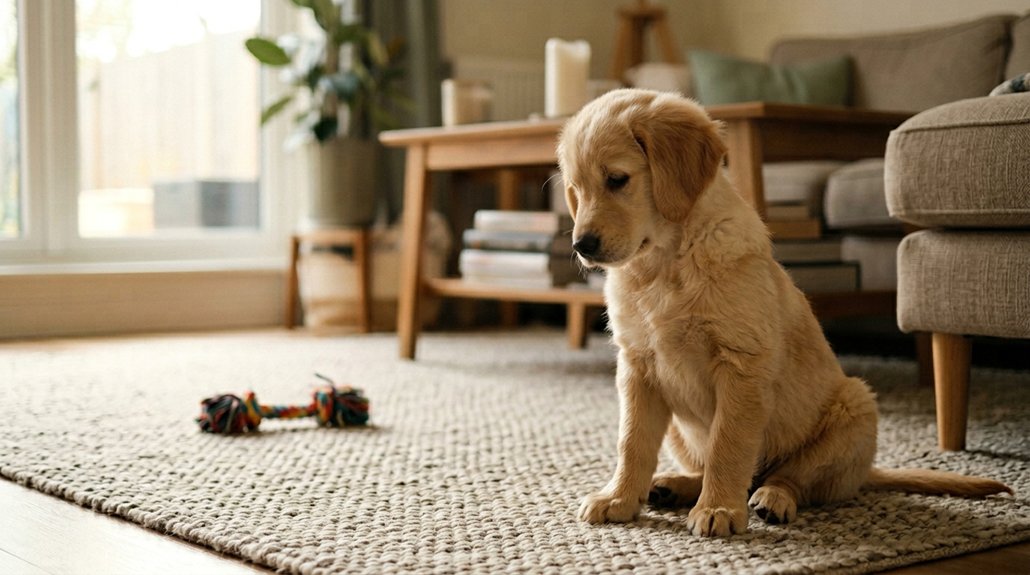
To guarantee your puppy thrives and develops confidence, initiate new experiences and stimuli at a gentle pace. Begin introducing new situations from a comfortable distance, allowing your pup time to acclimate. Incorporate puppy exploration strategies by combining low-intensity desensitization with positive reinforcement like treats or praise, creating comforting distractions that encourage curiosity. Watch your puppy’s body language closely; signs of discomfort, such as trembling, indicate the need to adjust the situation to remain non-threatening.
Regularly integrate socialization opportunities, ensuring they interact with friendly people and dogs in controlled settings. This controlled exposure helps in building confident associations with varied stimuli. Tailor every experience based on your puppy’s reactions, fostering an encouraging environment that nurtures a lifelong love for learning and exploration.
Letting Your Puppy Set Their Pace
Let your puppy lead the way when it comes to exploring new experiences, ensuring you respect their comfort levels at all times. Pay close attention to stress signals like trembling or hiding, as these will guide you on when to give them space and ease their anxiety. Gradual exposure through spaced and positive interactions supports their confidence and helps them feel secure in unfamiliar situations.
Respect Puppy’s Comfort Levels
Understanding your puppy’s comfort levels is essential for building a trusting relationship. Recognizing and respecting puppy boundaries is vital. Allow your puppy to approach situations at their own pace, ensuring their comfort zones aren’t breached. Pay attention to body language; trembling or retreating suggests the need for a break.
| Signs of Comfort | Signs of Distress |
|---|---|
| Playful behavior | Trembling |
| Wagging tail | Retreating |
| Relaxed posture | Excessive vocalizing |
Create a supportive environment by gradually introducing them to new experiences. Always maintain a calm demeanor and use treats and praise to reinforce positive interactions. Keep socialization sessions twice weekly within the important period, prioritizing comfort over routine. Helping them build confidence is your best approach to a resilient puppy.
Gradual Exposure to Stimuli
When it comes to helping your puppy adjust to the world around them, gradually exposing them to various stimuli is essential. Begin with low-intensity experiences, allowing for puppy exploration in a safe environment. Sensory adaptation comes from letting them witness new sights and sounds at a distance, slowly increasing intensity as they get comfortable. Keep interactions brief at first, and observe your puppy’s pace—it’s vital they set their own. Offer them breaks if needed, while rewarding successful explorations with treats and praise. This positive reinforcement guarantees new experiences are associated with comfort. By monitoring their reactions, you can adjust exposure levels, making sure your puppy stays relaxed. Ultimately, a gentle approach fosters confidence and a smooth sensory adaptation process.
Observing Stress Signals
As you commence on the journey of raising a well-adjusted puppy, recognizing and understanding stress signals is essential. Pay attention to signs like trembling, reluctance to play, whining, or hiding, as these could mean your puppy’s overwhelmed. For effective stress management, allow them to approach new experiences at their own pace. This encourages a sense of security while fostering healthy environmental adaptation. Gradually introduce them to unfamiliar places and people, starting from a distance for ample acclimation time. Keep a close eye on their body language, and if fear signals like shaking emerge, promptly remove them from the situation to protect their emotional well-being. Establish structured socialization routines to create predictability, helping to build confidence without stress.
Why Consistent Play and Rest Matter
Balanced routines are essential for nurturing a puppy’s well-being. Play benefits include enhanced social skills and energy management, critical for a developing puppy. Structured play sessions throughout the day will help them manage hyperactivity. Just as significant, rest importance can’t be understated—consistent downtime prevents overstimulation, fostering calmness and improving focus for training. Establishing a routine with balanced play and rest is key for a resilient, adaptable dog.
Consider this simplified routine:
| Activity | Purpose |
|---|---|
| Play Sessions | Social skills, energy management |
| Nap Times | Prevents fatigue, supports learning ability |
| Quiet Time | Calms demeanor, enhances adaptability |
Using Positive Reinforcement Skillfully
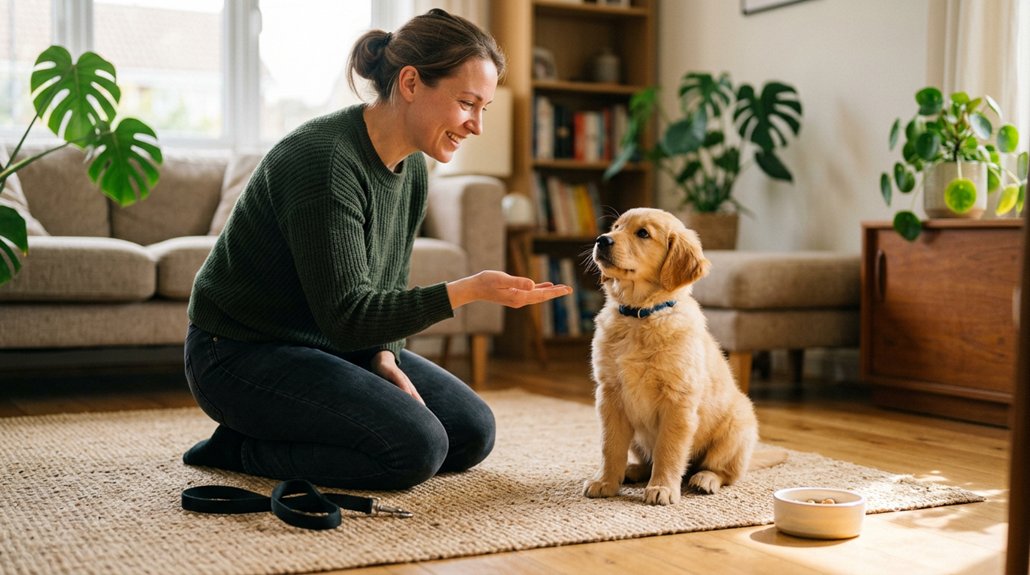
To use positive reinforcement skillfully, focus on rewarding your puppy’s desired behaviors immediately with treats, praise, or play, as this strengthens the connection between their actions and positive outcomes. Make sure you’re consistent with the timing of your rewards, providing them within seconds to reinforce the behavior effectively, which is essential for preventing overwhelm and promoting learning. By keeping interactions positive and celebrating small successes, you’ll help your puppy build confidence and maintain motivation throughout their training journey.
Reinforce Desired Puppy Behaviors
When you’re training your puppy, skillful use of positive reinforcement transforms the learning experience into one that’s both effective and enjoyable. Proper treat timing is essential—reward your puppy immediately after they display the desired behavior. This quick response helps them connect the action with the reward. Reinforcement methods like offering praise or play also effectively motivate your puppy. Keep sessions short, around 5 to 10 minutes, to guarantee they stay engaged and excited to learn.
Gradually challenge your puppy with more complex tasks, providing consistent positive reinforcement to build confidence. Use a calm, upbeat tone; your emotional response directly influences their willingness to repeat the behavior. By maintaining consistency in cues and rewards, you help your puppy understand expectations and strengthen your bond together.
Consistent Reward Timing
While mastering consistent reward timing is an essential part of using positive reinforcement skillfully, you’ll find that it’s this precise timing that helps your puppy connect their actions with the rewards you’re providing. Effective reward timing is about giving treats, praises, or play within 1-3 seconds after the desired behavior. This immediate response fosters positive associations, helping your puppy understand which behaviors earn them rewards, encouraging repetition. Keep rewards engaging yet more enticing than distractions, maintaining your puppy’s focus and interest during training sessions. Over time, shift from frequent rewards to intermittent reinforcement, which strengthens and sustains learned behaviors. Monitor how your puppy responds, tweaking timing and choice of rewards to guarantee continual motivation and engagement in their training journey.
Encourage Frequent Positive Interactions
Successfully timing rewards sets the stage for nurturing positive interactions with your puppy, a cornerstone for using positive reinforcement effectively. During your puppy’s critical socialization period, engaging in playful exploration through gentle handling and new experiences is essential. Introducing them to friendly people and environments at a comfortable pace guarantees they develop adaptability. Positive reinforcement, using treats and verbal praise, reinforces good behavior and creates positive associations. This approach helps your puppy feel safe and secure as they encounter new stimuli. Consistent rewards for calm and positive responses help prevent anxiety, boosting their confidence. Gradually increase the complexity of interactions, allowing your puppy to acclimate without feeling overwhelmed, fostering robust social skills and emotional resilience throughout their development.
Routine to Avoid Overwhelm
Establishing a consistent daily routine for your puppy can be a game-changer in reducing their anxiety and preventing overwhelm. With careful meal planning and structured training sessions, you provide a comforting structure they can rely on. Implementing this routine means dedicating specific times for meals, walks, and training to create predictability.
Creating a reliable daily routine for your puppy reduces anxiety and fosters a comforting structure they can trust.
Here’s a guideline to help your puppy feel secure:
- Meal Planning: Serve meals at the same time daily.
- Structured Training: Allocate short, focused sessions to build skills and boost confidence.
- Breaks and Downtime: Schedule regular rest periods, letting them recharge and process their activities.
- Safe Spaces: Use crates or playpens for quiet retreats when they’re overstimulated.
This approach guarantees a balanced day, helping your puppy thrive with ease.
Controlled Socialization Tips
To guarantee your puppy’s socialization process is effective without causing stress, start by introducing them to new stimuli from a comfortable distance, gradually working toward closer interactions as they adjust. Engage them in positive interactions with well-behaved dogs to foster a friendly environment while always keeping an eye on their body language for any signs of anxiety. If you notice trembling or withdrawal, it’s vital to pause and allow them to regroup, using treats and praise to create a positive association with each experience.
Gradual Exposure Strategy
When you’re introducing your puppy to new experiences, maintaining a gradual exposure strategy can be pivotal in avoiding overwhelming situations. Start by providing puppy comfort by positioning them at a distance from new stimuli. As they grow at ease, slowly decrease this distance, ensuring exposure balance. Varied experiences should be part of their routine but should always remain manageable for your puppy. Watch their body language closely; it’s empathetic to remove them from stressful environments to maintain positive associations.
- Begin with vaccinated dogs and friendly humans, expanding to diverse controlled scenarios.
- Include slightly intimidating sounds, easing them in sensitively.
- Opt for brief encounters followed by breaks, ensuring interactions remain enjoyable.
- Monitor stress signals, avoiding cumulative negativity during exposure.
Positive Interaction Techniques
Building on the gradual exposure strategy, fostering positive interactions through controlled socialization can markedly enhance your puppy’s confidence and well-being. Begin by using effective socialization techniques that introduce new experiences gradually. Start at a comfortable distance, letting your puppy decide when they’re ready to approach. Engage with a variety of friendly individuals to expose your puppy to diverse people, increasing their adaptability. Employ controlled environments like puppy classes with vaccinated dogs. During interactions, use positive distractions such as treats or play to create happy associations. Guarantee safe experiences so your puppy feels secure and relaxed.
Here’s a simple guide to help you along the way:
| Technique | Environment | Positive Distraction |
|---|---|---|
| Start at Distance | Puppy Classes | Treats |
| Friendly People | Controlled Areas | Toys & Play |
| Safe Exposure | Known Settings | Verbal Praise |
Monitoring Anxiety Signals
Although socializing your puppy is essential for their development, it’s important to be mindful of anxiety signals that they might display. Watch for anxiety triggers like trembling, hiding, or reluctance to engage. These often depend on unique puppy personalities, and addressing these early can prevent long-term fears. To manage anxiety:
- Gradually introduce new stimuli, letting your puppy set the pace rather than rushing encounters.
- Reward calm behavior with treats or praise; positive reinforcement builds confidence and alleviates anxiety.
- Control the environment by avoiding high-traffic areas and loud noises to foster a calmer atmosphere.
- Space out social interactions so your puppy can decompress and process new experiences without stress.
Each puppy’s journey is different, so patience and attentiveness are key.
Recognizing and Addressing Early Signs of Fear
It’s essential to recognize the early signs of fear in your puppy to prevent overwhelming them and guarantee a positive developmental experience. Observing fearful behavior like trembling, hiding, or attempts to escape is vital in puppy communication. When your puppy retreats from new stimuli or vocalizes through whining and barking, they’re signaling anxiety and need reassurance. Such signs suggest that they’re overwhelmed and might benefit from a break. Pay close attention to physiological responses like excessive salivation, which indicate they’re struggling. Addressing these signs promptly helps prevent long-term anxiety issues. If your puppy displays any signs of distress, create a calm environment and gradually reintroduce them to the situation, ensuring a safer, more positive socialization journey.
Building Confidence Through Handling Practices
Recognizing early signs of fear is just one part of preventing puppy overwhelming; equally important is fostering confidence through everyday handling. Start early, ideally within the first few weeks of your puppy’s life, with consistent exposure to gentle handling. Use varied handling techniques to build their confidence: hold your puppy in different positions, and touch their paws and ears. This not only prepares them for future experiences like vet visits and grooming but also reinforces positive social skills.
When you’re interacting with your puppy, keep an eye out for signs of discomfort:
- A stiff body
- Attempts to escape
- Yawning or lip licking
- Whining or barking
Adjust your approach accordingly—your empathy and understanding are crucial for effective confidence building.
Frequently Asked Questions
What to Do When Your Puppy Is Overwhelming You?
When your puppy’s overwhelming you, establish a structured routine with consistent puppy training and socialization tips. Use gates and crates for safe spaces, seek professional guidance, and connect with support groups. You’re not alone in this journey.
What Is the 7 7 7 Rule for Puppies?
The 7-7-7 Rule for puppies suggests introducing them to seven people, places, and experiences to enhance puppy enrichment and puppy socialization. Gradually exposing them guarantees they’re not overwhelmed, fostering confidence and adaptability comfortably.
What Month Is Hardest With a Puppy?
The month when puppies face more spirited antics is around 4 to 6 months. You’re dealing with adolescent energy and seasonal adjustments that test patience. Enjoy the challenges with empathy, structured routines, and engaging activities to ease this phase.
What Is the 3-3-3 Rule With Puppies?
The 3-3-3 rule guides you through a puppy’s adjustment: first three days of stress, three weeks of settling, and three months of comfort. Focus on socialization tips and puppy training to ease their adaptation empathetically.
Conclusion
You’re doing a lot to guarantee your puppy feels safe and secure. Did you know that puppies under three months of age can sleep up to 18 hours a day? This staggering statistic highlights the importance of balanced play and rest. By recognizing signs of overwhelm and using gradual introduction techniques, you’re setting your puppy up for confidence-building experiences. Remember, a well-paced routine and gentle socialization can prevent fear. Your empathy and commitment are key to raising a happy, well-adjusted pup.