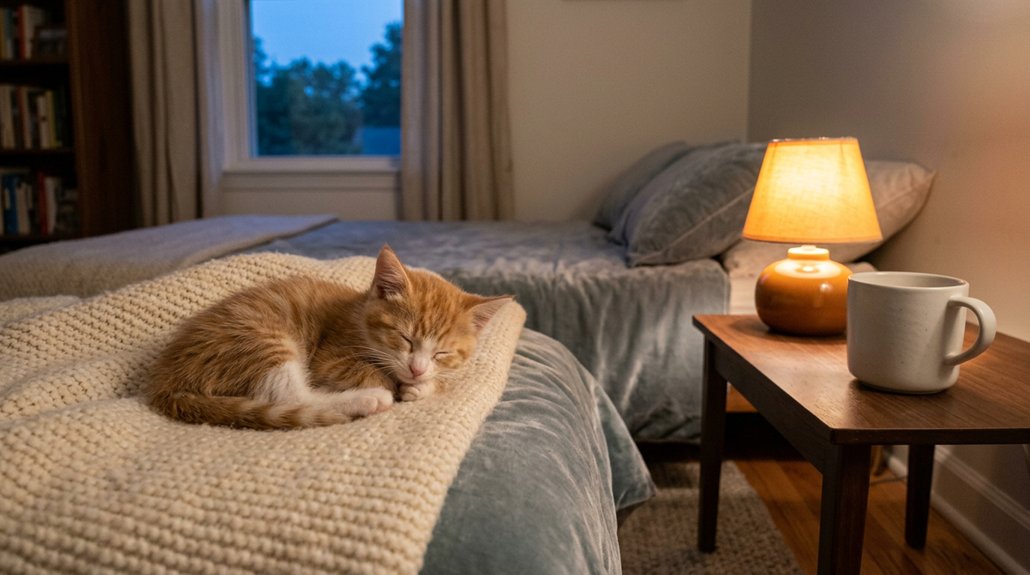
To help your kitten sleep through the night, align with their natural crepuscular sleep patterns by establishing a structured play and feeding schedule. Create a cozy bed space with familiar scents, soft blankets, and maintain a warm environment. Engage in active play sessions during the day and keep the nights calm with soothing sounds to minimize anxiety. It’s important to address nighttime disturbances calmly, focusing on teaching independent sleep habits. Discover more effective strategies for promoting restful nights.
Key Takeaways
- Provide warm, cozy bedding with familiar scents to enhance comfort and security.
- Maintain a consistent feeding and play schedule to regulate sleep patterns.
- Engage in intense interactive play sessions during the day to expend energy.
- Avoid responding to nighttime cries to promote independent sleep habits.
- Use calming background sounds like gentle music or white noise to support relaxation.
Understand Kitten Sleep Patterns
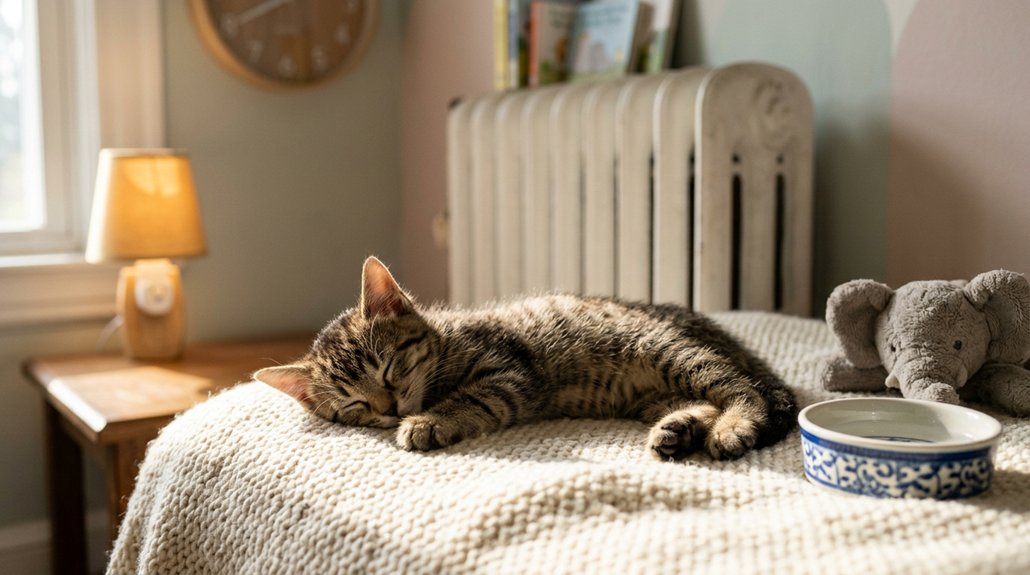
Understanding kitten sleep patterns is essential for fostering a comfortable environment for your new pet. Kittens generally require 18 to 20 hours of rest each day. However, their sleep cycles may not align with your own, as they’re often punctuated by bouts of nocturnal wakefulness. During the shift to a new home, your kitten might wake frequently at night, driven by anxiety and a natural instinct to explore. It’s important to recognize that kittens are crepuscular, meaning their nighttime behavior often peaks at dawn and dusk. To accommodate these innate behaviors, observing their sleep cycles can aid in predicting periods of activity. Such understanding guarantees they get the rest necessary for growth, energy, and exploration.
Build a Cozy Bed Space
To build a cozy bed space for your kitten, guarantee it includes a warm and inviting bed with high sides to foster a sense of security. Position the bed in a draft-free location to maintain warmth and consider adding soft blankets and familiar scents to ease any anxiety. Having essential items like food, water, and a litter tray nearby can help prevent nighttime disruptions and enhance the kitten’s resting environment.
Ensure Warmth and Comfort
When you’re helping a kitten adapt to a new environment, ensuring warmth and comfort is paramount for fostering a restful sleep. Providing a cozy bed with high sides boosts sleep safety, offering the kitten a sense of security in their nighttime environment. Use soft blankets or a familiar item with the kitten’s scent to alleviate anxiety and enhance relaxation. Position the bed in a draft-free area ensuring the kitten stays warm and undisturbed. For additional warmth during colder months, consider a warm water bottle wrapped in a blanket. Establishing this dedicated sleeping space promotes independent sleep habits, assisting your kitten in acclimating smoothly to their new surroundings, ultimately creating an ideal environment for a peaceful night’s rest.
Choose Secure Sleeping Location
Having addressed warmth and comfort, it’s now important to focus on selecting a secure sleeping location for your kitten. Opt for secure sleeping choices that include a cozy bed with high sides; this boosts your kitten’s sense of safety. Position the bed in a draft-free area to guarantee temperature stability overnight. Consider elevated bed options to cater to your kitten’s instinctual desire for safety and a superior vantage point. Integrate familiar scents, like a blanket or an old sweater, to ease any anxiety they might have in unfamiliar settings. Keeping essential resources—food, water, and a litter tray—nearby will guarantee your kitten can rest comfortably without anxiety. Strategic bed placement and careful design encourage restful, uninterrupted sleep.
Set a Predictable Play and Feeding Schedule
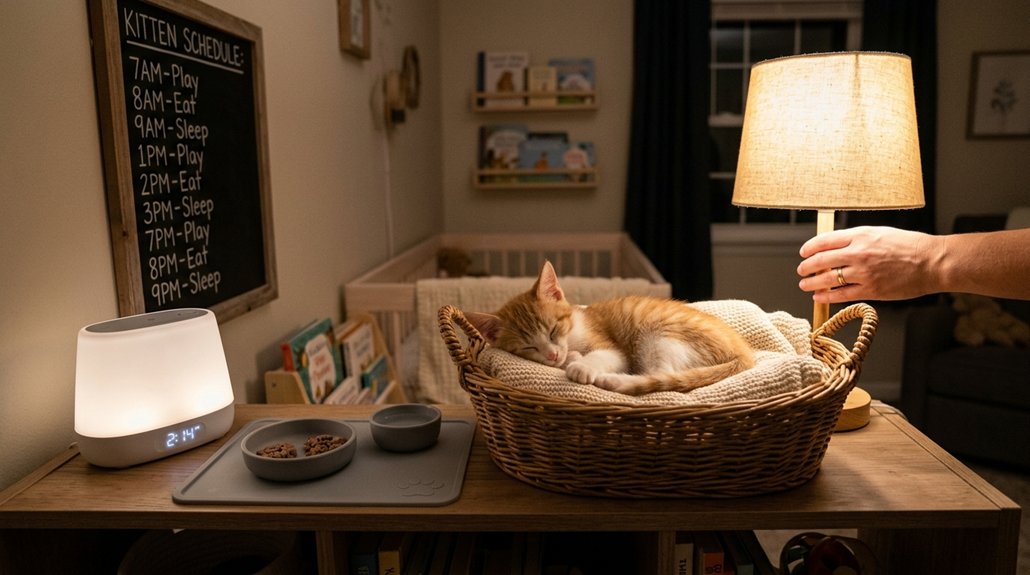
Establishing a structured play and feeding schedule can greatly enhance your kitten’s ability to sleep through the night. Begin with a predictable feeding frequency by providing three meals daily, each spaced six to eight hours apart. This regulates energy levels and minimizes nocturnal activity. As part of evening rituals, engage your kitten in interactive play just before offering its last meal. A bedtime feeding around 9:30 PM for an 11 PM sleep time can align with its natural hunting instincts, promoting drowsiness. Consistency in these routines helps your kitten comprehend its environment, fostering security and better sleep. By monitoring and gradually adjusting your kitten’s schedule, you can guarantee your sleep patterns are in sync with theirs effectively.
Promote Active Play During the Day
To support a kitten’s sleep routine, focus on scheduling interactive play sessions throughout the day. Use toys that encourage natural hunting behaviors, like feather wands and food-dispensing toys, to provide mental and physical stimulation. By implementing consistent play routines, you can help align their energy levels and sleep patterns with your own schedule.
Schedule Interactive Play Sessions
While it’s tempting to let your kitten lounge during the day, scheduling interactive play sessions can promote essential physical exercise and mental stimulation. Incorporate interactive toys like feather wands or laser pointers to encourage active participation. These mimic natural movements and help expend energy efficiently. Plan several short sessions throughout the day, aiming for increased intensity as part of the evening routine. This prepares your kitten for restful sleep by signaling that bedtime is near. Engaging in these stimulating activities doesn’t just guarantee your kitten’s physical well-being but also fosters a disciplined routine. Consistency in active play before bed establishes a calming environment, making it more likely for your kitten to sleep through the night without disruptions.
Encourage Natural Hunting Behaviors
Mimic your kitten’s innate hunting instincts by encouraging active play throughout the day. Engaging your kitten in intense play sessions mimics their natural hunting behaviors, effectively exhausting their energy and encouraging better sleep at night. Utilize hunting toys such as interactive laser pointers or feather wands, which provide instinct stimulation and physical exertion. Schedule these play sessions to align with your kitten’s natural activity cycles, especially in the early morning and late afternoon, to help regulate energy levels for a calmer nighttime routine. Additionally, consider incorporating food-dispensing toys during the day. These toys simulate the hunt-catch-consume cycle, offering both mental and physical engagement, which can considerably reduce nighttime activity, thereby promoting restful sleep.
Implement Consistent Play Routines
Engaging your kitten in consistent play routines is essential to promoting active behavior during the day, which helps establish a balanced sleep pattern. By focusing kitten energy through interactive toys, you can guarantee they’ve expended excess energy before bedtime. Use elements like laser pointers and wand toys for 15-30 minutes, particularly after their last nap, to maximize playtime benefits. Incorporating food-dispensing toys simulates hunting and provides mental stimulation, reducing evening restlessness.
| Time of Day | Activity Type | Duration |
|---|---|---|
| Morning | Wand Toy Session | 15 minutes |
| Afternoon | Laser Pointer Chase | 20 minutes |
| Early Evening | Food-Dispensing Toys | 15 minutes |
| Late Evening | Intense Play Session | 30 minutes |
Align these routines with feeding schedules for predictable, secure changes.
Handle Nighttime Wake-ups Without Stress
Handling nighttime wake-ups without stress is essential for both the kitten’s development and your peace of mind. Engaging in sleep training early on supports the establishment of a firm nighttime routine. Start by ignoring the kitten’s cries at night; reacting can reinforce undesirable behavior. Instead, promote restfulness by offering intense play sessions throughout the day—especially close to bedtime—to help expend excess energy. Introduce short periods of solitude during the day, gradually helping the kitten adjust to being alone and diminishing nighttime separation anxiety. Consistency is key: maintain a routine that shifts from active play to quiet time, signifying bedtime. Additionally, ensuring a cozy sleeping environment can assist in mitigating stress and encourage uninterrupted rest.
Use Familiar Scents and Sounds to Soothe
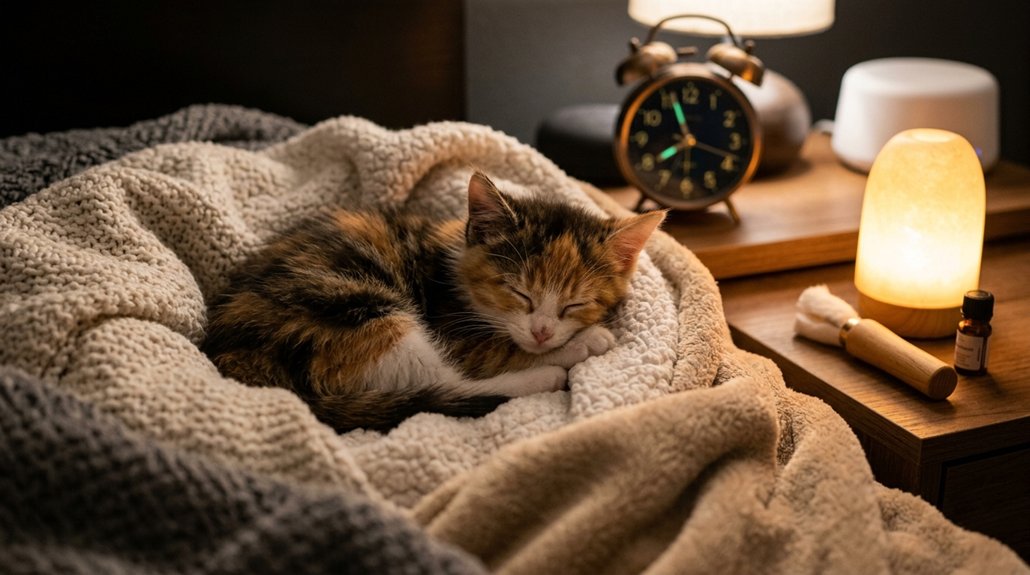
To help your kitten feel secure and relaxed at bedtime, incorporating familiar scents and sounds can be highly effective. Utilize items like scented blankets from their previous home to ease anxiety. Calming sounds, such as gentle music or white noise, replicate the soothing environment provided by their mother and littermates. Rhythmic sounds from a ticking clock or warmth from a water bottle wrapped in a towel imitate sibling presence, enhancing safety. Gradually expose your kitten to these comforting stimuli to aid acclimation and reduce nighttime restlessness. Consistent use establishes a secure sleeping routine, aligning their internal clock for nighttime tranquility.
| Familiar Scents | Calming Sounds |
|---|---|
| Scented blankets | Soft music |
| Article of clothing | White noise machine |
| Warm water bottle | Ticking clock |
| Gradual home exposure | Rhythmic warmth sounds |
Frequently Asked Questions
How to Make a Kitten Fall Asleep at Night?
To make a kitten fall asleep at night, implement calming techniques like dim lighting and gentle snuggles. Develop a consistent bedtime routine with interactive play before feeding, then settle into a cozy, secure sleep space for comfort.
What Is the 3-3-3 Rule for Kittens?
The 3-3-3 rule for kittens outlines three stages of adjustment: initial stress within three days, routine development in three weeks, and full acclimatization by three months. It’s essential for understanding and guiding kitten behavior during change.
At What Age Do Kittens Start Sleeping Through the Night?
Most kittens start sleeping through the night around one year old. To aid their progress, establish consistent kitten sleep patterns with a regular nighttime routine, including feeding and playtime, helping them adapt and rest peacefully.
Can I Ignore My Kitten Crying at Night?
Yes, you can ignore your kitten’s crying at night as long as you’ve confirmed all needs are met. Establish a calming nighttime routine and use soothing strategies to help them adjust and learn self-soothing.
Conclusion
Helping your kitten sleep through the night involves understanding their unique sleep patterns and creating a conducive environment. Did you know kittens sleep approximately 16-20 hours a day? This statistic highlights why mastering their schedule is essential. By establishing a cozy bed, a predictable play and feeding routine, and using comforting scents and sounds, you can ease nighttime restlessness. Addressing wake-ups calmly teaches your kitten nighttime isn’t playtime, ensuring peaceful nights for both of you.