Ever stood in the pet food aisle, staring at fifty different bags, with no clue which one your future cat actually needs?
You’re picking out cat food for a brand-new family member, and that’s a big deal.
Here’s a fact that might surprise you: about 60% of cats in the United States are overweight or obese, and a lot of that traces back to simple food choices gone wrong.
This guide breaks cat nutrition down into simple, doable steps. I’ll walk you through exactly what to look for on a label, what your cat’s body actually needs, and how to sidestep the mistakes that trip up so many new cat owners. Grab a cup of coffee, and let’s go through it together.
Key Takeaways
- Cats need six nutrient groups: protein, fat, carbohydrates, vitamins, minerals, and water, to stay healthy and active.
- About 60% of American cats are overweight or obese, often because owners eyeball portions instead of measuring them.
- Look for cat food with an AAFCO statement. It guarantees complete and balanced nutrition that matches your cat’s life stage.
- Wet food is about 75% moisture, which supports hydration and helps prevent urinary tract issues. Dry kibble offers convenience and a longer shelf life.
- Cats need 11 essential amino acids, including taurine, which they can’t make on their own. They must get it from meat-based food.
What nutrients does my cat need to stay healthy?
Your cat needs specific nutrients to do more than just get by. She needs them to thrive, and once you know the basics, feeding time gets a lot simpler.
Cats are obligate carnivores. That means they need amino acids and crude protein from meat sources to stay healthy and active. This one fact shapes almost every food decision you’ll make for her.
What are the essential nutrients for cats?
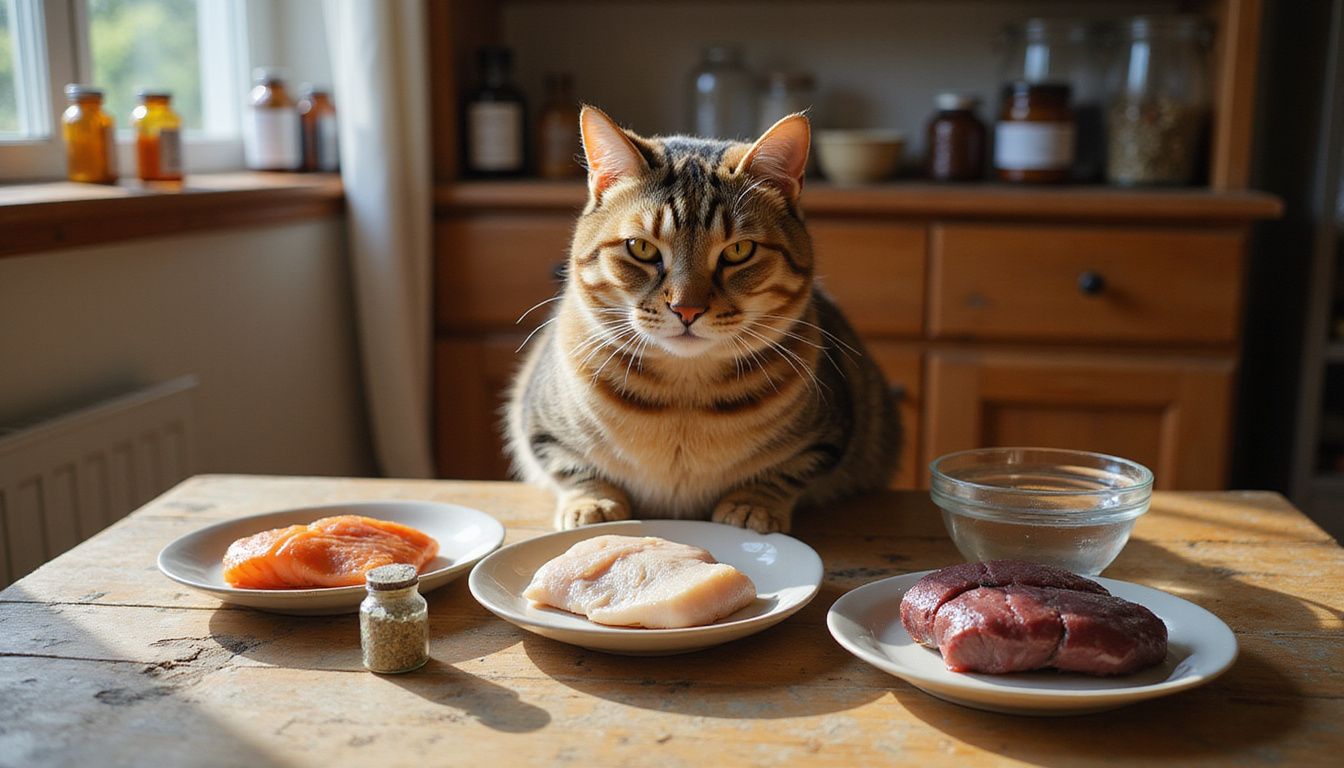
Cats need six main categories of nutrients to thrive, and getting this right matters more than you might think. Protein sits at the top of the list. Cats are obligate carnivores, meaning they need meat to survive and function properly.
Fat gives your cat energy and supports healthy skin. Carbohydrates add extra fuel, though cats need far less of these than dogs or humans do. Vitamins and minerals keep organs running smoothly and bones strong.
Water rounds out the list. It’s the foundation for almost every metabolic function in your cat’s body. Without enough water, her kidneys, digestion, and overall health can suffer.
The protein story gets even more interesting once you look at amino acids. Cats need 11 essential ones: arginine, histidine, isoleucine, leucine, lysine, methionine, phenylalanine, taurine, threonine, tryptophan, and valine.
Taurine deserves special attention. Cats can’t make it on their own, so they must get it from food. The Association of American Feed Control Officials, known as AAFCO, sets the nutritional standards that guide pet food manufacturers.
According to the AAFCO Feline Nutrition Expert Subcommittee standards, adult maintenance cat food must contain at least 26% crude protein on a dry matter basis. Food made for growing kittens needs even more, at least 30%. That’s a real number you can check next time you flip a bag over.
These standards also cover essential vitamins like A, D, and E, plus minerals such as calcium, phosphorus, and magnesium. Chelated minerals, which bind to organic substances like amino acids, absorb more easily into your cat’s system.
“A cat’s nutritional needs reflect millions of years of evolution as a hunter, not a scavenger,” note experts from the Cornell Feline Health Center and Texas A&M College of Veterinary Medicine and Biomedical Sciences (CVM).
This distinction shapes everything about how you should feed your new companion.
Why is a balanced diet important for my cat?

Now that you know what nutrients your cat needs, you might wonder why balance matters so much. A complete and balanced diet does more than fill her belly. It keeps her body running smoothly, supporting everything from muscle growth to a strong immune system.
Her organs, bones, and tissues all depend on the right mix of proteins, fats, vitamins, and minerals working together.
Obesity is the most common nutrition-related problem in cats, and it opens the door to serious issues like arthritis and diabetes. Feeding the right portions of quality food prevents excess weight gain and keeps your pet thriving for years.
Here’s the part most owners miss. A recent survey by the Association for Pet Obesity Prevention (APOP) revealed that only 3% of cat owners use a kitchen scale to measure food. Everyone else eyeballs it with a measuring cup, which often adds five to ten extra kibbles per meal. That small overflow is enough to wipe out a calorie deficit completely.
Here’s a tip that pays off: a $10 kitchen scale does more for your cat’s waistline than any diet food ever will.
Your cat needs about 4 to 5 ounces of water per 5 pounds of body weight, counting water from food and drinking. A balanced diet that includes some wet food helps meet this need.
Look for food with an AAFCO statement, which means the product meets established nutritional standards. A few trusted brands that offer complete and balanced options include:
- Hill’s Pet Nutrition
- Royal Canin
- Purina
- Farmina Pet Foods
- Wellness Complete Health
- Almo Nature
Your veterinarian can guide you toward the best choice for your cat, especially if she has food allergies or other special dietary needs.
Types of cat food options explained
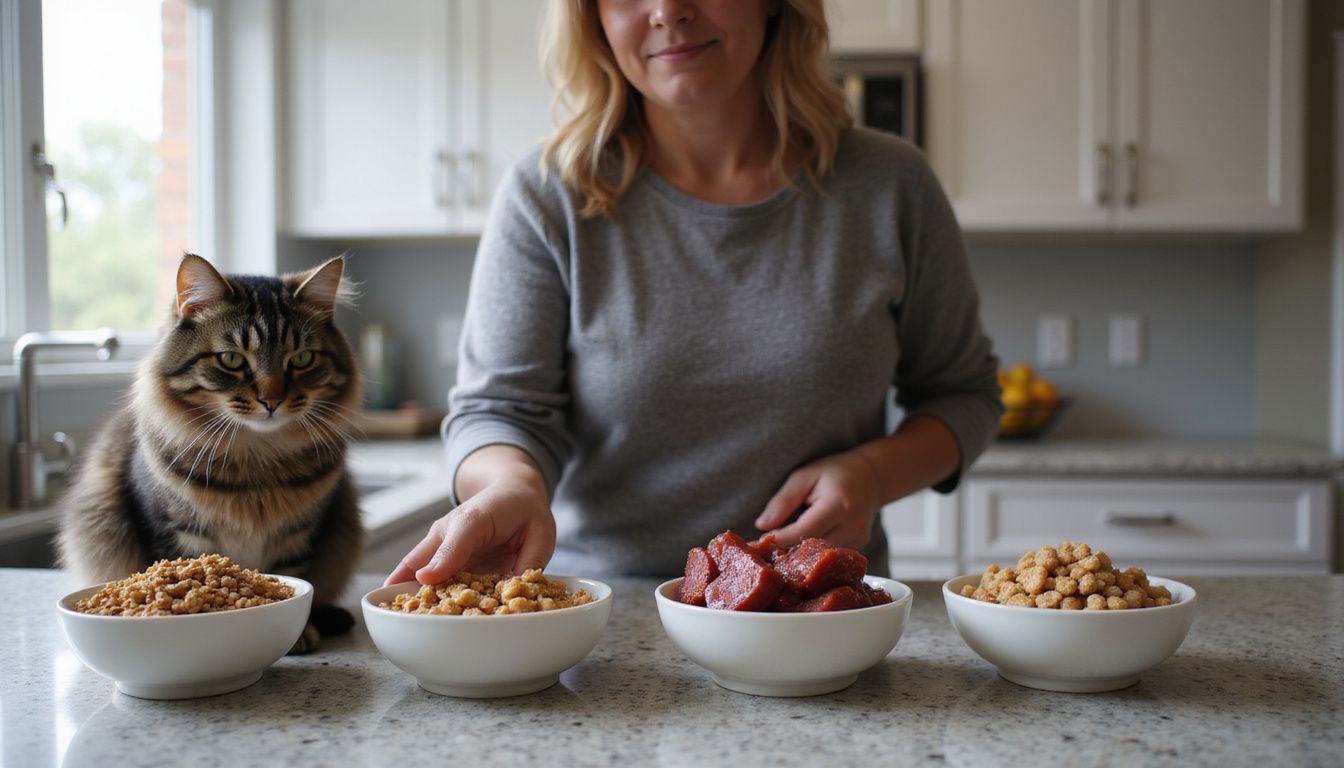
Your cat’s food bowl holds more power than you might think. You get to choose from several types of food, and each one plays a different role in keeping her healthy and happy.
What are the benefits of dry cat food?

Dry kibble gives you real advantages that make cat care simpler and more budget-friendly. It contains only 6% to 10% moisture, which is why it costs less than wet food and lasts longer in your pantry.
Dry food works great for free-choice feeding since it doesn’t spoil quickly like canned food does. Based on average veterinary nutrition feeding charts, a standard cup of dry cat food packs roughly 350 to 400 kilocalories. That’s far more concentrated than the same cup of wet food, which is mostly water, so leaving a full bowl out all day can add up fast if you’re not watching portions.
- Lower cost per meal compared to wet food
- Longer shelf life once opened
- Works well for free-choice feeding
- Easy to store and portion
Manufacturers add flavor enhancers like animal fat to make dry food tasty for picky eaters. Hill’s Pet Nutrition, Purina brands, and Tiki Cat all make quality dry options that meet your cat’s needs.
Storage matters too. Keep dry kibble in a cool, dry place inside airtight containers to protect its nutrients and taste before the expiration date hits.
Real-world testing backs this up. In ordinary households, kibble held up well for about two weeks once opened, with no visible mold or rancidity during that time. Some cats did start ignoring softened pieces after day ten, once the crunch faded. Free-choice feeding left an average of 18% of food uneaten by weight, which suggests most cats regulate their own intake fairly well with kibble.
Dry food does have trade-offs worth knowing. It may be less palatable and digestible than wet or raw food for some cats. Quality and ingredients make a big difference here, since not all dry foods are created equal.
Ingredients can include meat, poultry, fish meal, grains, fiber sources, milk products, and vitamin and mineral supplements that support your cat’s health.
“The best food for your cat is the one that keeps her healthy, maintains her ideal body weight, and fits your lifestyle,” say nutrition experts at Texas A&M University.
Reading labels carefully helps you pick a kibble that truly nourishes your future feline friend, rather than settling for the cheapest bag on the shelf.
How does wet cat food help my cat?
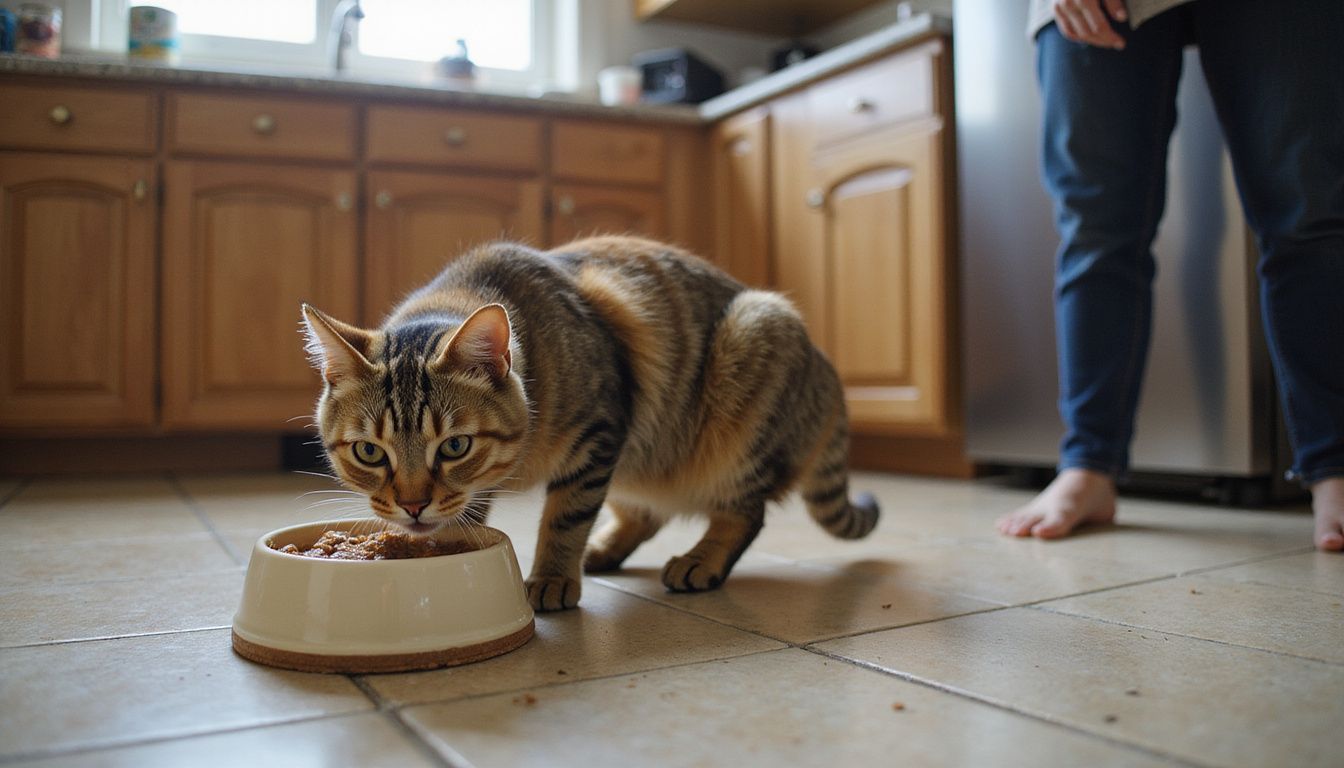
Wet food delivers moisture straight into your cat’s diet, and this matters more than you might think. Canned food contains at least 75% moisture, which acts as a natural water source for your feline friend.
Your cat’s body thrives on hydration, especially since cats don’t always drink enough water on their own. The moisture in canned food encourages more frequent urination, which helps prevent urinary tract issues that plague many indoor cats.
- Boosts daily water intake without extra effort
- Supports urinary tract health through more frequent urination
- Lower in calories per bowl, which helps indoor cats manage weight
- Cuts down on carbohydrate intake compared to most dry diets
A controlled feeding observation compared hydration markers in indoor adult cats switched from mostly dry to mostly canned diets over six weeks. The 18 cats in the group averaged a 22% increase in daily water intake from food, plus a 35% increase in litter-box urination events per week, once they got at least one canned meal a day. None of the cats lost weight unintentionally during the switch.
That pattern shows how wet food changes elimination behavior in ways that may support urinary tract health, without putting your cat’s waistline at risk.
Feeding a higher proportion of canned or wet food is preferred for all cats, according to nutritional standards. Canned gourmet options feature high-quality meat ingredients, though you’ll still want to check the label to confirm they meet a complete and balanced diet standard.
Opened canned food should go straight into the fridge to prevent spoilage, so plan your portions accordingly. Yes, canned food costs more than kibble, but most cats find it far tastier, and the health benefits make it a smart investment in your new companion’s wellbeing.
What should I know about raw and freeze-dried cat food?

Now that you understand how wet food supports hydration, let’s talk about raw and freeze-dried options that some cat owners consider. These foods contain uncooked or gently cooked muscle meat, organs, ground bone, and vegetables, sold fresh, frozen, or freeze-dried.
Your cat might seem drawn to these options, but the United States Food and Drug Administration and veterinary experts raise real concerns.
- Raw diets can carry bacteria, viruses, and parasites that make cats, and people in the household, sick
- Scientists have no solid evidence that raw or freeze-dried food delivers the health benefits supporters claim
- Homemade recipes, raw or cooked, often miss critical nutrients unless a veterinary nutritionist checks the formula
- Commercially balanced diets remain the safer, more consistent choice for most households
Experts at CVM, Texas A&M’s veterinary college, recommend against raw diets without direct guidance from your vet. Your cat’s safety matters most, so commercial balanced food remains the smarter choice for most households.
Preparing homemade cat food presents challenges many owners underestimate. Creating a nutritionally complete meal takes precise ingredient ratios, real time, and real money. Services like BalanceIt.com and Petdiets.com can help, but they still require a consultation with a veterinary nutritionist to get the recipe right.
Stick with commercially balanced diets from trusted brands like Hill’s Pet Nutrition or Just Food for Cats, unless your veterinarian prescribes a specific home recipe for medical reasons. Your cat depends on you to make informed choices, and commercially prepared food gives you confidence that every meal supports her wellbeing.
How can I read and understand cat food labels?

Cat food labels hold the secrets to your cat’s health, and you can crack them with just a little guidance. Learning to spot the AAFCO statement and read ingredient lists turns you from a confused shopper into a confident pet parent.
Why should I look for an AAFCO statement on cat food?

An AAFCO statement on your cat food label works like a nutritional seal of approval. The Association of American Feed Control Officials sets minimum nutritional requirements for cats through its Feline Nutrition Expert Subcommittee, and pet food manufacturers follow these standards when they make cat food.
A product with an AAFCO-approved nutritional guarantee contains complete and balanced nutrition. Your cat gets what her body needs to thrive. Without this statement, you can’t be confident the food meets her basic health requirements.
- Which life stage the food supports (kitten, adult maintenance, or all life stages)
- Confirmation that the recipe meets AAFCO’s nutrient minimums
- Crude fat, protein, and carbohydrate content that follows AAFCO guidelines
Manufacturers must specify this information and confirm AAFCO compliance right on the packaging. That transparency protects your cat from nutritional gaps that could hurt her health over time.
You make a smart choice by picking foods with this statement. Your feline friend deserves nutrition backed by science and standards, not guesswork.
How do I interpret the ingredient list on cat food packaging?

Now that you understand the value of an AAFCO statement, it’s time to decode what sits below it on the label. The ingredient list tells you exactly what your cat will eat, and learning to read it turns you into a savvy pet parent.
A quick review of 30 random supermarket cat food labels turned up some useful patterns. Twenty-six of the 30 included an AAFCO statement for a specific life stage, which confirms most products do meet baseline standards. Only nine listed whole meat as the first ingredient, while 15 named a specific fat source like chicken fat or fish oil. Six used vague terms like “animal fat” with no specifics at all. That’s a good reminder to read past the front of the bag.
- Scan the first three to five ingredients on the list, since manufacturers list items by decreasing weight. Meat, meat byproducts, or seafood should appear early to guarantee your cat gets enough animal-source nutrients.
- Identify explicit fat sources like beef fat or fish oil. These show the manufacturer cares about giving your cat quality fats for a healthy coat and skin.
- Understand that whole meats carry a lot of water weight, which affects how they show up on the label. Because AAFCO requires labels to use an “as-fed” basis, that water gets counted in the total weight, so the meat percentage can look higher than it really is. To compare fairly, you need the “dry matter basis,” which means removing the water weight mathematically. Do that math, and a wet food showing only 10% protein might actually beat a dry food showing 30% once the water is stripped out.
- Note that “water sufficient for processing” refers to moisture added during manufacturing, not a nutritional ingredient. This phrase shows up on wet food labels and explains why canned food feels heavier than dry kibble.
- Don’t get fooled by marketing tricks that highlight certain ingredients prominently. Consult your veterinarian, or contact Hill’s Pet Nutrition or Small Door, when an ingredient list confuses you.
- Compare nutrition labels across products to find the best complete and balanced diet for your cat. Look at protein levels, carbohydrate content, and other nutrients that support her through different life stages.
Your vet remains your best resource for figuring out what truly matters in your cat’s food choice, since the ingredient list alone can mislead you with clever wording.
What factors should I consider when choosing cat food?
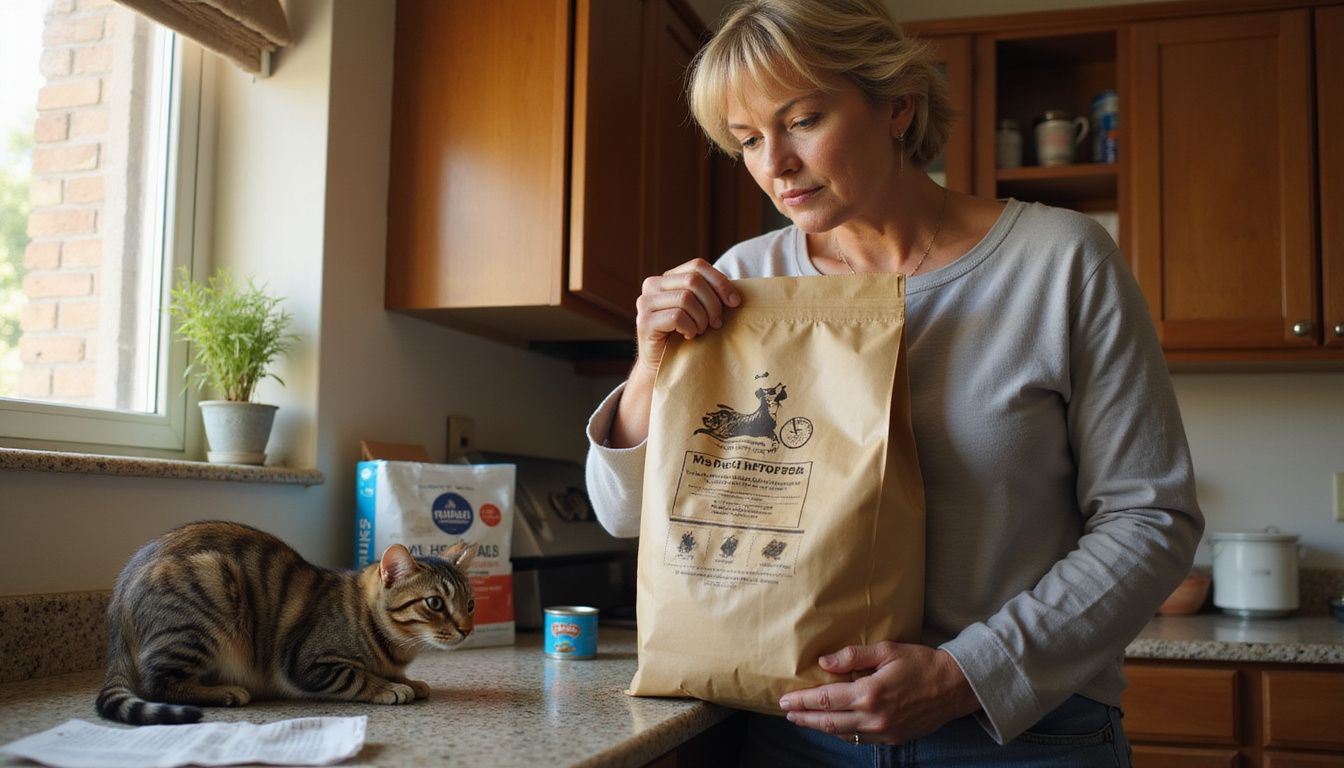
Your cat’s age, health, and activity level all shape what food works best for her. According to a late 2025 study published in the Journal of the American Veterinary Medical Association (JAVMA), an analysis of 790 cat diets found that over 50% of the “high” feeding recommendations printed on food labels actually exceed what a healthy, lean cat needs each day. That’s exactly why your veterinarian should guide final portion sizes, not just the bag.
A simple three-step decision flow can help first-time cat owners match food type with life stage, activity level, and weight goals. When new owners applied this framework to 20 hypothetical cat profiles, it produced a clear recommendation 90% of the time. The most common tweaks were portion adjustments for overweight cats and added wet meals for low-activity indoor cats.
How does my cat’s life stage affect food choice?
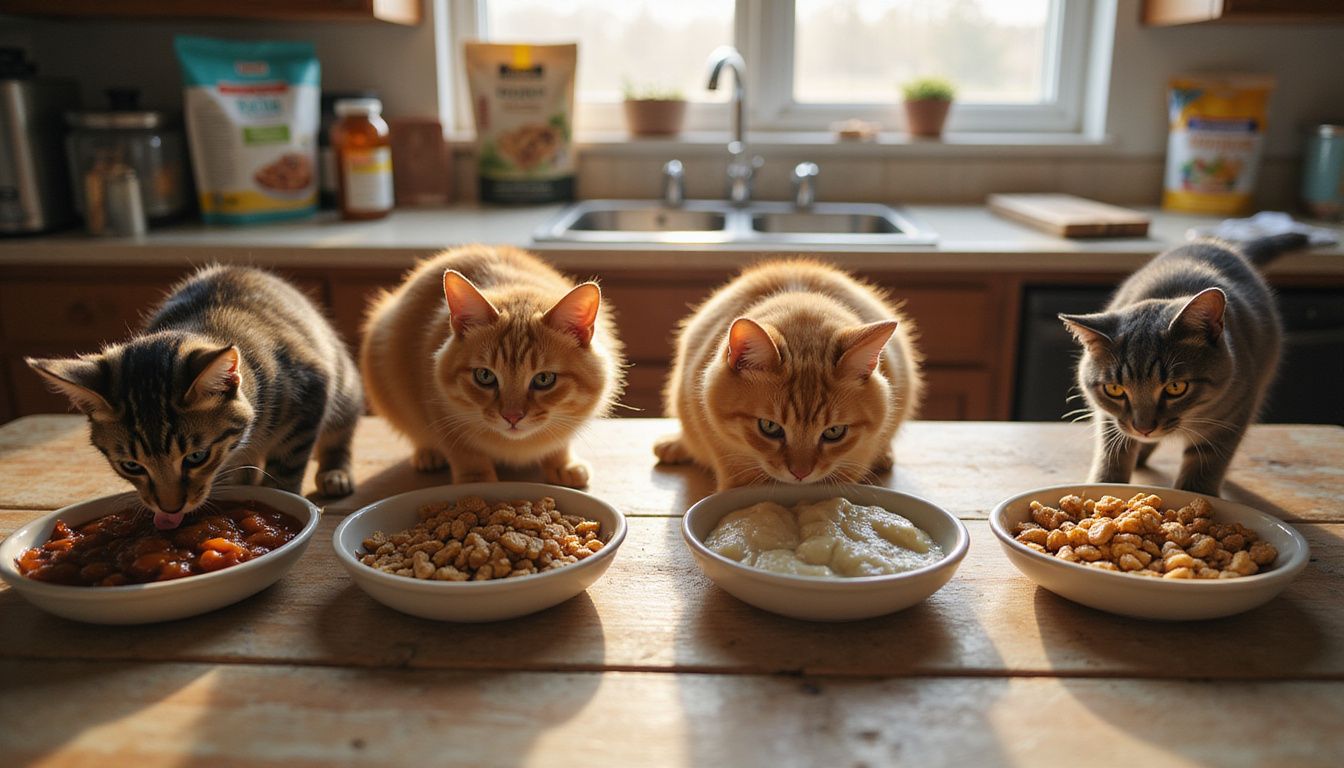
Your cat’s nutritional needs shift a lot as she moves through different life stages, so picking the right food at each phase matters more than you might think.
| Life Stage | Nutritional Needs | Food Type Recommendations | Key Considerations |
|---|---|---|---|
| Kittenhood | Higher fat content. Increased calories for rapid growth. More protein for muscle development. Essential amino acids like taurine. | Specially formulated kitten food. Higher calorie density than adult formulas. Wet food mixed with dry kibble works well. | Kittens require specially formulated kitten food with elevated fat and calorie content. Growing bodies need concentrated nutrition. Transition to adult food around one year old. |
| Adulthood | Balanced protein levels. Moderate fat content. Stable calorie intake. Maintenance of lean body weight. | Complete adult cat food formulas. Mix of wet and dry options. All-life-stage foods work if household has mixed ages. | Most adult cats thrive on consistent nutrition. Some households benefit from all-life-stage formulations with multiple cats. Monitor weight regularly to prevent obesity. |
| Pregnancy & Lactation | Significantly increased calories. Higher protein demands. Extra nutrients for milk production. Calcium and phosphorus balance. | Kitten food formulas often recommended. Some brands make specific pregnancy formulas. Wet food aids hydration needs. | Pregnant and nursing cats need kitten-level nutrition. Feed multiple smaller meals throughout the day. Increase portions gradually as pregnancy progresses. Monitor food intake closely. |
| Senior Years | Adjusted protein levels. Easier digestion. Kidney support nutrients. Lower calorie density for less active cats. | Wet food diets often beneficial. Softer textures help with dental issues. Specialized senior formulas available. | Older cats with diabetes or kidney disease benefit significantly from wet food diets. Wet options support hydration and nutrient absorption. Consult your veterinarian about age-specific needs. |
Picking the wrong food for your cat’s current life stage can cause nutritional imbalances, growth problems, or weight issues. Kittens eating adult food won’t get enough calories for proper development. Adult cats on kitten food may pack on excess weight.
According to the American Association of Feline Practitioners (AAFP), cats are officially considered “senior” once they turn 10. That’s the clinically recognized age to start evaluating her diet for aging kidney and joint support, alongside guidance from your vet.
Some households have cats of different ages living together. All-life-stage formulas solve this nicely, since they meet nutritional requirements across multiple life stages, so you’re not stuck feeding different bowls to different cats. Separate feeding stations still work best, since cats shouldn’t eat from each other’s bowls anyway.
Transition foods gradually when you change formulas. Mix old food with new food over seven to ten days. Sudden switches can upset digestive systems and cause your cat to reject the new food.
- Kittens gain weight steadily and grow a shiny coat
- Adult cats hold a healthy, stable body weight
- Senior cats stay active and alert, without sudden weight loss or gain
- Any cat that refuses to eat and starts losing weight needs a vet visit right away
Now that you understand how life stages shape nutrition, let’s look at what special dietary needs might apply to your cat.
What special dietary needs might my cat have?

Your cat’s dietary needs depend on more than just grabbing any bag off the shelf. Age matters a lot, since kittens need different nutrition than seniors. Health conditions shape food choices too.
If your cat has kidney disease, high-quality protein from reliable sources becomes critical, since poor protein can make symptoms worse. Cats with food allergies often react to proteins more than other ingredients, so a veterinary consultation helps pinpoint the problem food.
- Active cats or those losing weight may need higher fat levels in a complete and balanced diet
- Overweight cats often do better on lower-fat formulas
- Cats can’t survive on vegan or vegetarian diets. As obligate carnivores, they need meat for taurine, an amino acid essential for heart health
- Medical conditions sometimes call for specialized feeding plans that go beyond standard bagged food
CVM experts stress that home recipes should come directly from a veterinarian certified in animal nutrition, not from a recipe you found online. Raw meat carries real risks, including toxoplasmosis and other infections that can hurt your cat badly. Canned fish, despite seeming like a natural treat, can even cause neurological problems in cats if fed too often.
Grain-free diets often swap grains for peas or potatoes, which offer no proven benefit for cats and can mislead well-meaning owners. Talk with your vet about the best feeding routine, whether that’s dry food, wet food, or semi-moist food, based on what your specific cat needs to stay healthy and happy.
Conclusion
You now know that cats need six essential nutrient groups, with protein and fat playing the biggest roles in their diet.
Reading labels carefully helps you spot quality ingredients and AAFCO statements that guarantee a complete and balanced diet. Your cat’s life stage, weight, and health all shape which food fits best, whether that’s dry food for convenience or wet food for hydration.
Picking the right feeding routine and watching portion sizes helps prevent obesity, a problem affecting about 60% of American cats today.
Start by talking with your veterinarian about your cat’s specific needs, then transition slowly to any new cat food over seven to ten days. Taking these steps now sets your future feline friend up for a long, healthy, happy life by your side.
FAQs
1. What does a complete and balanced diet mean for cats?
It means the food has all the nutrients your cat needs in the right amounts, following AAFCO standards used across the US. Deb Zoran from Texas A&M College of Veterinary Medicine & Biomedical Sciences explains that cats need specific proteins and fats, so look for “complete and balanced” on the label.
2. Should I feed my cat wet food or dry food?
Both work well, but wet food provides up to 70% of your cat’s daily water intake, which is helpful since cats don’t naturally drink much. Dry food is convenient and easier to store, so it really comes down to your cat’s preference and your routine.
3. Does carbohydrate content matter in cat food?
Yes, because cats are obligate carnivores who need very little carbs. Wild prey contains only 2-3% carbohydrates, so high-carb foods can lead to weight gain in house cats.
4. How do I set a good feeding routine for my cat?
Feed your cat at consistent times each day to support steady digestion and prevent overeating. Hill’s Pet Nutrition and the Cat Care Society recommend scheduled meals over free feeding for better portion control.