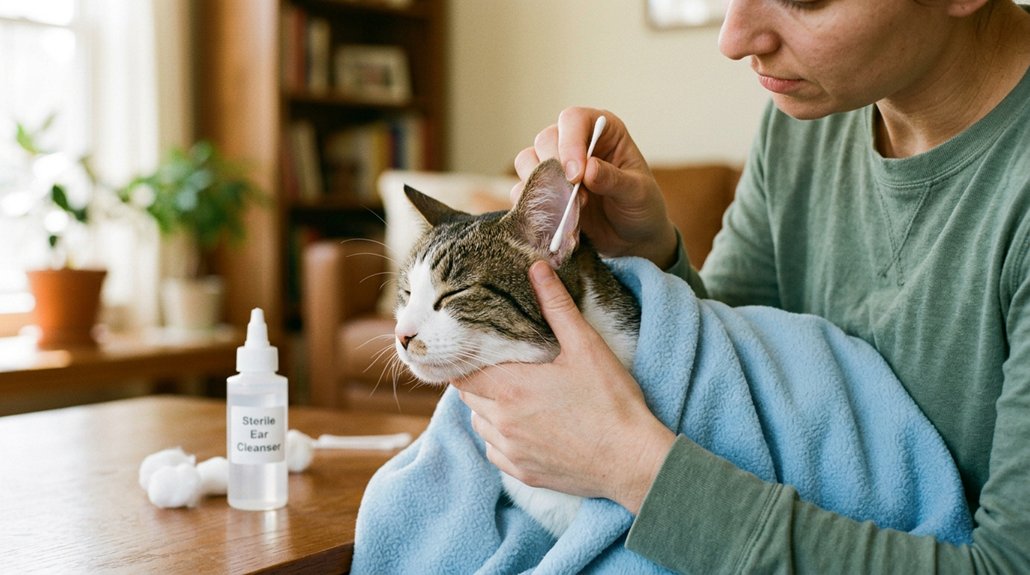
To safely clean your cat’s ears, inspect them weekly for wax or odors. Use a vet-recommended cat ear cleaner, avoiding alcohol or hydrogen peroxide products. Wrap your cat in a towel for calmness, apply a few drops of cleaner, then gently massage the base of the ear. Wipe away debris using cotton balls, avoiding deep insertion. Provide treats afterward. Keep an eye out for any lasting issues—there’s more to explore for maintaining healthy ears.
Key Takeaways
- Use veterinary-recommended, cat-safe cleaning solutions without alcohol or hydrogen peroxide to avoid ear irritation.
- Inspect your cat’s ears for excessive wax, redness, or foul odors before cleaning.
- Gently massage the ear base for 20-30 seconds after applying the ear cleaner.
- Use cotton balls or gauze to wipe away debris, avoiding deep insertion into the ear canal.
- Monitor for persistent odors or discharge and consult a vet if necessary after cleaning.
Why Cleaning Your Cat’s Ears Matter
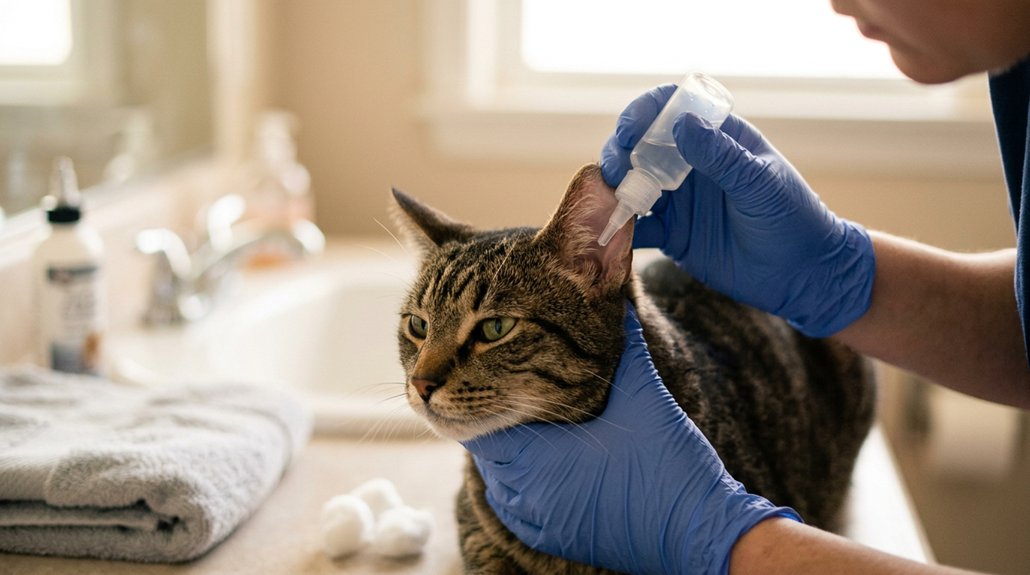
Ensuring your cat’s ears are clean is essential because it prevents the buildup of dirt, wax, and debris that could lead to infections and discomfort. Maintaining proper ear hygiene is vital not only for your cat’s comfort but also for infection prevention. Cats, particularly certain breeds with unique ear structures, often require regular ear cleaning to maintain ideal health. You’ll want to establish a routine, as a good ear cleaning regimen can greatly reduce the risk of infections, supporting your cat’s overall wellness. Remember, healthy cat ears should appear pink inside, odorless, and free from excessive wax. By keeping a vigilant check on these factors, you help safeguard your feline friend’s well-being, preventing potential ear problems before they start.
Spot When Your Cat’s Ears Need Some Care
How can you tell when your cat’s ears need some care? Start by regularly checking for excessive wax buildup, often dark brown or yellow, which signals they need cleaning. Pay attention to any foul odors wafting from your cat’s ears, as these might indicate an infection demanding immediate care. Observe your feline’s behavior; head shaking, scratching, or head tilting often indicate ear discomfort. Visible debris or inflammation in the ear canal can disrupt your cat’s ear health, necessitating cleaning. Consider your cat’s breed, as breeds with folded or fluffy ears typically require more frequent attention to prevent infections. By keeping these signs in mind, you can guarantee your cat maintains peak ear health, safeguarding their comfort and wellbeing.
How to Choose Cat-Safe Ear Cleaning Solutions
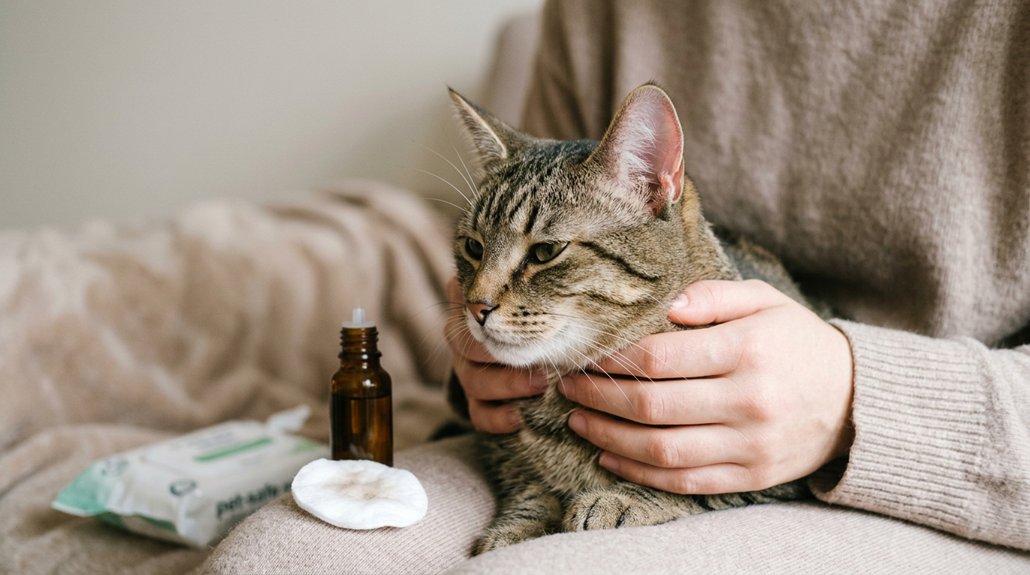
When choosing an ear cleaning solution for your cat, prioritize products specifically formulated for feline use, steering clear of those containing alcohol or hydrogen peroxide, as they can irritate delicate ear tissues. Opt for solutions with antibacterial or antifungal properties and make certain they are gentle, fragrance-free, and chemical-free to avoid any discomfort during cleaning. It’s wise to consult your veterinarian, who can provide recommendations tailored to your cat’s specific health needs.
Selecting Safe Ingredients
As you begin the task of selecting an ear cleaning solution for your feline friend, it’s crucial to verify that the product is specifically formulated for cats. Due to their sensitive ear canals, prioritize solutions with gentle ingredients and natural alternatives. Opt for alcohol-free and fragrance-free options to prevent irritation. Important properties like antibacterial and antifungal support ear health without adverse effects. These qualities help maintain cleanliness while safeguarding your cat’s well-being. Consulting your veterinarian provides personalized guidance tailored to your cat’s specific needs. Avoid compounds such as hydrogen peroxide that might aggravate sensitivity.
| Feature | Recommended | Avoid |
|---|---|---|
| Formulation | Cat-specific | General ear cleaners |
| Ingredients | Natural, fragrance-free | Hydrogen peroxide, vinegar |
| Properties | Antibacterial, antifungal | Alcohol-based |
Avoiding Irritating Compounds
To guarantee your cat’s ear health, it’s essential to select cleaning solutions that steer clear of irritating compounds. Opt for formulations specifically made for cats, making sure they include safe ingredients like natural antibacterial or antifungal agents that bolster ear health without harsh chemicals. Steer clear of products containing hydrogen peroxide or alcohol, which can lead to ear irritation due to their harsh nature on sensitive ear skin. Check labels for artificial fragrances—these can also cause discomfort and irritation. Additionally, consulting with a veterinarian is wise, especially if your cat has a history of ear issues or sensitivities—they can give tailored advice on suitable ear cleaners. Prioritize safe ingredients to guarantee a comfortable and irritation-free ear cleaning experience for your feline friend.
Gather Essential Supplies for Ear Cleaning
Before starting on the task of cleaning your cat’s ears, make certain you have all the essential supplies within reach to streamline the process and minimize stress for both you and your feline friend. Effective ear cleaning techniques begin with a cat-safe ear cleaning solution—avoid anything with alcohol, hydrogen peroxide, or fragrances. Cotton balls or gauze are critical for gently wiping the outer ear and removing debris without pushing dirt further inside, so sidestep cotton-tipped applicators. For cat behavior tips, offer treats afterward to create positive associations. Wrapping your cat in a towel or blanket might help keep them calm and secure. Consult your vet before buying supplies suitable for your cat’s specific needs, ensuring maximum safety and efficacy.
Prepare Your Cat for Cleaning
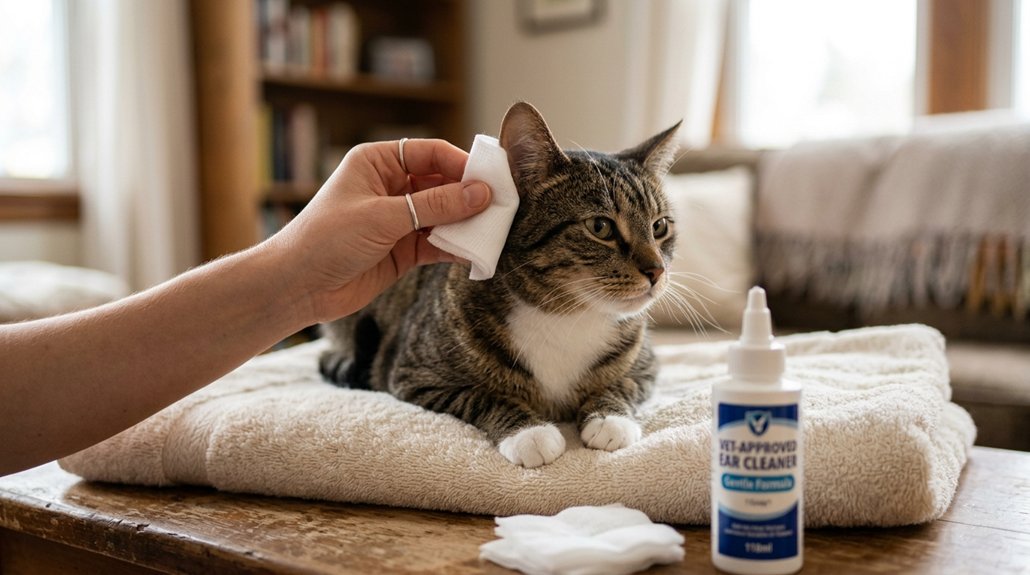
To prepare your cat for ear cleaning, start by creating a calm environment to keep them relaxed. Gently secure your cat using a towel, which helps limit sudden movements and makes them feel safe. Position them comfortably in your lap or on a stable surface facing away from you for better access to their ears.
Gather Necessary Supplies
Cleaning your cat’s ears requires careful preparation to guarantee a smooth and comfortable experience. Start by focusing on gear selection. Choose a high-quality cat ear cleaning solution, confirming it’s free from alcohol and hydrogen peroxide to minimize irritation. For cleaning techniques, prepare cotton balls or gauze—avoid cotton-tipped applicators, which can push debris deeper into the ear canal. Keep treats handy to reward your cat post-cleaning, fostering a positive experience. Consider using a towel or blanket to gently wrap your cat, preventing sudden movements. Proper lighting is essential for inspecting your cat’s ears for any debris or inflammation before proceeding. Gathering these supplies promotes a safer and more efficient cleaning process, making the experience comfortable for both you and your feline friend.
Ensure Calm Environment
Once you’ve gathered all the necessary supplies, the next step is to create a calm environment for ear cleaning. Start by choosing a quiet and warm space, free of distractions, to help your cat feel secure. Play calm music softly and introduce soothing scents like lavender to ease their anxiety. Allow your cat to explore the cleaning supplies; this familiarization reduces stress. Wrap your cat gently in a towel, leaving only their head exposed, to prevent sudden movements. Speaking softly and reassuringly will build trust and maintain a serene atmosphere. Take your time, and proceed slowly—this guarantees your cat remains relaxed. By following these steps, you’ll reduce your cat’s stress and set the stage for a smooth ear cleaning.
Secure Cat Gently
Guaranteeing your cat’s comfort is essential before beginning the ear cleaning process. Start by gently wrapping your cat in a towel to limit its movement and reduce stress. Choose a quiet, comfortable environment that puts your feline friend at ease. With gentle handling, place the cat in your lap or on a stable surface. Keep one hand securely on its body to maintain control while speaking in a soothing tone. As you use your hand to grasp the ear flap, pull it back slightly—this straightens the ear canal for better access. Remember, offering treats serves as positive reinforcement, helping your cat associate the experience with good outcomes. This method guarantees a smooth and safe cleaning process for both of you.
Step-by-Step Guide to Cleaning Your Cat’s Ears
Before you start cleaning your cat’s ears, it’s vital to prepare properly by gently wrapping your cat in a towel. This simple step guarantees their safety and keeps them calm. For effective ear cleaning, maintaining cat hygiene is essential. Follow this step-by-step guide:
- Inspect the Ears: Look for excessive wax, redness, or any foul smell. This initial check helps identify any issues before applying a cleaner.
- Apply Ear Cleaner: Use a few drops of a recommended solution, following the product instructions. Gently massage the base of the ear for 20–30 seconds to loosen any debris.
- Clean the Ears: Use cotton balls or gauze to gently wipe away debris. Be cautious not to insert anything deeply into the ear.
Finally, reward your cat with treats to reinforce a positive experience.
Routine Maintenance for Healthy Ears
Maintaining your cat’s ear health through routine check-ups can prevent many common issues. Regular ear cleaning techniques aren’t necessary for most felines, but it’s vital for cats prone to infections or those with folded ears. Adopting preventative health routines such as weekly ear inspections guarantees you can spot any excessive wax buildup, odors, or discharge early on.
| Aspect | Frequency/Action |
|---|---|
| Ear Inspection | Weekly |
| Cleaning (if needed) | Every 1-4 weeks |
| Product to Use | Veterinary-recommended |
| Avoid | Alcohol-based products |
| Post-check Reward | Treats to guarantee cooperation |
Always choose a safe, vet-recommended solution for cleaning, avoiding irritants like alcohol. After each routine, rewarding your cat with treats encourages future cooperation, reinforcing a positive experience while maintaining their overall ear hygiene.
When to Call the Vet for Ear Woes
How do you know when it’s time to seek veterinary help for your cat’s ears? Watch for specific signs that something’s wrong. Ear infections often manifest through certain noticeable symptoms. Here’s when to call the vet:
- Persistent foul odor: If your cat’s ears emit a stinky smell, it could signal an infection needing veterinary attention.
- Discharge or bleeding: Any signs of bleeding or yellow/green discharge aren’t normal and require immediate vet care.
- Swelling and behavior changes: Redness, swelling, increased scratching, or head shaking are clear indicators suggesting a visit to your vet.
Regular checks can help catch potential issues early. If you observe signs like black debris hinting at ear mites, consult your veterinarian for the proper treatment.
Frequently Asked Questions
What Can I Use at Home to Clean My Cat’s Ears?
You shouldn’t use homemade solutions, but rather a pet-safe ear-cleaning solution. Clean your cat’s ears monthly unless they require more frequent cleaning due to buildup. Always monitor for signs of infection and consult a vet if necessary.
Should I Clean the Black Stuff Out of My Cat’s Ears?
You shouldn’t clean the black stuff from your cat’s ears without a vet’s guidance. It might be ear wax, irritation, or a health indicator of a deeper issue. Consult your vet to determine the appropriate action.
What Are Common Cat Ear Cleaning Mistakes?
You’re likely making common mistakes like ignoring ear cleaning frequency and not using safe cleaning techniques. Don’t use cotton swabs or human products; these can harm your cat’s ears. Always consult a vet before proceeding.
How Do I Tell if My Cat Has Ear Mites or Just Dirty Ears?
When your furry friend seems plagued by itchy ears and dark debris, they might have ear mites. Pay heed to frequent cleaning; smelly, coffee-ground-like symptoms suggest mites more than the gentler waxy build-ups.
Conclusion
In the gentle dance of cat care, balanced between a purr of comfort and a twitch of uncertainty, ear cleaning stands as a crucial yet tender task. By attentively maintaining your cat’s ears, you’re nurturing their well-being and fortifying your bond. Contrasting the serenity of healthy ears with the potential chaos of neglect, your actions define harmony. Embrace this routine, ensuring your feline’s world remains a symphony of health and contentment, silencing discomfort before it crescendos.