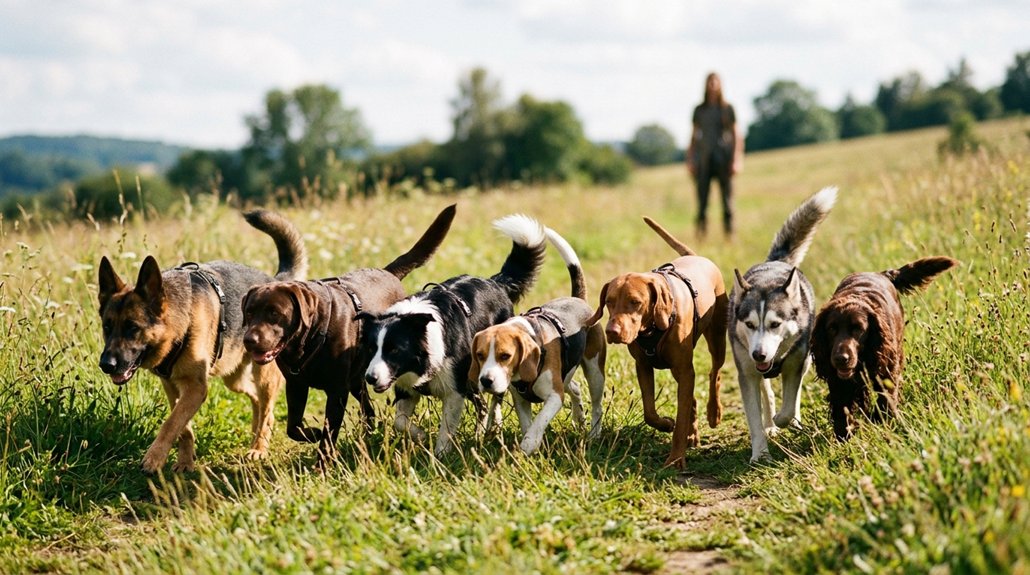
Understanding pack behavior in dogs is essential for establishing a balanced relationship with your pet. Modern insights into pack instincts reveal how recognizing signs like dominance indicators and playful social bonding can help you reinforce effective leadership. Consistent training, clear boundaries, and environmental stability prevent behavioral issues and promote your dog’s well-being. Professional guidance and structured routines further support positive dynamics. Explore how these strategies can enhance your interaction with your furry companions.
Key Takeaways
- Pack behavior helps establish hierarchy, reducing anxiety and promoting emotional well-being in dogs.
- Understanding dominance indicators, like resource guarding, is crucial for managing dog pack behavior effectively.
- Consistent training from an early age supports a clear leadership role and stable pack dynamics.
- Environmental changes can disrupt pack behavior, requiring structured introductions and routine stability.
- Professional trainers offer valuable insight and strategies for managing complex pack dynamics.
Why Understanding Dog Pack Behavior Matters
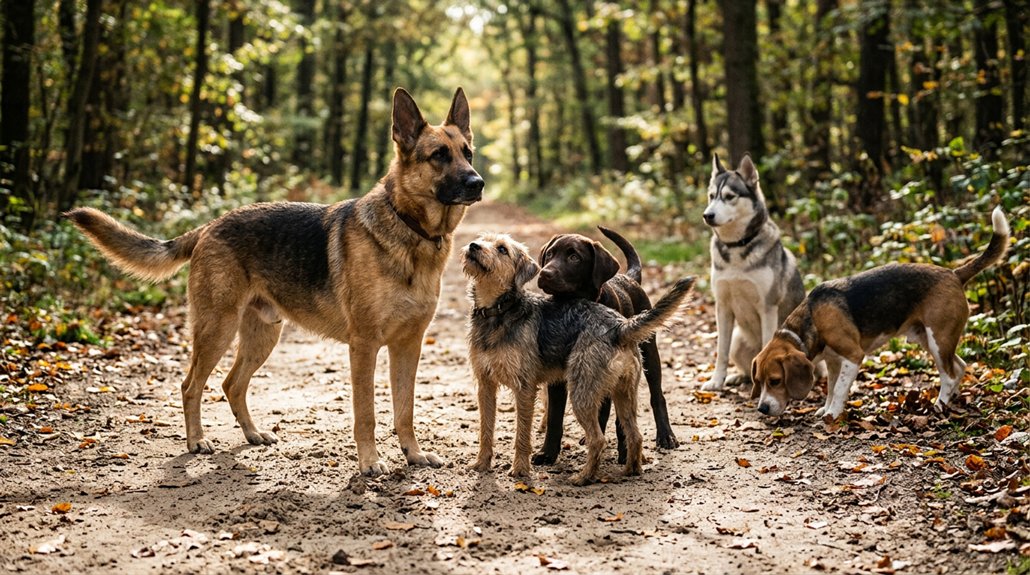
Understanding dog pack behavior is crucial for fostering a balanced and harmonious relationship between you and your pet. Recognizing your dog’s pack instincts and natural social hierarchy allows you to establish a leadership style that curtails dominant behavior and potential behavioral issues. Training consistency is essential in maintaining a stable environment, preventing dominance-related problems that could arise from misunderstandings of pack dynamics. A well-defined social hierarchy contributes greatly to a dog’s emotional health and anxiety reduction, allowing for better communication skills between you and your dog. By embodying the role of a pack leader through effective obedience training, you not only reinforce your position but also enhance your dog’s overall well-being and emotional resilience within your shared household.
Is Your Dog Showing Pack Behavior? Here’s How to Tell
To assess whether your dog is exhibiting pack behavior, begin by observing their interactions and environment. Look for indicators of dominance such as taking prime spots on furniture, pushing past you, or showing aggression over food and toys. These behaviors, while instinctual, can reflect their understanding of their place within the hierarchy and require conscientious management to guarantee a harmonious household.
Signs of Pack Behavior
Observing canine behavior reveals insightful clues about pack dynamics within a household. Analyzing pack interactions can help you understand your dog’s social structure. Look for dominance displays like asserting leadership in play behaviors. Communication signals, such as growling or nudging, demonstrate their instinctual behaviors and relationship dynamics. These signals reflect your dog’s place within their canine and human pack.
Behavioral training plays a pivotal role in curbing unwanted pack behaviors. Establishing clear leadership helps prevent aggression driven by unclear pack roles. Here’s a guide to signs of pack behavior:
| Sign of Pack Behavior | Observation |
|---|---|
| Playful Greetings | Indicates social bonding and inclusion |
| Defending Owners | Shows loyalty and protective instincts |
| Hierarchy Formation | Displays natural social structure of the pack |
| Communicative Body Signals | Expresses pack status, requiring guidance |
Identifying Dominance Indicators
Dogs often exhibit distinct behaviors to assert dominance within a pack. Observing these can help you identify dominance display and behavioral triggers in your pet. Look for patterns such as:
- Growling over resources: If your dog growls over food or toys, it might be challenging your perceived leadership, indicating a dominance display.
- Staring contests: Dogs engaging in prolonged eye contact with you, especially while refusing commands, may be signaling a dominance challenge.
- Claiming territory: Occupying high-status locations like furniture or pushing past you demonstrates attempts to exert control over pack dynamics.
Monitoring these signs can prevent aggression issues with other dogs or humans. Understanding these indicators allows for appropriate responses, ensuring harmony within the home environment while managing unwanted dominant behavior effectively.
How to Lead Your Dog Pack Effectively to Prevent Issues
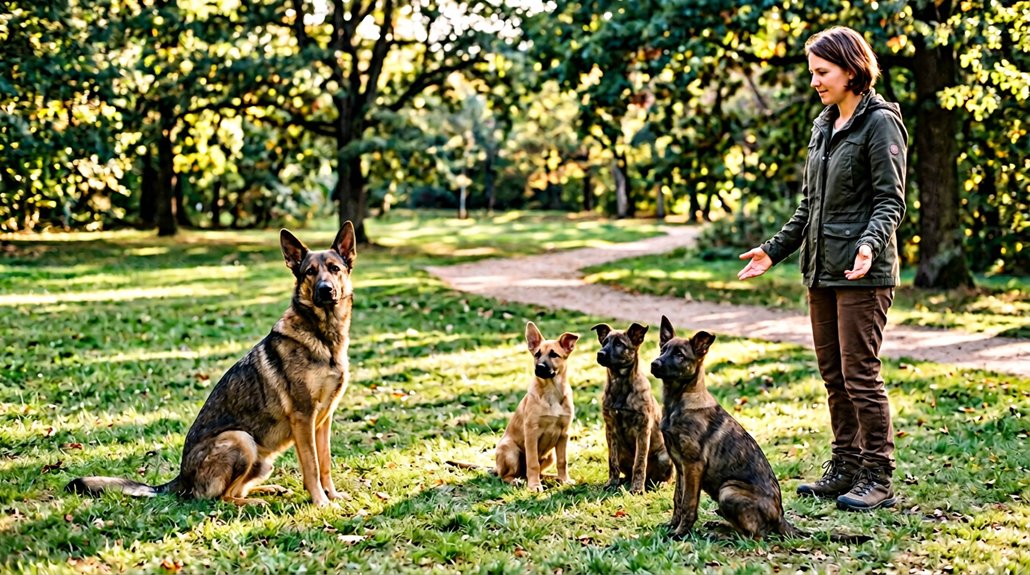
To effectively lead your dog pack and prevent potential issues, you should establish a clear leadership role, which reduces stress and enhances cohesion among your dogs. Consistent training techniques from an early age, incorporating basic obedience commands and regular supervision, are essential for promoting a stable pack structure. By improving pack communication through maintaining eye contact and employing positive reinforcement, you’ll foster a harmonious environment where each dog understands their position within the pack hierarchy.
Establishing Leadership Role
Leading a dog pack effectively often hinges on your ability to communicate clearly and reinforce rules consistently. Different leadership styles play an important role in establishing authority reinforcement, ensuring a balanced pack dynamic. Scientific observations suggest that effective pack leaders maintain the following strategies:
- Positive Reinforcement: Use rewards to encourage desired behaviors, strengthening the bond and clarifying roles.
- Eye Contact: Maintain eye contact to assert control, prevent dominance issues, and reinforce your leadership position within the pack.
- Activity Supervision: Control household activities, such as feeding and playtime, to assert your leadership and guide the dog’s behavior.
It’s essential to recognize every dog’s individual personality, as observing and adapting your approach can greatly impact how well they accept their place within the pack hierarchy.
Consistent Training Techniques
In establishing effective pack leadership, a few consistent training techniques are vital for preventing behavioral issues and ensuring your dog’s proper place within the pack hierarchy. From early on, consistent training aids in reinforcing your dog’s understanding of pack dynamics, mitigating dominance struggles. Integrating clear boundaries and rules reduces canine stress and engenders a respectful owner-pet relationship. Leash training proves essential in this process, enhancing walking behavior that fosters the leader-follower relationship by ensuring your dog walks alongside or behind you. Additionally, positive reinforcement is integral for securing desirable conduct and maintaining communication. Structured activities under supervision are important in multi-dog households to prevent conflicts, ensuring a stable hierarchy. These techniques uphold a harmonious pack environment and preempt potential issues.
Improving Pack Communication
Building on the foundation of consistent training techniques, enhancing pack communication is pivotal for reinforcing your role as the leader and maintaining a balanced hierarchy. Enhanced signals are key; clear communication prevents confusion and guarantees dogs understand boundaries. By utilizing positive reinforcement, you can cultivate an environment of mutual respect. To effectively lead your pack, consider these strategies:
- Regularly Observe Pack Dynamics: Monitor interactions to identify early signs of disharmony or aggression and adjust training accordingly.
- Incorporate Structured Activities: Engage in obedience training and socialization to strengthen cohesion and respect between dogs and their owners.
- Understand Canine Body Language: Communicating using dogs’ emotional cues allows timely responses to prevent dominance and aggression issues.
Each strategy supports your leadership, promoting a harmonious, well-communicated pack environment.
Easy Training Tips to Calm Your Dog’s Pack Instincts
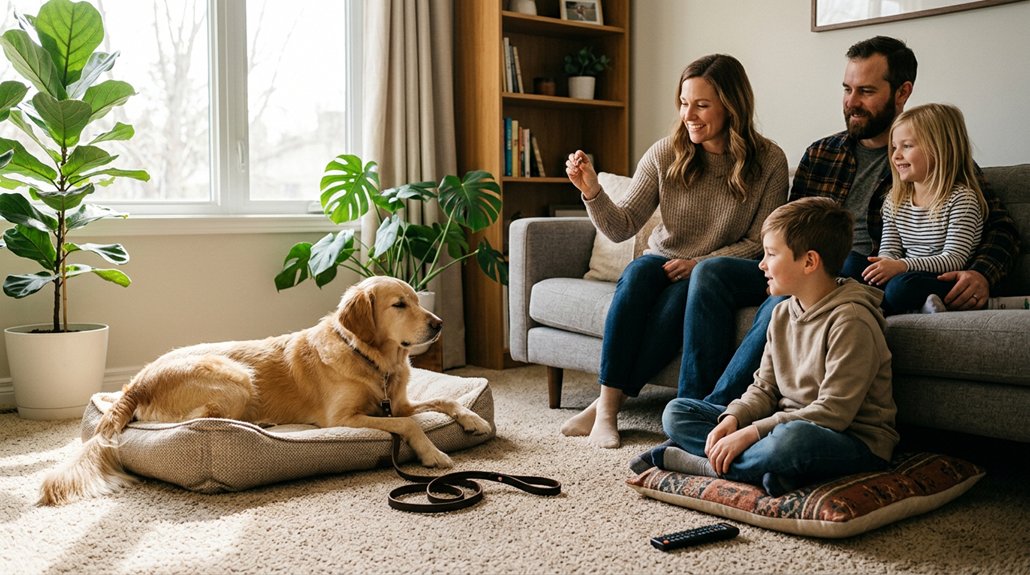
Understanding pack behavior in dogs can markedly enhance their training experience, especially when you aim to calm their instincts. Implementing structured playtime routines contributes considerably to reducing dominance urges. Consistent obedience training should start early, as it’s vital for preventing hierarchy confusion at home. By integrating reward systems, you encourage positive interactions and temper aggressive pack instincts. Regular leash training is essential; it teaches them proper behavior by reinforcing human leadership, ensuring they walk beside or behind you. Eye contact during interactions should be maintained to solidify your alpha position, fostering focus and decreasing unwanted behavior. Finally, structured routines with clear boundaries alleviate anxiety and uncertainty, ultimately reducing potential aggression within multi-dog settings.
How Your Environment Impacts Dog Pack Behavior
An ever-changing environment can profoundly impact a dog’s pack behavior, triggering shifts in their social dynamics that aren’t always positive. Environmental stressors like relocating or introducing new pets can disrupt well-established routines, leading to behavioral issues such as aggression and anxiety. Routine disruptions are significant contributors to these disturbances, affecting dogs’ stability.
To minimize adverse reactions, consider the following:
- Structured Introductions: Properly introduce new dogs to maintain harmony.
- Consistent Environment: Keep routines stable to provide a sense of security.
- Objective Assessment: Remain vigilant in identifying environmental stressors that might influence behavior.
Emotional attachment sometimes blinds owners to environmental influences on pack dynamics. Identifying these factors objectively and implementing appropriate strategies can help manage and reduce dominance-related conflicts within the pack.
How Professionals Can Help With Pack Behavior
When addressing pack behavior issues in dogs, often the expertise of professional trainers or animal behaviorists becomes invaluable. They provide tailored training strategies and conduct a thorough behavioral assessment to understand the root of issues like aggression or dominance. Early intervention by these experts can avert escalating problems related to poor pack dynamics. Specialized training courses focus on maintaining a healthy pack hierarchy, vital for managing your dogs’ interactions effectively.
Additionally, professionals teach you to keenly observe and interpret your dog’s body language, a skill essential for identifying and resolving conflicts in a multi-dog household. By engaging experienced trainers, you learn effective communication methods and reinforce positive behavior, cultivating a harmonious environment and promoting well-being within your canine group.
Navigating Changes in Pack Dynamics: What to Expect
As the dynamics within a pack of dogs evolve, often due to environmental changes like moving or the introduction of new canine members, it’s crucial to anticipate potential disruptions to established hierarchies. Environmental triggers can cause shifts in behavior, making it necessary to employ effective pack adjustment strategies.
Consistent training and observation are imperative. Here’s what you should focus on:
- Identify Roles: Understand each dog’s position—leaders, middle-dwellers, or followers.
- Maintain Structure: Guarantee ongoing, structured training sessions with your dogs to reinforce order.
- Communication: Maintain clear communication with professional trainers to navigate these changes effectively.
Frequently Asked Questions
How Do Dogs Decide Who Is the Pack Leader?
You observe that dogs determine the pack leader through a keen sense of leadership dynamics, reading dominance hierarchy cues. They assess social structure via canine communication, evaluating consistent, calm, and assertive behavior to identify their leader within the group.
What Is Pack Behavior in Dogs?
Think of dogs’ pack behavior as a symphony of social hierarchy and instinctual behaviors. You’ve got pack dynamics at play, with all members using canine communication to maintain order, akin to musicians following their conductor’s baton.
Are Dogs Happier in a Pack?
Yes, dogs are generally happier in a pack, as it fosters social bonding and supports canine hierarchy. You’d observe that they often display reduced stress and enhanced well-being, thriving in structured and socially engaging environments.
How Many Dogs Are Considered a Pack?
Pack size typically starts with two dogs, creating a compact collective, but it can ascend to fifteen. Such numbers naturally nurture a nuanced social structure, demonstrating distinct dynamics influenced by environmental factors and individual temperaments.
Conclusion
Envision the synchronized dance of wolves in the wild; such harmony reflects the instinctual pack behavior coursing through domestic dogs today. By understanding these dynamics, you can foster an environment where your dog thrives—side by side, in tune with you. Observing changes and leading with calm authority transforms your home into a balanced ecosystem. You guide the pack, shape the interactions, and navigate the rhythm of their instincts, ensuring peace and cooperation in your shared space.