Cats may ignore you due to their inherent independence, rooted in their evolutionary background as solitary hunters. This aloofness might also stem from environmental factors or playful distractions. Individual personality traits and varying social needs influence whether they seek interaction. Health issues, especially in aging cats, can alter behavior. Respecting their autonomy and understanding feline body language fosters a better connection. Explore further to enhance your bond through insights on behavior and interaction techniques.
Key Takeaways
- Cats are naturally independent, stemming from their evolutionary background as solitary hunters.
- Sudden withdrawal may signal health issues, especially if accompanied by changes in eating or litter habits.
- Environmental stimuli like loud noises or unfamiliar animals can divert a cat’s attention away from human interaction.
- Individual personality traits can result in varying levels of sociability and lower social needs.
- Excessive interaction might overwhelm a cat, prompting it to seek solitude for comfort.
Common Reasons Cats Ignore Their Owners
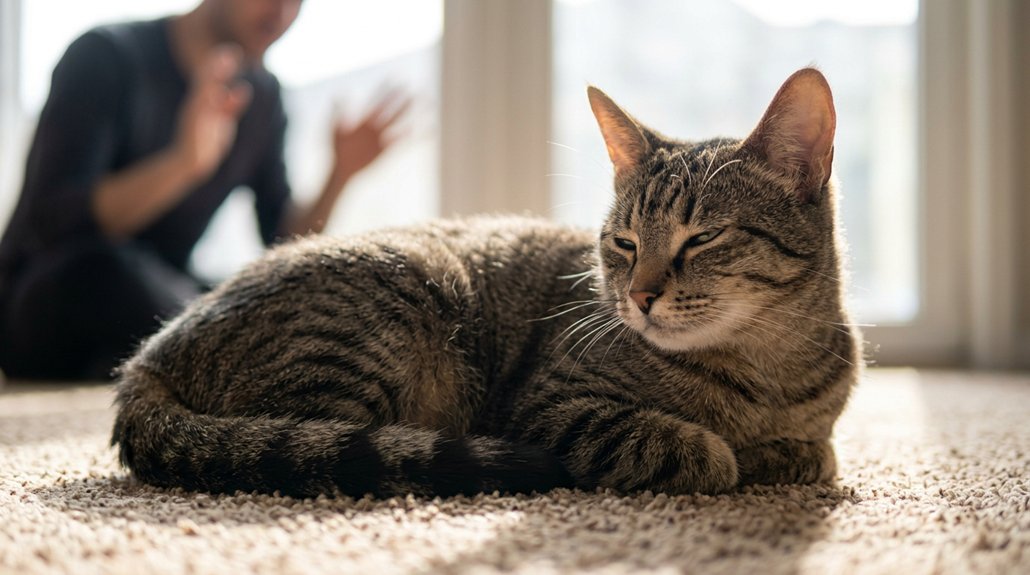
Although your cat’s aloof behavior may seem perplexing, it often serves as a natural expression of its independence. This behavior stems from their evolutionary background as solitary hunters. Various socialization factors can influence this aloofness; cats that missed early interaction may prefer solitude. Environmental stimuli like loud noises or the presence of unfamiliar animals may also divert their attention, appearing as if they’re ignoring you. Playful distractions can further contribute, pulling their focus away from human interaction. Additionally, individual personality traits mean some cats simply have lower social needs. Importantly, abrupt changes in behavior, especially those that resemble ignoring yet are accompanied by altered eating or grooming habits, could indicate health problems requiring professional veterinary assessment.
Understanding Your Cat’s Independent Nature
Recognizing your cat’s independent nature is important for understanding their behavior and fostering a harmonious relationship. Cats have evolved as solitary hunters, leading to intrinsic feline independence that shapes their social needs. While some cats may revel in human interaction, others require solitude, indicating a broad variability in behavior. It’s essential to accept that their occasional aloofness signifies not rejection but an instinctual necessity for autonomy. Excessive human interaction might overwhelm them, causing withdrawal. Patience becomes a significant factor; allowing your cat to engage on their terms strengthens trust and intimacy. By respecting these intrinsic qualities, you can better cater to their unique socialization preferences and develop a more enriched bond, aligning with their natural independence and diverse needs.
Health and Age: What Affects a Cat’s Behavior?
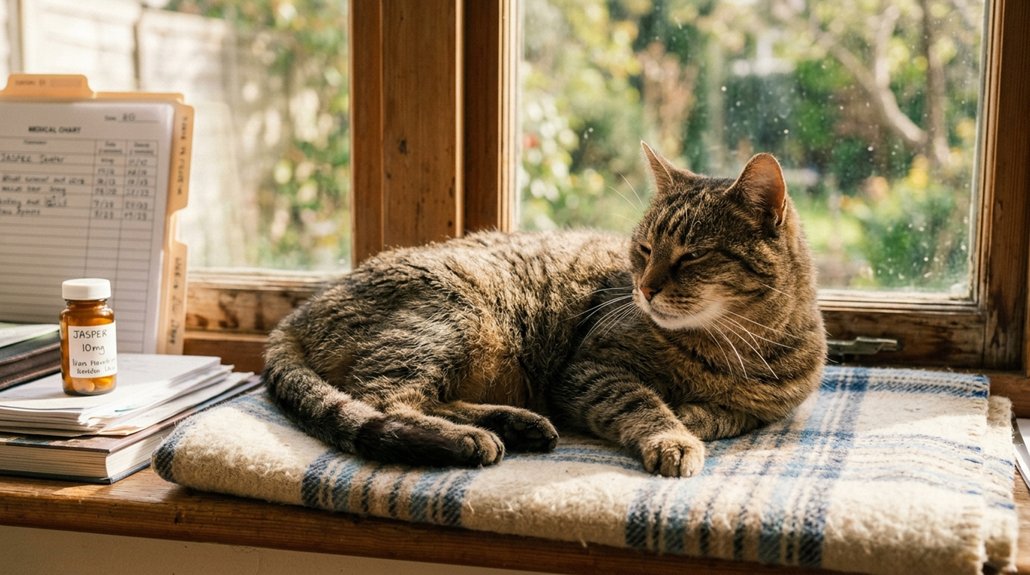
While embracing a cat’s independent nature is fundamental, it’s equally important to contemplate how health and age can affect their behavior. Sudden aloofness might hint at underlying health issues, especially if paired with changes in eating or litter habits. Regular veterinary visits are vital for uncovering such problems, ensuring your pet’s well-being.
Aging effects further complicate social dynamics. Senior cats often face sensory and cognitive declines. Arthritis, impaired vision, and other ailments might render interactions uncomfortable, prompting withdrawal. This withdrawal isn’t just a matter of personality; it’s a protective instinct during vulnerability. As these changes are pronounced in older felines, patience and understanding become paramount. Recognizing and adjusting to a cat’s evolving needs fosters a more harmonious relationship.
How to Strengthen Your Bond With Your Cat
When fostering a deeper connection with your cat, respecting their autonomy is vital. Allowing them to initiate interactions strengthens trust and naturally enhances your bond. Engage in structured playtime activities to fulfill your cat’s need for stimulation and interaction. Integrating toys and safe resting areas into their environment creates an enriching setting that promotes mental engagement and healthy exchanges.
Incorporate bonding routines that rely on positive reinforcement techniques, like treats or clicker training, to encourage desired behaviors and boost your cat’s engagement levels. Consistent, positive interactions foster a secure relationship, ensuring your cat feels comfortable and valued within your shared space. Regular veterinary check-ups are essential, as ideal health can directly influence their behavior, supporting a harmonious bond.
Reading Your Cat’s Body Language
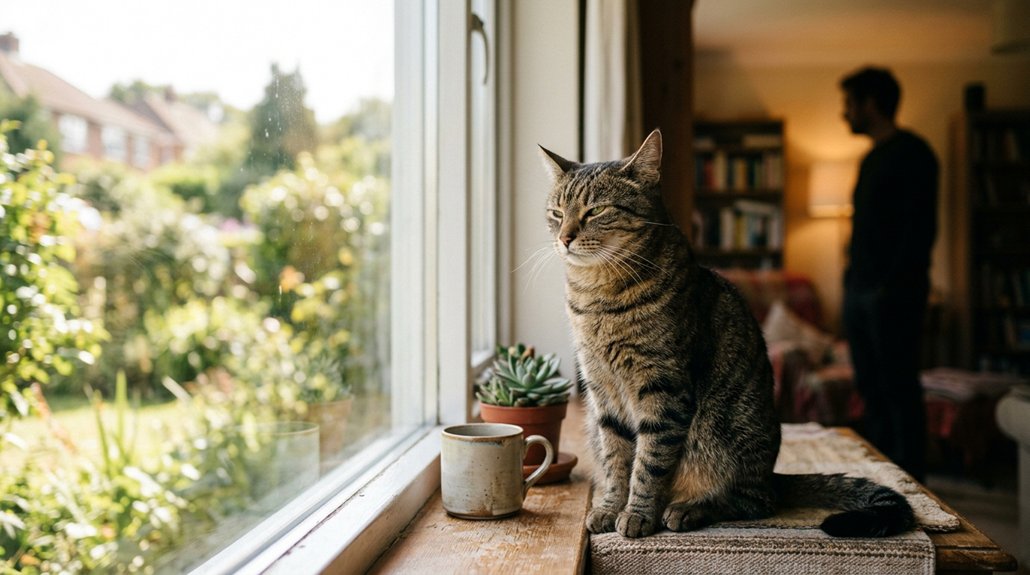
Understanding feline body language is vital for interpreting your cat’s emotions and intentions effectively. Recognizing body language cues can reveal a wealth of emotional signals. Slow blinking, a common cue, indicates trust and affection towards you. In contrast, dilated pupils might signify excitement or fear. Paying attention to the tail position provides insight into your cat’s mood; an upright tail suggests confidence, while a low or tucked tail may indicate anxiety or submission. Observe ear orientation: forward-facing ears reveal curiosity, whereas flattened ears denote fear or aggression. Whisker positioning also serves as an important cue; relaxed whiskers denote comfort, but whiskers pushed forward suggest excitement or alertness. These observations enable you to adjust interactions, fostering a deeper understanding of your feline companion.
Frequently Asked Questions
Why Is My Cat Randomly Ignoring Me?
Your cat’s behavior could stem from natural independence, communication style, or environmental stressors. Assess feline behavior changes for medical issues or stress. Remember, cats need space, and ignoring can be part of their communication and self-regulation strategy.
What Is the 3-3-3 Rule for Cats?
The 3-3-3 Rule outlines feline behavior across three socialization phases: initial acclimation (first three days), active exploration (first three weeks), and full adjustment (first three months), helping mitigate environmental stressors and enhance cat communication.
How Do Cats Apologize to Humans?
Picture a velvet whisper unspooling in silence; cats apologize using body language and feline communication. Through slow blinks, gentle nudges, and purring, they express remorse, rekindling bonds. These gestures illustrate a unique, innate form of cat behavior.
Why Do Cats Sometimes Ignore Their Owners?
Cats occasionally ignore you due to their inherent feline behavior and social dynamics. It’s not about rejecting you but managing attention signals. Your expectations should consider their independent nature and possible subtle cues indicating discomfort or overstimulation.
Conclusion
Cats, creatures of delightful contradiction, may ignore you due to their inherent independence or subtle health shifts. While they cherish solitude, they also thrive on understanding, which makes their aloofness both a mystery and an invitation. By decoding their body language, you bridge the gap between self-reliance and companionship. In this dance of contrasts, what seems like indifference is often an opportunity to deepen the bond. Recognizing this balance lets you appreciate the complexity of feline affection.