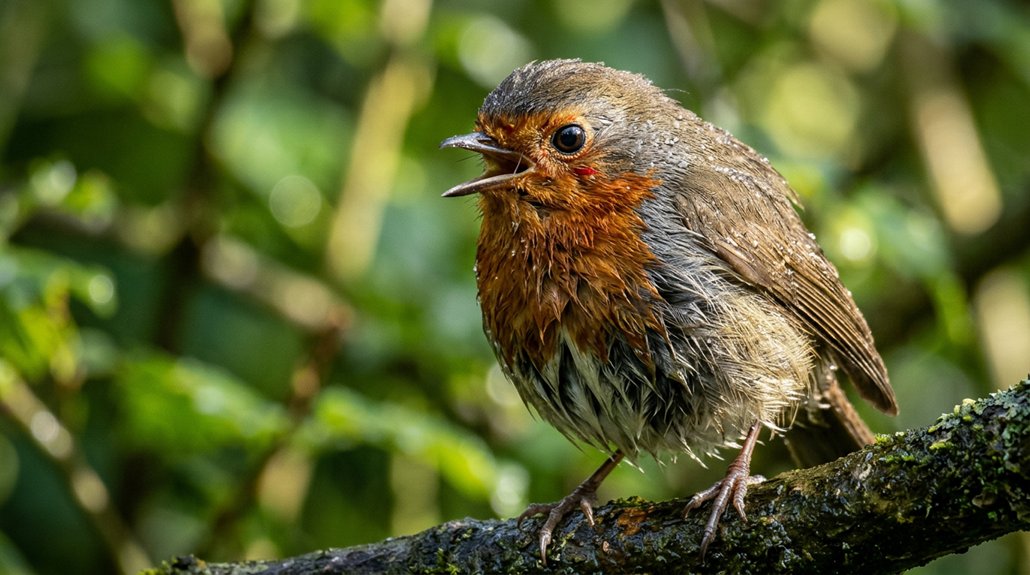
If your bird is breathing heavily, you should treat it as a warning sign of respiratory distress. Look for open-mouthed breathing, tail-bobbing, wheezing, reduced activity, fluffed feathers, or nasal discharge. This can be caused by infection, airway blockage, heart disease, toxins, or smoke exposure, including Teflon fumes. Move your bird to a quiet, warm, clean area and remove irritants right away. If signs are severe, contact an avian vet immediately; there’s more to know.
Key Takeaways
- Heavy breathing in birds can signal respiratory distress, especially if there is tail-bobbing, open-mouthed breathing, or audible clicking.
- Common causes include pneumonia, sinus or airway blockage, parasites, vitamin A deficiency, heart disease, and heavy metal toxicity.
- Smoke, fumes, aerosols, and overheated nonstick cookware can trigger sudden, dangerous breathing problems in birds.
- Emergency signs include collapse, inability to perch, cyanosis, extreme lethargy, or rapid worsening of symptoms.
- Move the bird to a warm, quiet, well-ventilated area and seek an avian veterinarian immediately.
How to Spot Bird Breathing Problems
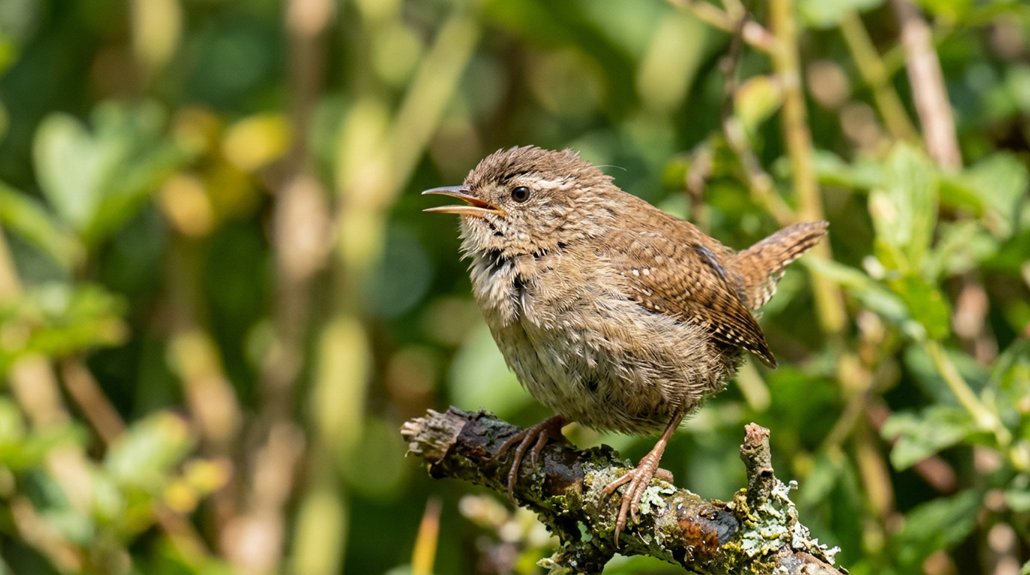
Birds often hide illness, so breathing problems can be easy to miss at first; however, open-mouthed breathing, audible clicking, wheezing, or a honk- or squeak-like cough, especially with each breath, are clear warning signs. You may also notice tail-bobbing, exaggerated chest or flank movement, or wings held slightly away from the body, which all suggest increased effort. Watch for behavioral changes such as reduced activity, sitting low in the cage, poor appetite, or closed, squinted eyes. Feather posture matters too; fluffed feathers can signal that your bird isn’t feeling well. Nasal discharge, watery eyes, sneezing, or a change in voice can point to upper airway involvement, while coughing and wheezing more often suggest lower airway or lung problems. These signs deserve prompt veterinary assessment, even if they seem mild at first.
When Bird Breathing Problems Are an Emergency?
When breathing changes are more than mild, you need to act quickly: heavy or labored breathing, open-mouthed breathing, audible clicking or gasping, or obvious tail-bobbing with each breath are emergencies that require immediate veterinary care. If you also see collapse, inability to perch, prolonged fluffed resting with eyes closed, or pale or cyanotic skin or comb, treat it as urgent respiratory distress. Fast or very slow breathing, panting, neck extension while coughing, or a wheeze or honk that doesn’t improve with brief calm, warmth, and removal from irritants also needs same-day evaluation. With known toxin exposure or suspected avocado or heavy-metal ingestion, start immediate triage and arrange transport logistics to an avian vet. Don’t wait for symptoms to worsen; advanced respiratory disease can progress rapidly, and prompt intervention gives your bird the best chance of recovery.
What Causes Heavy Breathing in Birds?
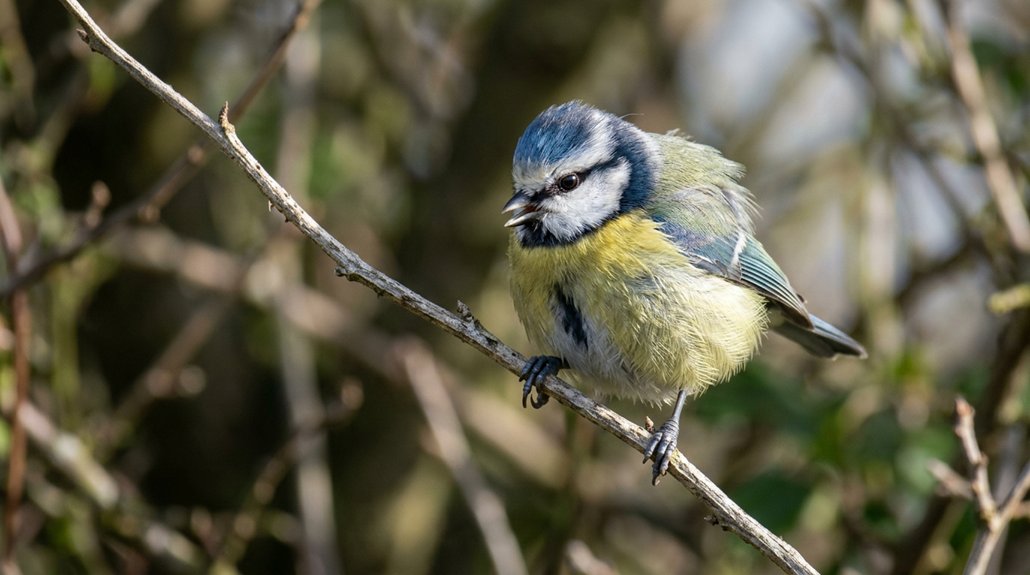
Heavy breathing in birds usually reflects increased work of breathing from a problem in the respiratory tract or a wider medical issue. You may see open-mouth breathing, tail-bobbing, or pronounced chest and keel motion. Common causes include lower airway disease such as bacterial or fungal pneumonia, including Aspergillus, which can need prolonged treatment. Upper airway obstruction from nasal or sinus infection, mucus, or tracheal blockage can cause honking or squeaking breaths. Parasite infections and metabolic disorders may also contribute by stressing the airway or altering oxygen use. Severe vitamin A deficiency, heavy metal toxicity, heart disease, and enlarged organs can further reduce oxygen delivery. Because acute dyspnea can worsen quickly, you should seek prompt avian veterinary care for oxygen support, imaging, cultures, and targeted therapy.
Smoke, Teflon, and Fume Hazards
Toxic fumes can overwhelm a bird’s respiratory system very quickly, because their highly efficient lungs and air sacs absorb airborne irritants with little delay. If your bird inhales cigarette, incense, or wildfire smoke, airborne toxins can trigger sudden heavy breathing, open-mouth gasping, wheezing, and collapse. Overheated PTFE/Teflon cookware and appliances may release odorless cookware fumes that can cause acute lung injury within minutes to hours, even at lower temperatures if the coating is damaged. Spray cleaners, air fresheners, and oil-based paints can also be dangerous; if you can smell them, they may harm your bird. You’ll often see tail bobbing, lethargy, or clicking sounds. These exposures need emergency veterinary care. Prevention means eliminating these hazards from your home.
How to Help Your Bird Breathe Easier Now
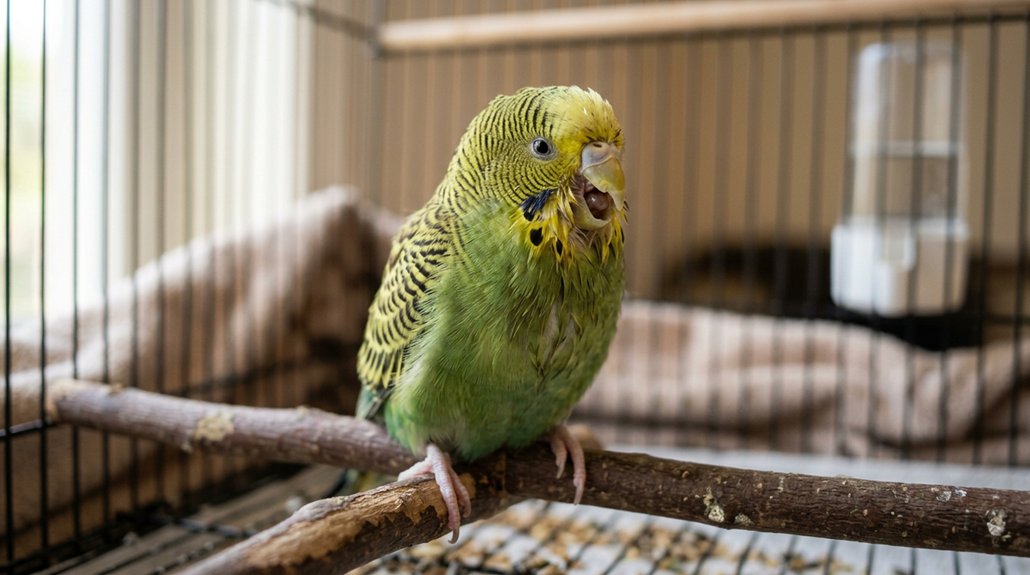
Move your bird to a small, quiet, well-ventilated area right away, and remove any smoke, fumes, aerosols, or kitchen vapors that could be worsening breathing. Keep the space draft-free and calm, since reducing stress can help lower your bird’s work of breathing. If you can, provide gentle warmth while you arrange prompt veterinary care.
Remove Airborne Irritants
If your bird is breathing heavily, the first step is to remove any airborne irritants from its environment right away. Move it from smoke, strong chemicals, aerosol sprays, or cooking fumes to a well-ventilated, draft-free area. Prioritize air quality and toxin avoidance by stopping candles, incense, air fresheners, perfumes, and non-essential cleaners around your bird. If you use nonstick pans, don’t heat them near birds; overheated PTFE can release lethal fumes. Tobacco, marijuana, wood stove, and wildfire smoke can trigger distress, so keep your bird out of contaminated air and use a smoke-rated purifier if needed. Reduce dust and mold by keeping bedding dry, changing liners often, and avoiding dusty seed mixes that may carry fungal spores.
Create A Calm Recovery Space
Once you’ve removed irritants, set your bird in a small, quiet recovery space—ideally a partially covered cage in a well-ventilated, draft-free area kept around 80–85°F—to lower stress and help conserve energy. Use soft bedding and low lighting, and limit handling. Keep fresh water and easily eaten food close so your bird doesn’t need to move far. You should also separate it from other birds to reduce contagion risk.
- Check breathing rate and tail-bobbing closely.
- Gently wipe visible nasal or beak discharge with a soft, damp cloth.
- Avoid noise, bright light, and unnecessary activity.
- Seek urgent avian veterinary care if open-mouth breathing, lethargy, or worsening signs appear.
How to Prevent Bird Breathing Problems
Preventing bird breathing problems starts with reducing the main environmental triggers that irritate the airways or promote infection. You should keep cages, liners, and nearby surfaces clean, dry, and well ventilated; damp bedding and mold-prone materials can raise Aspergillus exposure. Use airflow assessment to check for stagnant areas, and support feather maintenance with regular grooming and dust control. Eliminate toxins by never using nonstick cookware near birds, and avoid smoke, incense, aerosols, and harsh cleaners; a properly sized HEPA purifier can help. Feed a balanced diet with vitamin A sources and quality pellets to support respiratory mucosa. Prevent crowding, isolate new or ill birds for several weeks, and maintain biosecurity. Keep conditions stable, draft-free, and about 70–80°F, with frequent cage-line changes.
Frequently Asked Questions
What to Do if My Bird Is Breathing Heavy?
Move your bird to a warm, quiet area with good habitat ventilation, remove fumes, and minimize handling. If breathing worsens, seek an avian vet immediately; you shouldn’t attempt avian CPR unless trained.
What Does It Mean if Your Bird Is Breathing Fast?
Fast breathing can mean rapid respiration from stress panting, illness, heat, or toxins; birds hide sickness well, so even one respiratory change matters. If it keeps up, you should contact your avian vet promptly.
Why Do Birds Breathe Heavy?
You’ll usually see heavy breathing from stress responses, illness, or airway irritation; feather condition can hint at health. Check for tail-bobbing, open-mouth breathing, or noise, and get prompt veterinary care if it’s worsening.
How Long Can a Bird Live With a Respiratory Infection?
Your bird can live days to months with a respiratory infection, depending on severity and treatment. With prompt veterinary care, antibiotics or antifungals, plus immune support, your chronic prognosis can improve markedly.
Conclusion
If your bird is breathing heavily, you can feel the worry in every quick flutter of its chest. By watching closely, acting fast in an emergency, and removing hazards like smoke and fumes, you give your bird the best chance to recover. Supportive care and prevention can help its breathing stay smooth and steady, like calm wings at rest. When you notice changes early, you’re protecting your bird’s health and peace.