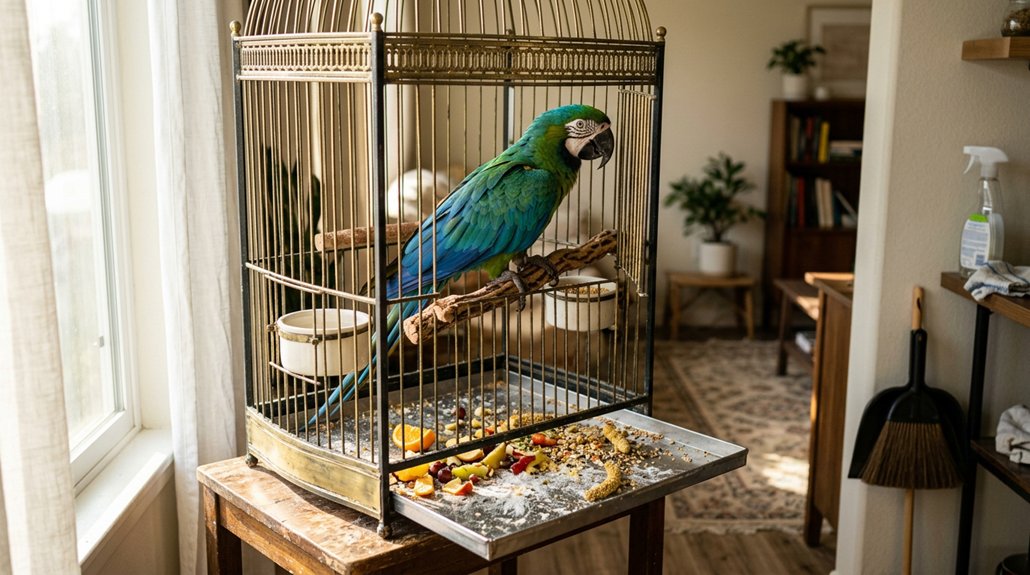
You should clean your bird’s cage every day. Remove droppings, uneaten food, and soiled liner, and wash food and water dishes with hot, soapy water. Do a full cage wash weekly, including bars, tray, perches, and toys, then rinse and dry everything completely. Deep-clean and disinfect at least once a month, or more often if you have multiple birds or notice heavier mess, odor, or illness. More details can help you keep it sanitary.
Key Takeaways
- Spot-clean droppings, uneaten food, and liners every day to limit odors and bacterial growth.
- Wash food and water dishes daily with hot, soapy water to prevent contamination.
- Do a full cage clean weekly, removing birds, toys, perches, and trays before scrubbing.
- Deep-clean and disinfect the cage monthly, or weekly if you have multiple birds or heavy buildup.
- Clean more often if you notice odors, wet droppings, feather dust, illness signs, or dirty environmental conditions.
How Often Should You Clean a Budgie Cage?
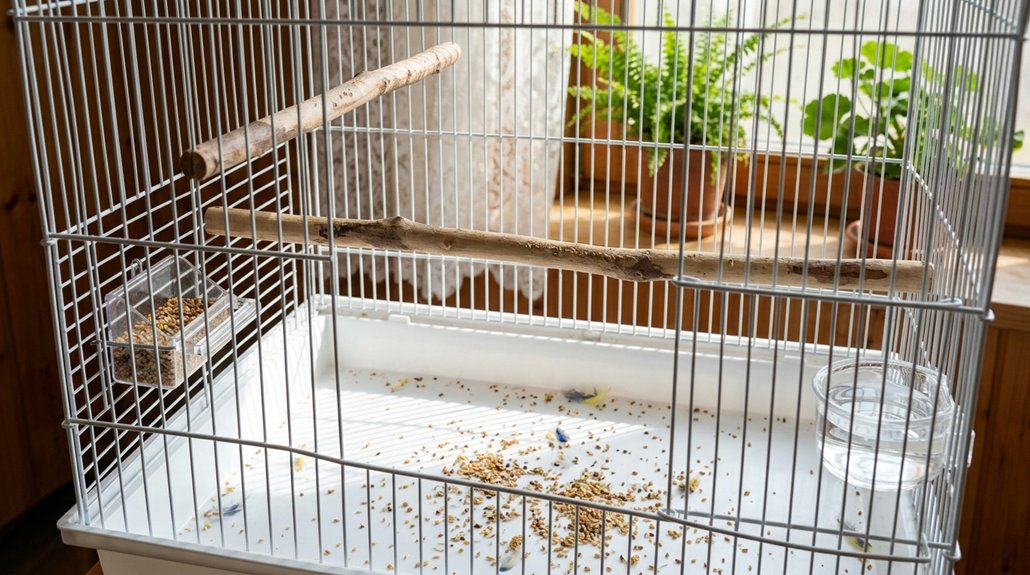
You should spot-clean a budgie cage every day by removing droppings, uneaten food, and replacing the cage liner to limit bacterial growth and odors. You should also wash food and water dishes with hot, soapy water and refill them daily to reduce contamination. Once a week, you should perform a full clean: remove your bird, take out toys, perches, and dishes, then scrub the bars and tray with warm soapy water or a bird-safe disinfectant, rinse well, and dry completely. Each month, you should deep-clean by disassembling components if possible, sanitizing them, and air-drying them. If you keep two budgies, notice odors, grime, abnormal droppings, or recovery from illness, increase cleaning frequency to protect health, support diet enrichment, and preserve social interaction.
What to Clean in the Cage Every Day
For the daily cleaning routine, focus on the items that collect waste, moisture, and food debris fastest.
| Item | Daily task |
|---|---|
| Cage liner | Replace it to remove droppings. |
| Food bowls | Wash, refill, and remove uneaten fresh food. |
| Water dishes | Clean with hot, soapy water and refill. |
| Daily perches | Spot-clean visible droppings with a damp cloth or bird-safe wipe. |
Also check the bath area, rinse and dry it, and change drinking water at least once daily, more often in hot weather. Wipe cage bars where droppings build up, and clean toys as needed. Sweep or vacuum around the cage to remove seed hulls and feather dust. This routine helps you spot stool changes early and limits bacterial growth, allergens, and pests.
How to Deep Clean a Budgie Cage
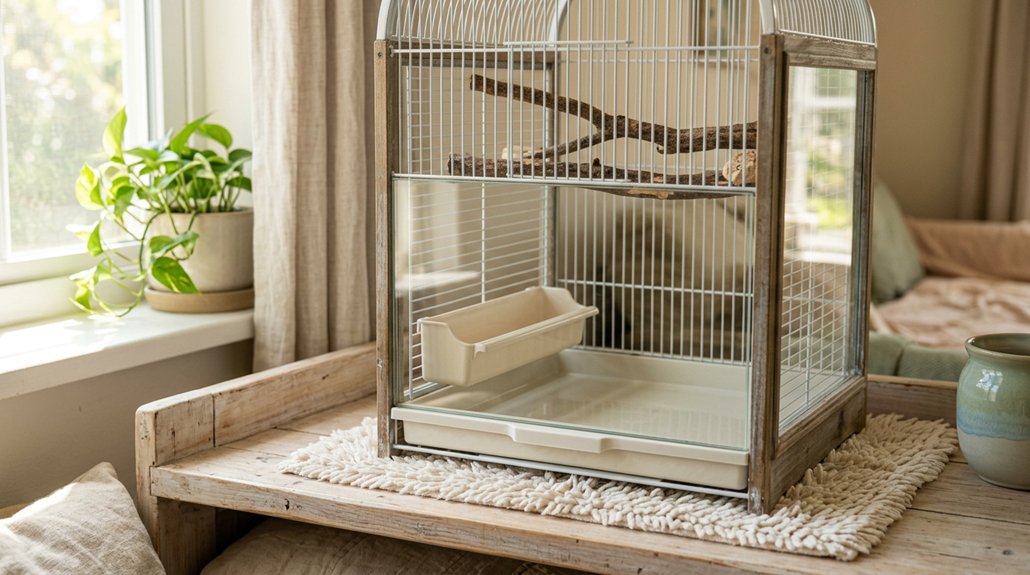
Before deep cleaning, move your budgies to a safe temporary area, then disassemble the cage and soak removable parts—trays, perches, dishes, and toys—in hot soapy water for 15–20 minutes. After soaking, scrub all surfaces with a brush, removing visible debris first. For cage disinfection, clean bars, corners, and crevices with a bird-safe disinfectant or a 1:10 bleach-to-water solution, then keep it wet for 5–10 minutes before rinsing thoroughly. Wash metal, plastic, and wood accessories separately, and discard frayed toys or heavily chewed pieces that can’t be sanitized. Let every component dry completely, preferably in sunlight, to prevent mold. Reassemble the cage only when dry, then return your birds. Use toy rotation to support hygiene and perform this deep clean monthly.
When to Clean a Budgie Cage More Often
Clean a budgie cage more often when conditions increase waste, moisture, or contamination, especially if you keep two birds in a small cage. You should spot-clean twice daily, removing droppings and uneaten food, because debris builds up quickly. Wash food and water dishes with hot soapy water at least once a day to limit bacterial growth from shared feeding. Deep-sanitize the cage and accessories weekly, not every other week, since higher traffic increases mold, mites, and bacterial buildup. If you notice persistent odor, wet or crumbly droppings, heavy feather dust, or illness signs such as sneezing or discharge, clean immediately and call a vet. Cage placement near drafts or kitchens, and higher noise levels that suggest stress, can also justify closer monitoring.
Budgie Cage Cleaning Mistakes to Avoid
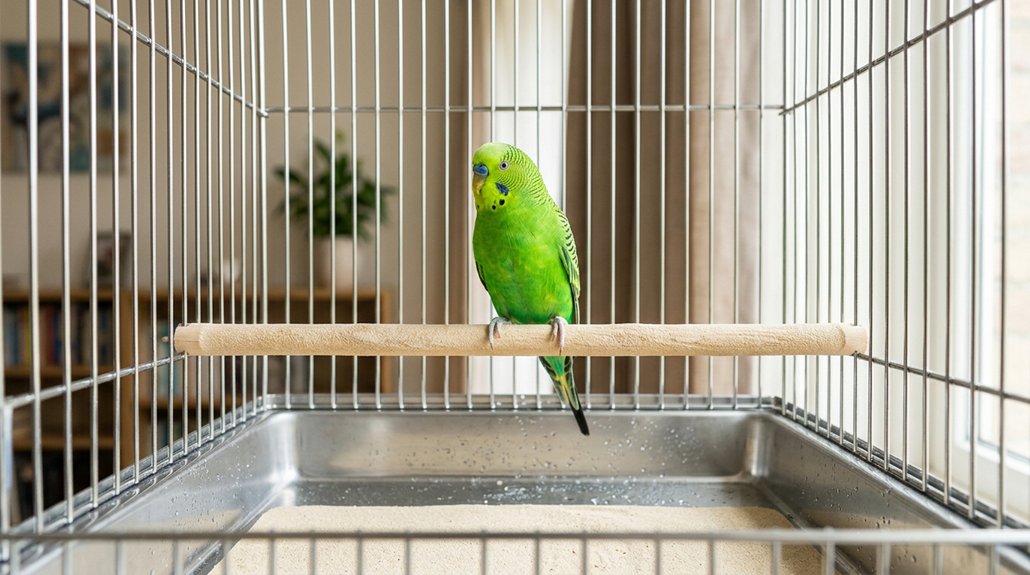
Even with a strict cleaning schedule, a few common mistakes can undermine cage hygiene and put budgies at risk. Don’t skip daily spot-cleaning; remove droppings, uneaten food, and replace the liner to limit bacterial buildup and odor. Avoid toxic cleaners such as undiluted bleach, ammonia, or scented aerosols, and move your birds to another room before cleaning. Use bird-safe products or diluted solutions, then rinse thoroughly. Don’t neglect toy rotation: wash toys, perches, and dishes weekly in hot soapy water for 15–20 minutes, scrub, rinse, and air-dry. Never return frayed, cracked, or soiled items. Also, don’t skip a monthly deep clean and disinfection, especially with two budgies, because waste load rises quickly.
Frequently Asked Questions
What Happens if I Don’t Clean My Bird Cage?
You’ll expose your bird to avian stress, respiratory disease, bacterial and fungal growth, mold, mites, pests, and ammonia fumes. Over time, you’ll risk infections, feather damage, toxic residues, and corrosive cage deterioration.
How Often Should I Clean the Bottom of My Bird’s Cage?
You should clean your bird’s cage bottom daily, with weekly scrubbing and monthly disinfection. Better diet variety and enrichment activities can reduce mess, but you’ll still need frequent removal of droppings, seed hulls, and moisture.
What Is the Best Cleaner for Bird Cages?
You’ll do best with a 1:1 vinegar solution, a safe natural disinfectant for routine cage cleaning. For heavy soiling, you can use diluted bleach after scrubbing, then rinse and air-dry completely before birds return.
Why Should You Cover a Bird Cage at Night?
You should cover your bird cage at night to support sleep hygiene, reduce light and noise, and maintain a consistent dark environment. A breathable night cover helps you avoid drafts, stress, and disrupted melatonin production.
Conclusion
Keeping your budgie’s cage clean is like opening a window to fresh morning air: it helps your bird breathe easier, move more freely, and stay healthier. You should remove droppings, spilled food, and soiled water every day, then deep clean the cage regularly. If your budgie is ill, messy, or molting, clean more often. Don’t let grime build up; a spotless cage supports a brighter, calmer, more comfortable bird.