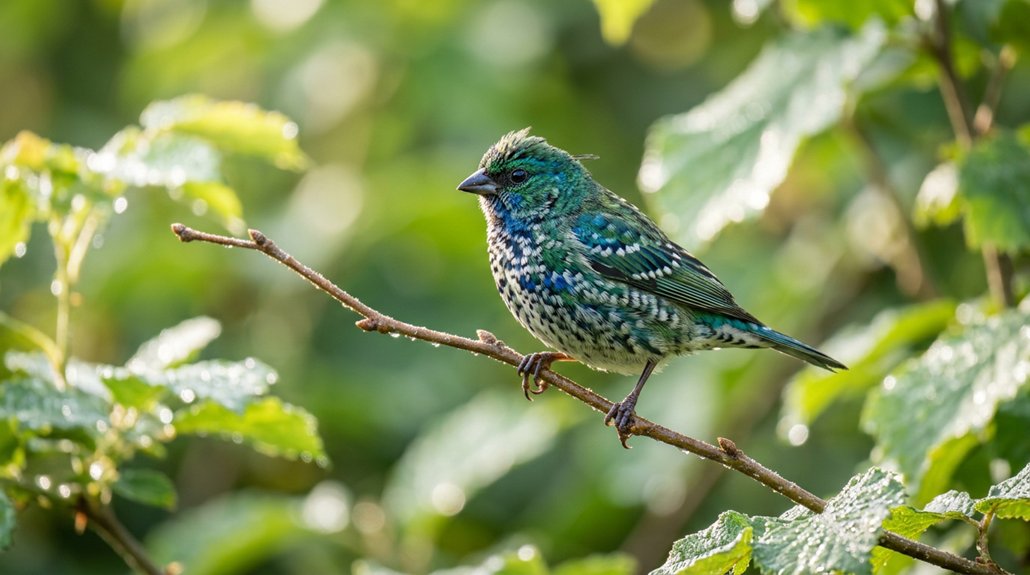
For limited space, you can choose budgies, cockatiels, parrotlets, lovebirds, or canaries, but you need to match the species to your time, noise tolerance, and room. Budgies are social and easy to train; cockatiels are gentle but need more space; parrotlets and lovebirds are active and need daily interaction; canaries are quieter and need less handling. A longer-than-tall cage, daily out-of-cage time, and proper enrichment make a major difference, and more specifics follow.
Key Takeaways
- Budgies are one of the best small-bird choices for limited space, needing a longer-than-tall cage and at least an hour of daily flight.
- Parrotlets stay compact and active, but they need daily out-of-cage time, toys, and attention to prevent boredom.
- Cockatiels can work in smaller homes if given a larger cage and 1–2 hours of daily exercise and interaction.
- Bourke’s parakeets are a quieter, mellower option and do well with sufficient flight space for regular exercise.
- Canaries and finches suit owners wanting low-handling birds, but they need aviary space or several-feet-wide flight areas.
Which Small Bird Fits Your Space?
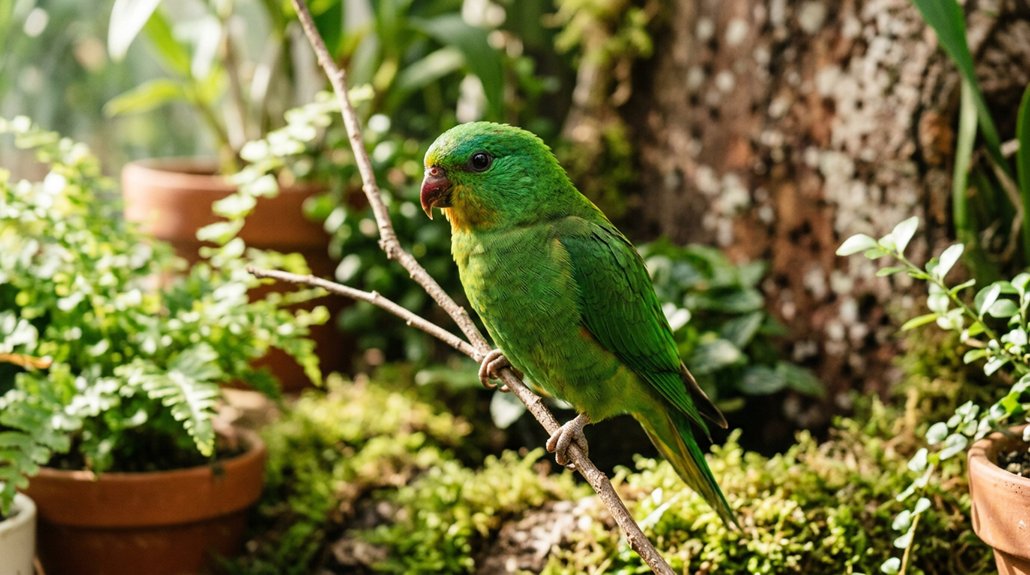
If you’re choosing a bird for a limited space, start by matching size, noise, and daily activity needs to your setup. During your space assessment, budgies fit well in small homes: they’re 6–8 inches long, need a cage longer than tall, and require at least an hour of out-of-cage flight. Parrotlets are even smaller, but they’re active and need several hours of play plus toys. Cockatiels are larger and need more room, yet they adapt to apartments if you can provide daily exercise. If your noise tolerance is low or you prefer minimal handling, canaries and finches work well because they stay mainly caged and are valued for song. Bourke’s parakeets are a quieter option, especially in pairs.
Budgies: Social, Smart, and Easygoing
Budgies are one of the best small parrots for limited space because they stay compact at 6–8 inches long and weigh about 1 ounce, yet they remain highly social, intelligent, and active. You’ll need daily interaction or a same-species companion.
| Care item | Guideline |
|---|---|
| Cage shape | Longer than tall |
| Daily time | 1+ hour out-of-cage |
| Diet | Pellets or seed mix |
| Extras | Fruit, vegetables, water |
Use foraging toys to reduce boredom and support problem-solving. If you’re home less often, keep at least two. Budgies can learn words and whistles through food-motivated repetition, and flight training helps maintain fitness. Provide fresh water every day, plus apple, banana, grapes, broccoli, and peas for dietary variety.
Cockatiels: Gentle Birds With Big Personality
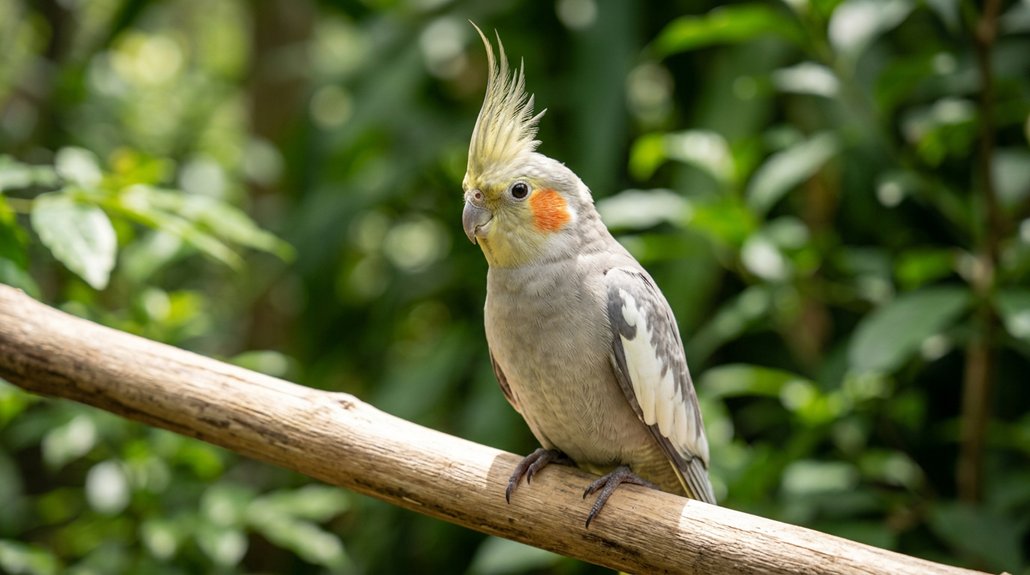
Cockatiels are gentle, affectionate birds that can adapt well to your household and often bond with several family members. You’ll also find that they’re strong whistlers, able to learn simple tunes with vocalizations that usually aren’t disruptive. For proper care, you’ll need a larger cage, daily out-of-cage exercise, and varied toys such as bells, mirrors, and chewables to prevent boredom.
Friendly, Adaptable Temperament
Often a strong choice for smaller homes, cockatiels offer a friendly, adaptable temperament in a compact 12–13-inch, 3-ounce body. You’ll usually see calm interaction, easy community bonding, and a willingness to accept handling from several people, not just one. Because they adjust well to household activity, they can fit into busy routines without becoming excessively reactive. Their voice is generally moderate, with whistles and calls that rarely create noise problems. You should still monitor stress signals, such as fluffed posture, withdrawal, or reduced appetite, because temperament can change with poor handling or inadequate space. Even in limited homes, consistent social contact and routine support their stability. You’ll get a bird that’s gentle, responsive, and practical for shared living when needs are met appropriately.
Whistling, Toys, And Care
With a cockatiel’s friendly temperament comes a strong need for vocal and environmental enrichment: these birds are expert whistlers and can learn tunes or simple phrases, especially when you whistle with them and reinforce the same songs daily. You should use short, consistent training sessions of 5–15 minutes to build whistling, trick-learning, and trust. Provide safe toys for beak-driven play, including bells, wooden blocks, paper, ladders, swings, and foraging puzzles. A regular chew rotation every 1–2 weeks helps prevent boredom and supports healthy activity. Give at least 1–2 hours of out-of-cage time in a safe room each day. Maintain clean water and a balanced diet, since proper care supports the energy behind their vocal, curious behavior and may reduce feather-plucking risk.
Parrotlets and Lovebirds: Tiny Birds With Energy
Parrotlets and lovebirds are compact parrots that can pack a lot of personality into a small footprint. You’ll find parrotlets at about 4–5 inches and roughly 1 ounce; they’re bold, curious, and usually quiet enough for apartments. Lovebirds are 5–7 inches, more vocal, and intensely social, so they need daily interaction or companion matching with another lovebird. Both species need several hours out of the cage each day for flight, foraging, and toys to prevent boredom and chewing problems. Because they can be territorial or nippy, use consistent training techniques and early socialization. Offer safe chew items and avoid zinc or lead exposure. With structured care, you can manage their energy well.
Canaries: Quiet Birds That Need Little Handling
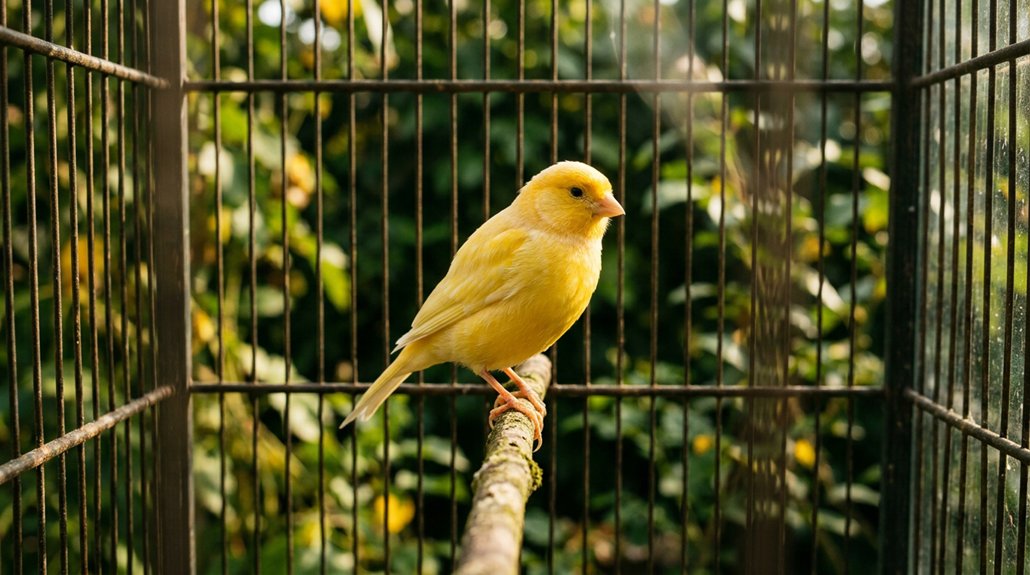
If you’d prefer a bird that’s less interactive than parrotlets or lovebirds, canaries are a strong fit for small spaces. You’ll usually get a compact songbird, about 5 to 8 inches long and 0.5 to 1 ounce in weight. Male canaries are selected for melodic singing, so you may notice stronger vocal output and more song variation; females typically give softer chirps. They’re best viewed, not handled, because they generally dislike frequent touching or cuddling. Feed them mostly seeds, with fresh vegetables such as carrots, celery, lettuce, and cabbage, plus clean water daily. Expect regular cage maintenance, since they scatter seed and food. If you provide out-of-cage flight time, use an adequately sized aviary, ideally several feet across, to reduce stress and clutter.
Small Parrots Beyond the Basics
Beyond canaries, small parrots can offer more interaction and personality in a compact footprint, but they vary widely in noise, handling needs, and space requirements. You should match species to your tolerance for handling and sound.
| Species | Key point |
|---|---|
| Parrotlet | Playful, trainable, needs daily handling |
| Budgie | Social, chatty, often kept in pairs |
| Cockatiel | Affectionate, whistle-capable, needs more out-of-cage time |
| Lovebird | Active, territorial, needs frequent attention |
| Bourke’s | Mellow, quieter, benefits from flight space |
Use vocal enrichment, foraging puzzles, flight training, and socialization strategies to prevent boredom and reduce nipping. If you want a low-noise option, Bourke’s may suit you; if you want stronger interaction, parrotlets, budgies, or cockatiels can work, provided you can meet their daily behavioral needs.
How to Set Up a Cage for Small Birds
Set up the cage to support movement, safety, and routine care: for small parrots such as budgies and parrotlets, choose a cage that’s longer than it is tall, with minimum internal dimensions of about 24 × 18 × 18 inches; cockatiels need at least 30 × 18 × 18 inches. Use perch placement to provide varied diameters and materials, including natural wood and rope, so you reduce foot sores and encourage short flight hops. Add one sturdy swing or play perch. For toy rotation, select zinc- and lead-free chew, foraging, and bell toys, then change them weekly. Keep food placement near water at perch height. Make lighting considerations part of setup: place the cage in a draft-free, well-lit area at human-head height, away from kitchens, and offer daily supervised flight time.
Frequently Asked Questions
What Pet Bird Needs the Least Space?
Finches usually need the least space; you’ll manage with a wide cage and strong cage enrichment. Canaries can also fit smaller setups. You’ll still need proper vet care, regular cleaning, and daily monitoring.
What Is the 3 3 3 Rule for Birds?
You’re asking about the 3-3-3 rule: about 100% of birds need time. It’s a bonding timeline with behavioral milestones—3 days settling, 3 weeks cautious testing, and 3 months of growing comfort and trust.
What Is the Smallest Bird You Can Keep as a Pet?
You can keep a zebra finch, the smallest common pet bird, at about 4 inches. With proper finch care, you might also consider a pygmy parrot, but it’ll still need space, enrichment, and social contact.
What’s the Most Low Maintenance Bird?
Canaries’re usually the most low-maintenance bird you’ll keep: simple diet, low noise levels, minimal handling, and modest habitat enrichment needs. You’ll still need lifespan considerations, since they can live 10-15 years with proper care.
Conclusion
If you have limited space, you can still choose a bird that fits your routine and environment. For example, if you want interaction in a small apartment, a single budgie may thrive with daily social time and a properly sized cage. By matching species to your space, noise tolerance, and handling preferences, you can reduce stress and improve welfare. Your best choice isn’t the smallest bird—it’s the bird whose needs you can consistently meet.