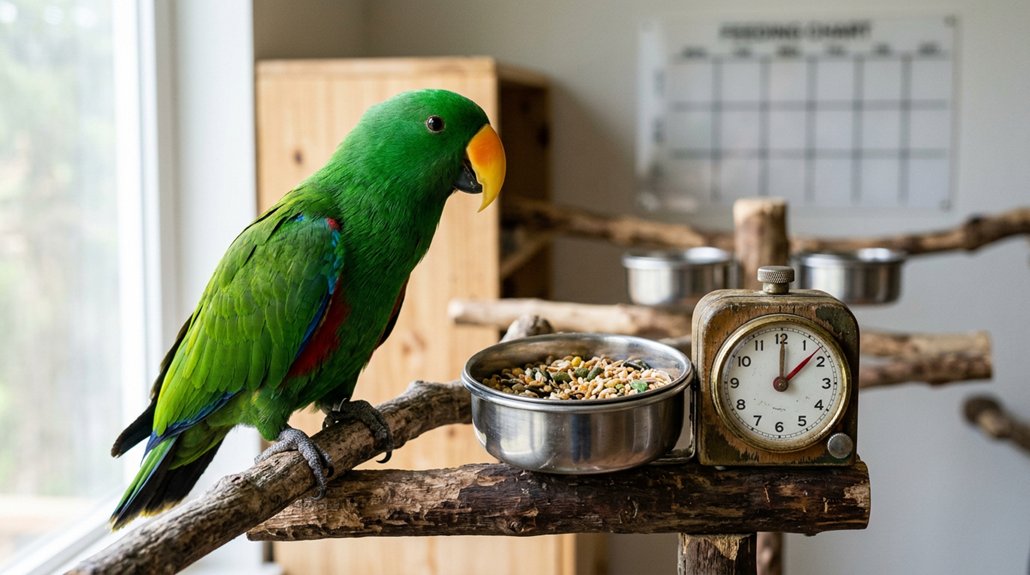
You should feed your pet bird fresh food once daily, usually in the morning, with a small top-up or evening snack before lights-out. Keep meal times consistent, because that helps prevent obesity and fatty liver disease. Don’t leave food out all day for most birds. Use measured portions, and adjust them to your bird’s species, size, and activity level. Fresh food should be removed after a few hours, and there’s more to get right.
Key Takeaways
- Feed most pet birds once daily in the morning, with a small evening top-up if needed.
- Offer fresh vegetables every day and replace perishable foods after about 4 hours, sooner in warmth.
- Base the diet on measured pellets, which should make up about half of the daily ration.
- Give small fruit portions and limit seeds and nuts to occasional treats.
- Provide fresh water at least every 12 hours and adjust portions based on weight and leftovers.
How Often Should You Feed a Pet Bird?
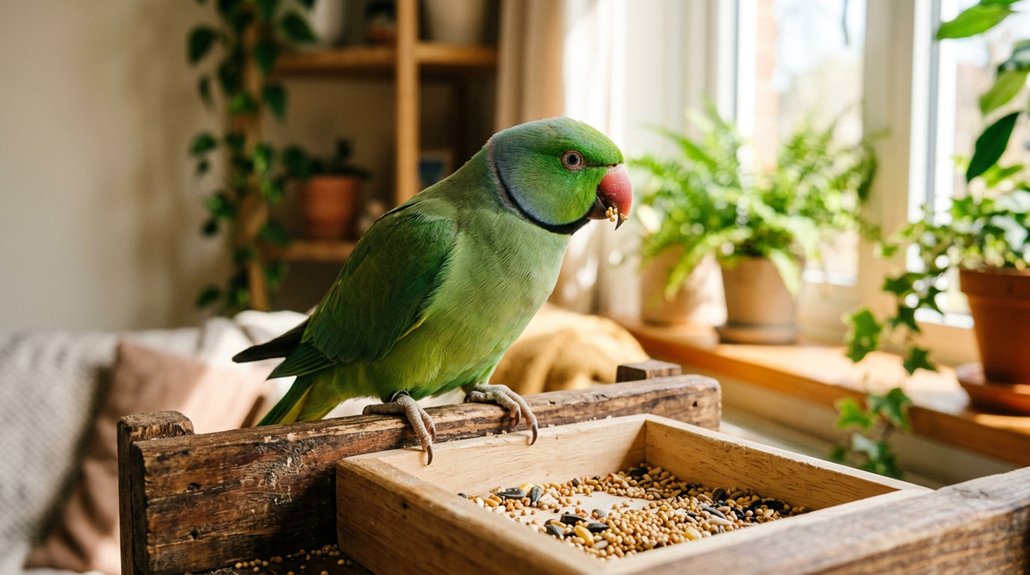
Most pet birds should be offered fresh food once daily in the morning, with a small top-up or evening snack before lights-out to match their natural foraging pattern. You should use consistent meal timing, because scheduled meals help prevent obesity and fatty liver disease in many species. Leaving food out all day isn’t ideal for most birds. Instead, offer measured portions matched to your bird’s size, then adjust with species-specific guidance or veterinary advice. Remove perishable food after about 4 hours, and replace water at least every 12 hours, sooner if it’s dirty. Weigh your bird regularly. If you notice leftovers, weight gain, or loss, change portion size or feeding frequency. Proper timing also supports environmental enrichment by encouraging natural foraging behavior.
What Should Pet Birds Eat Daily?
A daily pet bird diet should start with nutritionally complete avian pellets, which should make up about 50% of the ration to help guarantee consistent intake of vitamins and minerals. You should add fresh vegetables every day, including dark leafy greens, zucchini, and broccoli, and remove any uneaten portions after 4 hours. Offer small fruit portions only, using safe options such as apple without seeds, banana, melon, mango, or papaya, because excess sugar can be harmful. Include plain cooked beans, brown rice, pasta, eggs, or pellets several times weekly for protein and fibre. Keep seeds and nuts limited to treats, since seed preferences can lead to excess fat intake. Maintain clean water daily and monitor water intake closely.
What Are the Best Diet Ratios for Pet Birds?
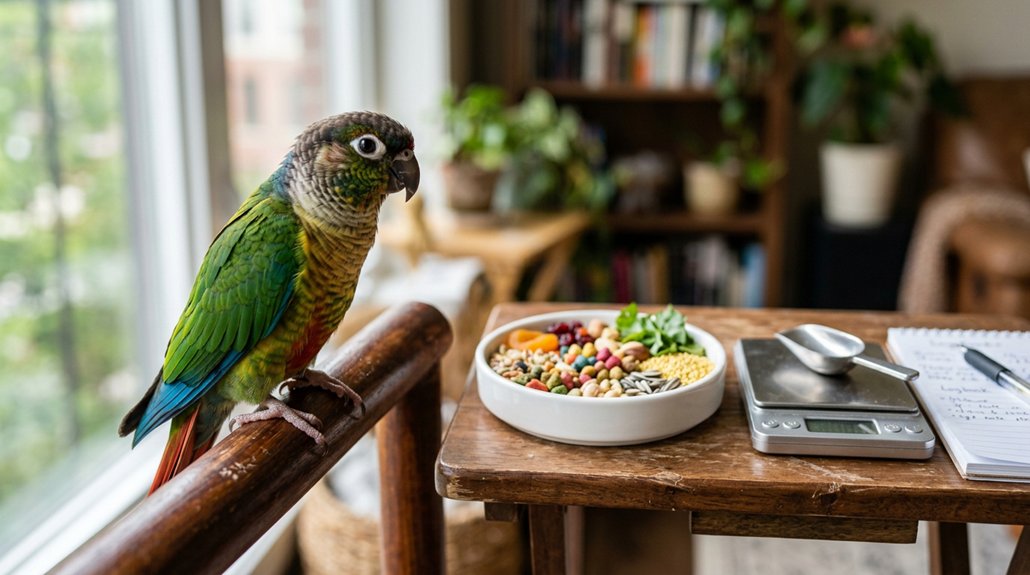
For most pet birds, the diet should be balanced with roughly 50% high-quality commercial pellets, 25% fresh vegetables—especially dark leafy greens, zucchini, and broccoli—and 25% protein-rich foods and grains such as cooked beans, eggs, or cooked brown rice. You should keep fruit under 10% of daily intake because sugar can displace more nutrient-dense foods; use it sparingly. Seed and nuts should remain treats or enrichment only, since seed-heavy diets can promote obesity and fatty liver disease. Offer cooked grains or legumes only once or twice weekly, not as a staple. Because species specific needs vary, and seasonal adjustments may be appropriate, you should confirm the exact ratio with an avian veterinarian. Size, age, and health also matter, so your bird’s plan shouldn’t be one-size-fits-all.
How Much Food Should You Give Each Day?
How much should you feed each day? You should use strict portion control and match the amount to your bird’s species, size, and activity level. Small parrots, budgies, and finches usually need 1–2 tablespoons daily; larger parrots may need several cups. Use seasonal adjustments if activity changes.
Use strict portion control and adjust food amounts to your bird’s species, size, and activity level.
- Measure pellets first; they should form the bulk of the diet when used, following the manufacturer’s or your vet’s guidance.
- Offer fresh fruits and vegetables at about 25% of the daily ration: a few tablespoons for small birds, 1/4 to 1/2 cup for medium parrots, more for large birds.
- Limit seeds, nuts, and high-fat treats to small amounts. Weigh your bird regularly and adjust portions with veterinary guidance.
How Do You Prevent Overfeeding and Spoilage?
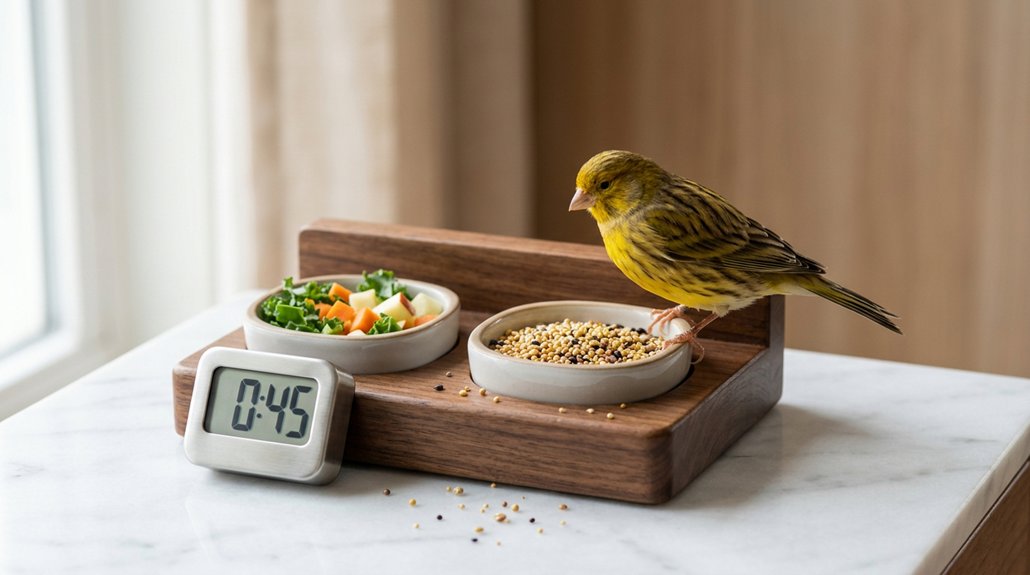
To prevent overfeeding, measure each day’s food carefully and match portions to your bird’s species, size, and activity level; small birds usually need about 1–2 tablespoons, while larger parrots may need several cups, with your avian vet’s guidance helping you avoid chronic excess. Practice strict portion control by counting treats as part of the day’s calories, and keep high-fat seed treats occasional only. For spoilage prevention, remove fresh fruits and vegetables after about four hours, or within one hour in warm conditions, because bacteria multiply quickly. Replace pellets daily, discarding any stale food before refilling the dish. Weigh your bird regularly, and if you notice unexplained weight gain or persistent leftovers, reduce portions promptly and reassess the diet with your avian veterinarian.
Frequently Asked Questions
How Often Should Pet Birds Be Fed?
You should feed pet birds daily, offering fresh food each morning and a small evening snack. Keep portion sizes species-specific, and use a consistent daily schedule; remove perishables after four hours to prevent spoilage.
What Is the 3 3 3 Rule for Birds?
The 3-3-3 rule means you’ll provide food and water within 3 hours, watch for eating by 3 days, and expect routine by 3 weeks. It’s clinical avian enrichment, supports molt care, and shouldn’t worry you.
What Is the 5 7 9 Rule for Bird Feeders?
The 5-7-9 rule means you’ll place feeders either under 3 feet or over 30 feet from windows, and you’ll space decals or markers about 5–9 inches apart. Good seed placement and feeder maintenance reduce collisions.
What Is the 60/40 Rule for Birds?
You’ll use bird portioning like a balanced ledger: 60% pellets, 40% fresh foods. This seed variety should be small and selective, with mostly vegetables, little fruit, and occasional grains, reducing obesity and deficiency risks.
Conclusion
In short, you should feed your pet bird every day, with fresh food provided consistently and removed before it spoils. A balanced daily diet should typically include about 60–70% quality pellets, 20–30% vegetables, and a small amount of fruit or seeds. Notably, studies show that birds offered varied diets are more likely to maintain better body condition than those fed a single food. Careful portions and routine help you keep your bird healthy and safe.