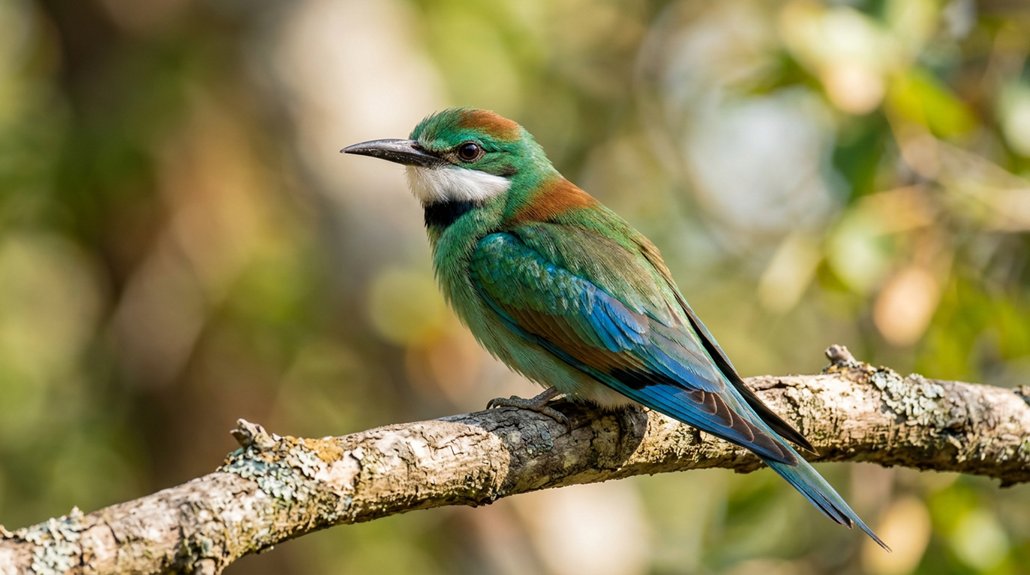
If you want a bird that’s easy to train, you should start with social, captive-bred species like budgies, cockatiels, and lovebirds. They learn best through short 5–15 minute sessions, consistent cues, and immediate rewards. Budgies can master step-up and simple tricks, while cockatiels often learn whistles and basic commands quickly. African greys and amazons are highly capable too, but they need more time, trust, and daily interaction to stay responsive and well-adjusted.
Key Takeaways
- Budgies are among the easiest birds to train, learning step-up, spin, wave, fetch, and sometimes simple words with short daily sessions.
- Cockatiels train quickly when given regular social time, consistent cues, and immediate rewards, especially juveniles under one year old.
- African greys and Amazons are highly intelligent, making them excellent at advanced training, speech, and problem-solving tasks.
- Lovebirds, doves, and canaries can learn simple tricks, recall, and perch behaviors with gentle, frequent positive reinforcement.
- Short, calm training sessions with trust-building and treats work best for most trainable bird species.
What Makes a Bird Easy to Train?
What makes a bird easy to train is a combination of species traits, prior handling, and current health. You’ll usually see faster learning in socially oriented, intelligent parrots because they’re responsive to interaction and behavioral cues. Hand-raised or well-socialized birds, especially younger ones, often adapt more quickly than wild-caught or poorly handled adults. Your results improve when you use short daily sessions, immediate treats or praise, and a calm setting. Size and dexterity also shape outcomes: smaller birds may learn vocal mimicry and simple tricks, while larger parrots can master more complex behaviors and reliable step-up responses. Healthy birds on balanced diets, with adequate social contact and environmental enrichment, tend to focus better and acquire commands more efficiently.
Best Birds to Train
If you’re choosing a bird for training, the most responsive species are usually those with strong social instincts, good vocal learning ability, and a history of frequent human interaction. You’ll often find that African grey parrots rank highest for cognition, vocabulary, and problem-solving, but they need substantial daily socialization. Amazon parrots are also highly trainable, especially for clear speech, though they’re best for owners who can invest consistent time. Cockatiels respond reliably to step-up and whistling tasks and do well with daily interaction. Conures and lovebirds can learn basic commands and tricks, but their independence means you’ll need patience. Use positive reinforcement and short sessions to keep learning efficient. Budgies are also highly responsive, especially when training is frequent and structured.
Budgies: Small Birds With Big Skills
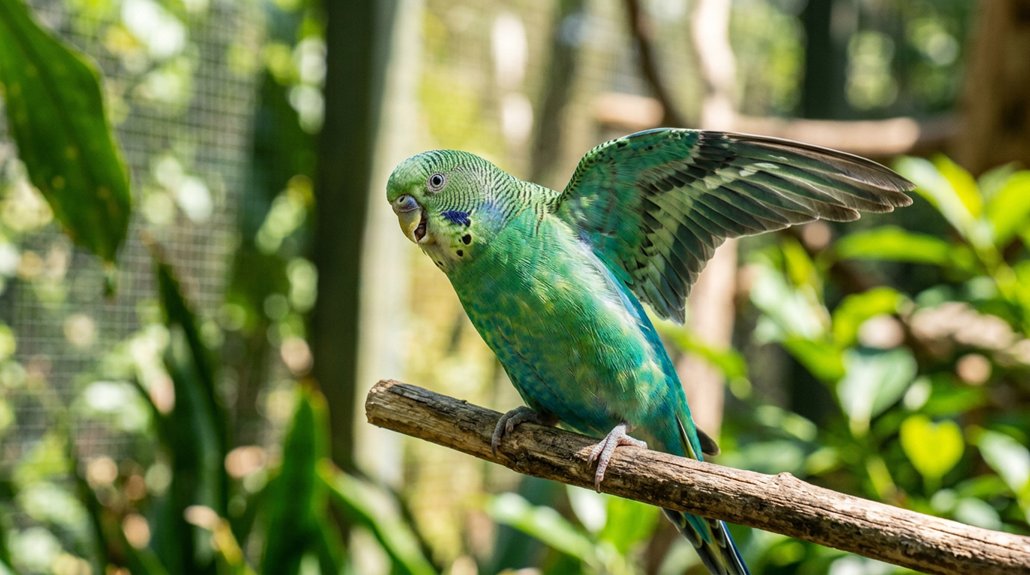
Budgies punch above their weight when it comes to training: at about 7 inches long and 1 ounce in weight, these highly social parrots can learn to step up, spin, wave, fetch, and even mimic words or short phrases with consistent, short sessions. You can expect progress in weeks to months if you use positive reinforcement, including small treats and brief praise, in 5–10 minute sessions several times daily. Because they’re small and quick to learn, you can build a reliable repertoire without overtaxing attention. Proper care supports feather health and steady learning, and cage enrichment helps reduce boredom between sessions. With good husbandry, budgies often live 7–15 years, so you’re making a manageable long-term commitment. Captive-bred color mutations train similarly, but temperament varies, so assess each bird’s willingness first.
Cockatiels Learn Fast With Attention
When you give cockatiels regular social time and 5–15 minute training sessions, they often learn basic cues and simple behaviors quickly. Positive reinforcement, such as millet or favored treats, can strengthen attention and speed skill acquisition. Many males also mimic whistles and simple phrases readily, and you may see tune learning within weeks.
Social Time Matters
Cockatiels often learn simple commands and tricks faster than many larger parrots when you give them consistent daily one-on-one sessions of about 10–15 minutes. You should also provide several hours of companionship or supervised out-of-cage time each day, because social contact keeps them responsive to training. Their learning improves when you vary social stimuli: rotate toys, let different people practice step up, and keep short, frequent positive-reinforcement sessions. This structure supports group bonding and fits well into enrichment schedules. Young, hand-raised birds with early handling and daily play usually step up sooner, accept harnesses more readily, and learn new behaviors faster than birds with limited exposure. If you’re consistent, you’ll see better attention, lower boredom, and steadier progress across tasks.
Whistling And Mimicry
Male cockatiels, in particular, often pick up whistles, phone-like sounds, and short melodies after a few weeks of daily exposure, especially when you keep their attention focused with short, frequent 5–10 minute practice sessions two to three times a day. You’ll usually get faster mimicry with a consistent cue and clear tone variation, because repetition helps the bird match pitch and rhythm. Use a single whistle or short tune, then reward correct copies immediately with a favorite treat. That positive reinforcement increases call response and repetition. Recorded playbacks can help for 15–30 minutes daily, but your live demonstration often produces more accurate imitation. Juveniles under 1 year tend to learn quickest, though adults can still acquire new sounds with patient, steady training.
African Grey Parrots for Advanced Training
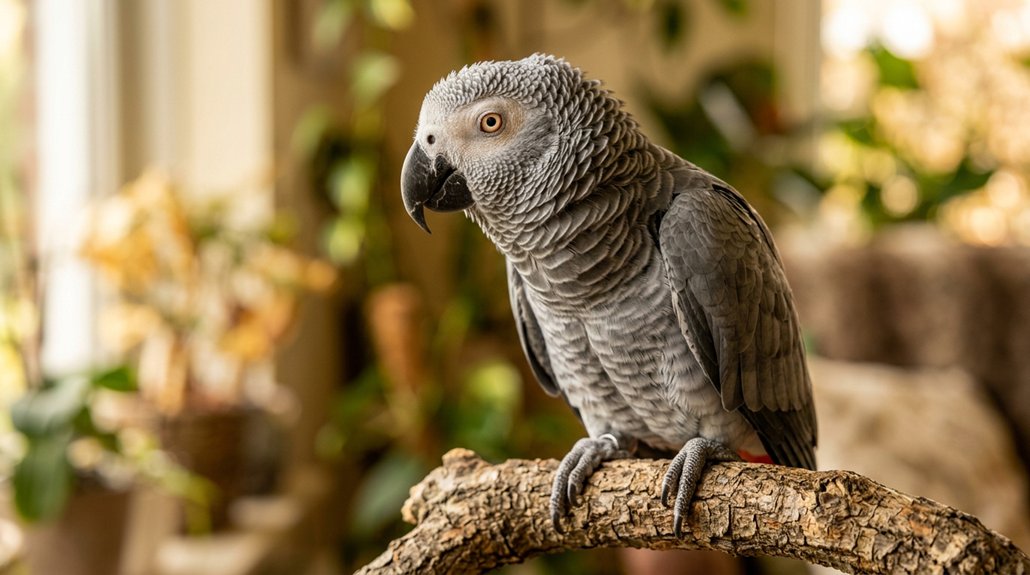
African grey parrots can support advanced training because you’re working with a species known for strong memory, vocal mimicry, and problem-solving, with some individuals learning complex vocabulary and sentence use. You’ll usually get the best results with short, regular sessions, daily social interaction, and positive reinforcement, since their attention and retention improve with consistent structure. Because they’re highly sensitive and form strong social bonds, you’ve got to build trust and use low-stress handling to avoid behavioral problems and maintain progress.
Advanced Cognitive Skills
Among parrots, grey species stand out for advanced cognitive performance, with African grey parrots (*Psittacus erithacus*) showing problem-solving and concept formation abilities comparable to those of a 3–5-year-old child. You can use cognitive enrichment to teach label-object matching, categorization, and novel word combinations. Research on Alex and related subjects showed they can identify colors, shapes, materials, quantities, and same-versus-different relations, and they’ve counted to at least six in controlled trials. Their working memory supports multi-step command chains, while long-term recall helps retain learned cues. Metacognitive indicators may appear when they adjust responses after errors.
- Use 5–15 minute drills.
- Repeat sessions daily.
- Reinforce correct responses consistently.
- Shape skills gradually over weeks.
Trust and Socialization
Because trust is the foundation of advanced training, grey parrots need extensive daily social interaction—often several hours—to support the deep rapport required for complex speech and problem-solving tasks. You should use consistent routines, gentle handling, and environmental enrichment to reduce stress and maintain emotional stability. Short, frequent sessions built on treats, praise, and toys work better than long drills, because they reinforce positive associations without overwhelming the bird. Let your parrot approach you first, then add hand-feeding, regular play, and gradual desensitization to new people, places, and cues. Before teaching multi-word speech, tool use, or performance tricks, establish reliable rapport. Since African greys can live 50–80 years, advanced training depends on long-term socialization, mental stimulation, and unwavering reinforcement consistency.
Amazon Parrots: Great Talkers and Learners
Amazon parrots are exceptional talkers and learners, typically measuring 13 to 15 inches long and weighing about 7 to 25 ounces. You’ll often see clear speech, large vocabularies, and rapid cue learning in these highly social birds. To maintain learning, you should provide frequent short sessions and consistent positive reinforcement. Protect vocal health by avoiding excessive noise exposure, and use enrichment toys to prevent boredom and support problem-solving.
- Train with treats and repetition.
- Keep sessions calm and brief.
- Reinforce desirable phrases only.
- Expect lifelong maintenance.
Without daily interaction, their mimicry can decline. If you guide them carefully, they can learn phrases, songs, and complex cues, but they may also copy unwanted sounds. Because they can live for decades, your training plan should remain steady across their lifespan.
Cockatoos and Macaws: Big Birds, Big Commitment
Cockatoos and macaws demand sustained commitment because their intelligence, size, and social needs make training a long-term process rather than a short project. You’ll need strict housing requirements and noise management.
| Species | Key Need |
|---|---|
| Cockatoo | Daily interaction |
| Macaw | Large secure space |
| Both | Consistent reinforcement |
Cockatoos, at 14–28 oz and about 18 in, are emotionally sensitive and can learn complex behaviors, but they’ll regress without several hours of daily stimulation. Macaws, some near 32 in and 35 oz, need secure flight space and repetitive practice. Both respond best to positive reinforcement, short sessions, and gradual desensitization. If you undertrain them, screaming and feather-plucking can emerge. Because cockatoos may live 40–70+ years and macaws nearly 100, you’re committing to decades of ongoing behavioral support, ideally with an avian trainer or veterinarian.
Lovebirds, Doves, and Canaries
You’ll find that lovebirds are small, highly inquisitive parrots that can learn simple tricks and solve puzzles, but they usually need early, consistent handling to become reliably tame. Doves respond well to gentle, steady training for perching and basic recall when you give them a roomy, flight-capable enclosure. Canaries aren’t typically handled much, but you can train them to fly to specific perches or return to an assigned area with short, positive sessions.
Lovebirds’ Puzzle Skills
Lovebirds are especially adept at simple puzzle-solving, often using their beaks and feet to manipulate latch-like closures and small objects in escape-style tasks. You’ll notice strong beak dexterity and rapid puzzle progression when you present a box or twist cap with a treat reward. Their inquisitiveness supports fast learning, and many individuals solve a new mechanism within a few sessions.
- Start with a single-step closure.
- Reward each successful manipulation immediately.
- Increase difficulty only after consistent success.
- Use social or food reinforcement to sustain effort.
Their performance is best when tasks are species-appropriate and compact. Compared with less manipulative birds, you’ll get clearer responses from puzzles that emphasize opening, turning, or moving small components rather than complex sequences.
Doves and Canaries
Doves and canaries respond best to calm, repetitive training routines that match their temperaments. You’ll get the best results with short, frequent sessions, positive reinforcement, and minimal stress. Doves are gentle, easygoing birds that tolerate moderate daily interaction and larger flight cages; with patient, consistent handling, you can teach them to perch on your finger and move between perches. Canaries usually prefer limited physical contact, but they can learn routine cues for returning to a specific perch or cage during flight conditioning. Both species startle easily, so avoid abrupt movements and loud noise. Their relatively short-to-moderate lifespans also make training goals more predictable than with long-lived parrots. Gentle handling supports taming, while consistent cues improve reliability.
Build Trust Before You Train
Trust is the foundation of effective bird training. You should begin with short sessions of 5–15 minutes, pairing high-value treats with gentle handling. Use predictability cues: fixed feeding, play, and training times, plus a calm setting, to lower arousal and improve learning.
- Sit near shy birds daily and speak softly.
- Offer treats through the bars for several weeks.
- Prioritize young, hand-reared, or already handled birds when possible.
- Watch body language; relaxed feathers and normal breathing indicate readiness, while fluffed posture, rapid tail bobbing, or biting mean you should pause.
When you build trust first, birds usually show less fear and more cooperation, making later training more efficient and measurable.
Teach Step Up and Easy Tricks
Once your bird is relaxed and responsive, you can begin teaching the “step up” cue and a few simple tricks. Start with your bird perched on a curved surface; gently press your fingertip against its lower chest to shift weight, then lift the foot onto your finger while you say “step up” and deliver a small treat. Use positive reinforcement and a bridge cue, such as a clicker, immediately before reward delivery. Keep sessions 5–10 minutes, daily, and teach the cue to both hands and other family members gradually. For shy birds, build trust for several days first. Target training can support later tricks, including wave, spin, and bow. Practice briefly several times weekly, vary rewards, and stop if you see fluffed feathers, wide eyes, or rapid breathing.
Frequently Asked Questions
What Is the Easiest Type of Bird to Train?
Budgerigars are usually the easiest bird to train; you’ll see quick learning in speech and tricks. With proper parrotlet care and cockatiel enrichment principles—social contact, consistency, short sessions—you’ll get reliable, factual training results.
What Is the 3 3 3 Rule for Birds?
The 3-3-3 rule is your bird’s adjustment training timeline: 3 days of fear, 3 weeks of testing boundaries, and 3 months to reach behavioral milestones. It’s a guideline, not a fixed schedule.
What Is the Easiest Bird to Domesticate?
Budgerigars are usually the easiest bird to domesticate; if you hand-raise and socialize them early, you’ll get quick trust, vocal mimicry, and step-up behavior. Cockatiel mimicry practice and parrotlet socialization also help.
Which Bird Is Very Easy to Tame?
A budgie, or parakeet, is usually very easy to tame; you’ll often see quick parakeet bonding with short daily sessions. Cockatiels’re also highly tameable, and cockatiel whistles often indicate comfort and social engagement.
Conclusion
When you choose a bird that matches your time, space, and skill, you set yourself up for success. When you build trust first, your bird learns faster and responds more reliably. When you reinforce calm behavior, you strengthen attention and reduce stress. Budgies, cockatiels, and African greys can all learn well, but each needs different handling. If you stay patient, consistent, and observant, you’ll create a stronger bond and a more trainable companion.