For first-time owners, you should usually start with a budgie or cockatiel: both are small, social, and easier to handle than larger parrots. Budgies are affordable and trainable, while cockatiels are gentle and usually tolerate handling well. Green-cheeked conures can suit confident beginners, but they need more training and daily enrichment. Avoid large macaws, cockatoos, and African greys, since they need much more space, time, and expertise. More practical care details follow below.
Key Takeaways
- Budgies are one of the best starter birds: small, social, trainable, and relatively affordable with a moderate lifespan.
- Cockatiels are gentle, friendly, and beginner-friendly, though they need a longer long-term commitment than budgies.
- Green-cheeked conures can suit committed beginners if they can provide regular handling, training, and enrichment.
- Avoid large parrots like macaws, African greys, and cockatoos because they need more space, attention, and specialized care.
- Beginners should choose a bird with manageable care needs, a social temperament, and a diet based mainly on pellets and vegetables.
What Makes a Bird Beginner-Friendly?
A beginner-friendly bird is usually small to medium in size, such as a budgie or cockatiel, because these species generally need less space, are easier to handle, and tend to have shorter lifespans than large parrots. You’ll also want a bird with a social temperament that tolerates handling and basic training. Moderate vocalizations matter, since very loud species can be difficult in a home setting. Daily care should be manageable, with limited out-of-cage time and simple enrichment. Diet and housing should be straightforward, using pellets, fresh produce, and an appropriately sized cage. Avian genetics can influence behavior, but individual variation still matters. Consistent bonding rituals, done calmly, may help you build trust without overstimulation.
Best Starter Birds for Beginners
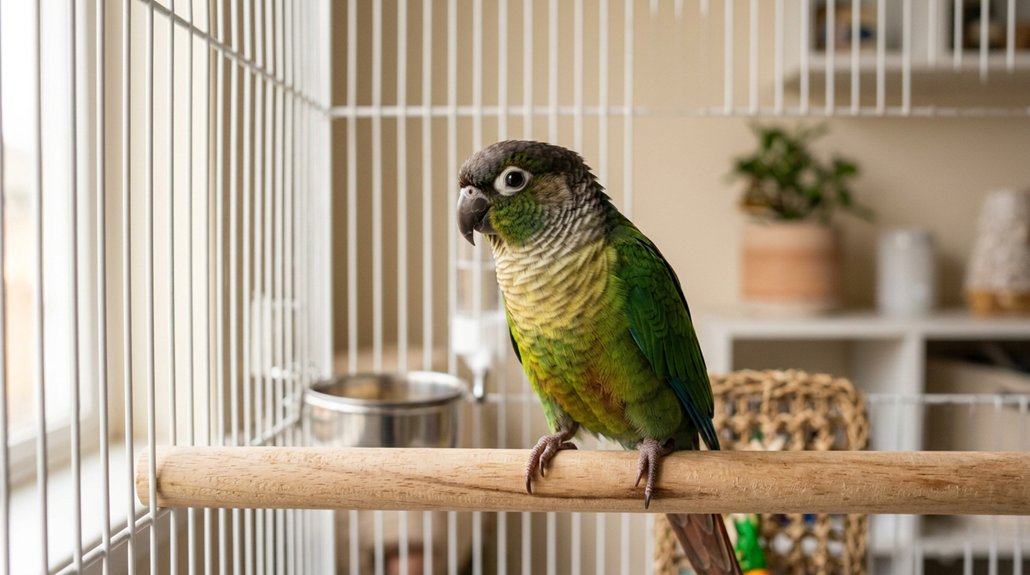
If you’re choosing your first bird, budgies and parakeets are often the most accessible option because they’re small, social, and relatively inexpensive. If you can provide more space and daily interaction, cockatiels may suit you, as they’re gentle and usually tolerate handling well. You might also consider friendly small parrots, such as lovebirds or green-cheeked conures, but they generally need more training, enrichment, and supervision than budgies or cockatiels.
Budgies And Parakeets
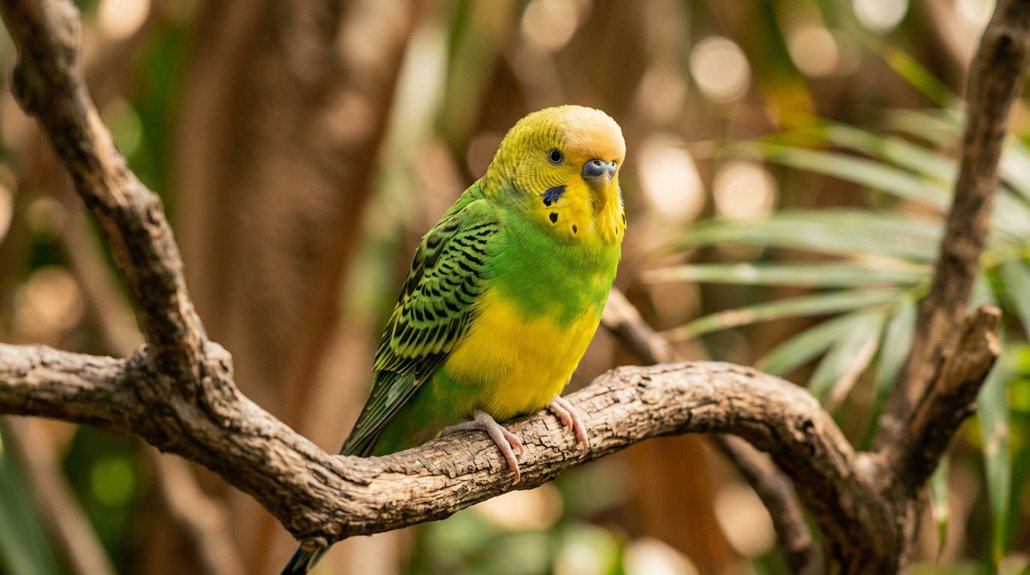
Budgerigars, often called budgies or parakeets, are among the best starter birds for beginners because they’re small, affordable, and generally easy to manage with proper care. You’ll usually see them at about 1 ounce and 6–8 inches long, with a lifespan of roughly 7–15 years. Their budgie mutations include green, blue, yellow, white, and violet forms, and many show black barring on the head, back, and wings. For effective parakeet socialization, you should provide daily interaction or a same-species companion, since they’re social and trainable and may whistle or mimic words. You’ll also need at least an hour of supervised out-of-cage exercise in a bird-proofed room, plus pellets, fresh produce, toys, and regular avian veterinary check-ups.
Cockatiels For Beginners
Cockatiels are often a strong choice for first-time bird owners because they’re manageable in size at about 3 ounces and 12–13 inches long, yet still highly social and interactive. You should expect a 15–20 year commitment, and sometimes longer, so this isn’t a short-term pet. They usually need several hours outside the cage each day and benefit from contact with more than one family member. A larger cage, multiple perches, and toys are important for behavioral enrichment and to reduce boredom-related feather plucking. Males often mimic whistles and household sounds, while both sexes respond best to consistent training and gentle handling. If you’re considering breeding concerns, keep in mind that these birds still require careful planning, housing, and long-term care.
Friendly Small Parrots
Friendly small parrots can be excellent starter birds, but each species comes with different time, noise, and care demands. Budgies are often the easiest entry point: they’re small, trainable, and usually need about an hour of daily out-of-cage time. Cockatiels are more demanding, needing larger cages and several hours of interaction, but they’re often affectionate. Green-cheeked conures may suit you if you want a playful bird with quieter vocalizations, though they still need substantial social enrichment and daily play. Parrotlets can bond well, but they’re energetic and need intensive training to avoid boredom. Lovebirds are strongly bonded and active, yet they may show territorial behavior and heavy chewing, so consistent handling and sturdy toys matter for care and noise management.
Small Parrots for Confident Beginners
If you’re considering a small parrot, focus on species that are friendly, trainable, and suited to consistent handling, such as green-cheeked conures or well-socialized lovebirds. You’ll still need to provide daily out-of-cage exercise, enrichment, and a species-appropriate diet, because smaller size doesn’t reduce care needs. If you’re confident with routine training and long-term commitment, these birds can be manageable choices for first-time owners who want a social parrot.
Friendly Small Parrots
Small parrots can be rewarding choices for confident beginners, but they’re not low-maintenance pets. If you want a friendly bird, parrotlets, green-cheeked conures, lovebirds, and small Amazons each have specific demands. Parrotlets are tiny and curious, yet you’ll need several hours outside the cage and varied toys to limit boredom and chewing. Green-cheeked conures are affectionate, entertaining, and relatively quiet, so your noise tolerance matters; they can be suitable if you accept a 15–30+ year commitment. Lovebirds are colorful and playful, but they may become territorial without consistent social contact, including bonded pairs. Small Amazons are strong personalities with good talking ability, but they need large cages and extensive daily enrichment.
Training And Care
Parrotlets and budgies need several hours of supervised out-of-cage time each day, along with short, consistent training sessions of about 5–15 minutes, 2–4 times daily, to reduce boredom and destructive behavior. You should follow a careful socialization timeline: daily gentle handling from weaning through the first 3–6 months improves taming and bonding. For green-cheeked conures and similar species, keep the diet near 70–80% pellets, then add fresh fruits, vegetables, and foraging items. Use enrichment scheduling by rotating chew, puzzle, and shredding toys weekly, and vary perch diameters to support foot health and limit stereotypic behaviors. Before free-flight work, confirm recall training or wing-clipping, bird-proof the room, and introduce flight gradually. Well-conditioned birds may need 30–60 minutes of safe flight time daily.
Birds Better Left for Experienced Owners
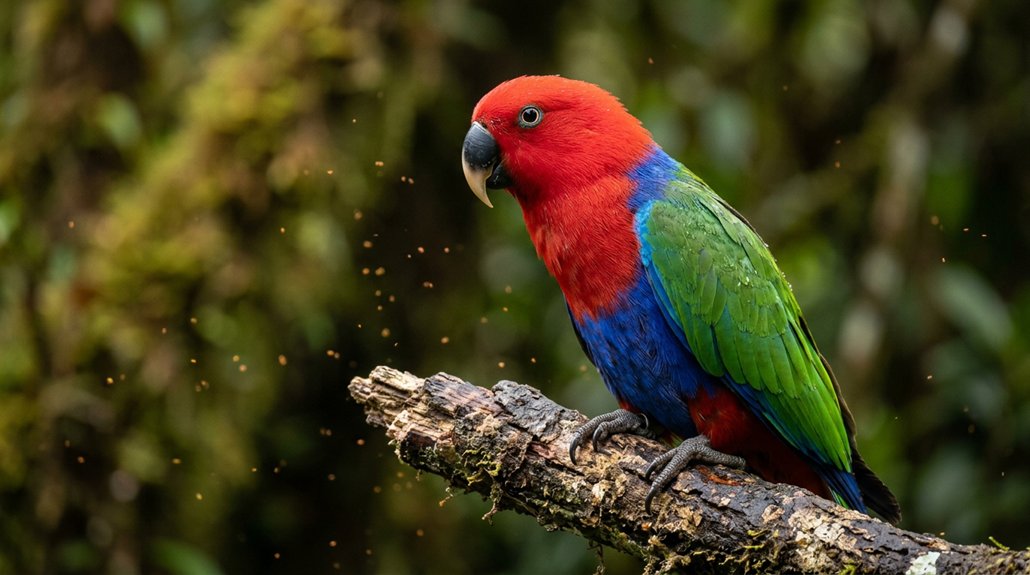
Large parrots are better left to experienced owners because their care demands are substantial and long-term. If you’re new to birds, large macaws can be a poor fit: they can live 50 years or more, require extensive space, and have powerful beaks that can injure. African Greys also need advanced handling because their high intelligence can lead to feather-plucking or chronic screaming when understimulated. Cockatoo bonding can be intense, and that attachment often brings separation anxiety, destructive chewing, and many hours of daily attention. Large Amazons and eclectus parrots add further challenges with loud vocalizations, strong personalities, and specialized care needs. In general, these birds aren’t beginner-friendly; they demand decades of consistent interaction, frequent veterinary care, and major financial commitment.
Choose Cage Size, Food, and Toys
When setting up a beginner bird’s home, size and safety matter as much as species choice: choose a cage at least twice the bird’s wingspan in width so it can fully extend and flap, with a budgie flight cage often around 30–36 inches wide. Place it with careful cage placement away from drafts, direct sun, and toxic fumes. Add varied perches—natural wood, rope, and sand-free options—in several diameters to reduce foot strain. Feed species-appropriate pellets as the base diet, then offer fresh vegetables daily, limited fruit, and seed mixes only as treats. Include chew, auditory, and foraging toys, plus foraging stations, and rotate them weekly. Use bird-safe materials only; avoid zinc or lead. Provide shallow bathing access if your species enjoys water.
Daily Bird Care for New Owners
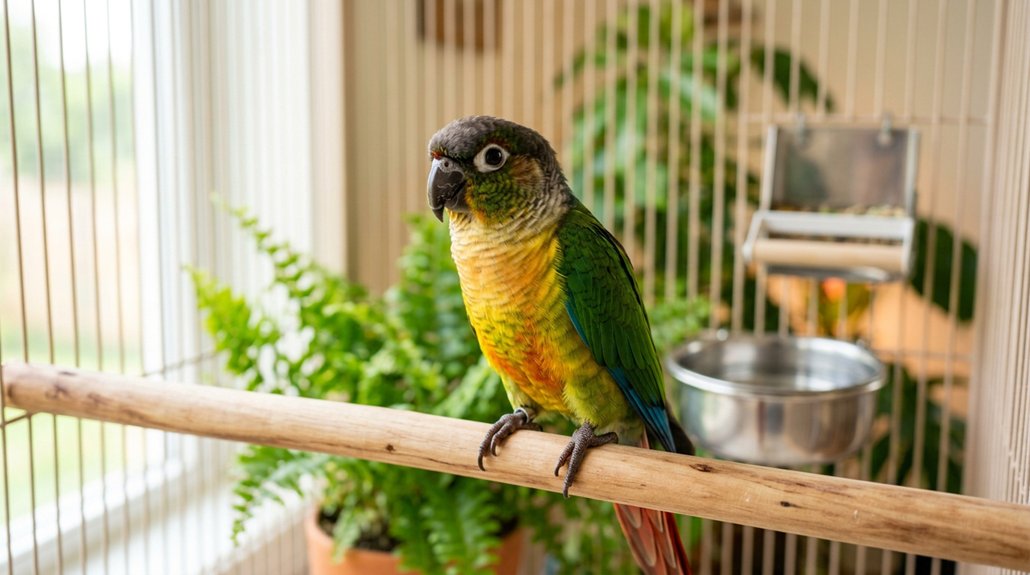
Each day, you’ll need to cover a bird’s core needs: offer a species-appropriate diet with a high-quality pellet base, fresh vegetables or fruit, and only limited seeds or treats, then replace water and remove droppings or uneaten food.
| Task | Frequency | Notes |
|---|---|---|
| Diet | Daily | Pellets should be the main ration. |
| Water | Daily | Use clean, fresh water. |
| Cleaning | Daily | Spot-clean waste and leftover food. |
| Enrichment | Daily | Rotate toys and daily foraging items. |
| Exercise | Daily | Follow safe flight schedules. |
Budgies usually need about an hour of supervised flight; cockatiels and conures may need several hours in a bird-proofed room. You should also watch appetite, droppings, and behavior, since changes can signal illness. Book an avian exam within 1–2 weeks, and plan annual wellness checks.
Frequently Asked Questions
What Is the Best Bird for a Beginner Owner?
A budgie’s usually your best beginner choice: it’s small, inexpensive, and social. You should consider diet variety, socialization needs, noise levels, and space requirements; cockatiels’re also suitable if you want a larger, interactive bird.
What Is the 3-3-3 Rule for Birds?
The 3-3-3 rule means your bird may need 3 days to decompress, 3 weeks to test boundaries, and 3 months to fully settle; it’s a cautious behavioral adjustment process needing gradual socialization, environmental enrichment, consistent routines.
Which Bird Is Good for Beginners?
A budgie’s often your best beginner choice: they’re small, affordable, and friendly. With consistent budgie care, you’ll manage easily. If you want more affection, cockatiels can work, but cockatiel bonding needs daily interaction and space.
What Is the 60/40 Rule for Birds?
The 60/40 rule means you feed your bird about 60% pellets and 40% fresh foods. You’ll support diet balance, reduce deficiencies, and can use noise training separately; adjust ratios cautiously with your avian vet.
Conclusion
So, you’ve decided a bird is the ideal “easy” pet. Admirable. Just remember: beginner-friendly usually means “less likely to outwit you,” not “no effort required.” If you choose wisely, provide an appropriately sized cage, balanced food, and enrichment, you may avoid becoming the next cautionary tale. In practice, your bird’s success depends on routine, patience, and restraint. Handle the responsibility carefully, and you’ll likely earn a healthy, tolerable companion.