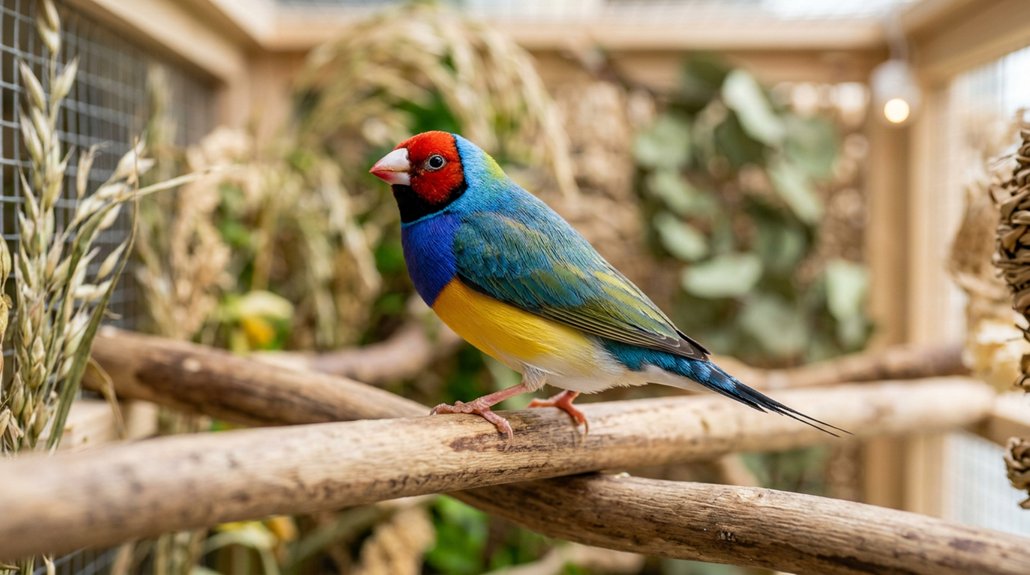
If you want a small pet bird that’s easier to care for, budgies are often the best starter choice because they’re social, trainable, and enjoy routine interaction. Cockatiels are also friendly, while canaries and finches suit you if you prefer quieter, lower-handling birds. Doves are gentle and calm, and lovebirds or parrotlets can work if you’re ready for more daily attention. The right setup, diet, and handling habits can make a big difference, and there’s more to compare.
Key Takeaways
- Budgies are a top beginner choice because they are social, interactive, and thrive with daily flight time and enrichment.
- Cockatiels are affectionate and manageable, but need a larger cage and several hours outside the cage each day.
- Finches and canaries are low-handing birds best for observation, with canaries especially suited to quieter companionship.
- Doves are calm and quiet, making them easier for busy owners, though they still need space and gentle taming.
- Easy care depends on good basics: proper cage size, safe bar spacing, varied toys, fresh produce, and daily water changes.
What Makes a Bird Easy to Care For?
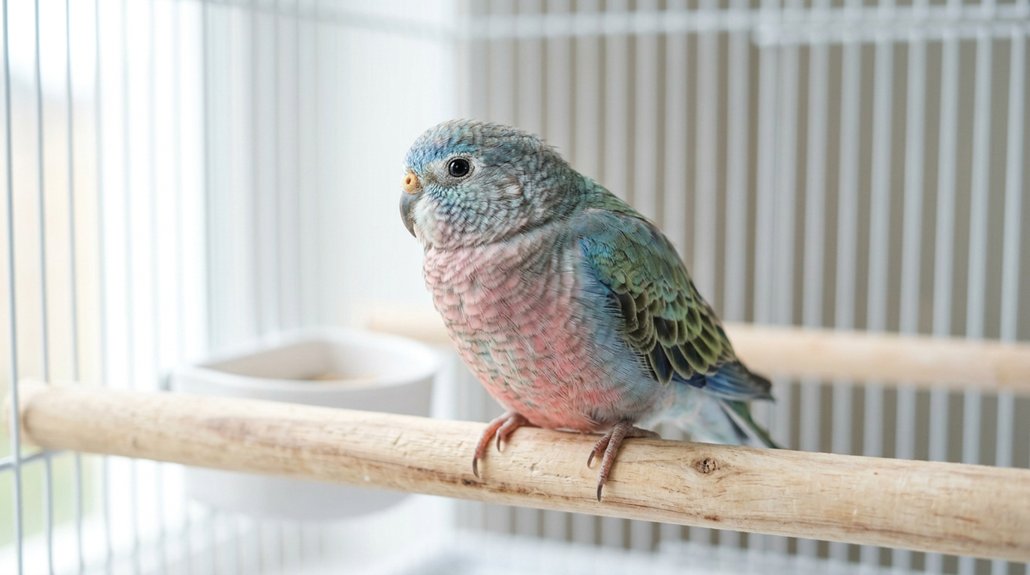
When choosing an easy-to-care-for bird, look for a species that fits a simple daily routine: it should need a modest cage with room to perch and fly short distances, have a straightforward diet, and tolerate being alone for several hours without stress. You’ll usually do best with birds that thrive on seed or pellet mixes plus fresh vegetables, rather than specialized foods. Low-maintenance care also means minimal grooming, predictable noise, and manageable handling needs. Birds that accept gentle interaction from multiple people can offer silent companionship without constant attention. You should also consider longevity considerations, since even an easy bird may live many years and need consistent housing, routine checks, and enrichment. In practice, you want steady behavior, simple feeding, and health needs you can realistically maintain.
Best Small Pet Bird Species for Beginners
For beginner bird owners, a few small species stand out as especially manageable, each with different strengths. If you want a sociable pet that can learn routines and even mimic speech, budgies fit well, but you’ll need daily flight time and behavioral enrichment. Cockatiels are affectionate and whistling, yet they need a larger cage and several hours outside it each day. Lovebirds are bright and active, but their strong bonds demand serious training commitment and close interaction to prevent biting. Parrotlets are tiny, bold, and amusing, though they need frequent handling and plenty of exercise. If you prefer observation, finches and canaries offer strong space compatibility and lower handling demands. Your best choice depends on noise tolerance, available time, and how much interaction you can provide.
Budgies, Canaries, and Doves Compared
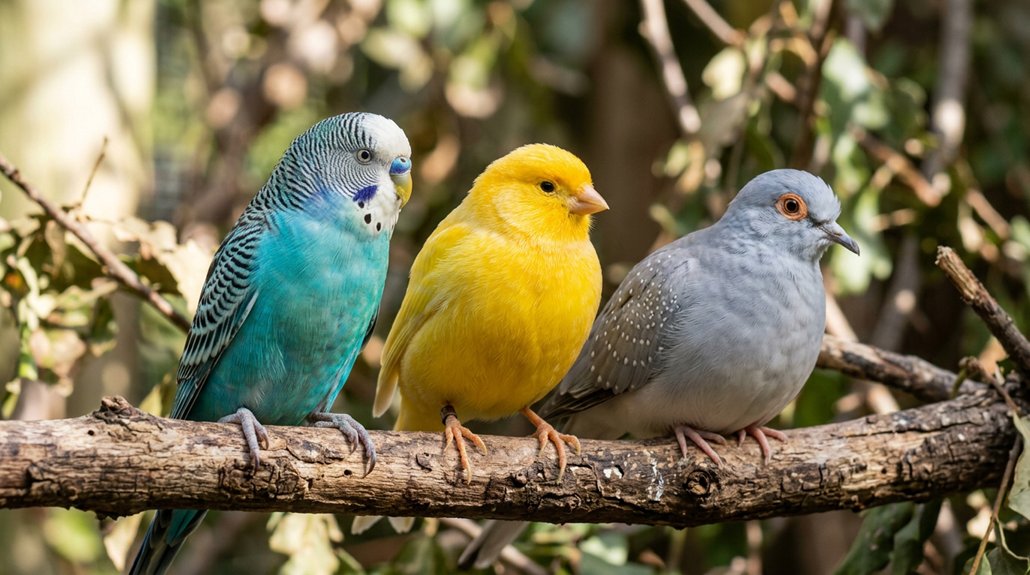
Budgies, canaries, and doves each make appealing small pet birds, but they differ sharply in personality and care needs. If you want an interactive pet, a budgie is the most social choice; it can show vocal learning, needs about an hour outside the cage daily, and benefits from cage enrichment and a companion if you’re away often. If you prefer listening rather than handling, a canary may suit you better: males sing beautifully, but they don’t like much contact and should live in a roomy flight cage, often singly. Doves are the quietest option and fit busier schedules, yet they still need space for flight and gentle handling if tamed. All three do best with balanced diets and routine veterinary care.
Small Parrots That Can Still Fit Busy Homes
Small parrots can fit busy homes well, provided their social and activity needs are met. You’ll get quiet companionship with species like budgies, cockatiels, lovebirds, parrotlets, and green-cheeked conures, each bringing a distinct balance of energy and charm. Their appeal includes minimal grooming and strong social bonds, but they’re not hands-off pets.
- Budgies suit homes with daily out-of-cage time and toys.
- Cockatiels need several hours of interaction and free flight.
- Lovebirds do best with a mate or steady one-on-one attention.
- Parrotlets and green-cheeked conures need regular handling and varied enrichment.
If you want an interactive bird that can still adapt to a packed schedule, choose one you can engage with consistently. Short, dependable attention matters more than occasional long sessions.
Small Bird Cage, Diet, and Care Basics
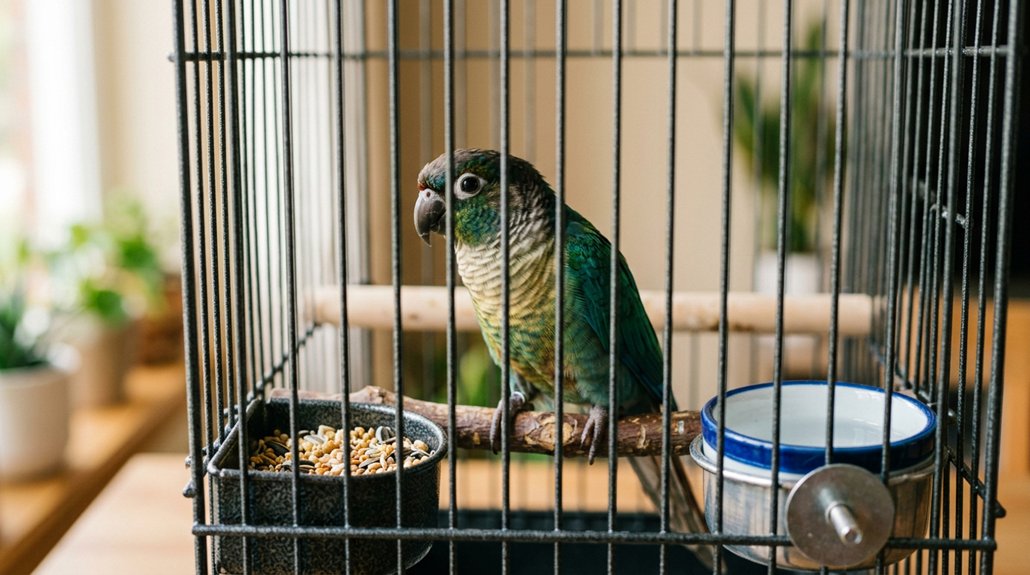
Once you’ve chosen a small bird that fits your home and schedule, the next step is setting up the basics that keep it healthy and settled. Choose a cage wide enough for one full flight stroke; 18–24 inches suits many budgies, parrotlets, and finches, while cockatiels need more room. Keep bar spacing safe at 1/2″–5/8″. Offer perch variety with natural wood and rope, plus 3–5 rotating toys. Meet diet needs with quality seed alternatives or pellets, which can make up most of a parrot’s diet, then add leafy greens, carrots, peppers, and only a little fruit. Follow a strict cleaning schedule, refresh water daily, and give several hours of out-of-cage exercise or focused social time.
Frequently Asked Questions
What Is the 3 3 3 Rule for Birds?
The 3-3-3 rule says you can expect 3 days of stress, 3 weeks of settling into routines, and 3 months for trust. You’ll see behavioral milestones sooner with patience, consistency, and vet checkups.
What Is the Smallest Bird You Can Keep as a Pet?
The smallest pet bird you can keep is usually a zebra finch. You’d still need to take into account its avian microbiome, nesting preferences, and flock needs; even tiny birds require roomy cages and companions.
What Small Bird Makes the Best Pet?
You’ll usually find a budgie, or parakeet, the best small pet: they’re social, trainable, and apartment-friendly. With consistent parakeet training, daily interaction, and proper care, they’re easier than most birds. Finch socialization suits observers, not handlers.
What Is the Lowest Maintenance Bird?
You’re looking at a low maintenance finch; it’s practically effortless compared with most pets. If you want a hardy parakeet, a budgie’s your best bet, but it’ll need more attention, toys, and daily interaction.
Conclusion
Choosing a small pet bird may seem like the simplest way to welcome feathered companionship, yet “easy” still means daily commitment. If you want a low-maintenance start, budgies, canaries, and doves usually offer the best balance of personality and care. Small parrots can suit busier homes, but they still need time, enrichment, and routine. In the end, the easiest bird is the one whose needs you’re ready to meet consistently.