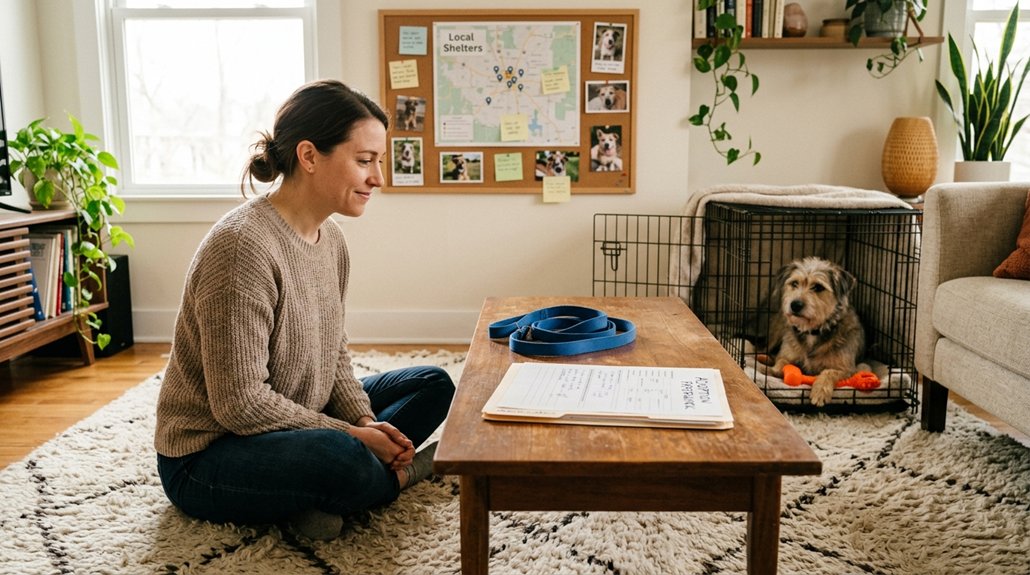
Before adopting a dog, evaluate your lifestyle to guarantee you’re ready for a long-term commitment. Consider your daily routine, work hours, and family dynamics. Pet-proof your home, guaranteeing hazards like electrical cords are inaccessible. Budget for annual costs like food and veterinary care, while understanding potential landlord restrictions and required deposits. Plan introductions if you have other pets, focusing on gradual, positive interactions. There’s much more to discover about forging a successful bond with your future canine companion.
Key Takeaways
- Conduct a thorough lifestyle assessment to ensure your routine aligns with a dog’s needs.
- Create a safe home environment with pet-proofing and designated areas for the dog.
- Understand financial responsibilities, including adoption fees and ongoing care costs.
- Verify landlord pet policies, including any breed or size restrictions for renters.
- Prepare for introducing your new dog to existing pets for a harmonious transition.
Are You Ready for Dog Ownership?

Before welcoming a dog into your life, it’s important to assess whether you’re truly ready for the responsibility that comes with it. Conduct a thorough lifestyle assessment by reflecting on your daily routine, work hours, and existing commitments. Make sure these align with the demanding needs of canine companionship. Evaluate family dynamics critically; this includes gauging everyone’s willingness to share dog care responsibilities and addressing potential allergies or fears. Additionally, matching a dog’s breed-specific traits—like energy levels and temperament—with your lifestyle is significant. Understanding the long-term commitment, encompassing daily care, training, and potential veterinary bills, is crucial. Remember, integrating a dog into your life successfully hinges on preparation and thoughtful consideration of these elements.
Get Your Home Ready for Your New Pet
Creating a safe and welcoming environment is essential when bringing a new dog into your home. Pet proofing essentials include securing electrical cords, eliminating access to toxic substances, and storing sharp objects. Remove chewable items and hazardous materials like toxic houseplants to prevent potential dangers. Designated spaces should be established to offer your dog a secure habitat; consider setting up an area with a comfortable bed and toys tailored for relaxation. Safety gates are useful tools for controlling access to specific parts of your home, safeguarding both your pet and possessions. Finally, incorporate a structured routine with designated feeding spots and scheduled exercise to help your dog acclimate smoothly to their new surroundings, promoting their overall well-being and comfort.
Understand Costs and Financial Planning

While preparing your home for your new dog is important, understanding the financial commitment that comes with pet ownership is equally essential. Adoption fees range from $50 to $300, often covering initial vaccinations and spay/neuter services. These upfront costs are just the beginning. Ongoing expenses for food, grooming supplies, and routine veterinary care can add up to $500 to $1,000 annually, depending on your dog’s size and health. Be prepared for unforeseen costs like emergency veterinary visits and behavioral training, which necessitate a financial buffer. Some organizations may require a pet deposit if you’re a renter. Explore low-cost veterinary care options and discounts on pet supplies to manage your expenses effectively while ensuring your dog’s well-being.
Landlord Policies and Approval
Before bringing a dog into your home, verify your landlord’s policies permit pets to avoid any future complications that might arise. Check for required pet deposits or additional fees, and confirm whether there are limitations on specific breeds, sizes, or behaviors. Adopting without landlord approval could force you to return your pet, causing significant emotional and financial distress.
Confirm Pet Allowance
Adopting a dog is an exciting decision, but ensuring your pet’s future starts with understanding your rental property’s pet policies. Before diving into pet ownership, confirm with your landlord if dogs are permitted in your rental unit. Review your rental agreements for any pet-specific stipulations or obligations. A landlord might require additional rent or a pet deposit.
| Requirement | Details |
|---|---|
| Pet Deposit | Potential additional financial charge |
| Lease Restrictions | Check for any breed or size limitations |
| Landlord Approval | Essential to avoid future complications |
Lack of landlord approval for a pet can lead to challenging scenarios, possibly resulting in the distressing need to return your dog. Remember, adoption fees are usually non-refundable, which compounds financial concerns if compliance with pet policies isn’t verified.
Address Lease Restrictions
Understanding your lease restrictions is fundamental in the journey to pet adoption. Prioritize confirming pet allowances within your lease agreement to prevent any complications post-adoption. Ascertain you know about any additional pet deposits or fees, as these can differ greatly between agreements. Carefully review any limitations on pet size, breed, or the number of dogs, which might dictate your adoption choices. Without landlord approval, adopting could lead to the distressing return of the dog, as adoption fees are non-refundable. Always secure explicit consent from your landlord to safeguard both your and the dog’s well-being. Additionally, consider pet insurance to manage potential health-related expenses and confirm your landlord is supportive of your commitment to responsible pet ownership.
Introducing Your New Dog to Other Pets
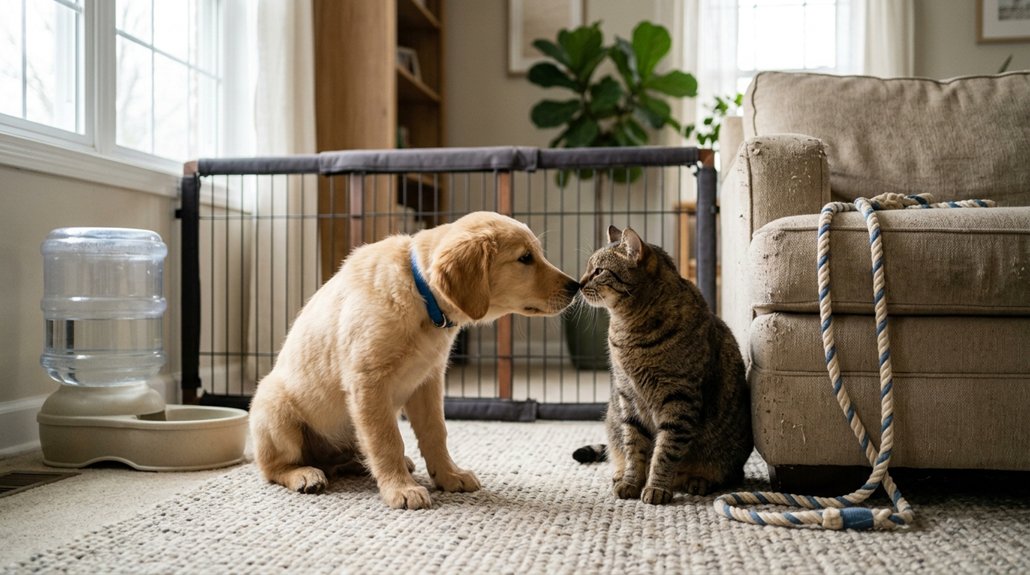
As you prepare to introduce your new dog to existing pets, guaranteeing a smooth changeover relies on careful planning and patience. Start with introduction techniques in a neutral setting to establish calm. Implement isolation strategies by initially keeping the new dog separate, allowing acclimatization to the new environment. This period helps minimize anxiety for all animals involved. Before the first meeting, verify that all pets are current on vaccinations and health care to maintain safety. During introductions, employ positive management by rewarding calm behavior and generously using treats, reinforcing positive interactions. It’s important to remember each pet’s unique adjustment period, so remain patient and supervise continuously. These steps will guarantee a harmonious changeover and secure a stress-free household dynamic.
Routine and Training Goals for Your Dog
Establishing a structured routine is essential for your new dog’s successful adaptation and well-being. Set a consistent daily schedule combining feeding, walking, and training to help your dog understand what’s expected. Integrate basic training techniques early, such as sit and leash manners, to forge a positive bond and reinforce good behavior. Ensuring regular exercise underpins their physical health, steering clear of boredom-led misbehavior.
| Daily Activity | Duration/Frequency |
|---|---|
| Feeding | Twice daily |
| Walks/Exercise | 30-60 minutes, daily |
| Training Sessions | 5-10 minutes, multiple times/day |
| Playtime and Enrichment | 15-30 minutes, daily |
Track achievements in a training journal, celebrating milestones and pinpointing areas needing focus. This tailored approach optimizes your dog’s well-rounded development.
Frequently Asked Questions
What Is the 3-3-3 Rule When Adopting a Dog?
The 3-3-3 rule describes the typical adjustment timeline for dog behavior post-adoption: three days for initial stress, three weeks for personality to emerge, and three months for complete integration. It’s essential for understanding the adoption process.
What Is the 7 7 7 Rule for Dogs?
Think of a dog’s journey like a hero’s quest. The 7-7-7 rule during dog adoption highlights three weeks of emotional readiness: settling in, personality emergence, and routine bonding—essential for a smooth, transformative change for you both.
Is It Hard to Get Approved to Adopt a Dog?
Yes, it can be challenging to get approved since the adoption process involves meeting specific approval criteria. You’ll need to demonstrate a suitable lifestyle for a dog, have financial stability, and adhere to potential home evaluations.
What’s the 90/10 Rule for Dogs?
The 90/10 Rule for dogs asserts that 90% of dog behavior stems from your consistency in training, while only 10% is due to the dog’s inherent traits. For adoption tips, prioritize structured, positive reinforcement methods for best results.
Conclusion
Before bringing a dog home, ask yourself: Are you truly ready for this commitment? Have you prepared your home, planned financially, secured your landlord’s approval, and considered how your new dog will fit into your existing pet family? Remember, proper preparation can make all the difference. Your dog isn’t just a pet; it’s a new family member that deserves attention, training, and love. So, are you ready to embrace this pawsitive lifestyle change with open arms?