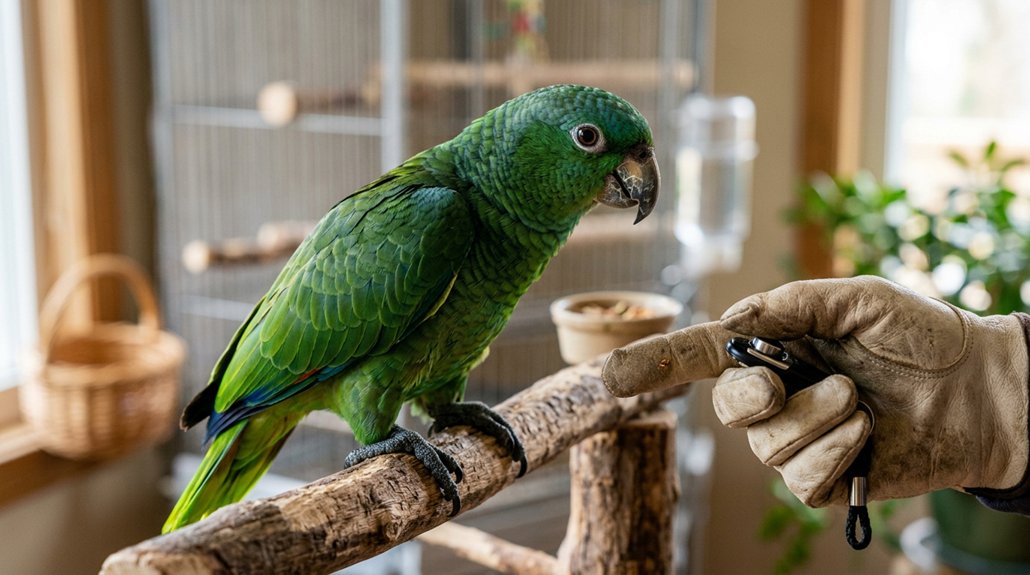
You can train your bird not to bite by watching for warning signs like leaning forward, eye pinning, ruffled feathers, or backing away, then pausing before handling. Track when bites happen, because pain, fear, hormones, or reinforcement can be involved, and sudden new biting should prompt a vet check. Teach step-up with a steady hand, reward calm choices, and redirect mouthing to safe toys. With a few careful changes, you’ll start seeing what works best next.
Key Takeaways
- Watch for warning signs like leaning forward, eye pinning, puffed feathers, hissing, or freezing, and pause before handling.
- Use a steady “step up” cue, keep your hand still, and reward calm voluntary stepping with treats or a clicker.
- Never punish or yank away after a bite; quietly set the bird down and take a short break instead.
- Track when bites happen, what preceded them, and whether pain or illness might be causing new or sudden biting.
- Redirect mouthing to safe toys immediately, and reinforce chewing on approved items consistently.
Why Birds Bite
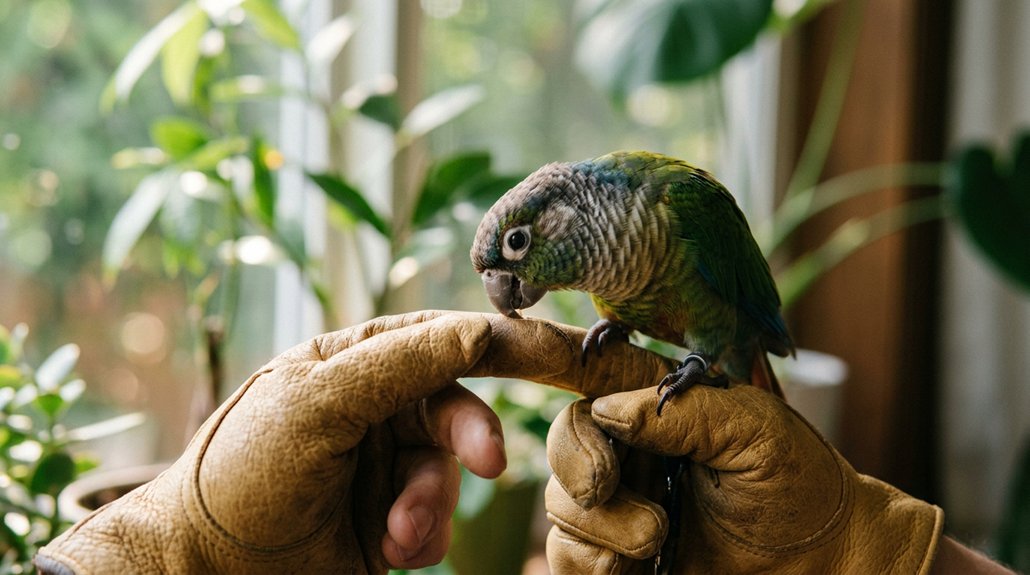
Birds usually bite not out of malice, but as a fear-based escape response: a sudden grab, a fall, or one bad handling experience can teach them to avoid hands by using their beak. When you see biting, think first about fear conditioning, since one sharp event can create lasting avoidance. A bird may also bite to protect a nest, defend territory, or react to hormonal aggression during breeding. If the behavior increases suddenly, pain or illness could be driving it, and a veterinary check is wise. You can also reinforce biting without meaning to, especially if it ends handling or brings attention. Because parrots learn quickly, inconsistent signals and missed early warnings often let the response escalate.
Read Your Bird’s Body Language
You can often spot a bite before it happens by watching for early warning signs like leaning forward, a slightly opened beak, flared feathers, or rapid eye pinning. If you see backing away, a lowered head, dilated pupils, hissing, or head-bobbing, stop approaching and give your bird space. Careful, calm observation helps you judge what the behavior means and respond before tension escalates.
Spot Early Warning Signs
Early warning signs often show up before a bite, so watch closely for leaning forward, slight beak opening, feather ruffling, pupil dilation, or head-bobbing, all of which can signal rising agitation. You’ll also notice avoidance signs such as backing away, a lowered head, or flared nape and tail feathers. These early cues mean the bird’s tolerance is dropping. Pair body language with context: bites often follow step-up requests, touching sensitive areas, or hormonal periods. Listen for hissing, sudden silence, or abrupt changes in calling, especially when they occur with eye pinning or posture shifts. When you see these patterns, treat them as data, not defiance. The goal is to predict escalation early, so you can prevent pressure and reduce the chance that a future bite becomes more frequent or severe.
Back Off Calmly
Reading a bird’s body language before pressure builds is one of the most effective ways to prevent a bite. Watch for leaning forward, puffed feathers, pinning pupils, slight beak opening, or head-bobbing; these cues usually mean discomfort is rising. When you see them, create distance and make calm exits by stepping back and pausing the interaction for several minutes. Don’t keep reaching in, because forcing contact can escalate fear and teach the bird that escape isn’t possible. Let your bird choose the timing for step-ups and handling. Present your hand still, low, and confident under the belly only when it’s relaxed. If it freezes, hisses, or backs away from a body part, stop and reassess. Teach others to respect these signals too.
Find the Cause of Biting
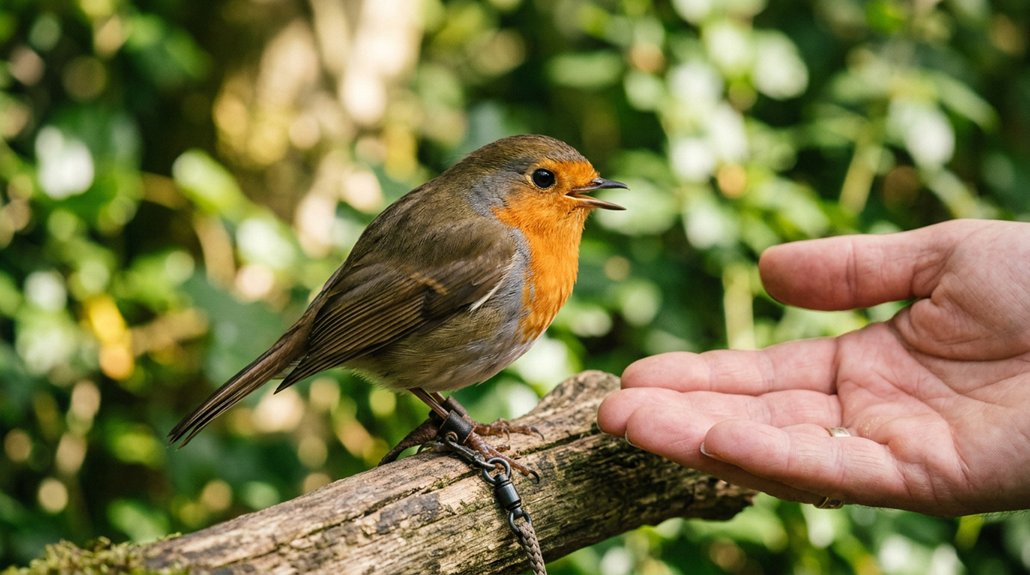
To find the root cause of biting, you’ll want to track each incident with the time, place, your actions just before it, your bird’s body language, and what it gained or avoided. You should also rule out pain or illness, since a bird that feels unwell may bite to keep you away. Over time, you can trace patterns in fear, hormones, territorial behavior, or learned hand-fear and adjust your handling to match the trigger.
Root Causes Of Biting
When a bird starts biting, the first step is to identify what the behavior is doing for it, because biting is often an escape response rooted in fear or prior negative handling. You should assess root causes calmly and systematically.
- Fear or learned avoidance: recent aversive handling can make hands predict danger.
- Hormonal shifts: seasonal breeding, nesting, or territorial change can intensify biting.
- Function and reinforcement: if biting stops trimming, moving, or touch, it’s being rewarded.
- Health and learning: sudden biting may signal pain; poor training and unclear rules can maintain it.
Also consider Genetic predispositions and whether better Environmental enrichment could reduce stress and improve coping. Observe patterns over time, then replace biting with reinforced, alternative behaviors.
Trace Bite Triggers
Once you’ve considered the likely reasons behind biting, the next step is to trace the specific triggers so you can see what consistently leads up to each nip. Keep a two-week time-log and record the exact time, location, handler actions, preceding events, body language, and what the bird gained or avoided afterward. This kind of environmental mapping and handler profiling helps you spot patterns you’d otherwise miss. Note seasonal or hormonal shifts, plus cage moves, new people, pets, noise, feeding changes, or nest-like access. Then run brief functional tests, one antecedent at a time, to see whether the bite seeks attention, a treat, or escape from handling. Use the most frequent antecedent-consequence pattern to guide intervention: veterinary care for pain, trigger management, or reinforcement-based training.
Teach Step-Up Without Fear
Present your hand confidently and firmly just below the bird’s belly, where the body meets the legs, and use the same clear “step up” cue each time so the bird can link the command with the exact motion.
- Keep your hand steady; don’t pull away if the bird nips.
- Watch for leaning back, puffing, or dilated pupils; pause and retry later.
- If needed, use a perch or T-perch, then shift to your hand.
- Reward immediate step-ups with positive reinforcement.
These desensitization exercises work best when you’re calm, consistent, and observant. A voluntary step-up followed by a treat or clicker teaches that moving onto your hand predicts something good. Over time, your bird’s hesitation should decrease, and the cue becomes safer, clearer, and more reliable.
Prevent Bites During Handling
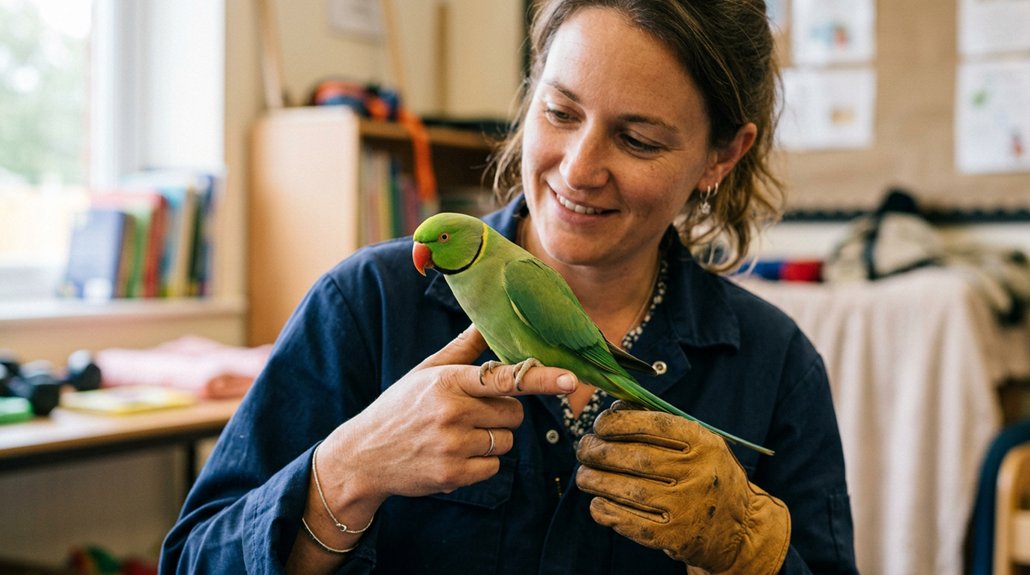
During handling, you’ll reduce bites by keeping your hand steady and confident just below the bird’s belly at the leg junction while giving the same clear “step up” cue, rather than pulling away if the bird resists. Your hand positioning should stay calm, with a closed fist or fingertips holding treats so fingers aren’t exposed. Observe early avoidance: leaning forward, puffed feathers, dilated pupils, a slightly open beak, or eye pinning. If you see these, pause for a few minutes and let the bird reset. Use a perch, T-perch, or stick when hand work still seems risky.
| Signal | Meaning | Response |
|---|---|---|
| Leaning forward | Unease | Pause |
| Eye pinning | Heightened arousal | Back off |
| Open beak | Warning | Stop contact |
| Calm posture | Readiness | Continue |
What to Do After a Bite
If a bird does bite, your immediate response matters more than the bite itself: quietly set the bird down or return it to its perch, then walk away for a short time-out so you don’t reinforce attention-seeking behavior.
- Don’t yell, yank your hand back, or punish; fear can strengthen biting.
- Wait for calm feathers, a relaxed stance, and no eye pinning before reapproaching.
- Use a neutral cue, like “step up,” or a brief treat only when the bird looks ready.
- If biting is new, painful, or paired with other signs, stop training and arrange medical follow up with an avian veterinarian.
Afterward, use post bite journaling to note antecedents, handling, and environment, then adjust your plan and resume positive-reinforcement sessions.
Offer Safe Chewing Toys and Rewards
Swap in chew-safe outlets so biting has somewhere appropriate to go. You can provide varied textures with hard wood blocks, untreated cardboard, and leather strips, then rotate chewing stations weekly to keep high-drive birds like cockatoos, African greys, and macaws engaged. Place these options near perch ends, the play gym, and cage top so your bird can redirect mouthing before it reaches your hands or household objects. When your bird chooses a toy, mark it with a clicker or a high-value treat; this teaches, “these are for biting.” If it bites you, calmly remove access, briefly set it down, then prompt chewing within seconds and reward it. Check size and wear daily, and replace toys with loose staples or small pieces.
Frequently Asked Questions
How Do I Get a Bird to Stop Biting Me?
You stop biting by reading body language cues, backing off early, and rewarding calm behavior with positive reinforcement. Stay patient, use consistent step-up training, offer chew toys, and calmly ignore bites so you don’t reinforce them.
What Is the 3 3 3 Rule for Birds?
You’re using a simple rhythm: wait 3 seconds after unwanted behavior, pause 3 minutes before reattempting, and reassess after 3 days. Watch bird body language carefully, and consider wing clipping ethics with patience, not haste.
How to Punish a Bird for Biting?
You shouldn’t punish biting; instead, calmly lower your bird, walk away briefly, and reinforce gentle behavior with positive reinforcement. Watch body language cues closely, since bites usually signal fear, stress, or overstimulation.
How to Tame a Bird That Bites?
You tame a biting bird by using positive reinforcement, reading body language cues, and rewarding calm step-ups and target touches. Back off when it’s tense, log triggers, and avoid punishment so trust can grow steadily.
Conclusion
You can reduce biting by watching your bird’s posture, noting triggers, and teaching calm step-up behavior at your bird’s pace. When you handle it gently, respect its signals, and reward relaxed choices, you strengthen trust and lower fear-based bites. If a bite happens, stay still, then reassess the situation before trying again. Remember, an ounce of prevention is worth a pound of cure: careful observation now can prevent repeated injuries later.