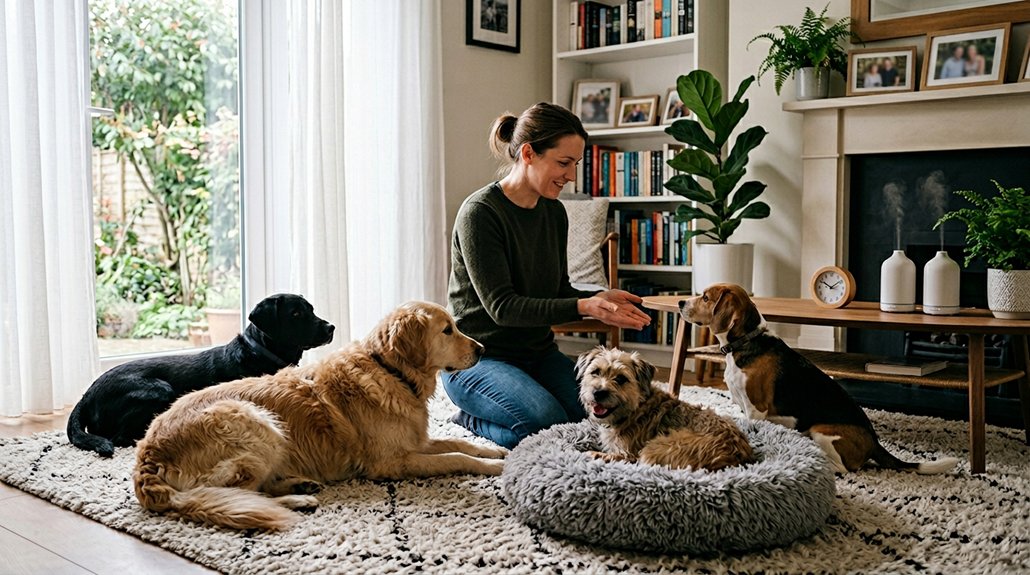
In managing behavior in multi-dog homes, establish clear pack leadership with consistent rules. Use structured routines, exercise, and positive reinforcement to foster stability and cooperation. Be proactive and seek professional help for complex issues. Prevent conflicts with smart techniques against resource guarding. Monitor behavior dynamics closely to spot early signs of tension. Safely intervene using gates and crates to maintain control. Discover more ways to nurture a harmonious, well-behaved multi-dog household.
Key Takeaways
- Establish consistent leadership and structured routines to prevent conflicts and promote harmony in multi-dog homes.
- Utilize professional behavior consultation and positive reinforcement to address specific challenges like aggression and resource guarding.
- Monitor behavior dynamics by observing body language and energy levels to identify potential conflicts early.
- Employ safe intervention techniques and timeouts to manage tensions and reinforce positive interactions.
- Use gates and crates to control interactions and monitor social dynamics, adjusting routines as necessary for maintained harmony.
Establish Pack Leadership With Confidence
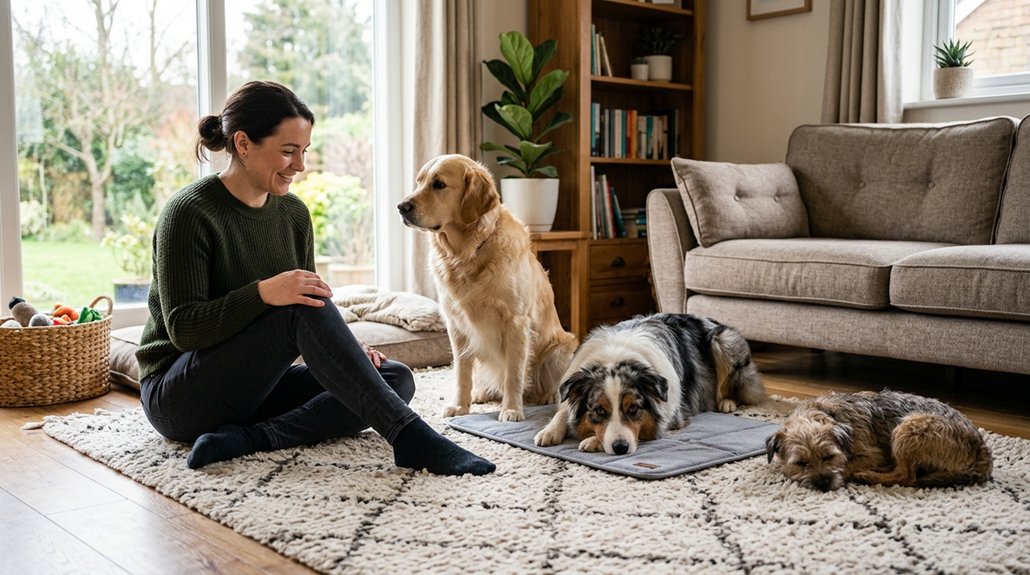
In multi-dog homes, establishing pack leadership with confidence is fundamental for maintaining harmony and preventing conflicts. You need to embody strong leadership qualities by setting consistent rules and boundaries. This structured environment enhances pack communication and fosters respect among dogs. Regular training sessions are vital, allowing your dogs to reliably respond to cues in group settings. Involvement of all household members guarantees everyone’s on the same page, reinforcing rules consistently and maintaining a cooperative environment.
Be proactive in evaluating and adapting your strategies, especially during changes like a new dog’s introduction or household modifications. By recognizing shifts in pack hierarchy, you can promptly adjust management strategies, securing continued stability. Your leadership guarantees a peaceful, unified household where your dogs thrive.
Get Professional Help Early
When you’re managing a multi-dog household, enlisting professional help early can be a game-changer in preventing small issues from snowballing into major problems. Behavioral consultation offers you proactive strategies to address potential conflicts, ensuring safer and happier interactions among your canine family members. Qualified trainers or behaviorists can tailor management plans to your specific dogs’ needs, targeting resource guarding, aggression, or anxiety before they solidify into significant challenges.
This early intervention is essential for gaining insights into each dog’s personality and how they interact with each other. You’ll understand dynamics better, maintaining harmony and balance in your home. Professional guidance also establishes consistent training regiment, making sure each dog receives the attention and support they need for positive behavioral outcomes.
Implement Structured Routines for Stability
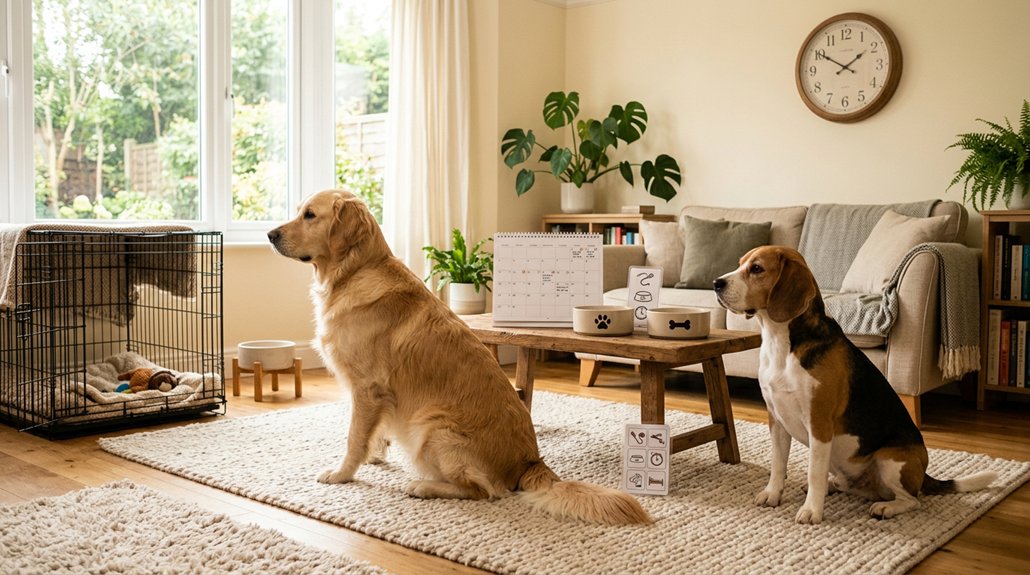
Although managing multiple dogs can seem intimidating, implementing structured routines is crucial for maintaining stability in your household. By establishing a consistent daily schedule, you create a calm environment that reduces stress and competition among your dogs. Start by feeding them in separate, designated areas to prevent resource guarding. Incorporate designated times for exercise, training, and play into their routine to keep them physically and mentally stimulated. Remember, it’s important to give each dog individual attention to strengthen your bond and maintain an emotionally balanced home. Be observant and regularly adjust your routines to suit each dog’s evolving needs. This adaptability helps prevent potential conflicts and guarantees harmony as your dogs’ behavior changes over time. Implementing these routines nurtures a peaceful and orderly multi-dog home.
Use Reinforcement to Encourage Good Behavior
Embracing positive reinforcement techniques is essential to fostering a harmonious environment in multi-dog households. Use treat rewards and praise to encourage cooperative behavior. Consistent positive reinforcement across all dogs guarantees they understand expectations, minimizing conflicts. Tailor training techniques with individual sessions to address specific needs. This helps each dog learn effectively while reinforcing good behavior. Create safe environments with tools like baby gates and crates, where dogs can practice manners without risk.
Family involvement is vital in this process. All household members should engage in reinforcing behavior consistency and clarity. Here’s a quick guide:
| Strategy | Benefit |
|---|---|
| Positive reinforcement | Encourages cooperation |
| Treat rewards | Motivates dogs |
| Individual sessions | Tailored learning experience |
| Safe environments | Reduces conflict risk |
| Family involvement | Guarantees consistent training |
Prevent Conflicts With Tactics Against Resource Guarding
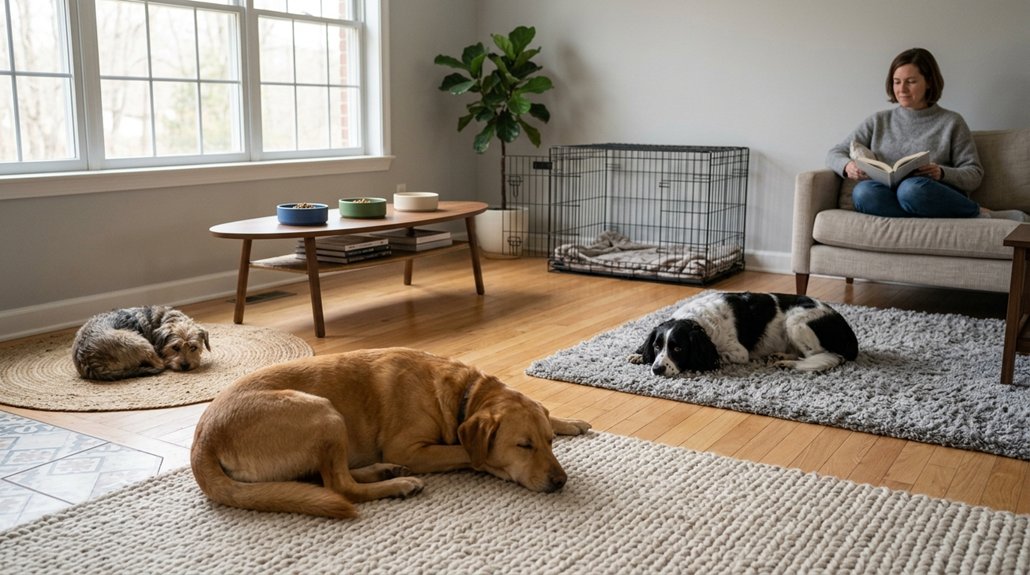
To maintain peace in a multi-dog home, addressing resource guarding is essential since this behavior can spark conflicts among pets. Start by creating separate feeding areas to reduce competition and stress. This setup promotes resource sharing without tension. Guarantee there’s an abundance of resources, like food bowls and toys, so each dog feels secure with their own items. Use positive reinforcement to encourage calm behavior when they’re near valuable resources. Desensitization techniques can be helpful, gradually exposing dogs to shared resources while rewarding relaxed demeanor. If resource guarding persists, consulting a professional dog trainer or behaviorist can provide tailored solutions. Their expertise can help you implement strategies to foster harmony, guaranteeing your dogs coexist comfortably and conflict-free.
Spot Issues Early by Monitoring Dynamics
In a multi-dog home, keeping a keen eye on changes in behavior is essential for spotting potential issues before they become conflicts. You’ll want to pay attention to subtle warning signals, like shifts in body language or unusual vocalizations. By regularly evaluating how your dogs interact, you’ll be better equipped to guarantee harmony and address any growing tensions early on.
Identifying Behavior Changes
When managing a multi-dog home, observing behavior changes is essential in maintaining harmony among your furry companions. Keep an eye on body language, as it holds the key to understanding stress signals. Signs like growling or avoiding eye contact can indicate tension brewing beneath the surface. Here’s how to identify shifts that could threaten the peace:
- Observe Interactions: Watch your dogs during playtime or meals. Spotting resource guarding or jealousy early can prevent conflicts.
- Evaluate Energy Levels: Overexcitement can escalate into aggression. Notice when energy spikes before a tussle.
- Monitor Routine Responses: Dogs thrive on structure. Changes in reaction to routines may signal discomfort.
- Use Cooling Techniques: Implement time-outs if tension rises, giving your dogs time to relax and reset.
Recognizing Subtle Warning Signals
Although dogs may not speak our language, their body language speaks volumes when it comes to recognizing subtle warning signals in a multi-dog household. Pay attention to the stiff posture, lowered ears, or averted gazes—these tension signs often signal discomfort or potential conflict indicators. Monitor play interactions closely; vocal cues like growling or whining can either denote play signals or distress, needing your immediate attention. Be alert to any resource fixation, such as one dog blocking others from toys or food, as these guarding behaviors can lead to escalated tensions. Keep an eye on energy shifts during playtime; over-excitement or agitation might forewarn impending disputes. Structured routines and boundaries help you observe and manage these dynamics effectively.
Assessing Pack Interactions
Understanding subtle warning signals sets the stage for ensuring harmony in a multi-dog home, but there’s more to fostering a cohesive pack. Observing your dogs’ body language and social cues can uncover underlying tensions and help you prevent conflicts. Regularly watch for subtle signs like tension or freezing behaviors, as these might indicate discomfort or potential conflict.
Here’s how you can keep the peace:
- Identify Triggers: Pay attention to common conflict triggers, like resource guarding or high arousal situations.
- Provide Individual Attention: Spend quality time with each dog to lessen jealousy and enhance socialization.
- Establish Structure: Set clear rules and boundaries to minimize misunderstandings.
- Use Timeout Strategies: When tensions rise, separate your dogs to de-escalate and process their behavior constructively.
Intervene Safely During Dog Conflicts
In multi-dog households, it’s essential to intervene safely during dog conflicts to maintain harmony and prevent unnecessary injuries. Stay calm and avoid direct physical intervention like grabbing collars, as this can escalate tensions. Instead, use auditory disruptors such as claps or whistles to interrupt fights safely. Observing your dogs’ body language is vital in recognizing signs of tension or discomfort before conflicts arise. By doing this, you can intervene timely and establish effective house rules for managing interactions. Once a conflict occurs, separate the dogs involved both physically and visually to enable them to de-escalate safely. Finally, assess each dog’s behavior post-conflict to pinpoint triggers and early signs, enabling more effective interventions in the future. Regularly monitor exercise levels and social dynamics.
Utilize Gates and Crates for Control
Structured feeding routines using gates and crates encourage good manners, minimizing resource competition. Consistent, positive reinforcement when dogs respect these boundaries strengthens desirable behaviors.
Here’s why these tools are invaluable:
Essential tools for a harmonious environment: ensure peace, reduce tension, support routines, and encourage relaxation.
- Keep peace at mealtimes.
- Reduce tension during introductions.
- Support structured routines.
- Promote individual relaxation.
Embrace these strategies to cultivate a harmonious pack.
Frequently Asked Questions
What Is the 3-3-3 Rule With Dogs?
The 3-3-3 rule helps new dogs acclimate with socialization strategies. In the first three days, guarantee calmness; after three weeks, use training tips; by three months, they’ve usually adapted, feeling secure and balanced.
How to Solve Multi-Home Dog Fighting?
You’ll solve multi-home dog fighting by preventing aggression through clear boundaries and establishing hierarchy. Recognize triggers, use disruptions safely, and focus on socialization. Consult a professional for tailored guidance and guarantee dogs coexist harmoniously.
What Smell Do Dogs Hate the Most?
Dogs generally hate the smell of citrus fruits, vinegar, and certain essential oils like eucalyptus and peppermint. These repellent smells can be overwhelming and unpleasant for them, so you might want to avoid using strong dog scents.
How Do You Say “I Love You” in Dog Language?
You show “I love you” in dog language by recognizing their dog communication cues. Respond with affection: make eye contact, pet them gently, engage in play, offer treats, and speak softly. This strengthens your bond and conveys canine affection.
Conclusion
In a multi-dog home, you’re the captain of a ship steering various personalities on the high seas. Steer with confidence and empathy, knowing you’ve set up structures that foster harmony. Don’t hesitate to seek expert advice or use tools like gates and crates for smooth sailing. Treat conflicts as signposts, not roadblocks, to guide you back to calmer waters. With love, patience, and a well-informed approach, you’ll create a peaceful haven for your dogs.