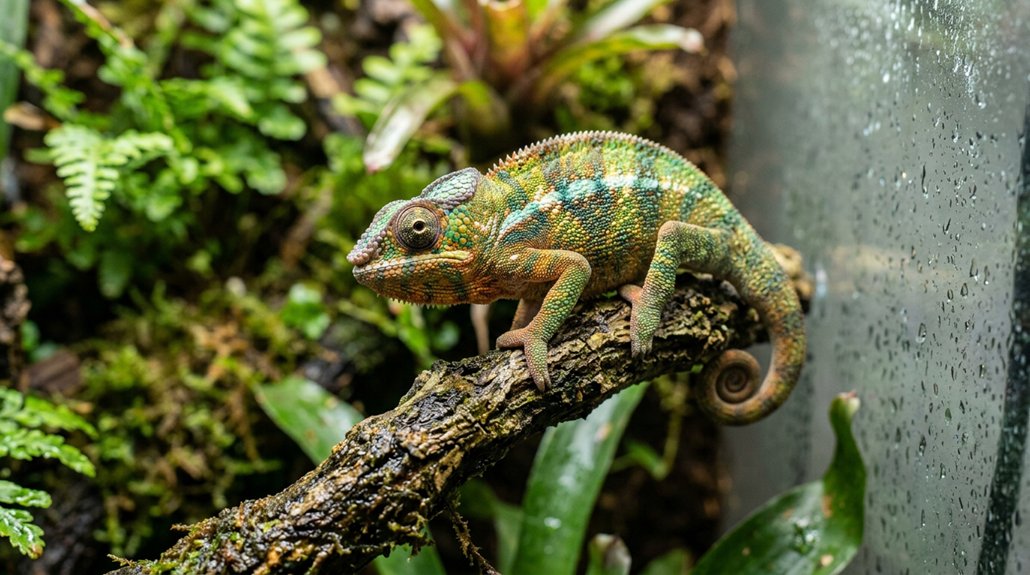
Chameleons are challenging for beginners due to their precise environmental needs, including specific temperature and humidity levels. They require daily misting and a varied diet of gut-loaded insects with calcium and phosphorus supplements. Lack of proper lighting can lead to health issues like metabolic bone disease. Additionally, maintaining their enclosures demands time and investment, especially for monitoring health and humidity. Considering these complexities, it’s worth exploring more to fully understand their care requirements.
Key Takeaways
- Chameleons require precise and controlled environmental conditions, including temperature and humidity management, making them challenging for beginners.
- Daily care tasks, such as misting and feeding, demand significant time and consistent effort from new pet owners.
- Improper UVB lighting can lead to serious health issues like metabolic bone disease, complicating care for inexperienced owners.
- The dietary needs of chameleons involve live insects and supplements, adding complexity for beginners not familiar with reptile diets.
- Wild-caught chameleons carry higher health risks and mortality rates, posing significant challenges for novice keepers.
Mastering the Basics of Chameleon Care
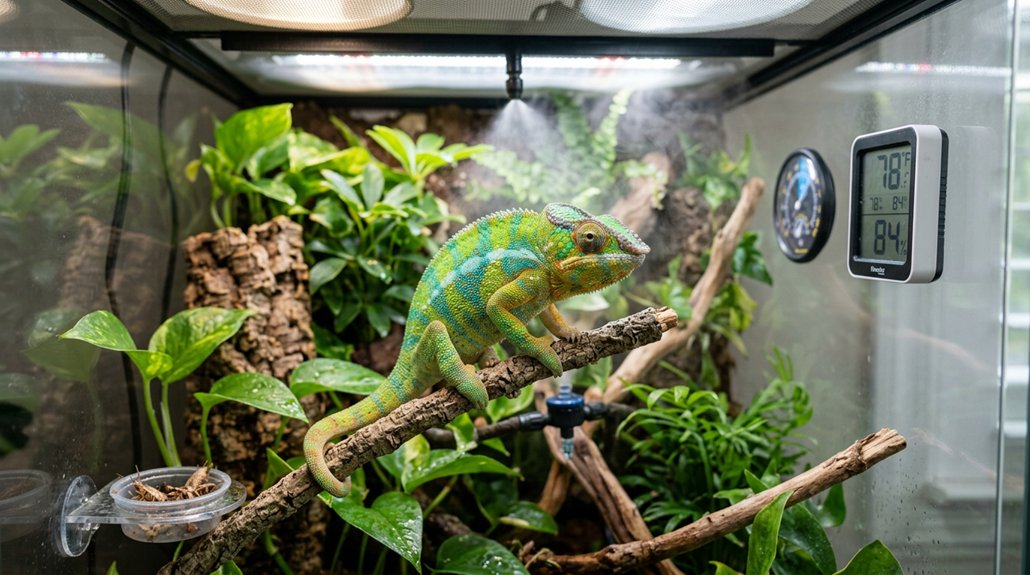
Mastering chameleon care begins with understanding their specific environmental requirements. It’s essential to maintain precise temperature and humidity levels, which necessitate frequent monitoring and specialized equipment. Daily misting is an important hydration technique, often needed more than twice a day, to guarantee chameleons can drink water from droplets on leaves rather than standing water. Achieving a proper dietary balance is also significant. Chameleons require a diverse diet of gut-loaded insects, along with dietary supplements to maintain correct calcium and phosphorus ratios. This careful balancing prevents ailments like metabolic bone disease. A well-maintained enclosure supports their solitary nature, mimicking natural habitats. By adhering to these practices, you create a stable, healthy environment conducive to chameleon well-being.
Common Mistakes Chameleon Owners Make
While establishing a stable environment for chameleons is fundamental, it’s equally critical to recognize common pitfalls that owners often encounter. Novice owner mistakes typically arise from underestimating the daily care needed. Essential tasks like misting and feeding are often neglected, risking health issues. Using improper substrates with small particles can lead to ingestion hazards, damaging the digestive system. Insufficient UVB lighting, a frequent misstep, triggers deficiencies causing metabolic bone disease. Impulse purchases of wild-caught chameleons introduce risks of undiagnosed ailments and higher mortality. Without thorough research on species-specific requirements, many create inadequate habitats, failing to replicate natural conditions.
| Pitfall | Consequence | Solution |
|---|---|---|
| Neglecting daily care | Health issues | Consistent routine care |
| Improper substrates | Digestive problems | Use safe bedding |
| Inadequate UVB lighting | Metabolic bone disease | Install appropriate lighting |
| Impulse buying | Health complications | Purchase from reliable sources |
| Lack of research | Inadequate habitat | Research thoroughly |
The Real-Time Commitment of Chameleon Care
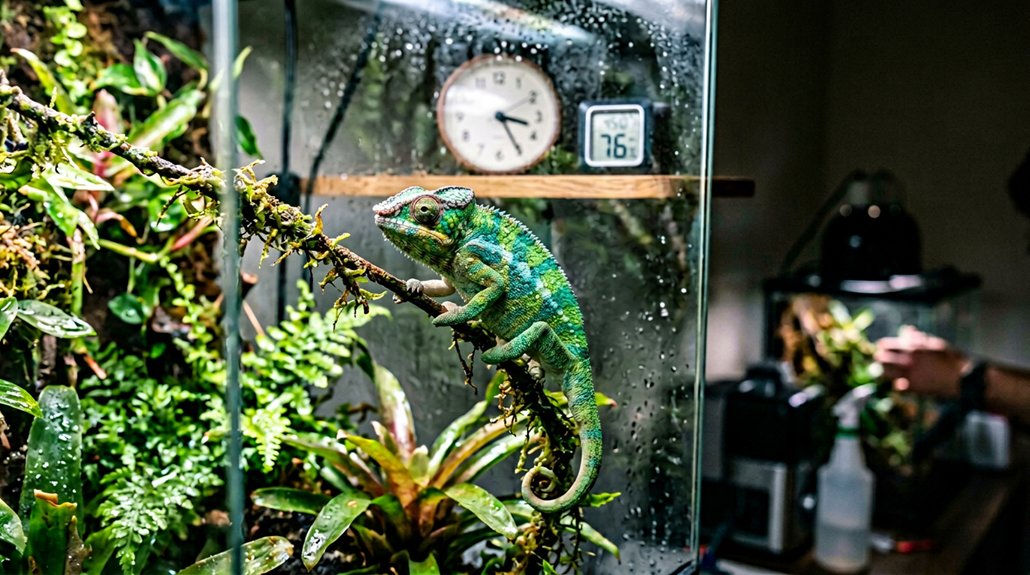
Caring for a chameleon isn’t just about the novelty of owning an exotic pet; it demands a substantial, ongoing commitment of your time and attention. Effective time management is essential as daily tasks often exceed an hour. You’re expected to navigate through a detailed routine:
- Feeding routines: You’ll need to maintain a sufficient supply of live insects, which involves gut loading—making sure they’re nutritionally ideal for your chameleon.
- Environmental maintenance: Clean the enclosure regularly to prevent disease, necessitating consistent effort and dedication.
- Humidity control: Achieve precise humidity levels by misting at least twice daily—crucial for their health.
Beyond these, regular health and environment monitoring is fundamental, amplifying your daily time commitment to guarantee thriving chameleon care.
Chameleon Habitat Challenges and Costs
Setting up a chameleon’s habitat involves creating a large, enriched environment with adequate foliage and climbing structures that simulate their natural surroundings. You’ll need to prepare for an initial investment of $300 to $1500, covering essential components like heating, specialized lighting, and humidity control systems. Maintaining precise environmental conditions is vital, as incorrect setups can quickly impact chameleon health, necessitating daily monitoring and regular enclosure upkeep.
Essential Habitat Requirements
Understanding the essential habitat requirements for chameleons is fundamental for any potential owner, given that these exotic pets necessitate environments mimicking their natural arboreal settings. To create a suitable habitat, several key elements need careful consideration:
- Enclosure Setup: Prioritize enclosure height to accommodate arboreal habits, guaranteeing adequate air circulation and precise temperature gradient. Implement reliable humidity control systems.
- Environmental Features: Select live plants strategically for habitat enrichment, choosing substrate options that aid humidity regulation and mitigate stress factors. Verify that lighting needs provide both UVB and heat.
- Care Maintenance: Regularly monitor hydration methods and feeding techniques suited to your chameleon’s specific needs. Consistent oversight is essential to avert health issues through inadequate upkeep.
Financial Commitment Overview
While owning a chameleon can be a rewarding experience, it’s important to recognize the substantial financial commitment required. The initial setup alone ranges from $300 to $1500, sometimes more for high-quality enclosures and equipment. You’ll need to engage in budget planning and expense tracking diligently, as ongoing costs are inevitable. Regular replacement of UVB bulbs every six months and the maintenance of automatic misting systems contribute to sustainability expenses. Additionally, feeding involves a continuous supply of feeder insects and dietary supplements, alongside veterinary care.
| Category | Initial Cost | Ongoing Cost |
|---|---|---|
| Enclosure & Setup | $300 – $1500 | N/A |
| UVB Bulbs | N/A | Every 6 months |
| Misting System | Significant | Regular maintenance |
| Feeder Insects | N/A | Regular supply required |
Planning is crucial to guarantee your chameleon thrives without financial strain.
Is Everything You Know About Chameleons Wrong?
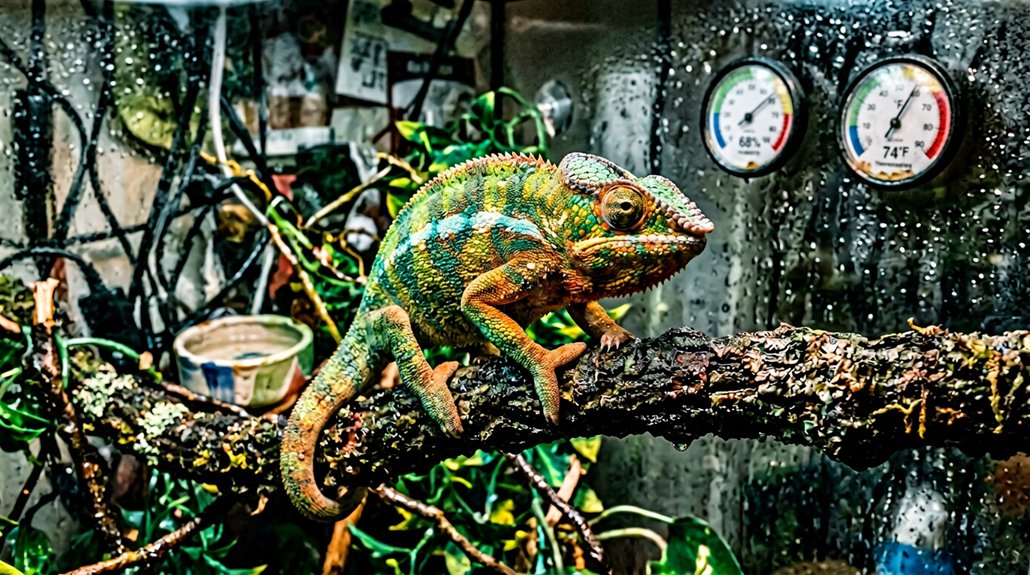
You may think chameleons are easy to care for, but this isn’t true due to their demanding environmental needs, including precise temperature and humidity control. Many owners mistakenly provide water dishes, unaware that chameleons require misting systems to simulate natural hydration from droplets. Additionally, opting for wild-caught chameleons instead of healthier, captive-bred ones often results in unforeseen health complications and reduced lifespan, underscoring the gap between common beliefs and the realities of chameleon care.
Misunderstandings About Chameleon Care
Although chameleons are often perceived as low-maintenance pets, this misconception can lead to significant care issues due to their highly specialized needs. Their feeding habits are frequently misunderstood; these intriguing reptiles require precise live prey diets with necessary supplements, such as calcium and vitamins. Moreover, hydration needs are crucial. Many believe infrequent misting suffices, yet, chameleons require hydration at least twice daily to maintain appropriate humidity levels, fundamental for their health.
Misunderstandings continue with their environment requirements:
- Temperature Regulation: Chameleons demand carefully controlled temperatures for thermoregulation.
- UVB Lighting: Important for calcium metabolism and overall vitality, UVB lighting is often overlooked by inexperienced owners.
- Enclosure Design: Elaborate enclosures that mimic natural habitats with appropriate foliage and climbing structures are necessary, not optional.
Common Chameleon Care Mistakes
Despite their intriguing behaviors and striking appearances, chameleons are not as straightforward to care for as one might think. One frequent mistake is improper hydration methods; chameleons need misting systems rather than water dishes to stay hydrated. It’s essential to maintain correct temperature gradients and light cycles to prevent stress. Mismanagement here can lead to stress indicators and even respiratory issues. Don’t underestimate the significance of feeding frequency and providing gut-loaded insects with nutritional supplements—this is crucial for disease prevention. Habitat enrichment and regular behavioral observations help guarantee a stress-free environment. Improper handling techniques also contribute to stress, as chameleons are solitary by nature. Here’s a quick reference:
| Aspect | Common Mistake |
|---|---|
| Hydration Methods | Using water dishes |
| Temperature Gradients | Inadequate equipment |
| Feeding Frequency | Skipping supplements |
Challenging Aspects of Husbandry
When commencing the journey of chameleon care, one quickly realizes the numerous challenging aspects of their husbandry, which might overturn common misconceptions about these fascinating reptiles. For successful care, you’ll need to master:
- Humidity management and temperature fluctuation: Keeping conditions stable requires consistent misting and precise temperature control, mimicking natural environments.
- Dietary complexity and health monitoring: A balanced diet isn’t just about gut-loaded insects; it includes calcium and vitamin supplements, demanding strict health checks.
- Enclosure design, fixture selection, and lighting requirements: Tailor the habitat with proper substrates, climbing spaces, and adequate UVB lighting to prevent deficiencies.
Without such diligent attention, chameleons suffer. Improper fixture selection and poor enclosure conditions substantially impact their well-being, making them unsuitable for many beginners who underestimate these needs.
Should Beginners Avoid Wild-Caught Chameleons?
Why should beginners steer clear of wild-caught chameleons? The wild caught risks are numerous, especially for novices. These chameleons can harbor unknown health issues, resulting in higher mortality rates and complex care requirements that inexperienced owners might struggle with. Wild-caught individuals often necessitate precise habitat and diet conditions, which can be difficult for beginners to replicate, leading to frustration and potential neglect. Ethically, purchasing wild-caught chameleons supports practices harmful to wildlife conservation, contributing to dwindling populations. Captive-bred chameleons are better suited for beginners as they generally exhibit higher survival rates and are acclimated to the captive environment. For novice enthusiasts, opting for a captive-bred specimen offers a less challenging, ethical, and more fulfilling start in chameleon care.
Preventing Health Issues in Chameleons
Ascertaining the well-being of your chameleon hinges largely on your ability to prevent common health issues. Begin with hydration monitoring by maintaining humidity levels above 50% through consistent misting. Chameleons are sensitive to humidity variances, so stability is key. The second focus is on diet supplementation. Offer gut-loaded insects with essential calcium to avert nutritional deficiencies like metabolic bone disease. Finally, guarantee lighting accuracy by providing proper UVB exposure; this prevents disorders such as vitamin A deficiency. Swift recognition of health changes—like color shifts or odd behaviors—guarantees veterinary readiness and prompt intervention. Routine health assessments, including temperature checks, help uncover issues early. By sticking to this regimen, you’ll substantially reduce the risk of health complications.
Consider These Reptiles Before Choosing Chameleons
While maintaining the health of chameleons warrants meticulous attention to various care elements, you might ponder whether a different reptile could better suit your experience and lifestyle as a beginner. Bearded dragons are an excellent choice, known for their straightforward needs and environmental adaptability. Leopard geckos are ideal due to their lower humidity requirements and tolerance for minor care errors. Crested geckos demand even less specialization, needing minimal lighting and simple enclosures. Consider corn snakes, which entail less daily maintenance, making them more manageable for first-time owners. Green anoles also offer a low-maintenance option; they thrive in adaptable settings absent the specialized habitat chameleons require. Each of these species provides a more forgiving introduction to reptile care.
Frequently Asked Questions
Why Are Chameleons Hard to Keep as Pets?
You’d struggle with temperature regulation, maintaining precise habitat requirements, and meeting complex dietary needs. Their health considerations demand careful monitoring due to sensitive conditions. Without patience and expertise, caring for chameleons becomes a formidable, labor-intensive task.
What Does the Bible Say About Chameleons?
The Bible doesn’t specifically mention chameleons. However, biblical interpretations often generalize chameleons with other reptiles considered unclean. Their absence may suggest a lack of specific chameleon symbolism within ancient texts, focusing instead on broader reptilian context.
Are Chameleons Good Pets for Beginners?
Chameleons aren’t ideal for beginners due to complex color-changing habitat requirements, feeding challenges, and precise temperature regulation. Stress factors include sensitive handling techniques, making their care intricate yet essential to guarantee their health and happiness.
Will It Hurt if a Chameleon Bites You?
A chameleon bite isn’t venomous but can cause pain and leave puncture wounds due to its strong jaws. Bites reflect chameleon behavior when stressed; clean wounds immediately to avoid infection and respect their natural reptile behavior.
Conclusion
In your quest to own a chameleon, ask yourself: are you ready for this intricate reptilian dance? With their demanding habitat requirements, susceptibility to health issues, and costs that climb like vines, chameleon care is no trivial pursuit. Wouldn’t it be wise to contemplate easier reptiles first? Beginners often struggle, and wild-caught chameleons complicate things further. Engaging with these vibrant creatures requires dedication and precision; are you committed to mastering their complex needs and ensuring their well-being?