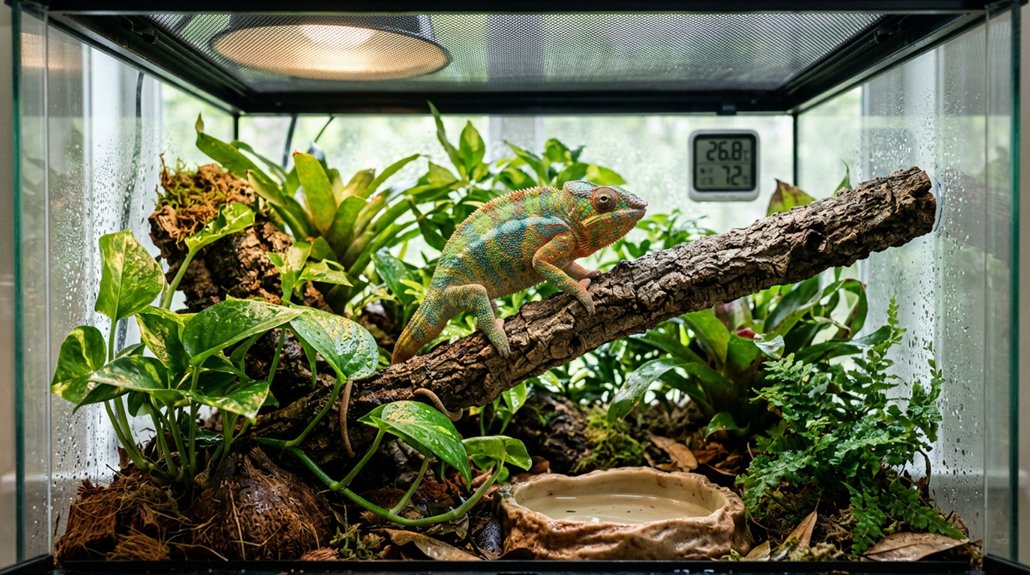
To care for a chameleon, choose your species based on available care information and specific environmental needs. Create a habitat with a minimum size of 24”L x 24”W x 48”H, using mesh or glass for ventilation. Maintain temperature gradients and humidity levels appropriate for the species, and use UVB and fluorescent lighting effectively. Feed gut-loaded insects dusted with calcium. Understand their solitary behavior and build trust gradually. Detailed insights await, which will guide you in mastering chameleon care.
Key Takeaways
- Select the chameleon species based on available care information and assess their specific temperature, humidity, and dietary needs.
- Ensure the enclosure size is at least 24”L x 24”W x 48”H with ample ventilation and climbing structures.
- Maintain a 12-hour light cycle using T5 fixtures with UVB bulbs for optimal light and heating.
- Provide a varied diet of gut-loaded insects, dusted with calcium, adjusting based on age and health needs.
- Employ gradual handling techniques to build trust and observe any stress or behavioral changes regularly.
Getting Started With Chameleon Care: Key Preparations
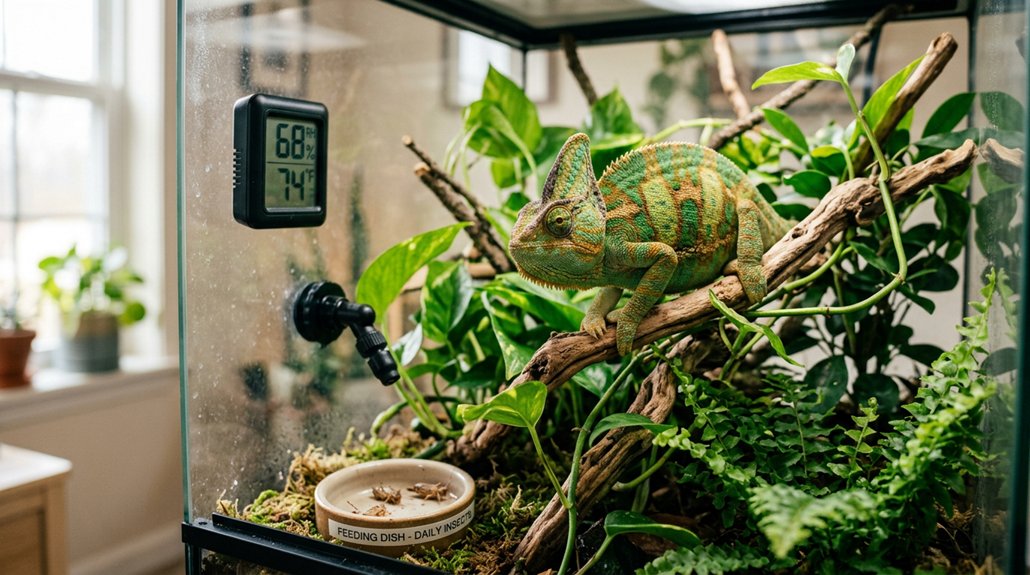
Before bringing a chameleon into your home, it’s important to thoroughly research the specific species you’re interested in, as each has unique requirements. Choosing species based on available care information is significant. Study their needs concerning temperature, humidity, and dietary preferences. Different species will thrive under distinct conditions, making a well-informed decision critical to their wellbeing.
Beyond selecting the appropriate species, prepare necessary supplies before acquisition. Acquire a proper enclosure size of at least 24”L x 24”W x 48”H, ensuring ample climbing space and proper ventilation. Necessary supplies include UVB and UVA lighting, operating 10-12 hours daily. Gut-load feeder insects like crickets and superworms, initiating balanced nutrition. Establishing an organized care routine with misting and feeding schedules is imperative.
Setting Up the Ideal Chameleon Habitat
How do you create the perfect habitat for your chameleon? Start with an enclosure that’s at least 24”L x 24”W x 48”H, using sturdy materials like mesh or glass to guarantee adequate ventilation and visibility. Incorporate branches and live plants for climbing and humidity retention; zip ties can secure vines effectively. For plant selection, opt for non-toxic varieties such as ficus and pothos that tolerate indoor environments and provide shade. A temperature gradient is essential—set up basking spots at 85°F (29°C) while maintaining ambient temperatures between 72-78°F (22-25°C). Nighttime temperatures should drop to 55-65°F (13-18°C). Maintain humidity levels at 40-50% RH during the day, rising to 80-100% RH at night, achievable through misting systems.
Light and Heat Essentials for Happy Chameleons
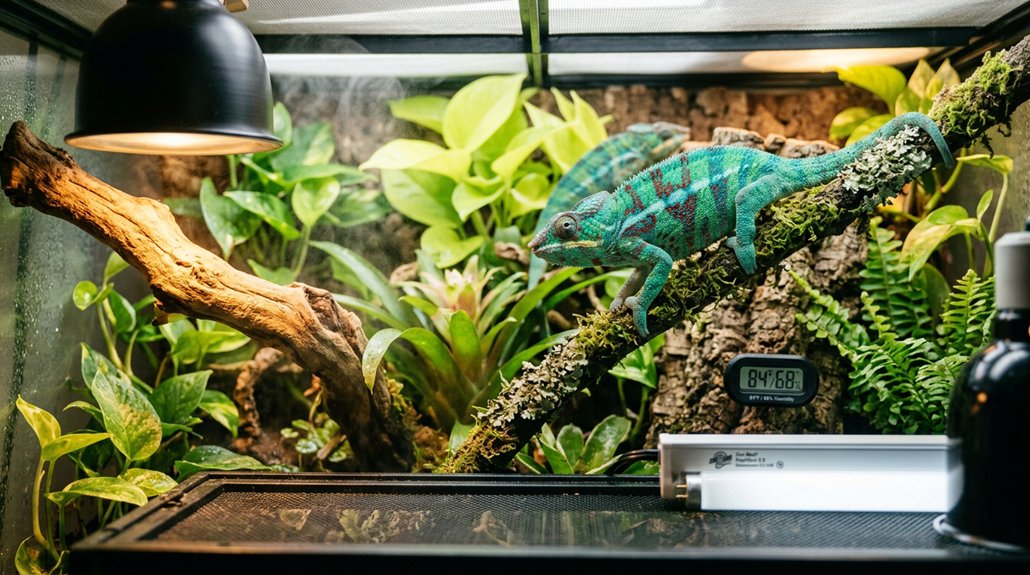
Although often overlooked, proper lighting and heating are critical to the health of your chameleon, mimicking natural sun exposure needed for physiological processes. For ideal lighting requirements, implement a 12-hour light cycle using a High Output T5 fixture with a 6500K fluorescent bulb. It’s essential to provide a linear T5 UVB bulb delivering a UVI of 3 at the basking branch for necessary vitamin D3 synthesis and calcium absorption. Effective temperature regulation involves maintaining basking temperatures around 85°F (29°C) and general daytime temperatures between 72-78°F (22-25°C). Nighttime temperatures should range from 55-65°F (13-18°C), using thermometers for precise monitoring. Replace UVB bulbs every 6-12 months, as diminished effectiveness can harm your chameleon’s health.
Feeding Routines: Keeping Your Chameleon Healthy
Guaranteeing a balanced and nutritious diet is critical for your chameleon’s health and longevity. Start by providing an insect variety, including gut-loaded crickets, mealworms, and superworms, which deliver essential nutrients. Gut-loading your insects with dark leafy greens for 2-3 days prior makes certain they’re nutrient-rich. For young chameleons, establish a daily feeding routine, whereas adults typically thrive on 3-5 insects every other day to prevent obesity.
Dusting all feeder insects with calcium supplements is important to support bone health and counteract deficiencies, such as vitamin D3 deficiencies. Regularly monitor your chameleon’s eating habits and adjust the diet according to age and health needs, assuring peak well-being. This methodical approach helps maintain both their physical health and liveliness.
Building Trust: Understanding Chameleon Behavior
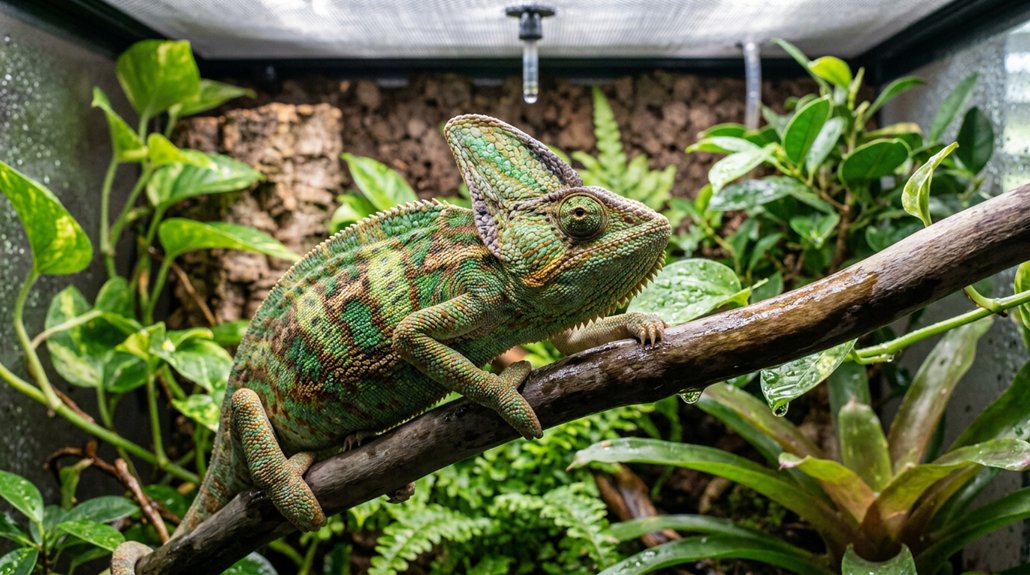
A key aspect to understanding chameleon behavior is recognizing the inherently territorial nature and solitary disposition of these reptiles. They often exhibit stress behaviors, such as darkening or puffing up, if threatened or over-handled. Trust building techniques are essential and should adopt a gradual “baby steps” approach. When working on handling strategies, always consider personality variations; what works for one chameleon might not for another. Some chameleons are more tolerant while others remain skittish.
To foster trust:
- Allow voluntary approach: Let chameleons come to you with encouragement from climbing tools.
- Use food rewards: Gradually offer food from your hand to build positive associations.
- Observe cautiously: Monitor for stress indicators, adjusting your approach accordingly.
Continuous observation aids in recognizing comfort levels, enabling effective trust-building.
Frequently Asked Questions
How to Care for a Chameleon for Beginners?
You’ll need to establish proper chameleon habitats with spacious enclosures and adequate lighting. Implement regular feeding schedules incorporating gut-loaded insects and supplements. Monitor temperature, humidity levels, and their behavior closely. Routine vet visits are a must.
Do Chameleons Need Daily Care?
Yes, chameleons need daily care. Monitor chameleon behavior and feeding habits, ensuring consistent enclosure conditions. Provide gut-loaded insects and misting to regulate humidity. Daily observation and cleaning prevent disease, ensuring healthy, stress-free living conditions.
How Much Does a Chameleon Cost Under $100?
You can find certain chameleon species for under $100, like the Veiled or Jackson’s. Consider other cost factors, such as enclosure setups and health essentials, when analyzing the total investment required beyond the initial purchase.
What Setup Does a Chameleon Need?
You’re diving into chameleon care, needing a habitat that’s fit as a fiddle. Make certain climbing spaces, branches, and UVB lighting. Maintain temperature gradients: 72-78°F daytime, 85°F basking, 55-65°F nighttime. High humidity is crucial.
Conclusion
Caring for a chameleon is both an art and a science, blending meticulous habitat setup with the delicate dance of building trust. By ensuring the right light and heat, you’ll create a sanctuary while feeding routines become health rituals. As you decode their behaviors, you’ll cultivate a bond as fragile and colorful as a chameleon’s skin. Approach each day with detailed attentiveness, and you’ll enjoy the companionship of nature’s master of disguise, thriving in your care.