Did you just bring home a new cat, or are you still thinking it over?
That mix of excitement and “wait, what do I actually need to do” is completely normal. Vaccines, fleas, ticks, worms, it can feel like a lot to keep straight.
Here’s something I learned early on: cats are pros at hiding pain.
That’s exactly why preventive care matters so much. A solid parasite prevention plan catches problems before they turn into something serious and expensive.
I’m going to walk you through every vaccine, every flea and tick option, and every worm treatment your new cat might need. Grab a coffee, and let’s get your feline friend set up for a long, healthy life.
Key Takeaways
- Core vaccines protect cats from rabies, feline distemper, and calicivirus, with kittens starting at six to eight weeks old.
- Topical treatments, oral medications, and flea collars all provide monthly (or longer) flea prevention, and most take just seconds to apply.
- Tick checks focus on the ears, neck, toes, and belly, since ticks need 24 to 48 hours attached to spread disease.
- Roundworms and tapeworms are common intestinal parasites, and vets catch them through fecal exams during annual wellness visits.
- Annual checkups catch serious diseases early since cats hide illness so well, which makes preventive care essential for long-term health.
What Are the Core and Non-Core Vaccines in Cat Preventive Care?

Your cat needs protection from serious diseases, and vaccines give your feline friend the best defense. Your veterinarian recommends specific shots based on your cat’s lifestyle, age, and health status.
What Are the Core Vaccines for Cats?
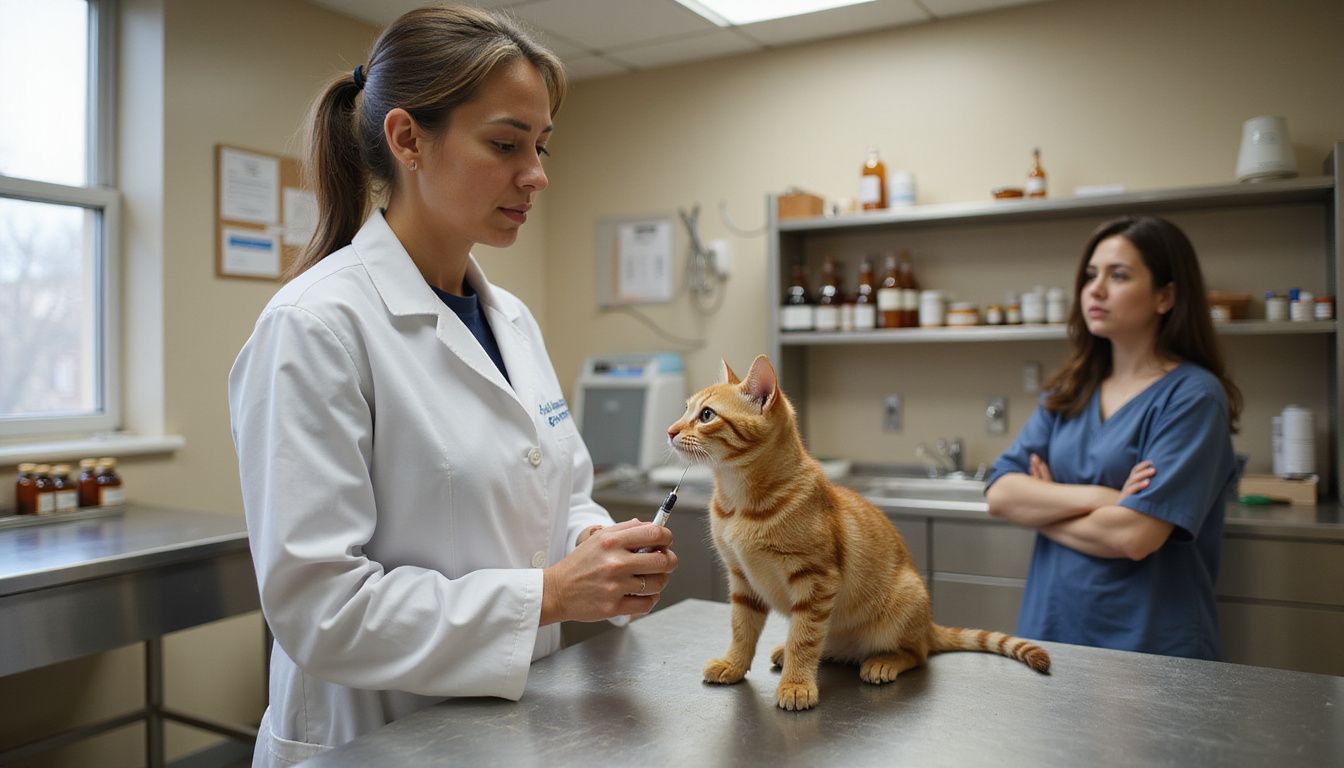
Core vaccines form the foundation of feline preventive health. They protect your cat from life-threatening diseases that spread easily between animals.
- Rabies: a fatal, zoonotic disease that can pass from your cat to you or your family
- Feline distemper (feline panleukopenia): a severe illness that’s often deadly if your cat isn’t vaccinated
- Feline calicivirus: causes painful mouth sores, fever, and respiratory trouble
- FVRCP combo shot: many vets bundle panleukopenia, calicivirus, and feline herpesvirus-1 (a leading cause of upper respiratory infection) into one vaccine
Rabies stands out as especially critical since it’s a zoonotic disease, meaning it threatens your family too. That’s why the rabies vaccine is legally required in many places, including New York.
The American Association of Feline Practitioners recommends these core vaccines for every cat, including indoor-only ones. Even cats that never go outside face real exposure risks, from open windows to trips to the vet.
Vaccination schedules depend on your cat’s age, lifestyle, and risk factors, which your vet sorts out during a physical exam. Kittens typically start their vaccination series at six to eight weeks old, then get boosters every three to four weeks until they reach sixteen weeks.
According to updated guidelines from the American Animal Hospital Association, the feline leukemia virus (FeLV) vaccine actually counts as core for every kitten under one year old. It only shifts to an optional, lifestyle-based shot once your cat becomes an adult, so don’t skip it thinking it’s not necessary yet.
Adult cats still need annual checkups, where your vet decides if booster shots make sense for your specific situation and region. These vaccines work by training your cat’s immune system to recognize and fight off dangerous germs before infection takes hold.
“Vaccination is not just a one-time event; it’s an ongoing commitment to your cat’s wellbeing.”
Indoor and outdoor cats both benefit from this protection, though your vet might suggest extra non-core vaccines depending on your cat’s exposure risks. Let’s look at the feline leukemia vaccine next, since it’s one non-core shot a lot of cat owners end up needing anyway.
What Is the Feline Leukemia Virus Vaccine?
Beyond the core vaccines, your vet will likely bring up the feline leukemia vaccine during your cat’s wellness exam. It protects against the feline leukemia virus, a serious infection that can turn fatal without treatment.
Based on 2025 diagnostic data from IDEXX laboratories, FeLV affects roughly 2.4% to 3.7% of cats across the US and Canada, and that number climbs much higher in outdoor, feral, or multi-cat households. That’s a real, measurable risk, not just a “maybe.”
Your vet classifies this vaccine as non-core for adult cats, meaning it’s not required for every animal. Outdoor cats or ones living with other felines, though, face a much bigger exposure risk.
- Indoor-only cats: minimal exposure risk, may not need the shot
- Cats with outdoor access: benefit greatly since they encounter other animals regularly
- Multi-cat households: higher risk, stronger case for vaccination
Your vet looks at your cat’s individual lifestyle before making a recommendation. This personalized approach means your cat gets exactly the protection it needs, nothing more and nothing less.
This conversation happens naturally during routine visits, so you’ll have plenty of time to ask questions before deciding.
How Can I Prevent Fleas on My Cat?

Fleas can turn your cat’s life into a scratching nightmare, but you have powerful tools to stop them before they start. Your vet can recommend spot-on treatments, oral medications, and flea collars that all work to keep these pests off your furry friend.
What Are Topical Flea Treatments for Cats?

Topical flea treatments stand out as one of the most popular ways to protect your cat, and they work by creating a protective barrier right on your cat’s skin.
| Treatment Type | How It Works | Application Method | Frequency |
|---|---|---|---|
| Topical Solutions | Applied directly to your cat’s skin, usually between the shoulder blades, where your cat cannot lick it. The medication spreads across the skin and kills fleas on contact. | Liquid formula squeezed onto the skin | Monthly application for effective control |
| Topical Wipes | Convenient wipes that contain flea-fighting ingredients. Your cat receives protection through direct contact with treated areas. | Wipe across your cat’s fur and skin | As recommended by your veterinarian |
| Topical Sprays | Spray formulations that coat your cat’s fur and skin quickly. These products reach multiple areas with minimal effort. | Spray directly onto your cat’s coat | Per veterinary guidance |
| Comprehensive Prevention | Many topical treatments tackle fleas, ticks, and mites all at once. Your cat gets multi-parasite protection from one product. | Liquid, wipe, or spray application | Monthly for optimal protection |
Your vet discusses these topical options during your annual checkup and recommends the best pick for your cat’s age and health status. Most products work by disrupting a flea’s nervous system, causing paralysis and death. Application takes just seconds, so it’s simple to fold into your monthly routine.
- Easy, mess-free application between the shoulder blades
- Your vet shows you exactly where and how to apply it
- Monthly use breaks the flea life cycle before infestations start
- Proven effective across clinical studies and years of real-world use
Some cats tolerate application better than others, so your vet may suggest starting with a specific type. Your annual visit is the perfect time to stock up on your cat’s flea prevention supply. Once your cat has solid flea protection, it’s worth looking at tick prevention too.
What Oral Medications Help Prevent Fleas?
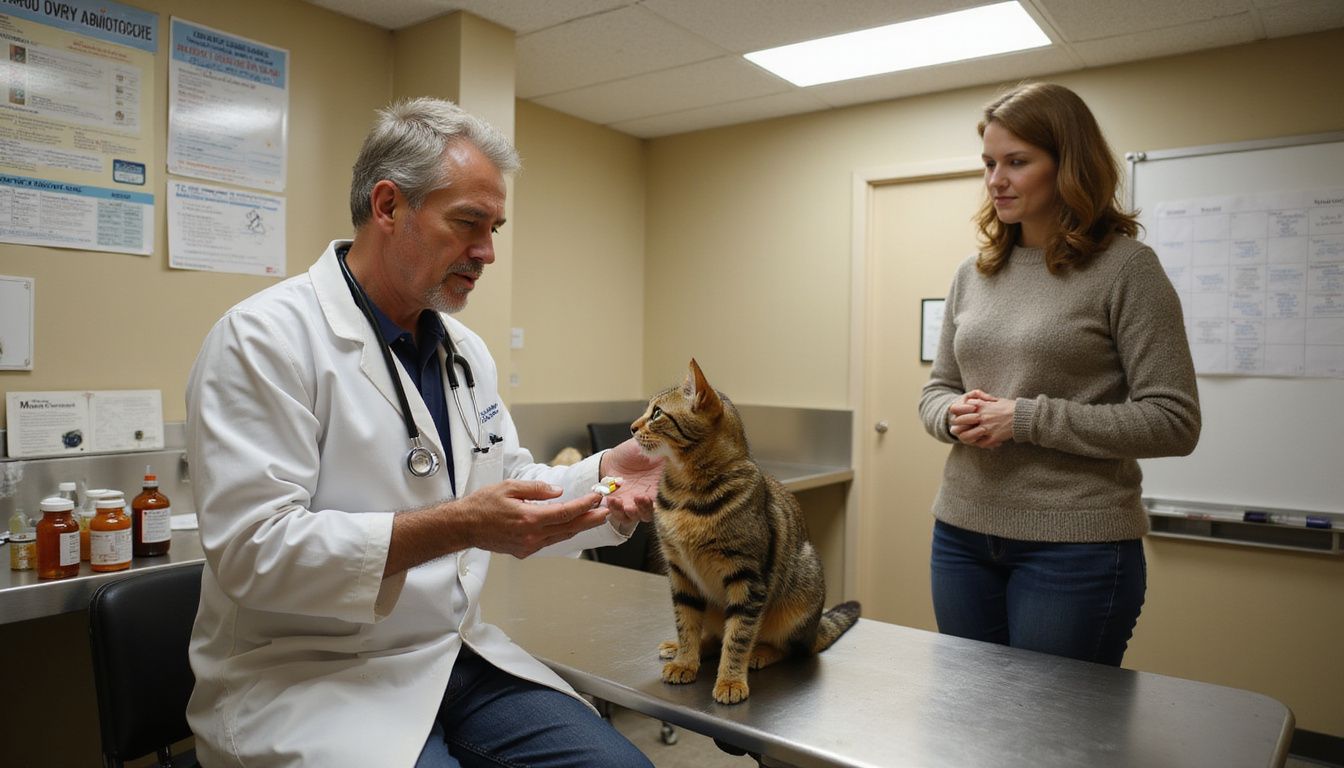
If topical treatments don’t fit your routine, oral medications offer another solid path forward for flea prevention.
| Oral Flea Prevention Option | Key Details |
|---|---|
| Monthly Tablets and Chews |
• Given once a month as part of routine preventive care visits • Come in tablet or chew form for easier dosing • Work systemically throughout your cat’s body to eliminate fleas • Fit easily into everyday care routines |
| Comprehensive Parasite Management |
• Serve as part of a broader parasite control strategy • Some formulations target multiple parasites beyond fleas • Discussed during vet visits to match your cat’s specific needs • Part of a complete wellness plan for indoor and outdoor cats |
| Administration Schedule |
• Given monthly to maintain consistent protection • Easy to remember with calendar reminders or subscriptions • No messy application like spot-on treatments • Your vet confirms the correct dose for your cat’s weight |
| Veterinary Guidance |
• Your vet recommends the right oral medication at preventive care appointments • Options vary by age, health status, and lifestyle • Regular check-ins help adjust treatment if needed • Prescriptions ensure safety and correct dosing |
Oral medications take the guesswork out of flea prevention. Your cat swallows a pill or chew, and you’re covered for thirty days.
Many cats handle these medications better than topicals. Products like NexGard Combo even combine flea, tick, and heartworm protection into one monthly chew, giving you an all-in-one option worth asking your vet about.
Talk with your vet about which oral preventive matches your cat’s lifestyle. They’ll walk you through dosing, possible side effects, and how to work it into your cat’s routine care.
Do Flea and Tick Collars Effectively Protect Cats?

Flea collars offer a solid option for protecting your cat without monthly applications. According to veterinary product standards, modern collars use sustained-release technology that can provide up to eight months of continuous protection, so you’re not thinking about this every few weeks.
Modern flea and tick collars release active ingredients that create a protective zone around your cat’s head and neck. Your vet can point you toward brands that also cover ticks, since some collars handle both pests at once.
- Wear a collar alone, or pair it with another product during peak flea season
- Some cats tolerate collars better than others, so start slow if you’re unsure
- Your vet weighs the benefits against any concerns for your cat’s specific situation
At clinics like Cotswold Animal Hospital, vet teams help cat owners sort through flea prevention choices during routine wellness visits. In a review of consecutive kitten appointments, staff covered spot-on options in the majority of visits, oral medications in nearly half, and collar options in about a third of cases.
The average counseling session lasted around four to five minutes, giving owners time to ask questions and compare methods. This quick, practical approach lets you pick between topical, oral, or collar prevention based on your cat’s lifestyle, which makes it easier to stick with protection year-round.
Now that you understand flea collar options, here’s how to handle ticks too.
How Do I Prevent and Remove Ticks on My Cat?

Ticks latch onto your cat’s skin and cause real problems, from irritation to serious diseases like Lyme disease. You need practical ways to spot ticks fast, remove them safely, and stop them from showing up in the first place.
How Can I Check My Cat for Ticks?

Checking your cat for ticks takes just a few minutes during grooming time. Your vet recommends these checks as part of routine wellness exams and preventive health practices.
- Ears and inside the ear flaps, where ticks love warm, hidden spots
- Neck and shoulders
- Between the toes and under the paw pads
- Belly and inside the back legs
- Use a fine-toothed comb to catch anything your fingers miss
Run your fingers slowly through your cat’s fur, feeling for small bumps or odd textures. Part the fur in sections so you can see the skin directly, since dark, tiny parasites can hide easily in thick coats.
Schedule annual physical exams too, since your vet performs professional tick checks at every wellness visit. Check more often if your cat spends time outdoors or lives in a tick-heavy area.
According to veterinary parasitologists, ticks need to stay attached for 24 to 48 hours before they can pass along serious illnesses like Lyme disease. That short window is exactly why quick, regular checks matter so much, catching a tick early can stop an infection before it ever starts.
One new adopter with an indoor-outdoor kitten ran twice-weekly tick checks for two months and found five attached ticks. Each removal took about 90 seconds from spotting the tick to cleaning the bite area, nearly all left no mouth parts behind, and one case needed a quick vet follow-up just to confirm everything looked fine.
Focusing checks on the ears, neck, and between the toes made ticks easier to find fast. Regular checking turns tick detection into a quick, manageable habit that protects your cat from tick-borne illness.
What Are Safe Ways to Remove Ticks from Cats?
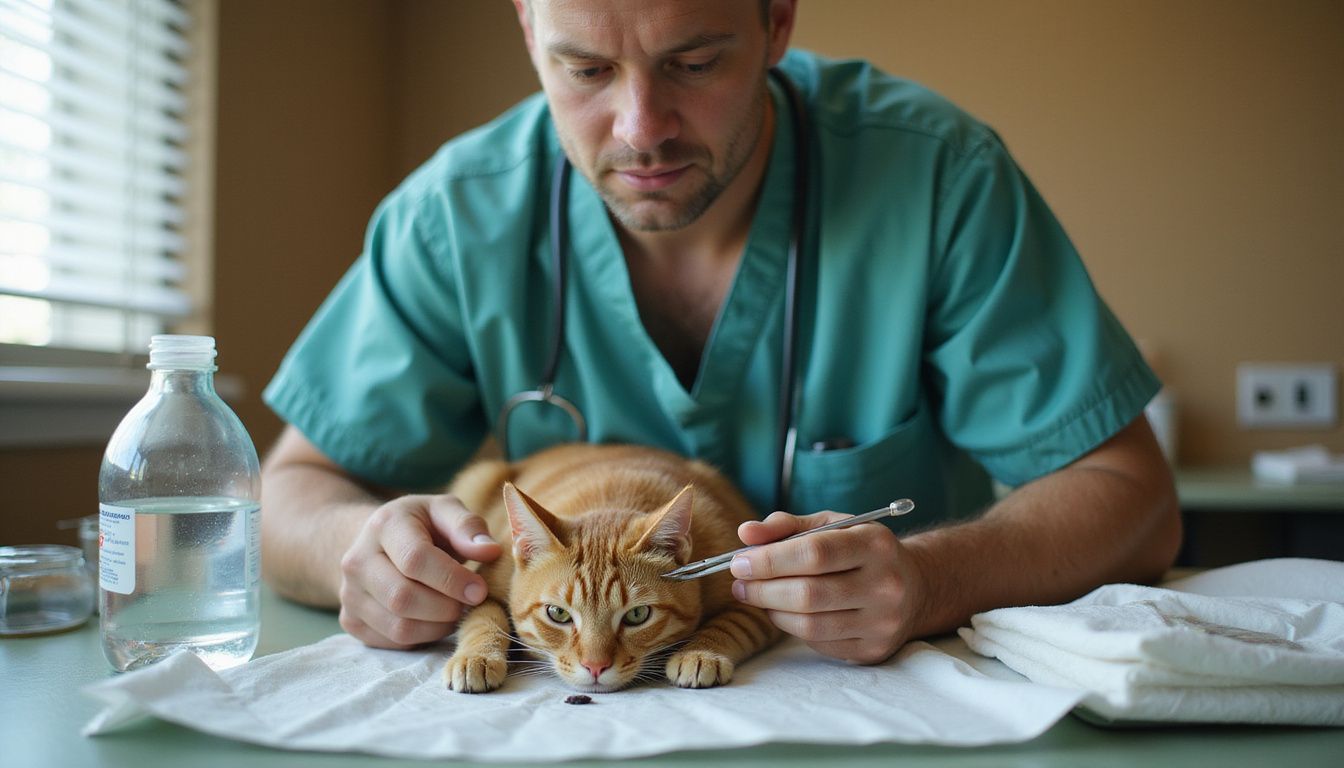
Your vet covers safe tick removal during wellness exams and can show you the right technique. Removing ticks quickly cuts your cat’s risk of tick-borne illness and prevents skin irritation at the bite site.
- Gather special tick removal tools or fine-tipped tweezers before you start. These let you grip the tick’s head without crushing its body.
- Grasp the tick as close to your cat’s skin as possible, holding it firmly at the head or mouth area. Pulling at the body can leave parts behind and cause infection.
- Pull straight out with steady, even pressure. Avoid twisting or jerking, since smooth removal keeps the tick from breaking apart on the skin.
- Place the removed tick in a sealed container with rubbing alcohol to kill it. Never crush it with your bare fingers.
- Clean the bite area with soap and water or an antiseptic right after removal to stop bacteria from getting in.
Ask your vet to demonstrate proper removal if you feel unsure about doing it yourself. Pairing quick removal with regular tick checks, especially during warmer months, keeps disease transmission off the table.
What Treatments Prevent Ticks on Cats?
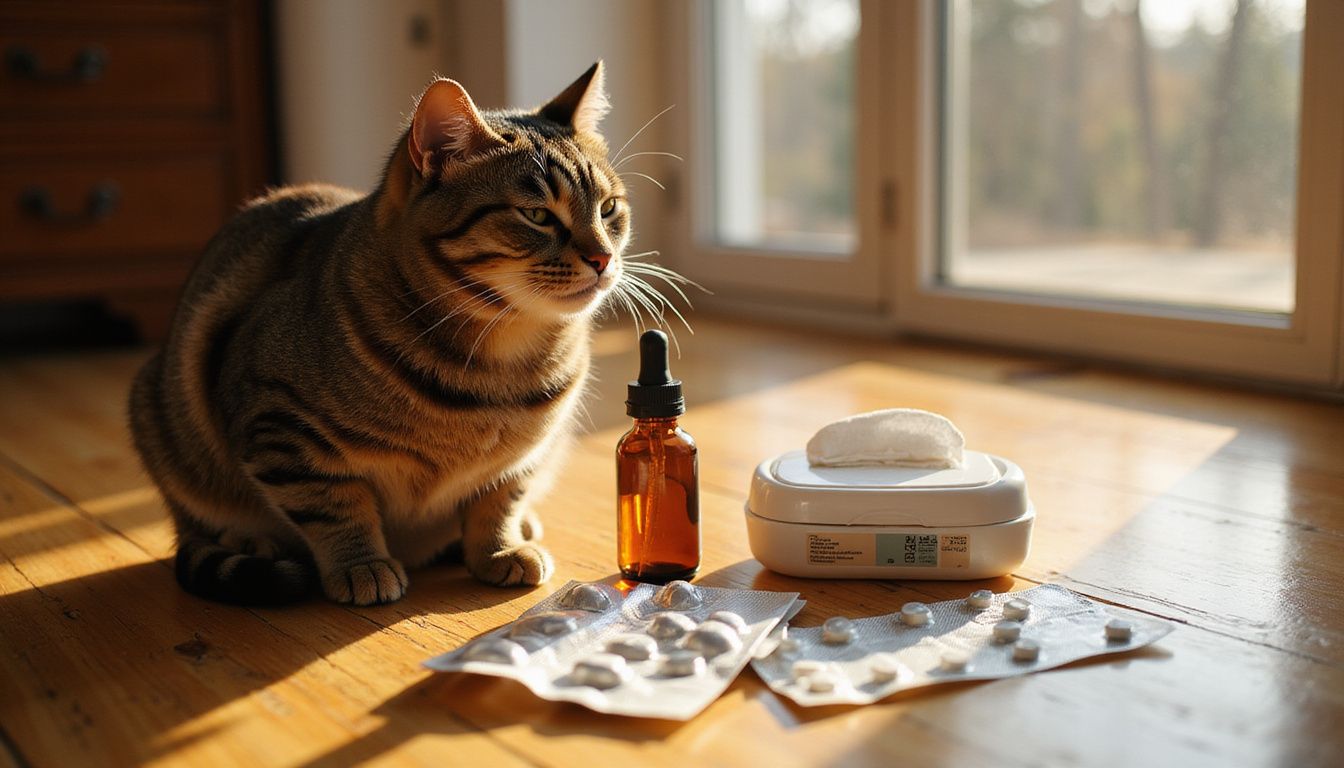
Tick prevention works best when you start early and stick with it all year, especially if your cat spends time outdoors where parasites thrive.
| Tick Prevention Method | How It Works | Application Frequency | Best For |
|---|---|---|---|
| Topical Solutions | Liquid treatments applied directly to your cat’s skin, usually between the shoulder blades. These spot-on products kill ticks on contact and prevent new infestations. | Monthly application; outdoor cats may need stronger or more frequent doses | Cats with higher exposure risk; outdoor cats |
| Tick Collars | Wearable collars that emit protective compounds around your cat’s head and neck area. Modern collars offer extended protection compared to older versions. | Varies by product; some last up to eight months | Cats that tolerate collar wear; long-term protection seekers |
| Oral Medications | Tablets or chews your cat swallows that circulate tick-fighting compounds through the bloodstream. Ticks die when they bite or feed. | Monthly administration; some products offer three-month dosing | Cats resistant to topical treatments; indoor/outdoor cats |
| Tick Wipes | Pre-moistened cloths containing tick-repelling ingredients, wiped across your cat’s fur during regular grooming. | Weekly or as needed during high-risk seasons | Supplemental prevention; cats needing frequent grooming |
Your vet prescribes tick prevention during your annual visit, so mark that appointment on your calendar. The 2026 Pet Parasite Forecast released by the Companion Animal Parasite Council warns that black-legged ticks are rapidly expanding their range due to shifting climate patterns, making year-round prevention essential even in states like the Upper Midwest and parts of the South that used to feel “safe.”
Cats spending real time outdoors face greater exposure and may need stronger formulations or more frequent doses than indoor cats. Think of tick prevention as one layer in a bigger plan:
- Tick treatment (topical, collar, or oral)
- Flea prevention running alongside it
- Regular worm management to round out full parasite control
Regular brushing helps you spot ticks early, and keeping your yard trimmed reduces tick habitat. Indoor cats need tick prevention too, since ticks can hitch a ride in on your clothing, shoes, or another pet. Starting prevention before adoption protects your new feline friend from day one.
How Can I Prevent and Treat Worms in Cats?
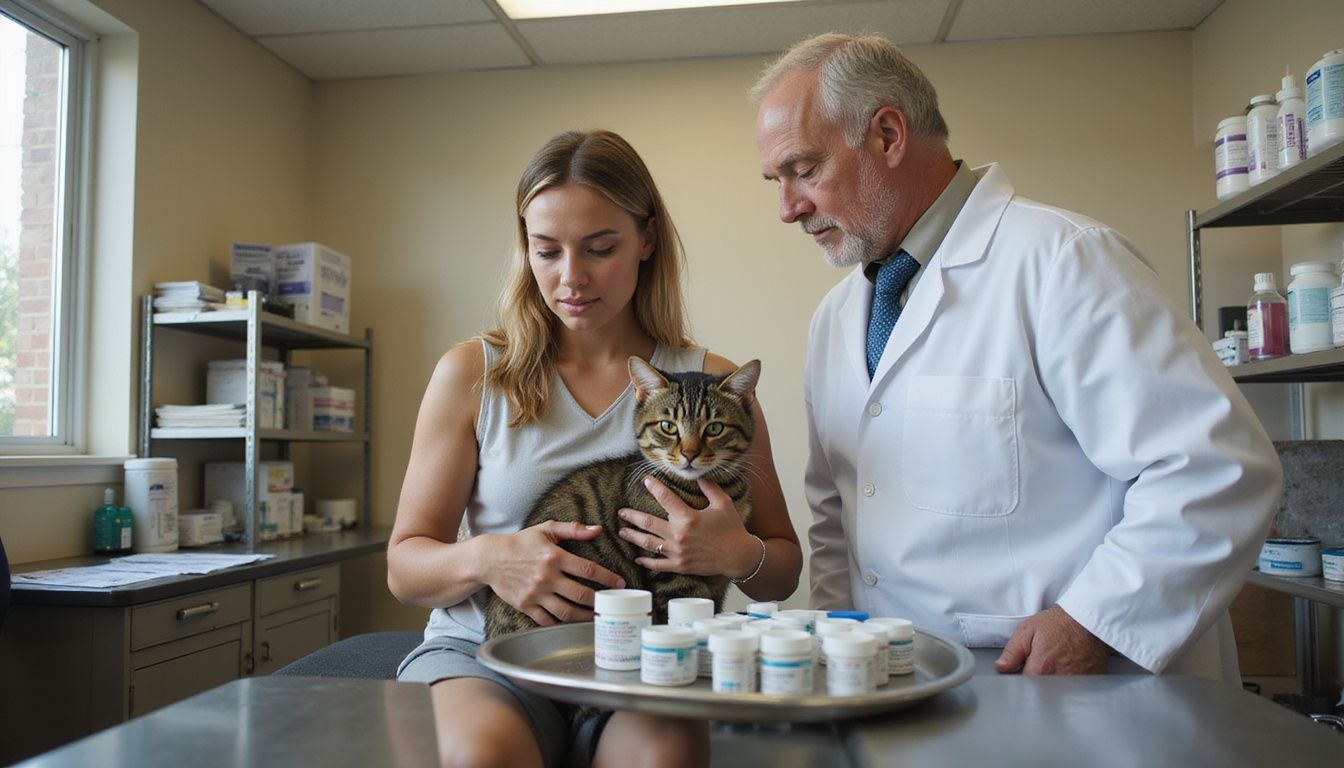
Worms can sneak into your cat’s body through contaminated food, soil, or even from their mother. Here’s how to spot the signs and kick these parasites out with the right dewormer and preventative care.
What Are Common Intestinal Parasites in Cats?

Your new cat can pick up intestinal parasites from a lot of sources, and roundworms and tapeworms top the list. Veterinary parasitologists note that most tapeworm cases don’t come from dirt or soil at all, they start when your cat swallows an infected flea while grooming. That’s one more reason flea prevention pulls double duty for your cat’s health.
Every cat, whether it hunts outdoors or lounges on your couch all day, can pick these up. Left untreated, intestinal parasites drain your cat’s energy, steal nutrients, and hurt their general well-being.
- Your vet performs an intestinal parasite screening through a fecal exam at your cat’s annual checkup
- This screening is often part of kitten preventative care as well as adult wellness visits
- Catching parasites early makes a real difference in your cat’s health and comfort
A dewormer like Drontal targets both roundworms and tapeworms in one dose, while other options such as Advocate pair deworming with flea protection. Ask your vet which dewormer fits your cat’s specific parasite risk. Treatment works fast, and a healthy dose of relief usually follows within days.
How Is Heartworm Prevented in Cats?

The American Heartworm Society’s 2026 incidence report reveals that heartworm has spread into cooler, drier regions across all 50 states, and nationwide antibody testing shows more than 10% of cats have been exposed. Heartworm gets talked about mostly as a dog disease, but that data proves cats everywhere carry real risk too.
Your vet assesses heartworm risk during annual wellness visits and recommends the right prevention strategy for your cat’s lifestyle. Oral or topical preventives both work well, and it comes down to what fits your cat best.
- Products like Revolution Plus offer dual protection against several parasites while guarding against heartworm
- Cats in warm climates or with outdoor access face higher risk
- Indoor cats may need less aggressive prevention, though mosquitoes can still get inside
A veterinarian such as Jason White, DVM, or Erin Poorman, DVM, can prescribe the right medication based on your cat’s age, weight, and outdoor exposure. You’ll find heartworm preventives at your vet’s office or through a trusted online pharmacy that carries prescription pet medication.
Starting prevention early builds good wellness habits that keep your cat thriving for years. Outdoor cats should get year-round protection to stay safe from this mosquito-borne infection.
Conclusion

Your cat depends on you to make smart health choices. The strategies here give you everything you need to protect them.
Vaccinations shield your kitten from serious diseases like feline panleukopenia, feline calicivirus, and rabies. Oral treatments and topical solutions keep fleas, ticks, and worms at bay.
Good parasite prevention and preventive care take just minutes each month, yet they save your pet from painful infections and costly veterinary surgery down the road.
Annual checkups at clinics like Cotswold Animal Hospital in Charlotte, NC, or Pure Paws Veterinary Care catch kidney disease, diabetes, and dental problems before they turn severe. Cats hide illness remarkably well, so wellness screening and dental care matter more than most owners realize.
Cats cannot tell you when something hurts. Your vigilance during wellness exams becomes their voice.
Getting your neutered or spayed cat on a prevention schedule now means fewer emergency visits and a longer, healthier life together. Schedule that first appointment today, because the best gift you can give your feline friend is simply showing up for their health.
FAQs
1. What vaccines does my kitten need first?
Kittens need core shots early on, starting around 6 to 8 weeks old. These include feline panleukopenia, feline calicivirus, and feline herpesvirus-1, often bundled together as the FVRCP vaccine. Your vet will also talk about the rabies vaccine and FeLV vaccine, since both protect against serious, sometimes deadly diseases.
2. Is rabies a real risk for indoor cats?
Yes, it is. Rabies is a zoonotic disease that can spread from animals to people, and all 50 states require the rabies vaccine for cats by law. Even indoor cats need this shot, since accidents happen, like a cat slipping out an open door or a bat getting inside.
3. How do I protect my cat from fleas, ticks, and worms?
Flea and tick treatment options include oral treatments and topical products like Advocate or NexGard Combo, which protect against multiple parasites at once. Drontal handles worms effectively. Ask your vet, whether at Cotswold Animal Hospital or Pure Paws Veterinary Care, which option fits your cat’s lifestyle best.
4. Do dental health and vaccines connect somehow?
They do, actually. Poor dental care can weaken a cat’s immune system, making them more vulnerable to illness, and studies show that over 70 percent of cats develop dental disease by age three.
5. Should I worry about diabetes or kidney disease in my cat?
Both are common in older cats, sadly. Routine bloodwork during vaccine visits helps vets like Zachary Chillag, DVM, or Linzi Long, DVM, catch these problems before they worsen.
6. Can I order pet medications online?
Yes, many pet owners use an online pharmacy for convenience. Just confirm the pharmacy is verified by the National Association of Boards of Pharmacy and connected to a licensed vet, whether you’re in Charlotte, NC, or Chiang Mai, Thailand.