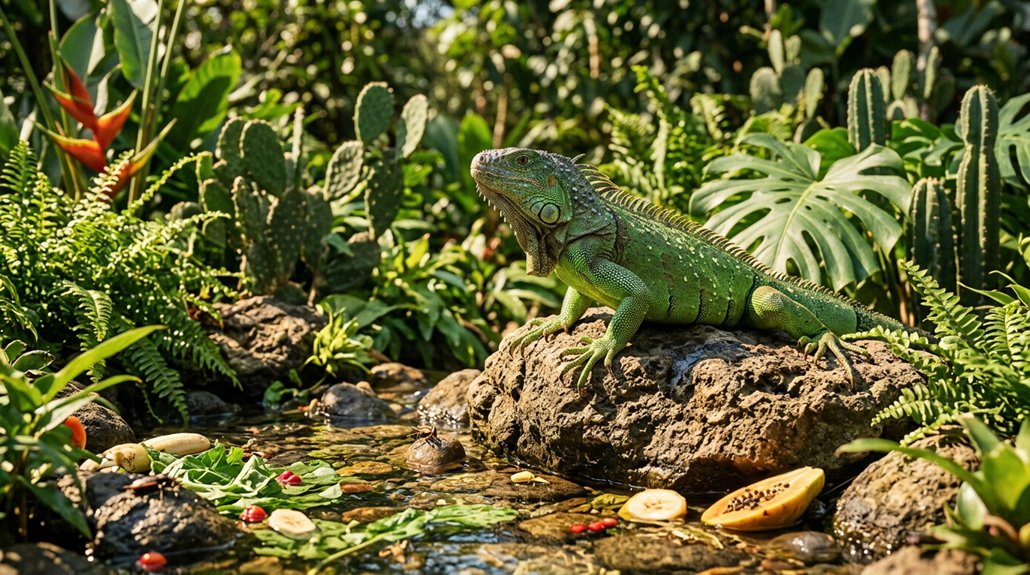
Your iguana’s diet should be 95% vegetables, mainly dark leafy greens like collard and mustard greens, essential for calcium intake. Adult iguanas can be fed daily or every other day, while young ones need daily meals. Limit fruits and avoid toxic foods like avocados and high-oxalate greens. Guarantee a stress-free environment and closely monitor their health. Understanding these feeding essentials will maintain their well-being and reveal more intricate dietary insights ahead.
Key Takeaways
- Iguanas primarily eat vegetables, with 95% of their diet consisting of dark leafy greens like collard and mustard greens.
- Limit spinach and kale due to oxalates that inhibit calcium absorption; prefer nutrient-rich options like dandelion and romaine lettuce.
- Fruit intake should be under 20%, with safe options including blueberries, apples, bananas, and strawberries.
- Avoid toxic foods such as animal proteins, avocado, rhubarb, apple seeds, and spinach due to potential health risks.
- Monitor health and appetite, managing environmental stressors to ensure proper digestion and nutrient absorption.
Feeding Your Iguana: How to Get It Right
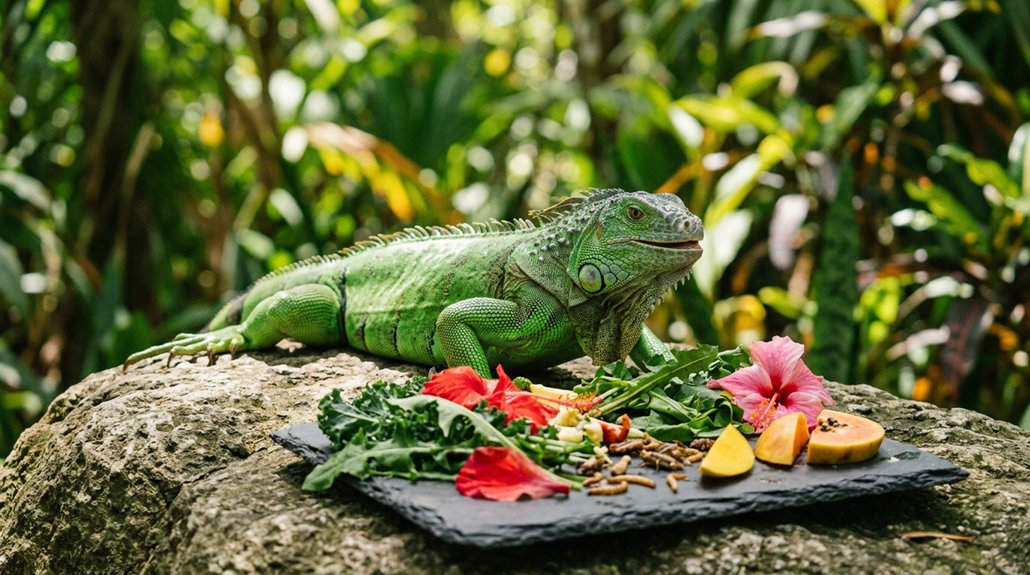
Feeding your iguana properly involves understanding its unique dietary needs and habits. Begin by focusing 95% of their diet on vegetables, emphasizing dark leafy greens like collard greens and mustard greens. Adult iguanas typically require feedings once a day or every other day. Meanwhile, young iguanas need daily feedings to support their growth. It’s essential to exclude animal-based proteins from their diet to prevent kidney and liver strain. Alongside this, incorporating dietary supplements such as calcium and vitamin D3 is vital. Calcium supplements should be provided two to three times a week for adults to support their skeletal health. Always make sure fresh, clean water is readily accessible for hydration, coupled with regular misting to maintain suitable humidity in their habitat.
Top Leafy Greens for a Balanced Iguana Diet
To maintain a balanced iguana diet, you’d want to focus primarily on leafy greens like collard, mustard, and dandelion greens, as these are rich in calcium, supporting bone health essential for their wellbeing. While romaine lettuce can add important nutrients, be cautious with spinach and kale; their high oxalate and goitrogen content can interfere with calcium absorption. Additionally, completely avoiding iceberg lettuce is critical due to its lack of nutritional value and potential to cause digestive issues.
Essential Daily Leafy Options
While ensuring your iguana’s health, understanding the significance of incorporating appropriate leafy greens into their diet is paramount. Leafy greens should comprise 80%-90% of the diet, providing critical nutrition. Given their nutrient density, a balanced leafy variety is essential. Opt for greens like collard, mustard, dandelion, and kale. These greens are excellent calcium sources, important for bone health and metabolic functions. Be cautious with spinach and beet greens due to their high oxalate content; excessive consumption can impede calcium absorption, leading to deficiencies. Additionally, choose romaine over iceberg lettuce for enhanced hydration and nutrients. Regularly rotating these greens is necessary to avoid deficiencies and maintain a well-rounded diet. By meticulously selecting these leafy options, you’ll support your iguana’s well-being.
Nutrient-Dense Green Choices
Understanding the foundational role of leafy greens in your iguana’s diet leads us to exploring the most nutrient-dense options available. Prioritizing nutrient balance is crucial for their well-being. Collard greens are an excellent choice due to their high calcium content, making them indispensable for meeting dietary requirements. Integrating other greens like mustard and kale guarantees a robust calcium intake, critical for preventing metabolic bone disease. Turnip and dandelion greens offer varied nutritional profiles, enhancing dietary diversity. Unlike iceberg lettuce, romaine provides more nutrients, fostering overall health.
Here’s a snapshot of beneficial leafy greens:
| Leafy Green | Key Nutrient | Percentage of Intake |
|---|---|---|
| Collard Greens | Calcium | 40%-50% |
| Mustard Greens | Calcium | 40%-50% |
| Kale | Calcium | 40%-50% |
| Turnip Greens | Various | Balanced intake |
| Dandelion Greens | Varied | Balanced intake |
Safe Greens to Avoid
Although diverse greens contribute considerably to an iguana’s diet, discerning which ones are safe yet best avoided in large quantities is important. Among safe green options, collard, mustard, and dandelion greens are highly recommended due to their rich nutrient profile, contributing essential minerals and hydration. However, caution is necessary with kale and spinach, as these contain goitrogens and oxalates, which may hinder calcium absorption, crucial for bone health. It’s important to incorporate these in moderation. Romaine lettuce is a preferable choice over iceberg lettuce due to its superior nutritional value, while alfalfa and plantain also serve as beneficial options. To guarantee a balanced diet, avoid acidic or harmful green varieties promoting overall health and preventing dietary imbalances.
Fruits and Treats: What’s Safe for Your Iguana?
Integrating fruits and treats into your iguana’s diet requires careful consideration to guarantee peak health and well-being. Fruit safety is paramount; provide safe fruits like blueberries, strawberries, apples, bananas, and cantaloupe. Limit fruit to less than 20% of their diet to avoid digestive issues. When exploring treat variety, remember to:
- Avoid Acidic Choices: Steer clear of citrus fruits as their acidity can upset your iguana’s digestive tract.
- Portion Control: Offer fruits in small pieces to prevent soft stools, which can be harmful.
- Incorporate Edible Flowers: Add hibiscus or dandelions sparingly, never exceeding 5% of their diet.
- Ensure Cleanliness: Always wash fruits thoroughly to remove pesticides, safeguarding your iguana’s overall health.
Dangerous Foods for Iguanas: What to Avoid
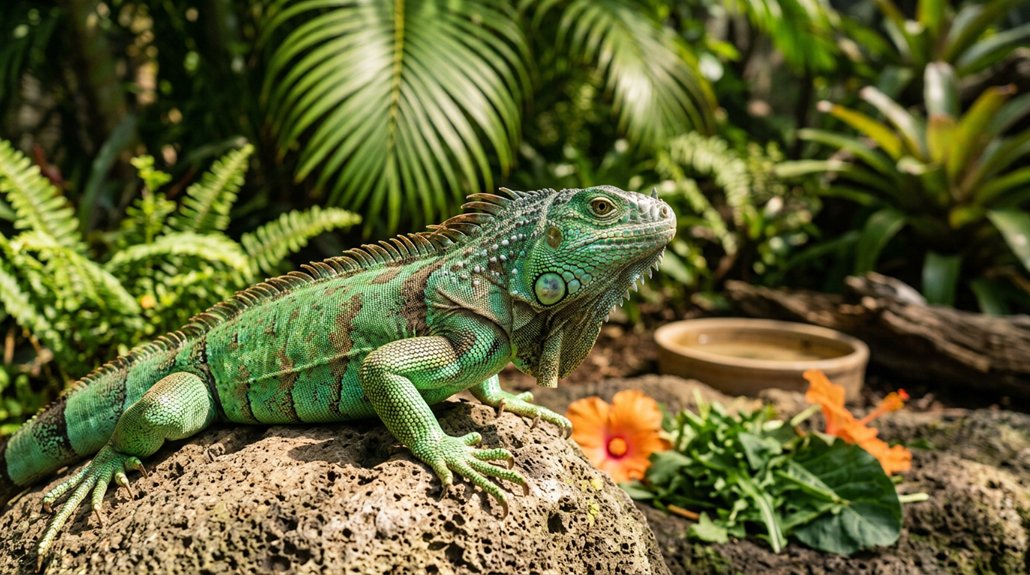
When planning your iguana’s diet, it’s essential to steer clear of harmful foods that could jeopardize their well-being. Iguanas should not consume animal proteins like mealworms and crickets, as these can adversely affect their health. Additionally, toxic fruits such as apple seeds and certain vegetables like eggplant should be strictly avoided due to their potentially poisonous effects.
Harmful Foods to Avoid
While it’s crucial to provide iguanas with a safe and nutritious diet, it’s equally important to be aware of foods that can pose serious health risks. Iguanas’ physiology isn’t designed for animal proteins, so consuming insects or meat can lead to severe liver strain and compromise kidney health. Beware of toxic fruit seeds from apples or cherries, as they can cause nutritional deficiency and toxicity. Additionally, certain greens and herbs require caution:
- High-oxalate greens like spinach and kale should be limited to prevent calcium absorption issues.
- Harmful herbs such as sage and rosemary should be excluded entirely to avoid adverse effects.
- Avoid eggplant, avocado, and rhubarb due to their severe toxic potential.
- Steer clear of all fruit seeds, which are inherently toxic to iguanas.
Common Toxic Vegetables
Many common vegetables can pose serious health risks to iguanas due to their toxic properties. Developing toxic vegetable awareness is vital for safeguarding your iguana’s health. Start by excluding avocados from their diet, as they’re highly toxic, potentially causing cardiac distress. Eggplants are another dangerous item on the harmful plant list, containing solanine, which may lead to digestive issues and lethargy. Be cautious with rhubarb, as its leaves have high oxalic acid levels, risking kidney damage. The tops and foliage of tomatoes can cause gastrointestinal issues, so limit their fruits’ consumption. Herbs like sage and rosemary aren’t safe either, as they can disrupt digestive health. Staying informed about these harmful plants is imperative for a healthy iguana diet.
Feeding Frequency: How Often Should You Feed Your Iguana?
Understanding the ideal feeding frequency for your iguana is vital for maintaining its health and well-being. Consistent feeding schedules and portion control are critical aspects. Here’s a breakdown:
Consistent feeding routines are key to your iguana’s health and well-being.
- Young Iguanas: Require feeding twice daily. Morning feedings help digestion with ample heat and UVB exposure.
- Adult Iguanas Over 2 Feet: Generally need once-daily feeding. Observation is key; if they maintain weight, adjust to every other day if necessary.
- Fully Grown Iguanas: If healthy and at ideal weight, feed every other or third day. Monitor behavior for signs of fullness.
- Uneaten Food: Remove promptly to prevent spoilage and maintain a clean habitat.
Aligning your feeding routine with these principles guarantees your iguana thrives, adapting as they grow.
When Your Iguana Won’t Eat: Diagnosing the Issue
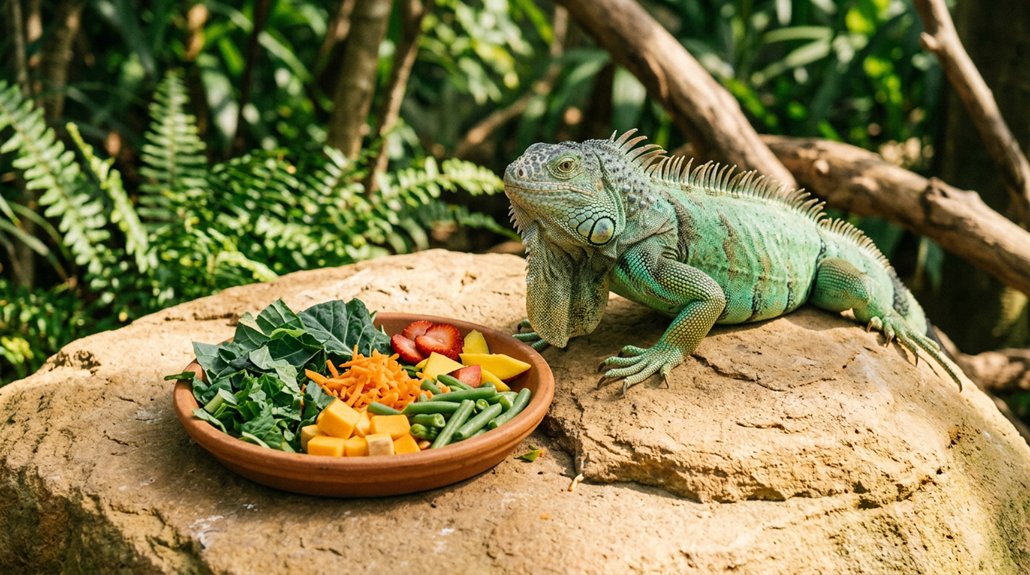
Guaranteeing your iguana’s well-being includes managing challenges such as when refusal to eat arises. Examine health issues like internal parasites, which often require veterinary consultation for resolution. Behavioral signs such as lethargy or skin discoloration might indicate these problems. Environmental stressors, such as recent dietary changes or an inadequate enclosure setup, can disrupt eating habits. Pay particular attention to temperature control, as improper temperatures hinder digestion and suppress appetite. Also, confirm a proper UVB light setup to support nutrient absorption. Be attentive to appetite triggers that may be affected by moving your iguana to a new home or altering their environment. Accurate assessment and prompt response are essential to diagnosing why your iguana won’t eat, guaranteeing their prompt recovery.
Frequently Asked Questions
What Is Iguana’s Favorite Food?
Iguanas’ favorite food typically includes dark green leafy vegetables, with kale and collard greens being ideal iguana snacks. They enjoy occasional treats like blueberries and hibiscus flowers. Providing these options guarantees their diet remains diverse and nutritionally complete.
What Predator Kills Iguanas?
Oh, you thought iguanas had it easy? Think again. Iguana predators like hawks, eagles, and boa constrictors lie in wait. Natural threats include feral cats or dogs, waiting for a chance at an iguana meal.
Do Iguanas Eat Rats?
Iguanas don’t eat rats due to their strictly herbivorous iguana feeding habits. Rats, part of animal protein sources, contradict iguana’s natural dietary requirements. Observing rat behavior showcases incompatibility with iguana nutrition, potentially causing harm to their internal organs.
Are Iguanas Aggressive?
Iguanas, like tricky dancers on a vibrant stage, can show aggressive behavior, especially males. Their temperament mirrors territorial instincts with head bobbing and tail whipping. Understanding iguana behavior helps prevent conflicts and guarantees peaceful coexistence.
Conclusion
Feeding your iguana is like tending to a delicate garden; each choice shapes its growth and health. Picture leafy greens as the sun, fruits as seasonal rain, and avoid harmful foods—hidden weeds that threaten the ecosystem’s balance. Like any seasoned gardener, observe how often to nourish your iguana and address signs of discontent. Cultivating this diet guarantees your iguana thrives, reflecting a microcosm of nature’s intricate harmony within your care.