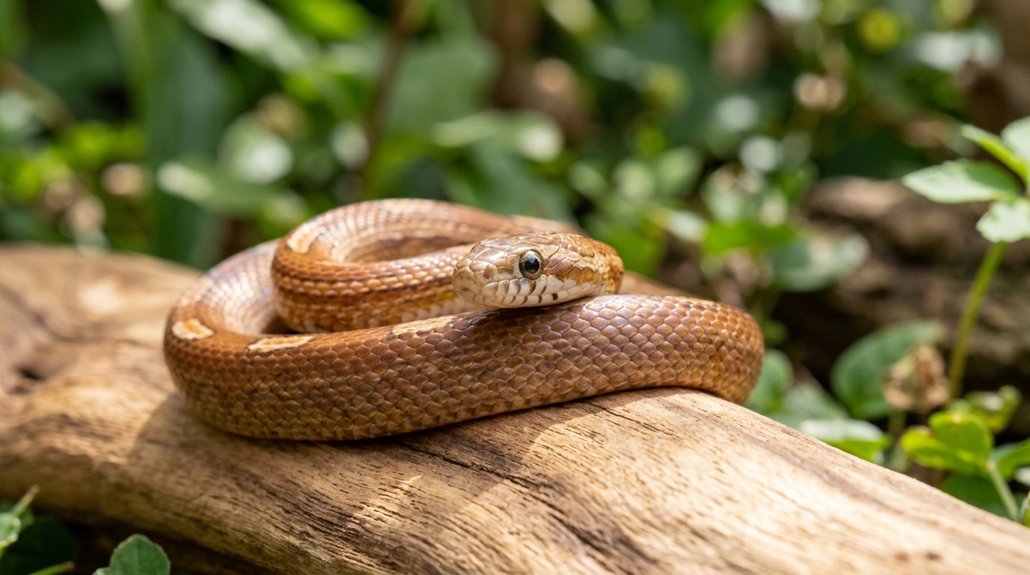
For beginner snake enthusiasts, consider corn snakes (Pantherophis guttatus) and ball pythons (Python regius). These reptiles, with sizes ranging from 2 to 5.5 feet, offer a manageable introduction to snake care. Corn snakes are particularly adaptable and visually alluring, especially albino morphs, while ball pythons, though shy, are easily housed. Their care is cost-efficient and educational, requiring stable environments and manageable diets. Explore more about creating an ideal habitat and additional beginner snake options.
Key Takeaways
- Corn snakes are ideal for beginners due to their docile nature, manageable size, and straightforward care requirements.
- Ball pythons offer a shy temperament and stable habitat needs, making them suitable for novice snake keepers.
- Garter snakes’ lively behavior and modest diet make them easy to care for and suitable for beginners.
- Kenyan sand boas are easy to handle due to their small size and placid temperament, beneficial for new keepers.
- Secure, escape-proof enclosures and proper temperature regulation are essential for creating a healthy environment for snakes.
Why Beginner-Friendly Snakes Make Great First Pets
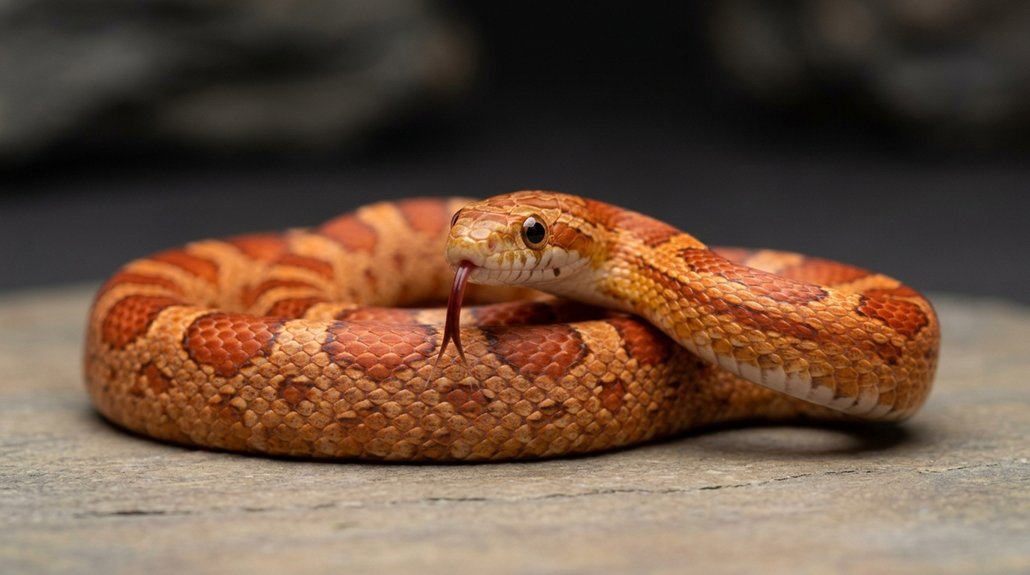
When considering a new pet, opting for a beginner-friendly snake such as the Pantherophis guttatus, commonly known as the corn snake, or the Python regius, the ball python, makes a wise choice due to their manageable size and docile nature. Snake behavior in these taxa reflects a distinct tolerance for human interaction, simplifying the pet bonding process. The manageable length of 2 to 5.5 feet enhances handling ease, an attribute tied closely to their placid demeanor. Observationally, these reptiles display a resilience to handling, enabling novice herpetologists to develop keen insights into interactive pet relationships. With long life expectancies—corn snakes up to 15 years, ball pythons 20 years—these snakes foster a commitment-rich environment. Cost efficiency furthers their appeal, promoting thorough care education.
Corn Snakes: A Beginner’s Ideal Starter Snake
Corn snakes, scientifically known as Pantherophis guttatus, stand out as an exemplary choice for novice snake enthusiasts. Exhibiting corn snake characteristics such as a manageable size of 4 to 5.5 feet and a docile temperament, they’re favored among newcomers. They promise a rewarding experience given their longevity of 10-15 years, requiring consistent corn snake care. Known for their adaptability, albino morphs present a visual treat, appealing to hobbyists of all levels. Their care requirements are straightforward; reliable resources enhance their allure for beginners. Observations show that their friendly nature guarantees easy handling, setting them apart as the ideal starter snake.
| Size (Feet) | Lifespan (Years) | Temperament |
|---|---|---|
| 4 to 5.5 | 10 to 15 | Docile |
| Adaptable | Long-term | Friendly |
| Manageable | Dedicated | Engaging |
Ball Pythons: Shy Yet Manageable Pets for New Owners
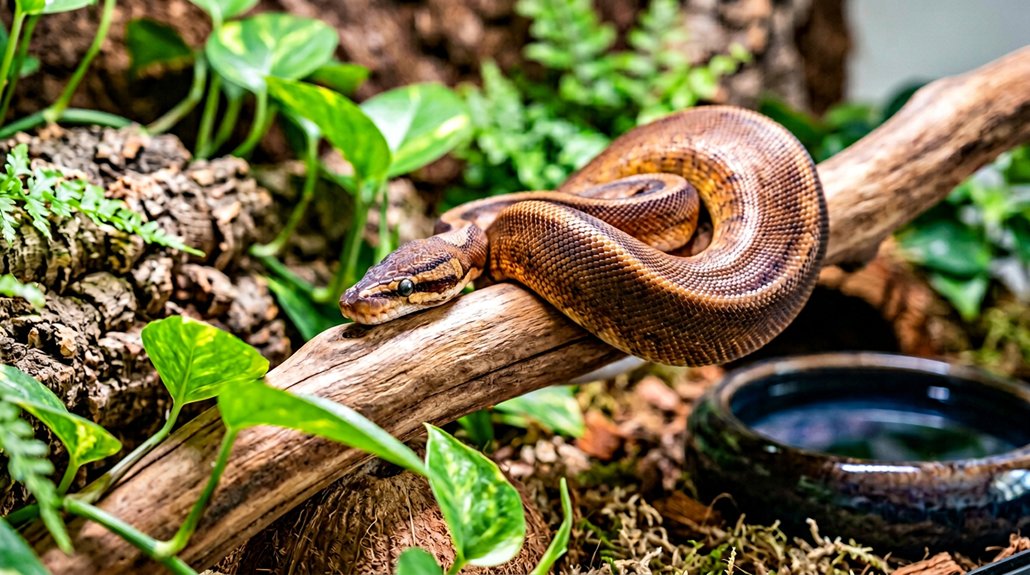
Ball pythons, known scientifically as Python regius, present an ideal option for budding snake enthusiasts due to their manageable size, typically reaching between 2 and 5 feet. This diminutive scale allows you to comfortably house and handle them. Ball pythons possess a demure, reticent temperament, gently accustoming themselves to human interaction with consistent ball python care. As they thrive in stable environments, creating a conducive habitat is essential. Observational insights reveal they often exhibit feeding challenges, necessitating a steady diet of pre-killed prey to ease feeding trials. Their longevity, averaging 15 to 20 years, requires a commitment from you. Fortunately, their popularity guarantees they are readily available, supported by abundant care resources for new snake keepers seeking a manageable, long-term companion.
Exploring Additional Beginner Snakes
Several engaging snake species serve as excellent candidates for novice keepers, each offering unique characteristics that cater to new handlers. Among them, Thamnophis spp., commonly known as garter snakes, exhibit a lively demeanor and manageable size, reaching 2-4 feet. They thrive on modest diets, consuming fish and amphibians, thereby aligning with entry-level care skills. In addition, Eryx colubrinus, or Kenyan sand boas, display a penchant for terrestrial habitats and burrowing behavior, a trait that appeals to neophyte owners seeking limited interaction. These boas are diminutive, measuring 2-3 feet, and are noted for their placid temperament, simplifying handling. Embrace these attributes to establish a rewarding herpetological journey punctuated by these remarkable serpentine specimens, whether you favor the vivacious garter snake or the hidden charm of the Kenyan sand boa.
Setting Up a Healthy Environment for Your Snake
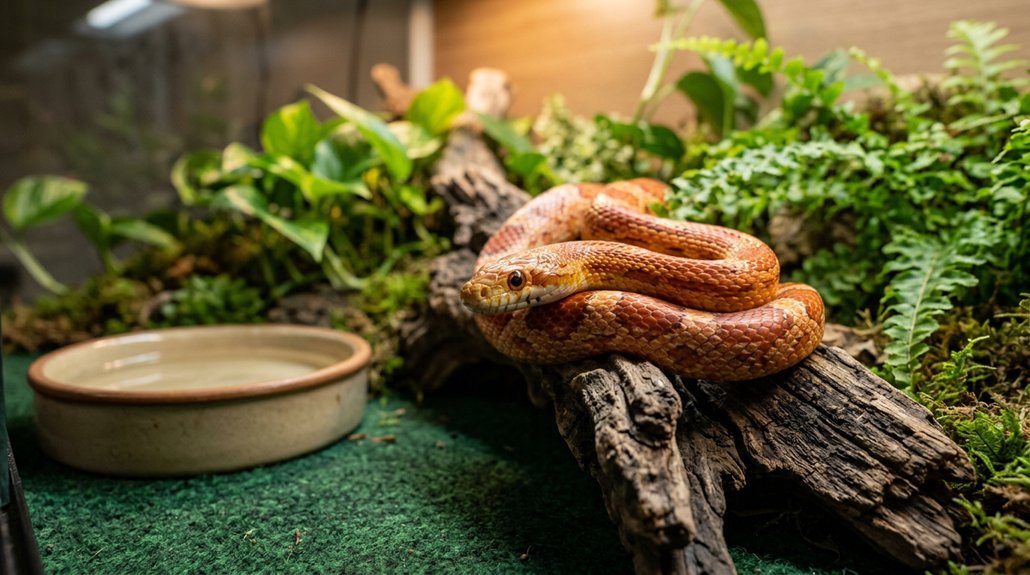
Establishing an ideal environment for your snake is essential to its health and well-being. Proper temperature regulation is vital, establishing a thermal gradient: 75-80°F for the cool side and 85-90°F for the warm side. This thermal zoning supports physiological functions like digestion.
Select substrate options that are hygienic and maintain humidity; consider:
- Aspen shavings – natural and absorbent.
- Reptile carpet – reusable and odor-resistant.
- Paper towels – simplify cleaning and prevent fungal issues.
- Coconut fiber – enhances moisture retention, beneficial for high-humidity species.
- Cypress mulch – resistant to mold under moisture-rich conditions.
The enclosure must be secure and escape-proof, facilitating natural behaviors with climbing structures and hiding spots. Maintain hydration and monitor ambient humidity (40-60%); employ a hygrometer to optimize respiratory and dermal health.
Frequently Asked Questions
What Is the Most Beginner Friendly Pet Snake?
You’d find the Corn Snake, Pantherophis guttatus, to be most beginner-friendly. Key insights include its docile behavior, size adaptation, and straightforward care. Common beginner snakes like this one thrive with appropriate habitat and consistent feeding schedules.
Which Snake Is the Best for Beginners?
Oh, the irony of simplifying reptilian companionship with corn snakes and ball pythons, the epitome of common beginner species. Understanding Pantherophis guttatus and Python regius involves mastering husbandry quirks like thermoregulation and diet—simple, right?
Will a Snake Chase Me if I Run?
No, a snake won’t chase you if you run. Snake behavior and running instincts align with their natural tendency to exhibit flight responses. Observational insights indicate that serpents prefer retreating to safety over pursuing larger perceived threats.
What US State Is Snake Free?
Alaska is snake-free due to inhospitable climates, lacking suitable snake habitats under state regulations. Observational insights confirm no native snakes exist here. Without evolutionary pressure, taxonomy has never adapted snakes into this unique, cold ecosystem.
Conclusion
In choosing a slithery companion, you’re starting on an adventure under the vast canopy of herpetology. Corn snakes and ball pythons, with their docile natures and adaptability, stand as sentinels of simplicity in the serpentine world. Like threads in a biological tapestry, these species intertwine ease and education, offering a window into reptilian ecology. As you nurture their environment, you’ll cultivate your own garden of knowledge, watching it blossom with each flicker of their forked tongues.