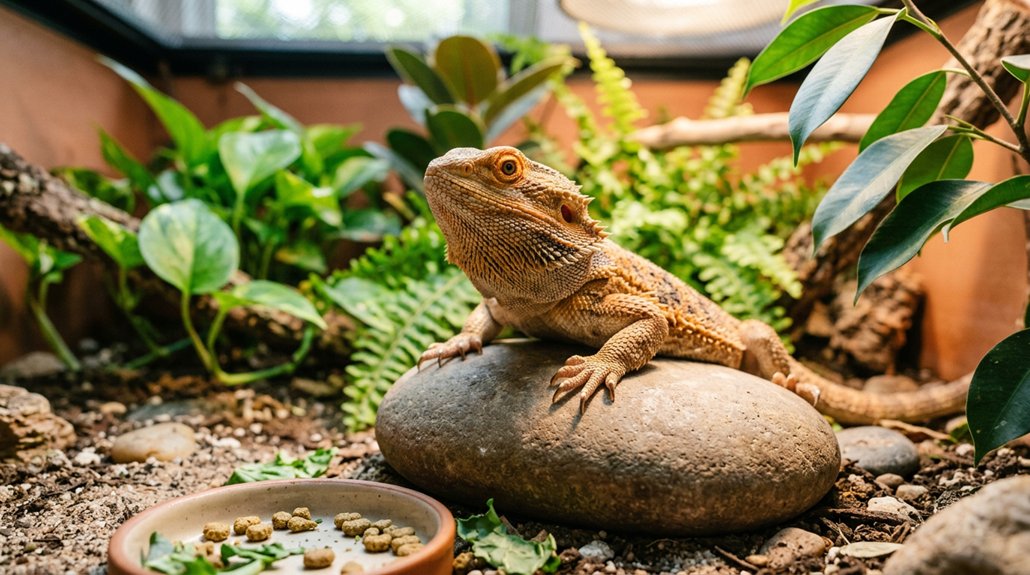
Your bearded dragon might not be eating due to environmental changes, shedding discomfort, improper husbandry, health issues, or stress. Verify basking temperatures are 95-110°F and check that UVB lighting is properly placed for calcium absorption. Offer softer foods during shedding and avoid overhandling to reduce stress. If they refuse food for over 3-4 days, consult a vet. Understanding these factors helps improve appetite, and more insights await to address these issues thoroughly.
Key Takeaways
- Evaluate for environmental changes that might cause stress, such as new tank locations or lighting adjustments.
- Consider shedding discomfort; offer warm baths and softer foods to alleviate and assist during this period.
- Ensure proper tank temperatures and UVB lighting to support metabolic health and appetite.
- Monitor for signs of dehydration or health issues like sunken eyes and irregular bowel movements; consult a veterinarian if needed.
- Reduce stress factors such as excessive handling or loud environments to help restore normal eating behaviors.
Common Causes of Reduced Appetite and Immediate Solutions
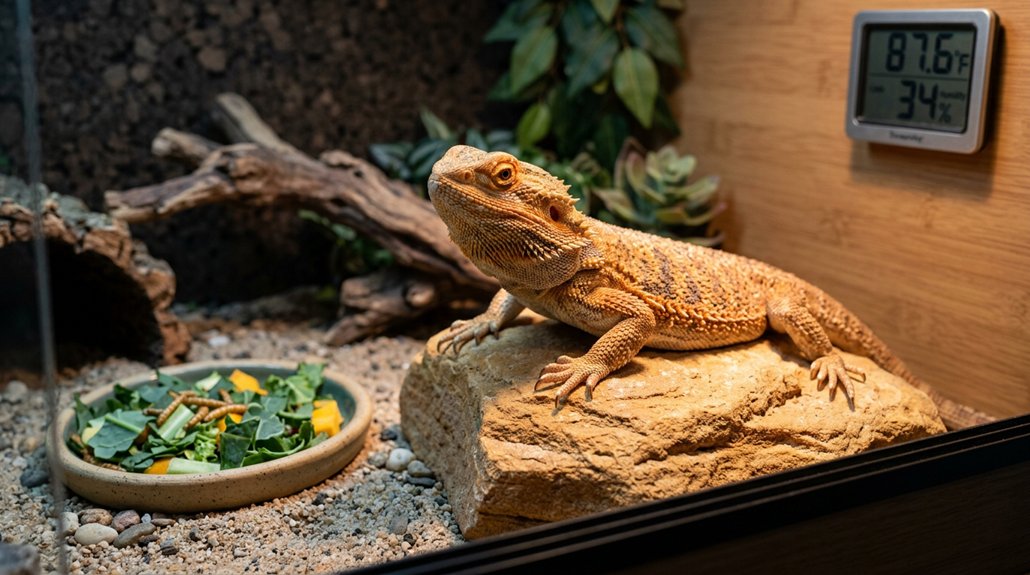
Though bearded dragons often have a hearty appetite, various factors can lead to reduced food intake. Stress from environmental changes, such as a new lighting setup or relocating their tank, can trigger temporary refusal to eat. These reptiles are sensitive to alterations, which can disturb their routine and appetite. Another common cause is shedding discomfort. During shedding, your dragon might experience skin irritation, reducing its desire to consume food. Observing tactile cues, you can assist by providing warm baths to soothe their discomfort and offering softer foods that are easier to chew. Monitoring these situations will help guarantee they return to their regular eating habits once the shedding process completes or environmental stability is restored.
Fixing Husbandry Shortfalls to Encourage Eating
When aiming to enhance your bearded dragon’s eating behavior, attending to husbandry shortcomings is vital. Effective temperature control is important, as basking areas should remain between 95-110°F, with cooler areas at 65-75°F. This range supports digestion and boosts activity levels. Ideal lighting adjustments are equally important; make sure UVB lighting is placed 14-16 inches from the tank surface. Proper UVB exposure aids calcium absorption and prevents metabolic bone disease, which can indirectly affect appetite. Additionally, consider the plant-to-animal ratio in the diet—greens should consist of 75-80% of food intake to maintain nutritional diversity. Finally, check that the enclosure’s size (minimum 40 gallons) and arrangement support a stress-free environment for your dragon’s comfort and mobility.
Spotting Health Issues in Your Bearded Dragon
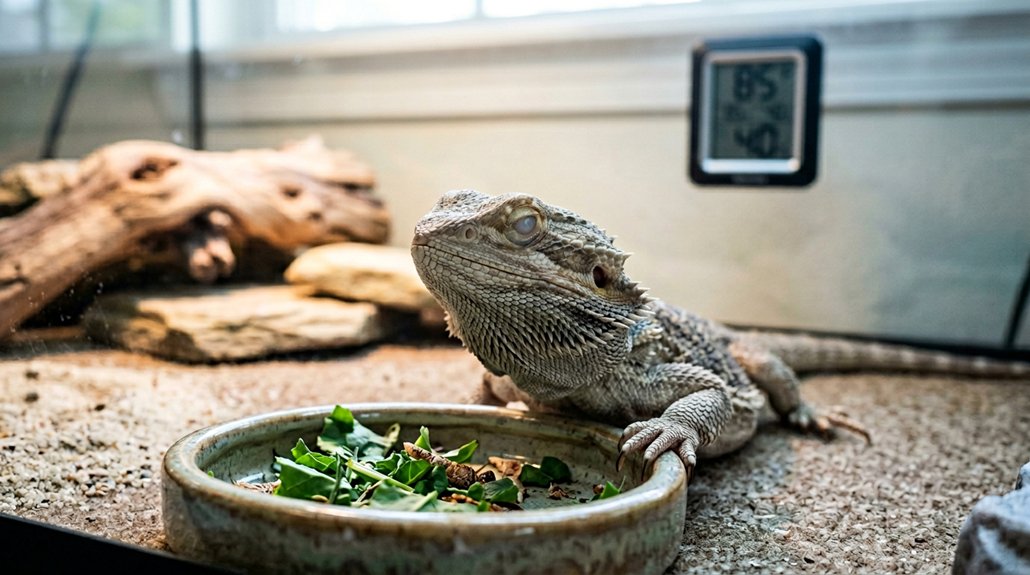
If you’re concerned about your bearded dragon’s health, identifying key symptoms can be vital for addressing potential issues early. Health indicators such as visible weight loss, lethargy, and a thin appearance in the tail and limbs can point to malnutrition or illness. A refusal to eat for more than 3-4 days, especially in juveniles, signals a need for veterinary assessment. Sunken eyes and dehydration are essential diagnostic signs necessitating immediate attention. Monitoring bowel movements—watching for diarrhea or constipation—is imperative, as these irregularities might suggest gastrointestinal problems or impaction. Regular veterinary check-ups help in detecting common ailments like metabolic bone disease or parasitic infections, which severely impact your dragon’s appetite. Early intervention is key to maintaining your pet’s health.
How Stress Impacts Appetite and Ways to Calm Your Dragon
Stress is a significant factor that can drastically affect a bearded dragon’s appetite, often resulting from environmental changes such as tank relocation or modifications in temperature and lighting conditions. Common stress symptoms include reduced food intake, lethargy, and basking avoidance. Overhandling and the presence of multiple dragons in one enclosure can heighten stress, leading to anxiety and territorial disputes. Calming techniques involve maintaining a stable habitat temperature—95-110°F for basking, 65-75°F at night—to reduce environmental stress. Also, consistently use minimal disturbances to foster security. Gentle handling and occasional warm baths are effective in soothing stress, promoting a sense of security, and encouraging appetite recovery. Monitoring and adjusting these factors help guarantee a healthy, stress-free environment for your dragon.
Actionable Steps to Improve Appetite
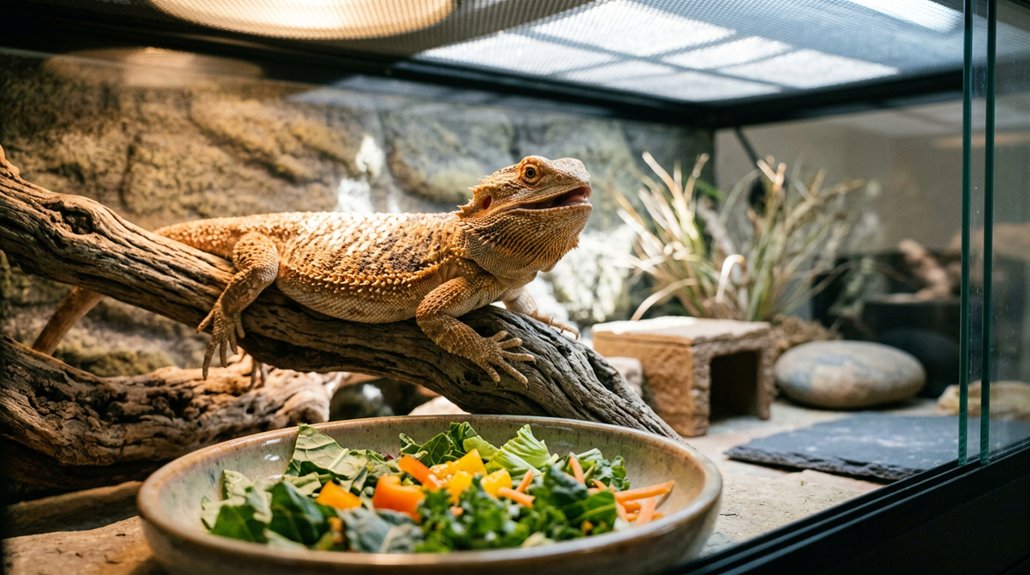
Ensuring your bearded dragon has a robust appetite involves several methodical steps, essential to their overall health and well-being. First, maintain the enclosure’s basking warmth between 95-110°F and cooler nighttime temperatures of 65-75°F to facilitate ideal digestion. Dietary variety is important; offer a mix of fresh greens, vegetables, and protein sources like crickets or dubia roaches to prevent nutritional deficiencies that diminish appetite. Regularly inspect UVB lighting, ensuring it’s 14-16 inches from the habitat for proper calcium absorption, vital to bone health and appetite. Minimize stress by eliminating loud noises and overcrowded conditions. If appetite wanes after 3-4 days, consult a veterinarian to explore potential health issues, including possible infections, parasites, or impaction.
Frequently Asked Questions
What to Do if Your Bearded Dragon Won’t Eat?
If your bearded dragon won’t eat, assess feeding routines and dietary preferences. Verify proper temperature and UVB lighting. Offer diverse food options and monitor their health. Consult a vet if fasting persists beyond 3-4 days or shows lethargy.
How Long Will a Bearded Dragon Go Without Eating?
A healthy adult bearded dragon might go without eating for 7-10 days, but common causes like health issues shouldn’t be ignored. Juveniles need consistent food, while prolonged fasting can lead to significant health complications. Monitor closely.
How to Stimulate a Bearded Dragon to Eat?
Think of enticing your bearded dragon as crafting a culinary masterpiece. Discover its food preferences while observing hiding behavior. Balance gut-loaded insects and fresh greens, ensuring ideal temperature and UVB lighting to rekindle appetite scientifically.
When Should I Worry About My Bearded Dragon Not Eating?
You should worry if your bearded dragon exhibits behavioral changes alongside illness symptoms like dehydration, weight loss, or lethargy. These indicators necessitate veterinary attention to assess potential underlying health issues affecting its eating habits.
Conclusion
Your bearded dragon’s appetite can be as delicate as a carefully balanced ecosystem, reacting to subtle shifts in its environment. Mending husbandry shortfalls is akin to recalibrating this intricate system, and recognizing stress or health issues is like shining a light on hidden shadows. With these insights, you can navigate the labyrinth of care, transforming obstacles into stepping stones. By taking precise action, you’ll nourish both their body and spirit, helping them thrive in a world you’ve crafted just for them.