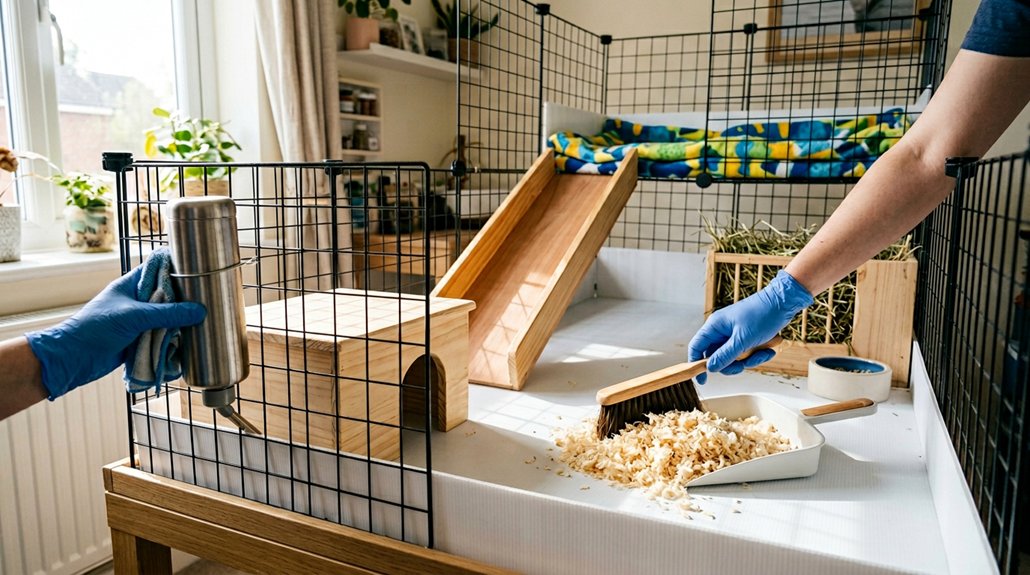
To keep your guinea pig cage clean, spot clean daily by removing soiled bedding, replacing hay, and checking water bottles. Weekly, deep clean by decluttering the cage and disinfecting with a vinegar-water solution. Choose bedding with excellent moisture control like kiln-dried pine or fleece liners. Customize the routine to match your pet’s habits and guarantee their comfort. By doing so, you’ll contribute to your guinea pig’s health and happiness. Discover more for a spotless habitat.
Key Takeaways
- Remove soiled bedding daily and replace it with fresh materials to maintain a clean habitat.
- Use a 1:1 vinegar-water solution weekly for disinfecting the cage effectively.
- Opt for absorbent bedding like kiln-dried pine or fleece to control moisture and odors.
- Check and refresh water bottles daily, ensuring they are full and leak-free.
- Personalize the cleaning routine based on the guinea pig’s habits and the cage setup.
Daily Spot Cleaning for Guinea Pig Hygiene
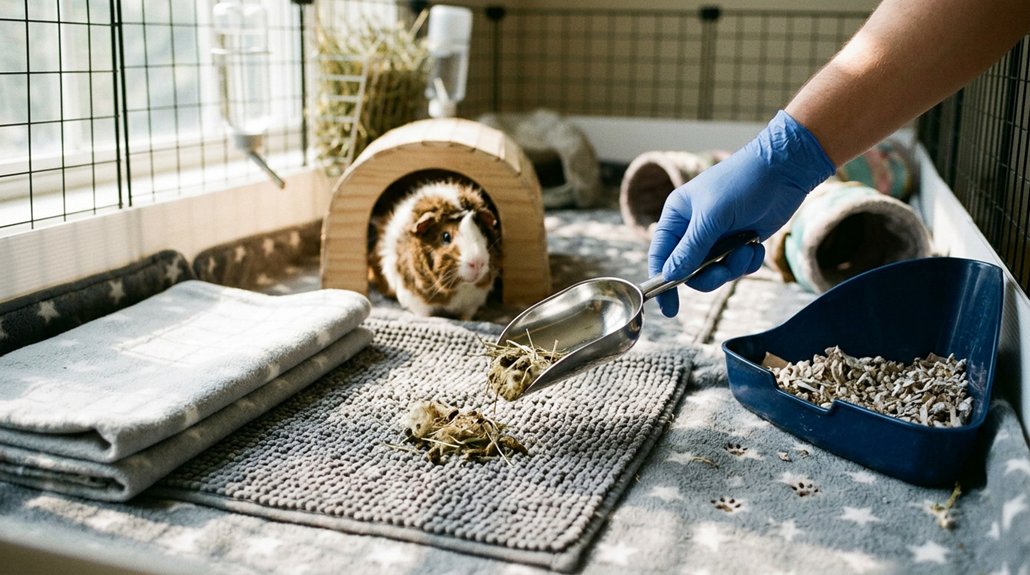
Regularly maintaining a clean environment for your guinea pig is essential for their well-being, and daily spot cleaning plays an integral role in this routine. Effective spot cleaning techniques start with removing soiled bedding and litter using a small food or litter scoop; focus on corners and beneath hiding spots. Replace loose hay with fresh hay to provide a clean food source. Employ a stiff brush and mini dust pan or hand vacuum to pick up stray poos, reducing odors and maintaining cleanliness. Daily checks of water bottles guarantee they’re full and leak-free, critical for your guinea pig’s health. Adding fresh bedding after clearing soiled material not only guarantees a sanitary habitat but also enhances your bond with your pet.
Weekly Deep Cage Cleaning for a Fresh Habitat
While daily spot cleaning keeps your guinea pig’s cage tidy, a weekly deep cleaning guarantees a healthy living space that prevents health issues like respiratory illnesses and bacterial infections. Start by removing hideouts, toys, and hay to declutter the space. For a thorough cage cleaning, mix a 1:1 solution of distilled white vinegar and water. This expertly tackles habitat hygiene by disinfecting and neutralizing odors across the cage and toys. Make sure to rinse well and allow the coroplast base to dry completely before adding bedding. Don’t forget to launder fleece bedding with clear detergent and vinegar for odor control, ensuring it’s dry before you place it back. Regular weekly cleanings only take about 5 minutes, securing a fresh and inviting habitat for your furry friends.
Select Bedding That Maximizes Cleanliness
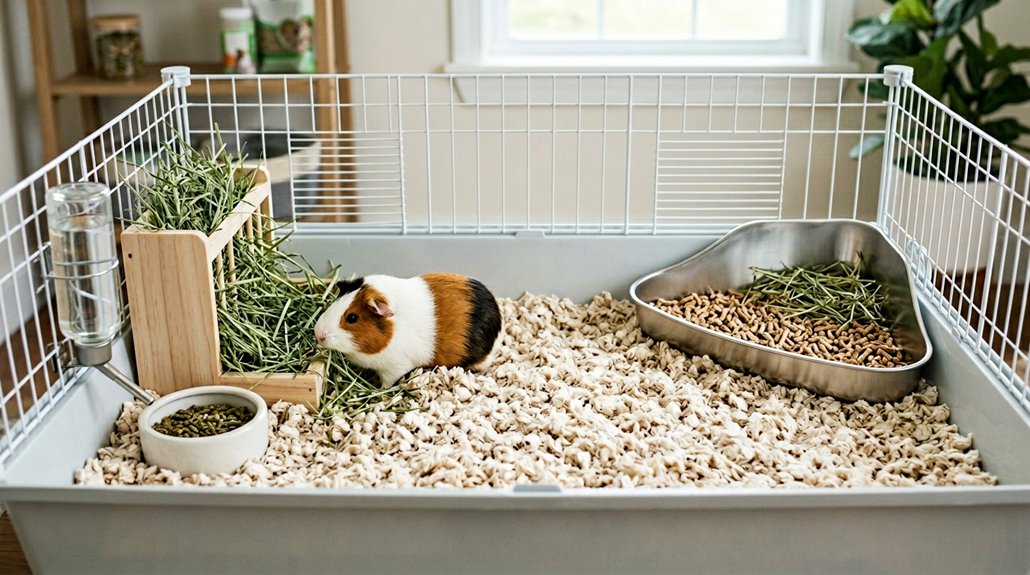
Choosing the right bedding plays a crucial role in maintaining a clean and healthy environment for your guinea pig. When selecting bedding materials, focus on products that provide excellent moisture control. Absorbent options like kiln-dried pine shavings effectively wick moisture away, minimizing odors and boosting hygiene. Fleece liners, being washable and reusable, also make maintenance a breeze while reducing waste. Here’s how:
- Layering: Use approximately 2 inches of bedding over a 1-inch layer of litter for ideal comfort.
- Material Selection: Avoid anything that produces harmful dust or odors—these can cause respiratory issues.
- Guinea Pig Preferences: Consider your guinea pig’s behavior and texture preferences to guarantee they’re comfortable.
Every guinea pig has unique needs, so listen to yours for a happier pet!
Manage Moisture and Odors Efficiently
Maintaining a guinea pig’s habitat involves several key practices, and managing moisture and odors efficiently is one of the most important. Begin with moisture control by regularly checking for damp spots. Excessive moisture can signal cleaning needs and lead to unpleasant odors. Employ absorbent bedding to wick away moisture—ensure it’s about 2 inches over a 1-inch layer of litter. This combination helps manage both moisture and odor elimination. A simple solution for disinfecting surfaces and neutralizing urine odors is a 1:1 mixture of distilled white vinegar and water. Remember to spot clean daily by removing soiled bedding and waste. Also, monitor water bottles for leaks and adjust your guinea pig’s drinking habits, as they can affect moisture levels in the cage.
Personalize Your Routine to Your Guinea Pig’s Needs
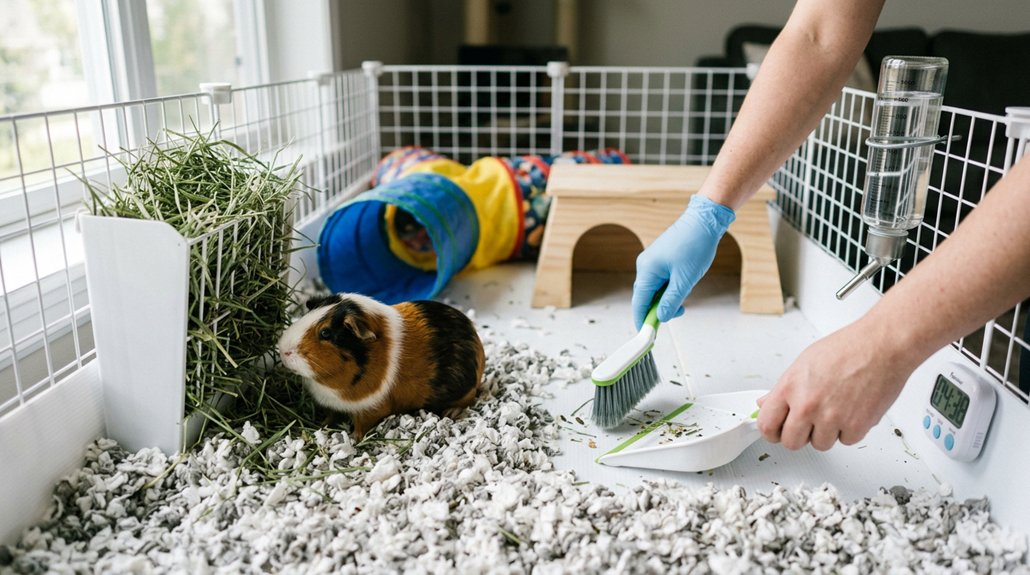
Recognizing that every guinea pig has unique habits and preferences is essential when tailoring your cleaning routine. Pay attention to your guinea pig’s behavior, like urination patterns, which will help determine the cleaning frequency and specific areas requiring extra attention. Here’s how you can personalize your routine:
- Bedding Choice: Choose materials—fleece liners or wood shavings—based on your guinea pig’s comfort needs. Fleece liners might demand more frequent washes.
- Cleaning Schedule: Customize it by the cage size and setup. Larger habitats need less frequent overall cleanings but do daily spot cleaning.
- Safe Environment: During cleaning, observe your guinea pig’s behavior and use a pet-proofed exercise pen to keep them comfortable and stress-free.
Opt for gentle cleaners, like diluted vinegar, ensuring your furry companion’s safety and well-being.
Frequently Asked Questions
What’s the Easiest Way to Clean a Guinea Pig Cage?
Start by establishing a consistent cleaning schedule. For easy cage cleaning, use a mini vacuum for spot cleaning daily. Every week, thoroughly spray and wipe with a vinegar solution, ensuring it’s fully dry before returning your guinea pig.
What Is the Number One Cause of Death in Guinea Pigs?
Imagine a ticking time bomb in the world of guinea pig health. Respiratory illness, fueled by unsanitary conditions, leads to their demise. Guarantee a proper diet, sanitation, and care to keep your furry friend healthy and thriving.
Is Dawn Dish Soap Safe for Guinea Pigs’ Cage?
While Dawn soap isn’t ideal due to its ingredients, occasional use with thorough rinsing is okay. Always prioritize pet-safe products. Maintain a regular cleaning frequency to guarantee your guinea pigs’ health and safety.
Where to Put Guinea Pigs While Cleaning a Cage?
Place your guinea pigs in temporary housing like a pet-proofed exercise pen with a comfy fleece blanket. Keep cleaning supplies handy. Make certain the pen has hideouts, fresh hay, and water for their comfort and safety.
Conclusion
Picture your guinea pig happily scampering around a clean, fresh habitat. With daily spot cleaning and weekly deep cleans, you guarantee their home is pristine and inviting. Choosing the right bedding transforms their cage into a cozy nest, while managing moisture and odors guarantees a pleasant environment. Tailor your routine to your guinea pig’s preferences and watch them thrive, feeling your care through every thoughtful detail. You’re creating not just a home, but a delightful sanctuary for your furry friend.