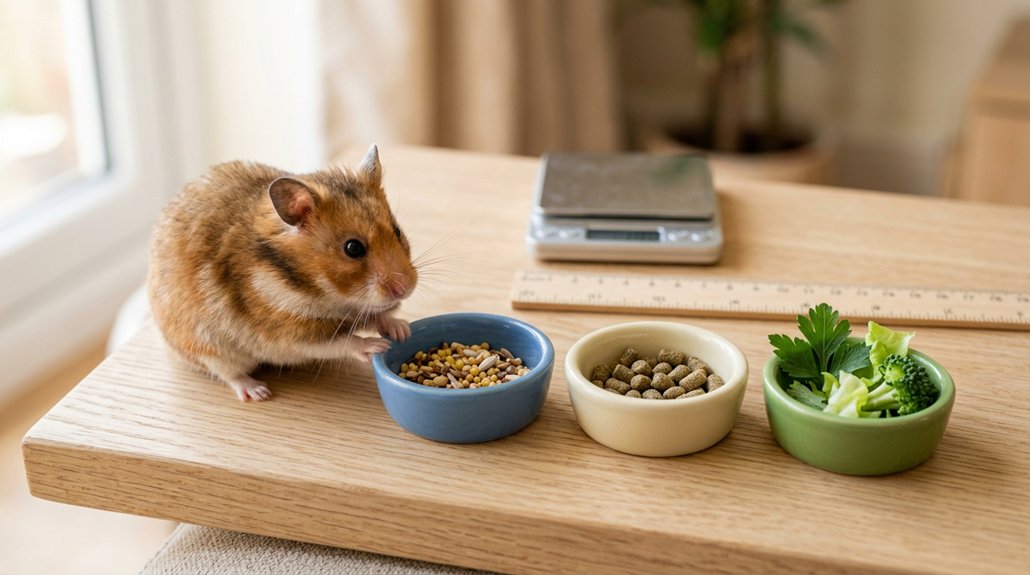
For ideal hamster health, feed 1-2 tablespoons of high-quality commercial mix daily. Syrian hamsters require 1-2 tablespoons, while dwarf hamsters need about 1 tablespoon. Adjust based on your hamster’s species, activity, and health. Include nutrient-rich pellets, diverse seeds, and fresh fruits or vegetables in small amounts weekly. Monitor weight and behavior for signs of overfeeding or deficiency. By exploring further, you’ll discover how to create a balanced, species-specific diet for your hamster.
Key Takeaways
- Syrian hamsters need 1-2 tablespoons of hamster mix daily.
- Dwarf hamsters require approximately 1 tablespoon of hamster mix each day.
- Base the primary diet on high-quality commercial hamster pellets.
- Adjust portion sizes based on the hamster’s activity level and health status.
- Monitor for signs of overfeeding, such as sluggishness or weight gain.
Feeding Needs Based on Hamster Species
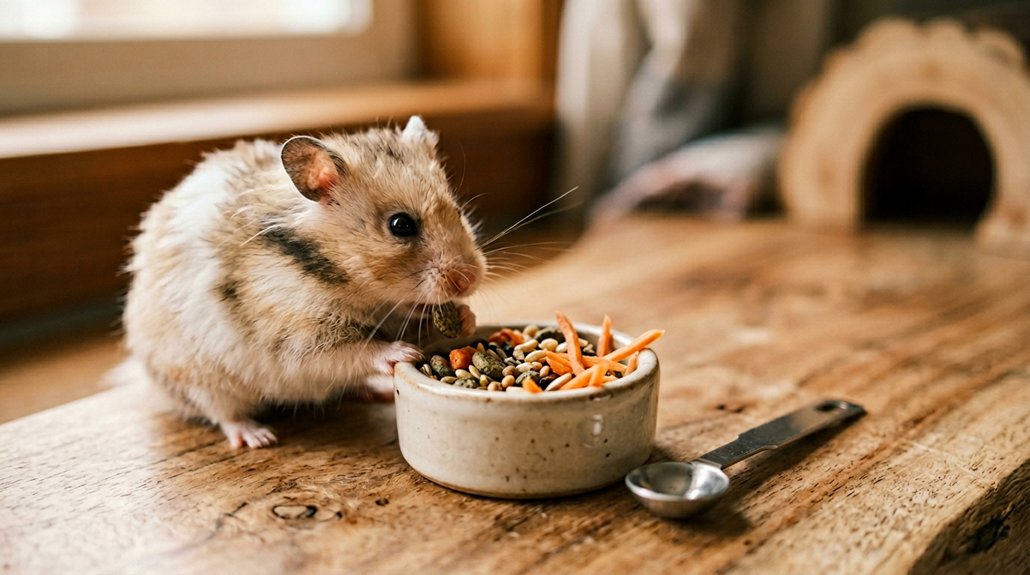
In understanding the specific feeding needs of various hamster species, one must consider size and dietary preferences. Syrian hamsters, being larger, require approximately 1-2 tablespoons of a commercially available hamster mix each day. Conversely, dwarf hamsters need only about 1 tablespoon daily due to their smaller stature. These diminutive creatures, such as dwarf hamsters, often favor small seeds and grains, thriving on diets with nutrient-rich pellet blends. For optimum health management, feeding schedules should align with your hamster’s nocturnal nature, providing meals once or twice daily. Remember to adapt portion sizes based on your hamster’s physical activity and health. Regular monitoring of weight is key to prevent both underfeeding and overfeeding, ensuring your hamster’s weight remains stable and healthy.
Creating a Balanced Diet With Pellets, Seeds, and Fresh Foods
Crafting a balanced diet for your hamster involves a careful blend of high-quality pellets, seeds, and incremental fresh food additions. Start with the pellet selection, choosing commercially available hamster pellets that meet nutritional standards. These pellets form the core of their daily intake, with a serving size ranging between 1-2 tablespoons. Complement this with a seed variety, ensuring a mix that provides diverse nutrients without leaning on high-fat content. Fresh foods, like fruits and vegetables, should be introduced periodically, adding essential vitamins. Supplement with protein sources, such as boiled egg whites or mealworms, weekly. Regularly monitor your hamster’s weight and demeanor to fine-tune the balance, steering clear of sugary treats that might lead to obesity or other health issues.
Preventing Overfeeding in Hamsters
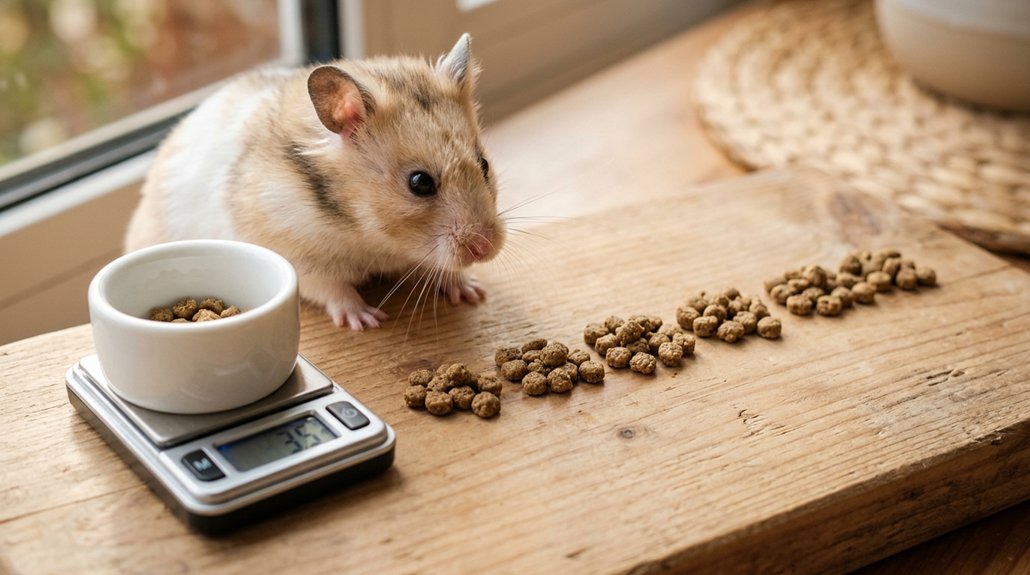
Avoiding overfeeding in hamsters requires careful portion control and attention to detail. Begin by serving 1 to 2 tablespoons of commercial hamster mix daily. Keep an eye on your hamster’s activity levels as indicators of health; sluggishness can suggest obesity from overeating. It’s important to not leave surplus food sitting around, as stale food won’t be consumed and can spoil.
Encourage a balanced diet by offering small portions of fresh fruits and vegetables several times a week. Regularly weigh your hamster to keep track of weight fluctuations and adjust portions if necessary. Monitoring behavior and weight helps maintain ideal health.
| Key Aspect | Recommendation |
|---|---|
| Daily Mix | 1-2 tablespoons |
| Fresh Produce | Small portions weekly |
| Indications of Obesity | Sluggishness, lack of activity |
| Portion Control | Avoid leaving excess food in the cage |
| Regular Monitoring | Weigh regularly for health assessment |
Timing Your Hamster’s Meals for Health
Although hamsters are adaptable creatures, timing their meals appropriately plays a vital role in ensuring their health and well-being. Due to their nocturnal habits, it’s best to align meal timing with their active periods. Feeding them once or twice daily, specifically in the evening, complements their natural behavior and helps prevent nutritional imbalances. Aim for portion sizes of 1 to 2 tablespoons of hamster mix per feeding to minimize overeating risks.
Introduce fresh fruits and vegetables into their diet several times a week in small quantities to supply essential nutrients. A consistent feeding schedule is important, as deviations can induce anxiety and disrupt feeding patterns. Remember to monitor their food intake closely and remove any spoiled food daily, promoting cleanliness and health.
Spotting Diet-Related Issues in Hamsters

How can one guarantee a hamster’s diet isn’t leading to health issues? Start by monitoring for signs of dietary deficiencies and behavioral changes. Identify potential problems through:
- Excessive lethargy or weight gain: This may suggest overfeeding or an unbalanced diet, necessitating a review of portion sizes.
- Fur loss or poor coat quality: These indicate a lack of essential nutrients like protein and vitamins.
- Increased aggression or behavioral changes: Often a response to dietary stress from inconsistent feeding schedules or lack of dietary variety.
- Abnormal droppings: Changes in size or consistency might signal too many fresh vegetables or insufficient fiber.
Regular monitoring of these symptoms can ascertain a balanced diet, preventing diet-related health issues in hamsters.
Frequently Asked Questions
How Much Should a Hamster Eat Every Day?
You should feed your hamster 1-2 tablespoons of high-quality mix daily, establishing a consistent evening feeding schedule to promote well-being. Include small, monitored portions of fruits and vegetables weekly, ensuring uneaten food is discarded after 24 hours.
Can Hamsters Hear You?
Yes, hamsters can hear you. Their auditory sensitivity surpasses that of humans, detecting high-frequency sounds. While they might not recognize your individual voice, consistent sounds help them become familiar, promoting comfort and reassurance in their environment.
What Color Calms Hamsters?
Imagine the soothing embrace of tranquil waters; blue, green, and purple are calming colors for hamsters, reducing stress by softening visual stimuli. With expert precision, these hues create a serene and reassuring environment for your pet.
Can Hamsters Go 2 Days Without Food?
No, hamsters shouldn’t go 2 days without food. Their rapid metabolism and inclination for food storage mean prolonged hunger can lead to hypoglycemia and organ damage. Monitor food access to prevent unnecessary stress and health complications.
Conclusion
Feeding your hamster is like fine-tuning a delicate instrument. Just as a musician knows their notes, you should understand your hamster’s unique dietary needs. For instance, Roborovski hamsters, being smaller, require only about a teaspoon of food daily. By offering a balanced mix of pellets, seeds, and fresh veggies while avoiding overfeeding, you guarantee a harmonious life tune. Watch for any dietary discord, like weight gain or lethargy, as these signal it’s time to adjust your care.