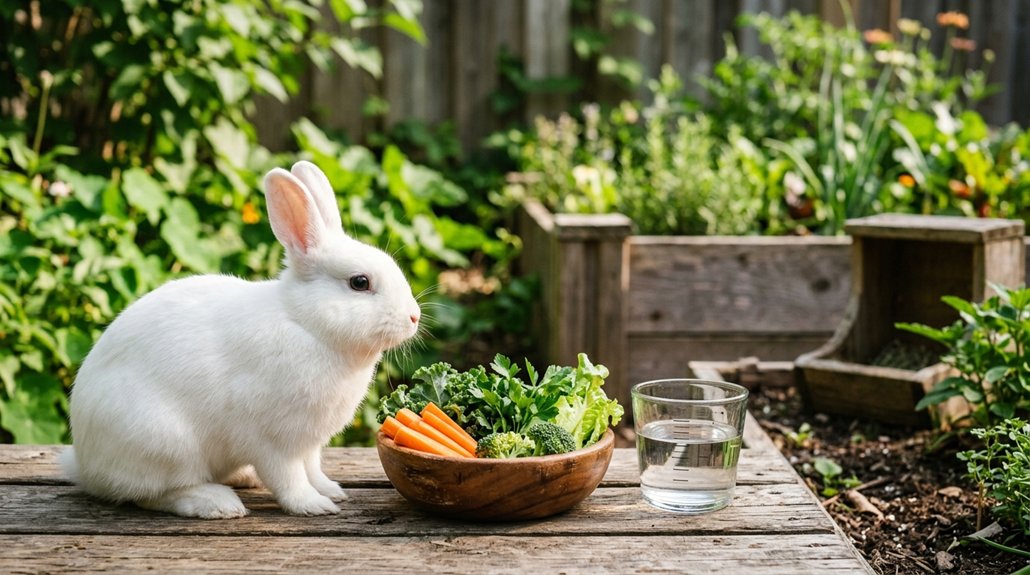
To guarantee your rabbit’s well-being, give them a balanced diet mainly composed of hay, which should be 80-90% of their intake. Fresh vegetables should be offered at 2 cups per 6 pounds of body weight daily, while pellets should be measured carefully: 1/8 cup for rabbits weighing 2-4 pounds, up to 3/4 cup for those weighing 11-15 pounds. Fresh, clean water must always be available. There’s more to explore about crafting an ideal diet for your rabbit.
Key Takeaways
- Approximately 85% of a rabbit’s diet should consist of high-quality hay, such as Timothy or orchard grass.
- Provide 1-2 tablespoons of fresh greens per 5 pounds of body weight, ensuring a variety of 5-6 types for nutrients.
- Measure rabbit pellets precisely; for example, 1/8 cup for 2-4 pounds and 1/4 cup for 5-7 pounds.
- Limit fruits and treats to 1-2 tablespoons weekly per 6 pounds, ensuring they account for only 5% of the diet.
- Ensure unlimited access to fresh water, regularly monitoring eating habits and droppings for signs of health issues.
Why a Balanced Rabbit Diet Matters
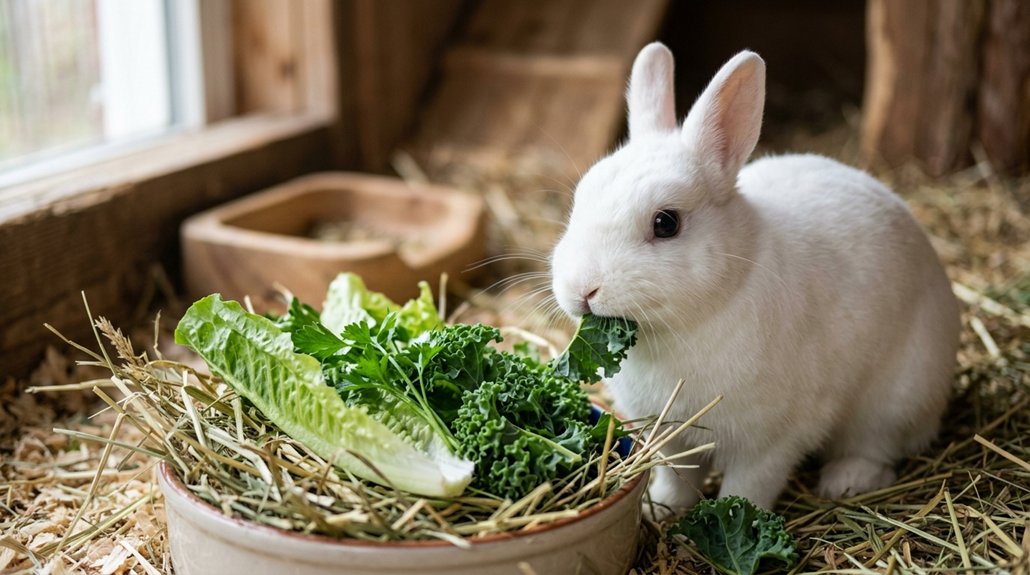
When it comes to maintaining your rabbit’s health, a balanced diet is vital, as it directly impacts their digestive system and overall well-being. The importance of fiber in their diet can’t be overstated. A diet of approximately 85% hay helps maintain normal digestion and a healthy gut flora. Additionally, fiber prevents obesity and supports dental health, as rabbits need to grind food down with their constantly growing teeth. Without enough fiber, rabbits risk nutritional deficiencies and dental issues.
Rabbits also have specific dietary needs that include fresh leafy greens and limited pellets—both important for weight management. Consistent meal frequency guarantees steady energy levels without overfeeding. For ideal health, balance these elements while providing access to fresh water to support digestion.
Hay: The Backbone of Your Rabbit’s Diet
Providing your rabbit with unlimited access to fresh, high-quality hay is essential, as this constitutes 80-90% of their diet and supports their digestive health. It’s important to store hay properly, keeping it in a cool, dry place and offering it in long, loose strands to encourage natural eating habits. By ensuring the hay is free of mold and dust, you’re protecting your rabbit from potential health issues and promoting their overall well-being.
Unlimited Fresh Hay Daily
Unlimited access to fresh hay is essential for your rabbit’s health, comprising about 80-90% of its diet. This high hay consumption supports the rabbit’s natural grazing behavior, helping it mimic the foraging habits seen in the wild. Opt for high-fiber hay, like Timothy or orchard grass, to prevent gastrointestinal problems and promote dental health through natural chewing. Store the hay in a cool, dry environment to preserve freshness and prevent mold or dust, which could be harmful. While alfalfa is suitable for young rabbits, adult rabbits should stick to grass varieties due to alfalfa’s high calcium content. Providing loose strands, rather than cubes, encourages a more authentic grazing experience, integral for proper nutrition and overall well-being.
Essential for Digestive Health
Digestive health is paramount for ensuring your rabbit’s longevity and well-being, with hay forming the cornerstone of their diet. Comprising approximately 85% of their consumption, hay is packed with fiber benefits vital for preventing digestive issues like gut stasis. Offering unlimited access to high-quality grass hay, such as Timothy or orchard grass, provides long-stemmed fibers. These fibers are essential in aiding normal digestion and maintaining your rabbit’s dental health by naturally wearing down teeth. A consistent supply, at least equal to your rabbit’s body size, is advised daily. Clipped fresh grass poses less risk if fed immediately. Always check hay for mold and dust to avoid health complications, ensuring that your rabbit remains in peak health.
Optimal Storage Practices
Proper storage of hay is vital to safeguard its quality, guaranteeing your rabbit’s diet remains nutritious and safe. Achieving ideal hay storage involves a few straightforward practices. First, store hay in a cool, dry place with adequate airflow. This prevents mold growth and maintains freshness. It’s important to regularly check hay for any dampness or unpleasant odors, discarding compromised hay to avert digestive issues. Providing long, loose strands of high-quality grass hay, such as Timothy or orchard grass, is essential for maintaining the required fiber intake.
Key elements of ideal hay storage include:
- Cool, dry environment: Reduces moisture and mold risk.
- Adequate airflow: Secures ventilation and freshness.
- Regular monitoring: Detects and removes damp or odorous hay.
Choose the Best Type of Hay for Your Rabbit
When selecting hay for your rabbit, prioritize types such as Timothy, orchard grass, brome, and oat hay, all of which supply essential long-stemmed fiber vital for digestion. Remember that hay must be stored properly in a cool, dry area with good airflow to maintain its quality and prevent health issues caused by damp or foul-smelling hay. Utilizing hay baskets or racks encourages the consumption of longer strands, supporting natural foraging behavior and dental health.
Essential Hay Varieties
An essential component of a rabbit’s diet is grass hay, with varieties like Timothy, orchard, and brome being the most beneficial for your furry friend. Each hay variety offers specific benefits, enhancing your rabbit’s diet with varied textures vital for dental and digestive health. Rabbits thrive on the constant chewing these textures provide, aiding in proper tooth wear and efficient digestion.
- Timothy Hay: Known for its balanced protein and fiber, suitable for daily feeding.
- Orchard Hay: Softer texture with a sweet aroma, enticing for picky eaters.
- Brome Hay: Coarser texture stimulates chewing and maintains dental health.
It’s important to monitor the freshness of the hay, ensuring it remains dry and free from mold or bad odors to prevent health issues.
Proper Hay Storage
To guarantee the longevity and quality of hay, storing it in a cool, dry place with adequate airflow is essential. Proper hay preservation techniques, including ensuring effective airflow, prevent mold growth and maintain nutritional value. Opt for grass hay varieties like Timothy, orchard grass, or brome hay for your adult rabbit, as these are high in fiber, promoting digestive health. It’s important to avoid compressed hay cubes due to their unsuitability for rabbit diets. Always inspect the hay, discarding any that is damp or has a bad odor, as poor quality hay can lead to health issues. Using hay baskets or racks helps keep hay clean and accessible, effectively encouraging natural grazing behaviors in rabbits.
How to Add Fresh Greens to Your Rabbit’s Diet Safely
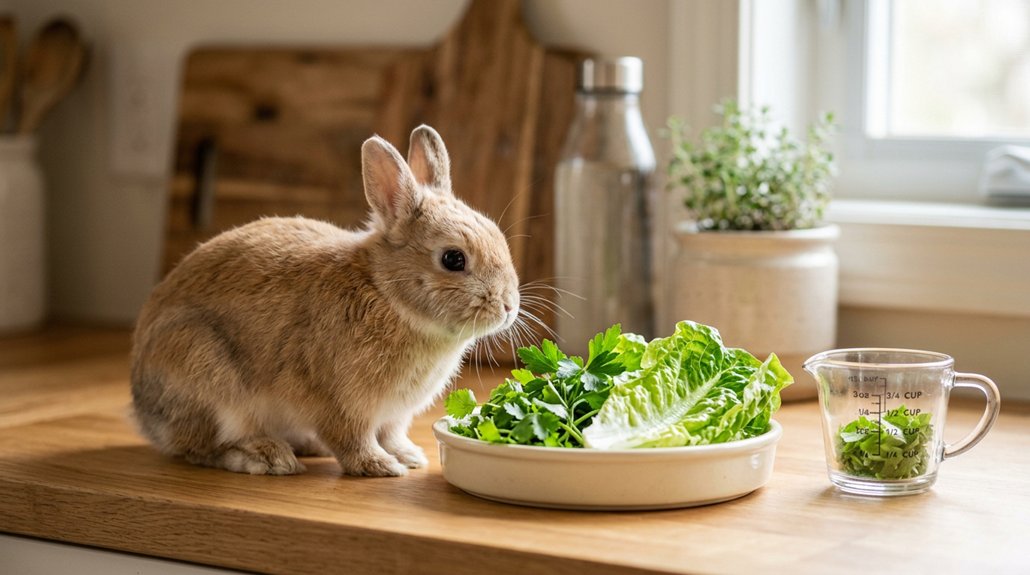
Although introducing fresh greens into your rabbit’s diet is beneficial, it requires careful consideration to assure their safety and well-being. Begin with small portions, such as 1-2 tablespoons for every 5 pounds of body weight daily. Slowly integrating fresh greens helps prevent digestive upset. Nutritional variety is essential, so aim to provide 5-6 types of leafy greens daily. This assures diverse nutrient intake and promotes balanced health. Always wash greens thoroughly to remove pesticides or contaminants. It’s advisable to monitor your rabbit’s droppings for any signs of gastrointestinal distress indicating potential intolerance.
Start with small portions of fresh greens to ensure your rabbit’s safety and promote balanced health through diverse nutrients.
- Recommended greens: kale, collard greens, dandelion greens, broccoli
- Avoid: iceberg lettuce and cabbage due to low nutritional value
- Gradual introduction: prevents digestive upset and assures safety
Measuring Rabbit Pellets Made Simple
Accurate measurement of rabbit pellets is essential for maintaining your pet’s health and preventing obesity. Start by using a standard measuring cup for precise pellet measuring, adhering strictly to feeding guidelines tailored to your rabbit’s weight. Adult rabbits weighing 2-4 pounds should receive 1/8 cup, while those between 5-7 pounds need 1/4 cup. If your rabbit weighs 8-10 pounds, provide 1/2 cup, and offer 3/4 cup if they are between 11-15 pounds. Guarantee pellets are fresh, and choose high-quality options with a minimum of 18% fiber, steering clear of pellets containing corn, nuts, or seeds. Following these precise measurements and selecting nutrient-rich pellets will optimize your rabbit’s diet while minimizing the risk of overfeeding and related health issues.
Identify Safe Treats for Your Rabbit
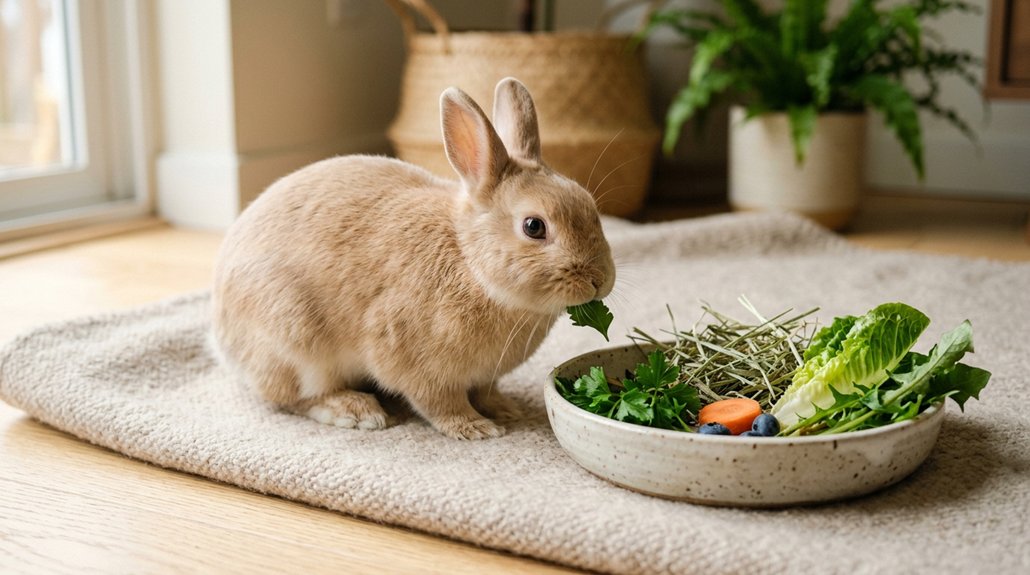
When considering what treats are safe for your rabbit, it’s important to prioritize their health over indulgence. Safe veggie options include small portions of fresh veggies and herbs like carrot tops, basil, and parsley—guarantee moderation to prevent obesity. Adhere to fruit treat guidelines by offering fruits just 1-2 times weekly, limiting it to 1-2 tablespoons per 6 pounds of body weight. Opt for healthier choices, such as strawberries and apples, to maintain digestive health. Keep treats to about 5% of their diet, complementing hay, fresh greens, and pellets.
- Avoid sugary or processed human foods: These can harm your rabbit’s digestive system.
- Carefully choose store-bought treats: Select products free from added sugars and artificial ingredients.
- Review ingredient lists: Confirm quality and safety in your rabbit’s treats.
Ensure Unlimited Access to Water
To support the health and well-being of your rabbit, it’s essential to provide constant access to fresh, clean water. Make certain that you change the water daily and choose a heavy bowl rather than a bottle to make drinking easier. Regularly check for contamination and monitor the water supply, particularly in cold weather, to prevent freezing and maintain proper hydration.
Daily Water Accessibility
Although it might seem obvious, guaranteeing your rabbit has unlimited access to fresh, clean water is essential for their hydration and overall health. Rabbits need water sources that are easily accessible, such as sturdy bowls, to prevent dehydration—a potential cause of serious health issues. Pay attention to hydration signs like decreased activity or dry feces, indicating an imbalance. It’s important to monitor the water supply more frequently in cold weather to prevent freezing. By providing constant water availability, you support your rabbit’s well-being.
- Bowl Placement: Place bowls at a comfortable height to guarantee effortless drinking.
- Material Matters: Choose heavy ceramic bowls to prevent tipping.
- Thawing Needs: Regular checks in winter to guarantee water isn’t frozen.
Keeping water readily available can safeguard your rabbit’s health.
Freshness and Cleanliness
Ensuring your rabbit always has fresh and clean water is vital for maintaining their hydration and overall well-being. Providing water in a clean bowl aligns with their natural bowl preference, offering easier access than the typical bottle alternative. It’s important to change the water daily to uphold the highest standards of hygiene and to avoid bacterial contamination. Water temperature should also be monitored closely, especially in cold climates. Frequent checks are necessary to prevent freezing, ensuring that your rabbit doesn’t inadvertently become dehydrated. Additionally, the bowl should be thoroughly cleaned every few days to avert bacterial proliferation. Monitoring consumption is essential as any sudden decrease might indicate underlying health issues, necessitating prompt veterinary evaluation. Therefore, consistent diligence is key.
Monitor Your Rabbit’s Eating Habits
When monitoring your rabbit’s eating habits, it’s vital to pay close attention to their droppings and weight. Droppings are primary health indicators; any alteration in size or consistency could signify digestive issues. Equally important is observing your rabbit’s weight; fluctuating patterns may suggest they’re not adhering to healthy eating habits. Make sure they’re consuming at least 2 cups of fresh vegetables per 6 pounds of body weight daily, adapting portions to their specific eating patterns and needs.
Monitor rabbit droppings and weight; changes signal dietary issues. Provide 2 cups of vegetables per 6 pounds daily.
- Observe if they’re grazing throughout the day, avoiding excessive pellet consumption.
- Notice any refusal in eating hay, indicating potential health problems needing veterinary consultation.
- Assess their droppings for changes as they reflect the rabbit’s digestive health, revealing dietary concerns.
Shift Your Rabbit to a Healthier Diet Gradually
After carefully monitoring your rabbit’s eating habits, moving towards a healthier diet requires thoughtful planning. Start by gradually introducing vegetables such as fresh leafy greens alongside their current feed. Adjust quantities progressively over one to two weeks to avoid digestive upset. It’s essential to observe reactions and watch for changes in your rabbit’s droppings to guarantee they’re digesting the new foods properly. Avoid making sudden changes in pellet types or brands; mix old and new pellets to ease the shift. Focus on your rabbit’s dietary preferences and adjust the proportions accordingly. Utilize meal timing and portion control to balance the diet effectively. Finally, maintain regular health monitoring, and consult a veterinarian for tailored advice to support your rabbit’s dietary change.
Recognizing When Your Rabbit Needs a Vet’s Diet Advice
How do you know when your rabbit’s dietary needs require expert attention? Monitoring dietary signs and rabbit behavior is key to ensuring their health. If your rabbit shows reluctance to eat or stops eating altogether, this could signal gut stasis, demanding immediate veterinary advice. Changes in your rabbit’s droppings, such as stickiness or reduced quantity, may suggest digestive distress, necessitating professional evaluation.
- Weight fluctuations: Sudden weight loss or gain can indicate dietary issues needing vet consultation.
- Hay aversion: A reluctance to eat hay can signify dental problems, requiring diet assessment.
- Dietary adjustment discomfort: Observing distress during dietary changes suggests the need for tailored guidance from a vet.
Addressing these signs early helps prevent serious health problems.
Frequently Asked Questions
What Is the 3-3-3 Rule for Bunnies?
The 3-3-3 rule optimizes bunny nutrition by advising three types of hay, leafy greens, and pellets in a structured feeding schedule. Stick to these proportions to prevent dietary imbalances, ensuring your rabbit’s health and well-being.
Do Rabbits Need to Be Fed Every Day?
Absolutely, rabbits need daily feeding to guarantee proper rabbit nutrition. Just like nourishing knights of old, they require daily hay, leafy greens, and limited pellets. This regimen supports their health and keeps them hopping happily.
How Do You Say “I Love You” in Rabbit Language?
You say “I love you” in rabbit language through attentive observations of rabbit communication and affection gestures, such as gentle nuzzles, excited following, relaxed postures, and grooming. Understanding these signs strengthens your bond and reflects mutual affection.
Do Rabbits Stop Eating When They Are Full?
Imagine Oliver, a well-fed rabbit, demonstrating that rabbits may not stop eating when full due to their grazing instincts. You’re unlikely to see obvious hunger signals, so monitor their hay intake to guarantee balanced nutrition.
Conclusion
Ensuring your rabbit receives a balanced diet is essential for its health and happiness. Like the beating heart of nature, hay should form the core of their diet, complemented by fresh greens and measured pellets. Always provide unlimited water and keep a watchful eye on their eating habits. Shift dietary changes gradually, and when in doubt, consult a vet. By doing so, you’ll be paving the path for your rabbit’s thriving, energetic life.