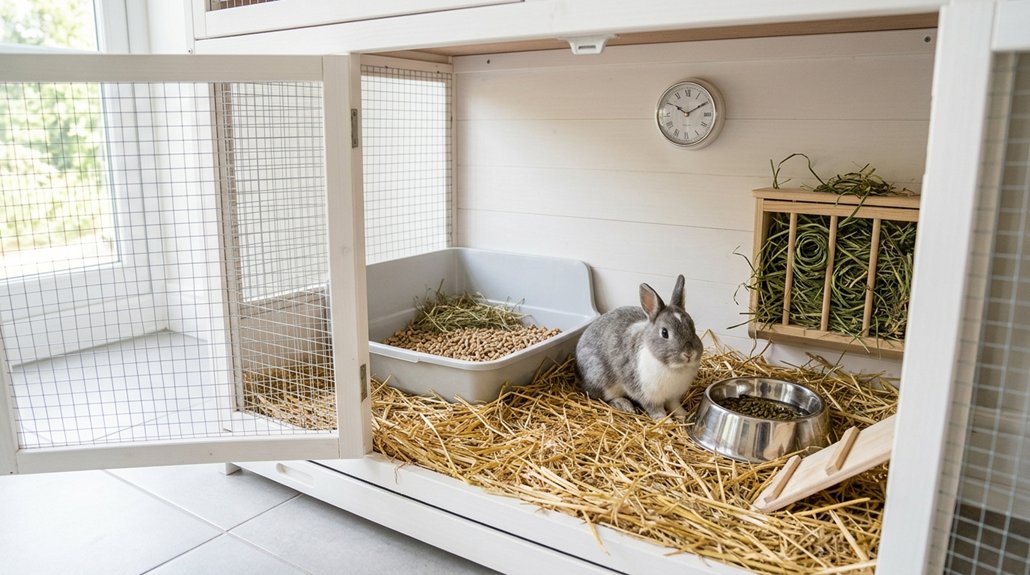
You should clean your rabbit’s living space daily and weekly, adjusting for breed, age, and season. Daily spot cleaning removes uneaten food, changes water, and scoops litter to control odors and bacteria. Weekly deep cleaning involves disinfecting surfaces and ensuring all bedding is fresh, especially in warmer months to prevent flystrike. Larger breeds may need more frequent cleanings due to increased waste. Understanding these practices can greatly enhance your rabbit’s health and hygiene journey.
Key Takeaways
- Clean litter trays daily to manage odor and control parasites.
- Spot-clean stray droppings and uneaten food every day to maintain hygiene.
- Perform a weekly deep clean, scrubbing and disinfecting surfaces.
- Increase cleaning frequency during warmer months to prevent flystrike.
- Use pet-safe disinfectants and natural cleaners for rabbit safety.
Why a Clean Living Space Is Essential for Rabbit Health
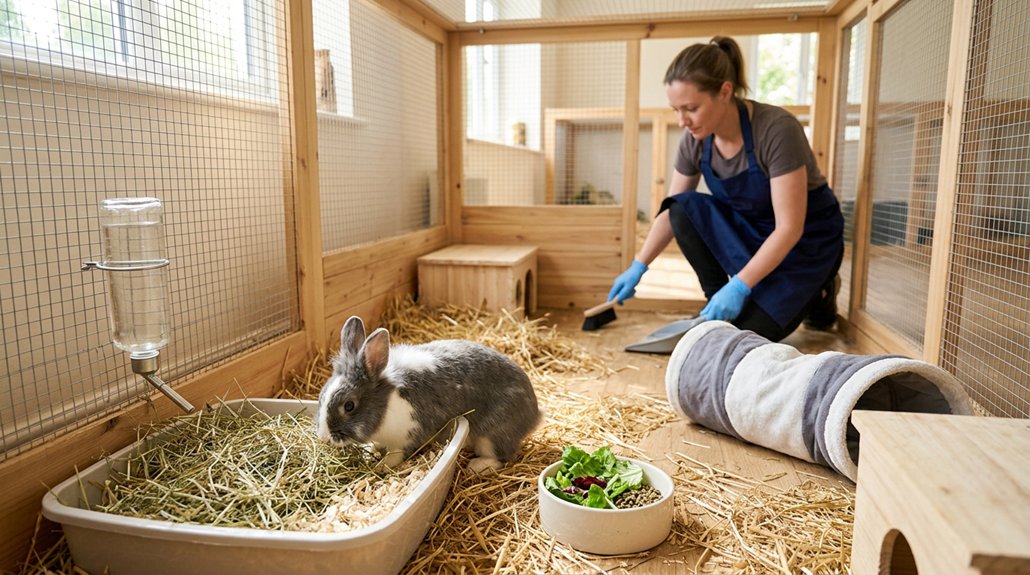
Maintaining a clean living space is essential for a rabbit’s health because it minimizes the risk of diseases like flystrike, a condition exacerbated by accumulated soiled bedding. Effective hygiene practices facilitate not only the prevention of flystrike but also reduce harmful bacteria and mold, which can compromise your rabbit’s wellbeing. Rabbits exhibit specific behaviors that favor cleanliness, including using designated toilet areas. Ensuring these spots are clean supports their natural instincts and promotes a stress-free environment. Implementing daily spot cleaning and thorough weekly sessions addresses common issues such as odor and parasite control. Neglecting these hygiene practices can lead to stress and discomfort, negatively impacting rabbit behavior and overall health. Therefore, a clean habitat is fundamental to nurturing healthy, happy rabbits.
Tailoring Cleaning Practices to Your Rabbit’s Breed and Age
Tailoring cleaning practices to fit your rabbit’s breed and age involves understanding specific needs for hygiene and comfort. Young rabbits necessitate more frequent bedding changes to prevent disruption, while larger breeds might require extended litter training periods, necessitating regular cleaning to maintain a fresh environment. Miniature breeds and highly active rabbits demand more strategic space management and frequent cleanings, ensuring their living area supports healthy habits and minimizes odor concerns.
Breed-Specific Cleaning Needs
As you care for your rabbit, understanding its breed-specific needs can greatly enhance the cleaning routine you implement in its living space. Larger breeds like Flemish Giants demand frequent cleaning due to increased waste production. Their living areas may require spot cleans more often and thorough cleaning for peak hygiene. Smaller breeds, such as Netherland Dwarfs, produce less waste, yet maintaining consistent cleaning practices aligned with their breed-specific habits will guarantee a clean environment. Rabbits with longer fur, such as Angoras, need additional attention to manage fur shedding and prevent matting. By observing your rabbit’s habits, you can strategically place litter trays and toilet areas, easing maintenance tasks.
“`markdown
| Breed | Cleaning Frequency | Specific Needs |
|---|---|---|
| Flemish Giant | Frequent | More waste management |
| Netherland Dwarf | Consistent | Litter habits |
| Angora | Extra cleaning | Fur shedding/matting |
| Dutch | Regular | Balanced cleaning |
| English Lop | Moderate | Ear cleaning |
“`
Age-Appropriate Cleaning Routine
Consider both breed-specific needs and age when creating a cleaning routine for your rabbit’s living space. Young rabbits, more prone to health issues such as flystrike, necessitate daily bedding changes due to their higher waste production. This guarantees ideal hygiene and potential disease prevention. As rabbits mature, cleaning frequencies can decrease; adult rabbits typically require full cleanings once or twice a week. However, daily spot checks are essential for managing soiled bedding and uneaten food. During hot weather, adjust cleaning frequencies to combat fly-related hazards. Larger breeds, in particular, may need increased cleaning due to their size and litter production. A consistent, tailored approach addresses specific needs, promoting a sanitary environment and reducing risks of odors and disease.
Easy Daily Spot Cleaning Tips
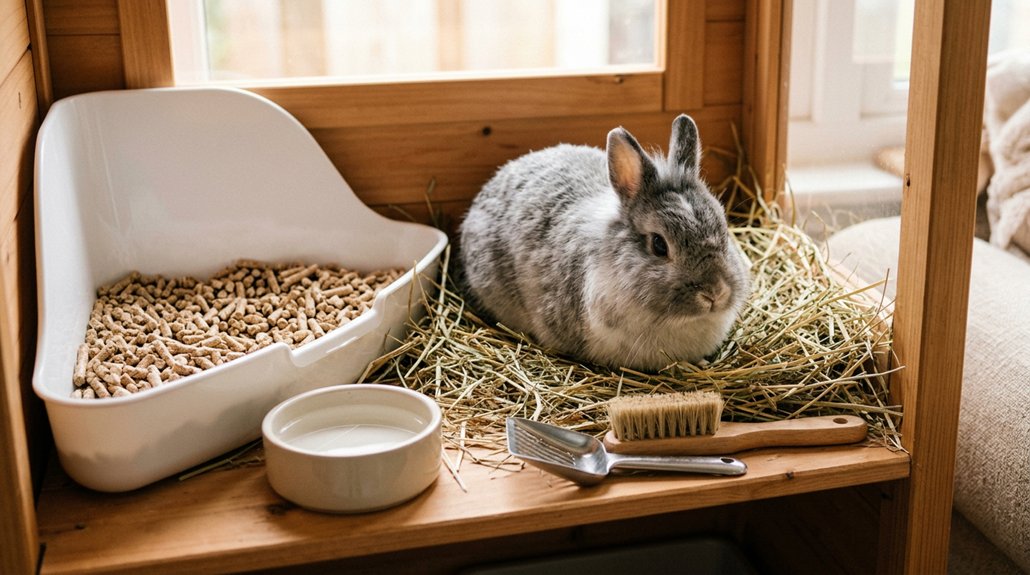
To guarantee your rabbit’s living space remains clean, adopting a few quick daily spot cleaning techniques is essential. Understanding rabbit behavior and cleaning frequency allows for a well-maintained habitat. Start by removing any uneaten or spoiled food and soiled hay or pellets each day. This prevents odor buildup and maintains a cleaner environment. Next, inspect and refill their water bottle, providing fresh, clean water at all times. Regularly scoop out the litter tray to control odors and limit parasite growth, especially when temperatures rise. Spot-clean any stray droppings and debris throughout the living space. Establishing this brief daily routine helps you become familiar with your rabbit’s habits, making it easier to notice any sudden changes in behavior or health.
How to Deep Clean Your Rabbit’s Hutch Each Week
To guarantee a thorough weekly deep clean of your rabbit’s hutch, start by gathering necessary materials, such as a pet-safe disinfectant, a brush, a scraper or spatula, and warm water. Methodically remove all soiled bedding, leftover food, and waste, and apply the disinfectant to every surface and corner, scrubbing to eliminate grime and bacteria. Once cleaned, rinse thoroughly with warm water to remove any cleaning agents, then allow the hutch to air dry completely before setting up fresh bedding and returning your rabbit.
Essential Cleaning Materials
Deep cleaning your rabbit’s hutch each week requires several essential materials to guarantee a safe and hygienic environment for your pet. Start with a high-quality, pet-safe disinfectant from the pet store, vital for effective disinfecting techniques against bacteria while ensuring your rabbit’s safety. Remove all soiled bedding, replacing it with fresh bedding to uphold cleaning frequency standards. Use a durable sponge for scrubbing the interior and exterior, meticulously rinsing off all residues with warm water, important to prevent potential harm to your rabbit. A final necessary step is allowing the hutch to air dry entirely, as lingering moisture can lead to mold buildup. Regularly inspect your rabbit’s enclosure, maintaining vigilance for any signs of dirt, thereby ensuring continuous cleanliness and comfort.
Step-by-Step Process
As you prepare to deep clean your rabbit’s hutch each week, begin by safeguarding your furry friend by moving them to a pet carrier or their run to secure their comfort and safety. Next, remove all items like bedding, food bowls, and toys to access every hutch surface. Dispose of soiled bedding and waste using underlying newspaper for easy cleanup. Clean the hutch thoroughly using a pet-safe disinfectant and a sponge. Rinse all surfaces with warm water to make certain that no residues are left behind. Allowing the hutch to air dry provides a safe environment for your rabbit. Once dry, reintroduce your rabbit, incorporating fresh bedding and enrichment activities, which serve as bonding techniques while enhancing your rabbit’s environment.
Adapting Your Cleaning Routine as Seasons Change
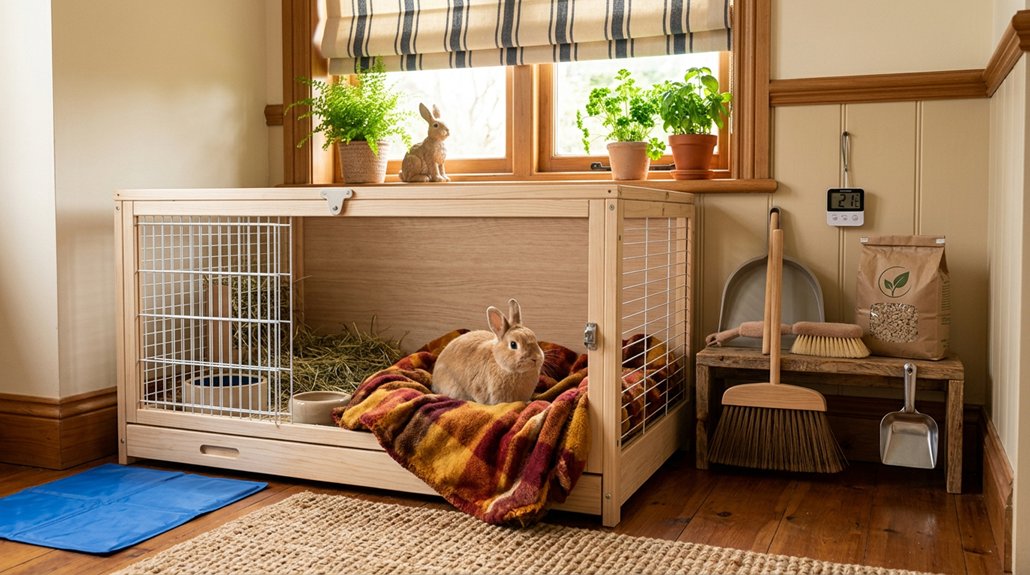
When the seasons shift, it’s crucial to adjust your cleaning routine based on the specific challenges each season presents to maintain your rabbit’s ideal health and comfort. Seasonal considerations require you to implement hygiene adaptations to address changing threats. During warmer months, increase cleaning frequency to counteract the higher fly risk, which can lead to flystrike. Young rabbits need daily bedding changes for optimal hygiene, while adult rabbits should have cleanings at least once or twice a week. In contrast, colder months might lower fly threats, but consistent cleaning prevents odors and maintains sanitation. Humidity and temperature variations influence moisture in bedding, necessitating regular checks to avert mold or parasites, thereby preserving a healthy environment for your rabbit.
Spotting When Your Rabbit’s Space Needs Extra Cleaning
It’s essential to maintain vigilant oversight of your rabbit’s living area for any signs of soiled bedding, which can harbor bacteria and lead to health issues. Inspect food bowls and water bottles regularly; mold or algae presence requires immediate cleaning to prevent contamination. You should also regularly assess for unpleasant odors, as these often signal that additional cleaning is necessary to maintain a healthy environment.
Signs of Soiled Bedding
One of the telltale signs that a rabbit’s living space requires extra cleaning is a persistent odor wafting from the hutch, which often signals soiled bedding. Daily inspections are vital, especially since rabbits might choose specific areas for toileting, impacting cleaning frequency. If wet or damp spots are spotted among various bedding types, act swiftly to prevent bacteria and parasites from thriving—your rabbit’s health depends on it. Additionally, increased fly activity, primarily in warmer weather, indicates the urgency for changing the bedding to avoid fly strike. Pay attention if your rabbit avoids certain areas within its hutch; this behavior might reveal unclean spots needing immediate attention.
- Persistent odor
- Damp spots in bedding
- Designated toileting areas
- Increased fly activity
- Rabbit’s avoidance of certain areas
Food and Water Inspection
While addressing soiled bedding is fundamental to maintaining your rabbit’s health, attention to their food and water sources is equally essential. Begin with a daily inspection of food bowls and water bottles; this prevents bacterial buildup and guarantees freshness. Replace any uneaten or spoiled food daily to achieve effective food spoilage prevention and safeguard against health issues. Clean water bottles every few days to prevent algae growth, maintaining efficient hydration. Always spot clean spills or messes around these areas immediately, minimizing odors and deterring pests like flies. Pay extra attention to these tasks during warmer months, as increased temperatures can accelerate spoilage and attract insects. Prioritizing these steps secures your rabbit’s environment, contributing to their overall well-being.
Detecting Unpleasant Odors
How often do you find yourself noticing unpleasant odors in your rabbit’s living space? Odor detection is key to maintaining a clean environment. Scent indicators, like the smell of soiled bedding or litter, should prompt daily spot-cleaning. During warmer months, perform regular scent assessments to prevent issues like fly strike. If you detect overwhelming odors, it’s time for an extensive cleaning of the cage, ideally once or twice weekly.
- Young rabbits need extra attention due to frequent accidents during litter training.
- Consistent cleaning routines reduce risks of bacterial growth and parasites.
- Spot-clean daily to avoid unpleasant odors becoming stronger.
- Use regular smell checks as a preventative measure.
- Keep your rabbit’s living space clean for their health and comfort.
Maintain these practices for a healthy home.
Choosing Safe Cleaning Products for Rabbits
To guarantee your rabbit’s safety and health, selecting the right cleaning products for their living space is essential. Safe cleaning alternatives should take precedence over traditional cleaners that might contain harmful chemicals like bleach, ammonia, or fragrances. Awareness of these chemicals is vital, as they can adversely affect your rabbit’s delicate respiratory system. Opt for pet-safe disinfectants available at pet stores specifically designed to eliminate bacteria and odors without risk. Vinegar is another excellent choice, acting as a natural, effective disinfectant and odor neutralizer. When using chemical cleaners, confirm every trace is rinsed thoroughly to prevent any health hazards. Finally, allow the hutch or cage to air dry completely before allowing your rabbit back into its space, confirming utmost safety.
The Best Bedding Materials for Rabbit Hygiene
Choosing the right bedding material is essential for optimizing rabbit hygiene and health. Prioritize rabbit-specific bedding materials like Megazorb, which offer superior absorbency and odor control. Avoid cat litter and wood-based options, as these can endanger your rabbit’s well-being. Fresh bedding maintains rabbit comfort, supporting natural behaviors like burrowing and nesting while ensuring cleanliness in toilet areas. Bedding should be changed once or twice a week for two rabbits or daily for young ones. This routine is vital for minimizing fly strike risks, a threat in warm weather when flies are attracted to soiled enclosures. Consider these bedding material characteristics:
- Absorbency for moisture control
- Odor management capabilities
- Safe composition avoiding harmful materials
- Support for natural behaviors
- Ease of replacement to maintain hygiene
Effective Space Management for Rabbit Hutches
Managing a rabbit hutch effectively demands a strategic approach to cleaning, organization, and space utilization. A well-defined hutch layout is paramount for efficient space management. Begin with a daily cleaning schedule, focusing on spot-cleaning to remove soiled bedding and uneaten food. This routine helps maintain a hygienic environment. Additionally, schedule a thorough cleaning once or twice weekly. Guarantee all surfaces are sanitized to mitigate disease risks like flystrike. Optimize the hutch layout by placing litter trays in designated areas for easy waste removal. Provide ample space per rabbit to prevent stress and improve litter habits. Incorporate features like removable bases to enhance cleaning efficiency, so you can maximize time spent enjoying your rabbit while maintaining their comfort and cleanliness.
Fitting a Rabbit Cleaning Routine Into Your Life
Streamline your rabbit cleaning routine to effectively integrate it into your daily schedule. By creating a structured cleaning schedule, you guarantee your rabbit’s living space remains hygienic and comfortable. Start with daily spot-cleaning to remove soiled bedding and waste, maintaining a fresh environment. A thorough cleaning of the hutch once or twice weekly, depending on your rabbit’s specifics, minimizes health risks like flystrike. In hot weather, daily checks are vital to combat increased fly risks.
Integrate daily cleaning to ensure a hygienic, comfortable home and reduce health risks for your rabbit.
Incorporate these essential hygiene tips into your routine:
- Spot-clean daily for waste and uneaten food.
- Schedule deep cleans weekly or biweekly.
- Use pet-safe cleaners for thorough sanitation.
- Make sure everything dries before re-entry to maintain safety.
- Adjust frequency based on weather and rabbit age.
This approach keeps your rabbit’s home inviting and safe.
Frequently Asked Questions
What Is the 3-3-3 Rule for Bunnies?
The 3-3-3 Rule for rabbits outlines their adaptation phases: three days to reduce stress, three weeks to show personality, and three months for bonding. Emphasize rabbit behavior and bonding techniques through patience and consistent care.
How Do You Say “I Love You” in Rabbit Language?
In rabbit communication, achieving a flop rate of 5 times per day indicates trust and affection. Bunny behavior such as gentle nudges, grooming, and following you show deep love, affirming they’re happy and feel safe with you.
How Often Should a Rabbit Enclosure Be Cleaned?
You’ll want to establish a cleaning schedule for your rabbit’s enclosure that includes daily spot-cleaning to guarantee hygiene. Thoroughly clean the enclosure weekly, considering the number of rabbits and season to optimize enclosure maintenance.
How Do You Tell if a Rabbit Is Happy?
Understand a rabbit’s happiness by noting that 80% of happy rabbits exhibit binkies. Watch for relaxed rabbit body language such as stretching or flopping. Happy rabbit behaviors include purring, exploring, and affectionate gestures like nudging or following.
Conclusion
Incorporating rabbit cleaning routines might seem tedious, but it’s essential for their health and happiness. You may worry it’s too time-consuming; however, with efficient planning, it seamlessly fits into your daily tasks. Prioritize safe cleaning products and ideal bedding to enhance their environment. Tailor your approach based on their breed, age, and seasonal changes. Remember, a clean space prevents illness, guaranteeing your rabbit thrives. Your effort guarantees a loving, hygienic haven for your furry friend.