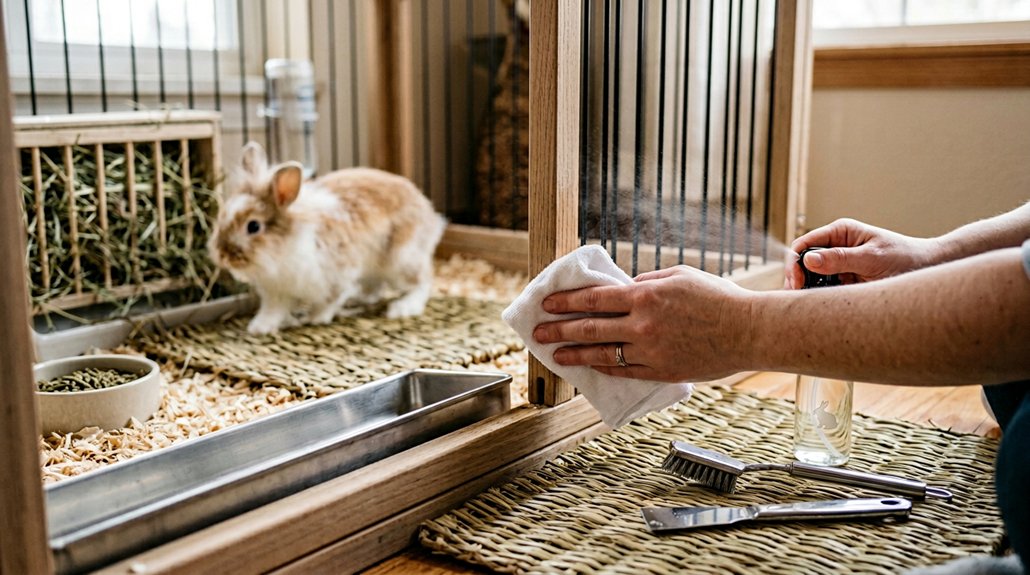
To clean a rabbit cage effectively, start with daily tasks like removing uneaten food and spot-cleaning spills. Use pet-safe disinfectants and replace soiled bedding to manage odors. Confirm a weekly deep clean by thoroughly disinfecting all surfaces, washing fabric bedding, and drying everything properly to prevent mold. Regular upkeep and the right cleaning tools assure a hygienic habitat. For an all-encompassing guide on maintaining a fresh and stress-free environment for your rabbit, follow the detailed strategies ahead.
Key Takeaways
- Remove all items from the cage and inspect for necessary repairs before cleaning.
- Use pet-safe disinfectants, like vinegar, to clean surfaces and eliminate odors.
- Replace soiled bedding and uneaten food daily to maintain hygiene and prevent odor.
- Disinfect and thoroughly dry all surfaces and accessories during weekly deep cleanings.
- Monitor rabbit behavior post-cleaning to ensure a comfortable and stress-free habitat.
Master the Basics of Rabbit Cage Cleaning
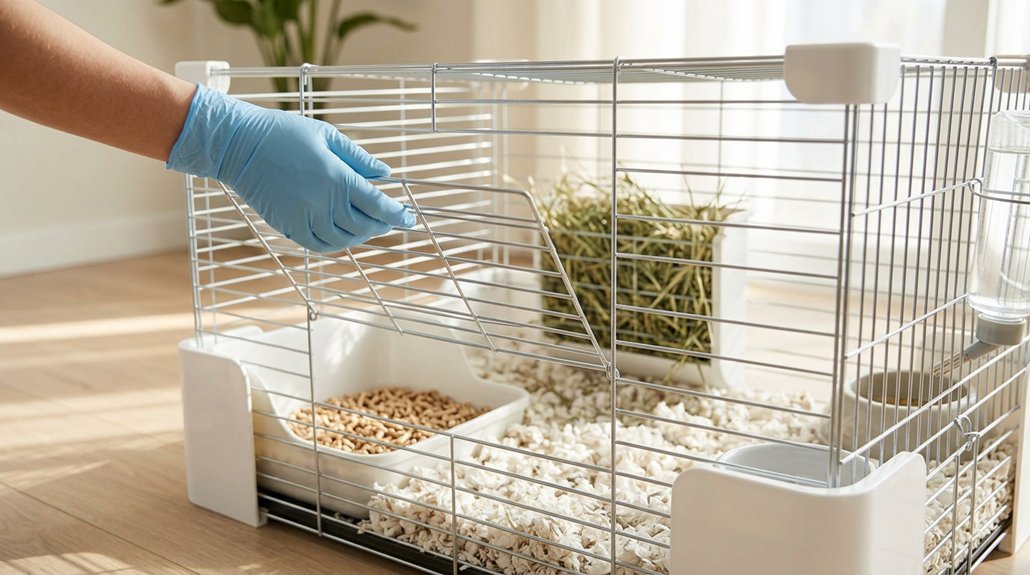
To master the basics of rabbit cage cleaning, start by understanding the essentials of maintaining a hygienic environment for your furry friend. The cleaning frequency is key. Engage in daily maintenance by removing uneaten food, spot-cleaning spills outside the litter box, and scooping the litter box. Each week, extend your efforts to a thorough wash of all accessories, such as toys and bedding, and disinfect cage surfaces with a safe solution like vinegar. It’s essential to use pet-safe products and rinse thoroughly to prevent harmful residue. Keep an eye on your rabbit’s specific habits; where they tend to toilet most often will inform the areas requiring more frequent attention. Regular monitoring for odors and soiled bedding is also important.
Tools and Cage Design Essentials for Easy Cleaning
Although the right tools and cage design can make rabbit cage cleaning easier, choosing the right setup guarantees you’ll maintain an ideal environment effortlessly. Start by investing in wire cages with slide-out trays, providing easier access than wooden hutches, promoting better cage ventilation and faster cleaning. Use soft brushes and non-abrasive sponges to tackle corners and surfaces without damage, ensuring every nook is spotless. A dedicated cleaning bucket helps mix solutions, keeping cleaning products tidy and avoiding cross-contamination. Opt for absorbent bedding materials that quicken cleanup and minimize moisture, enhancing hygiene effectively. Finally, prioritize a large cage design that allows easy access to all areas, facilitating thorough cleanings and ensuring a healthy and comfortable space for your rabbit.
Get Your Rabbit Cage Ready for a Spotless Clean
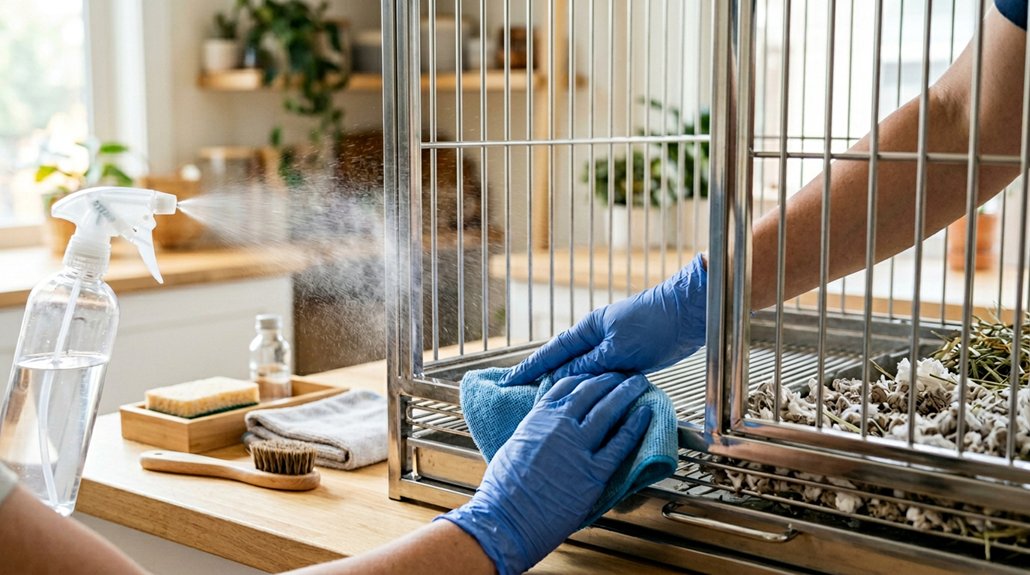
To prepare for cleaning your rabbit cage, start by removing all items, such as the litter pan, toys, and bedding, and inspect the cage for any needed repairs. Mix a pet-safe disinfectant or a vinegar-water solution to guarantee every surface is sanitized without harming your rabbit. Finally, gather clean absorbent bedding and fresh hay, allowing all surfaces to air dry thoroughly before returning your rabbit to its now spotless home.
Essential Cleaning Supplies
A well-stocked arsenal of cleaning supplies is essential for maintaining a spotless rabbit cage. Start by gathering non-toxic solutions, such as pet-safe disinfectants and a vinegar-water mixture. These will effectively sanitize surfaces without risking your rabbit’s health. Depending on your cleaning frequency, you’ll want some soft brushes and non-abrasive sponges. These are key for reaching corners and preventing scratches. Have plenty of paper towels or cloths on hand to thoroughly dry surfaces after cleaning—ensuring a safe habitat.
Keep a dedicated bucket for mixing solutions to avoid cross-contamination. Investing in a handheld vacuum is wise; it quickly clears hay, debris, and waste, making the cleaning process efficient and thorough. With these supplies, you’re set for a successful cage cleaning routine.
Efficient Preparation Tips
Armed with your assortment of cleaning supplies, it’s time to prepare your rabbit cage for an immaculate clean. Start with cage maintenance by relocating your rabbit to a secure area, like a pet carrier or exercise run, preventing any accidents. Gather essentials: a soft brush, non-abrasive sponge, pet-safe disinfectant, and fresh bedding for efficiency. Remove all accessories, food bowls, and litter trays, guaranteeing unobstructed access to every surface. Roll up soiled bedding and litter, discarding them, while setting aside unsoiled bits for reuse to reduce waste. During this preparation, don’t neglect health checks by inspecting the cage for damage or wear. This guarantees a safe habitat when it’s time to reintroduce your furry friend into their spotless home.
Daily Habits for a Fresh and Clean Rabbit Home
To maintain a fresh and clean rabbit home, make daily cleaning tasks efficient by removing uneaten fresh foods twice a day and scooping the litter box regularly. Spot-clean spills and replace soiled bedding or hay with fresh materials to minimize odors and guarantee a hygienic environment. Keep feeding areas pristine by cleaning food bowls regularly and checking the water bottle daily, using a bottle brush to prevent bacterial growth.
Streamline Daily Cleaning Tasks
Maintaining a squeaky-clean environment for your rabbit requires implementing a few consistent daily habits that streamline cleaning tasks. Efficient routines and time-saving techniques are key. Begin by removing uneaten fresh foods and spoiled pellets at least twice daily; this prevents decay and keeps your rabbit healthy. Make it a daily habit to wash food bowls and refill them with fresh water, guaranteeing constant cleanliness and accessibility. Don’t forget to spot-clean any spills or messes outside the litter box and replace them with fresh hay or bedding. This keeps odors in check. Scooping the litter box daily is essential, adjusting frequency based on litter depth. Finally, spend a moment inspecting the cage for any signs of soiling or wear.
Maintain Fresh Feeding Areas
Efficient daily routines set the stage for a healthy rabbit, and maintaining fresh feeding areas is paramount. Begin by implementing robust fresh food management practices: check and remove uneaten foods twice daily to prevent spoilage. Clean food bowls regularly with hot water to combat bacteria and odors, enhancing feeding area hygiene. Refilling water bottles to three-quarters full every day guarantees fresh hydration for your rabbit while preventing algae buildup. Promptly spot-clean any spills or messes, replacing soiled materials with fresh hay or bedding to uphold a clean environment. Finally, observe your rabbit’s eating patterns and food waste, as any unusual changes could be a sign of health issues needing attention. Keep your rabbit’s feeding setup pristine for their best well-being.
Weekly Rabbit Cage Deep Clean
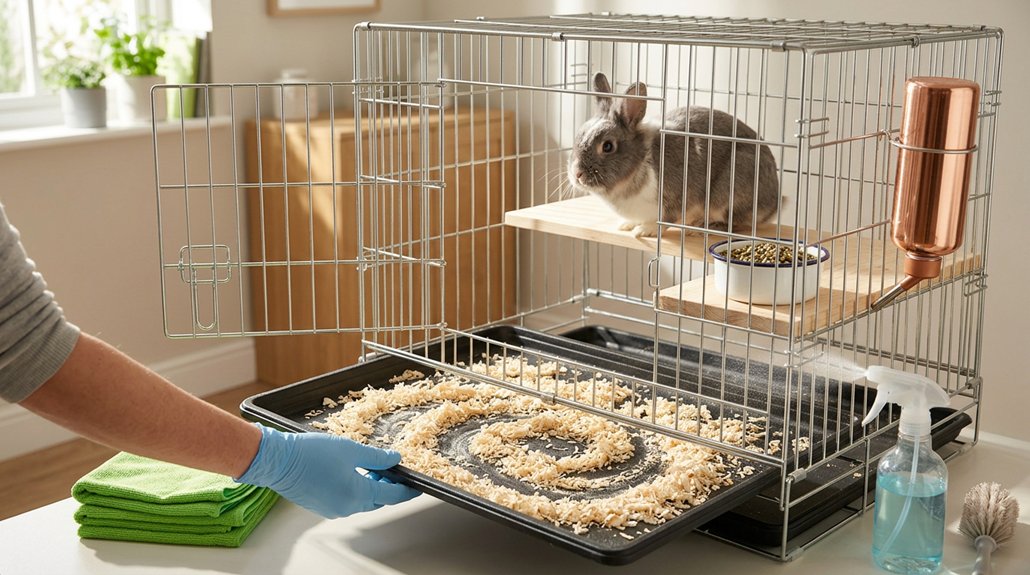
Transform your rabbit’s environment with a weekly deep clean that not only refreshes their habitat but also enhances their well-being. Establishing a regular cleaning schedule is essential for maintaining rabbit health, minimizing odors, and keeping bacteria at bay. Here’s how to achieve a pristine cage:
- Remove All Items: Begin by taking out all accessories, toys, and bedding. This guarantees a thorough clean of every component.
- Wash Thoroughly: Clean fabric bedding with hot water and mild detergent. Hard accessories need a non-toxic cleaner or vinegar solution to tackle stubborn odors.
- Disinfect Cage Surfaces: Wipe cage surfaces with hot water, then apply a pet-safe disinfectant. Allow 30 minutes of soaking for tough spots.
- Dry Completely: Make sure the cage air dries entirely to inhibit mold growth before replacing items and reintroducing your rabbit.
Using Cleaning Solutions Safely: Top Practices
After revitalizing your rabbit’s habitat with a weekly deep clean, it’s important to understand the art of using cleaning solutions safely to protect your furry friend. Prioritize cleaning safety by opting for pet-friendly solutions like Zoflora’s pet version or Simple Solutions Cage Cleaner. These guarantee solution effectiveness without exposing your rabbit to harmful chemicals. Always wipe surfaces down with clean water post-cleaning to eliminate any residue that could irritate sensitive skin. Allow the cage to air dry completely to avoid moisture-related issues like mold growth. While vinegar spray is a safe, effective option for dissolving urine deposits, avoid bleach or ammonia-based cleaners. If they’re necessary, thorough rinsing and ventilation are essential to maintain a healthy environment for your rabbit.
Overcoming Rabbit Cage Cleaning Challenges: Tips and Tricks
While traditional rabbit cages often present cleaning challenges, particularly with wooden hutches, there are effective strategies to streamline the process. Start by focusing on cleaning frequency and odor control. Here’s how to tackle these challenges:
- Use a handheld vacuum – Quickly remove hay and debris from corners and crevices to maintain cleanliness even in hard-to-reach areas.
- Opt for absorbent bedding – Choose materials that simplify waste removal and greatly reduce odors.
- Perform regular inspections – During each cleaning session, check for damage or wear. Addressing repairs improves hygiene and safety.
- Establish a routine – Implement daily waste removal and conduct deeper cleanings weekly or bi-weekly depending on your rabbit’s activity level and cage size.
These steps guarantee a clean, odor-controlled environment for your rabbit.
Crafting Your Rabbit’s Environment for Maximum Hygiene
Creating a hygienic environment for your rabbit begins with mindful planning and consistent maintenance. Start by choosing absorbent bedding materials that simplify cleaning and keep the cage dry. Materials like paper-based or hemp bedding work well, as they’re excellent at absorbing moisture and controlling odor. To minimize waste accumulation, use designated litter trays where your rabbit typically urinates, making spot cleaning easier.
Air circulation plays an essential role in maintaining a fresh environment. Confirm the cage is placed in an area with good airflow but away from drafts that could harm your rabbit. Regular cleaning of your cage not only removes waste but also prevents the buildup of ammonia smell, which can be stressful and unhealthy for your bunny. Establishing a consistent cleaning routine will promote maximum hygiene.
Preserve a Healthy Habitat After Cleaning
Making sure your rabbit’s habitat stays healthy after cleaning involves taking several important steps. A thorough habitat assessment helps maintain an ideal environment for your furry friend. Here’s what you should do:
- Dry Thoroughly: Make certain every surface is completely dry to prevent moisture-related issues like mold or bacteria, which can harm your rabbit.
- Rinse and Inspect: After using disinfectants, check for any residues as leftover chemicals can be harmful. Always rinse all surfaces well.
- Monitor Behavior: Keep an eye on your rabbit’s mood and actions—any signs of stress or discomfort might indicate problems with cleanliness or cleaning product choice.
- Refill Essentials: Immediately replenish food and water dishes to make sure your rabbit’s continuous access to necessary nutrients and hydration.
Regular behavior monitoring keeps the habitat safe and stress-free.
Frequently Asked Questions
What Is the Best Way to Clean a Rabbit Cage?
For cage maintenance, start with daily spot-cleaning using safe cleaning supplies, like vinegar. A weekly deep clean should include removing items, washing surfaces, and drying thoroughly. Make sure all products are non-toxic and pet-safe.
What Is the 3 3 3 Rule for Rabbits?
The 3 3 3 rule for rabbits involves their adjustment over three days, weeks, and months. Understanding this helps you detect rabbit behavior changes, facilitating better cage maintenance by ensuring a comfortable and supportive living environment throughout.
How Does a Rabbit Say “Sorry”?
A rabbit says “sorry” through subtle body language and communication cues. You’ll notice signs like a “binky,” submissive behavior, grooming actions, or even offering a treat. These actions express forgiveness, reconciliation, and the restoration of harmony.
Why Do Rabbits Scream at Night?
Imagine a fire alarm in the dark—rabbits scream at night from fear or pain, using vocalizations to signal distress. Their night behavior highlights vulnerability, akin to alarms when sensing threats, environment changes, or health issues.
Conclusion
To maintain a healthy environment for your rabbit, it’s essential to clean the cage regularly. Did you know that 60% of rabbit health issues stem from poor hygiene conditions? By integrating daily spot cleaning and a weekly deep clean, coupled with safe cleaning solutions, you guarantee your rabbit’s habitat stays inviting and disease-free. Remember, a clean cage not only boosts your rabbit’s health but also enriches its quality of life. Keep your bunny’s home a haven; they’ll thank you for it!