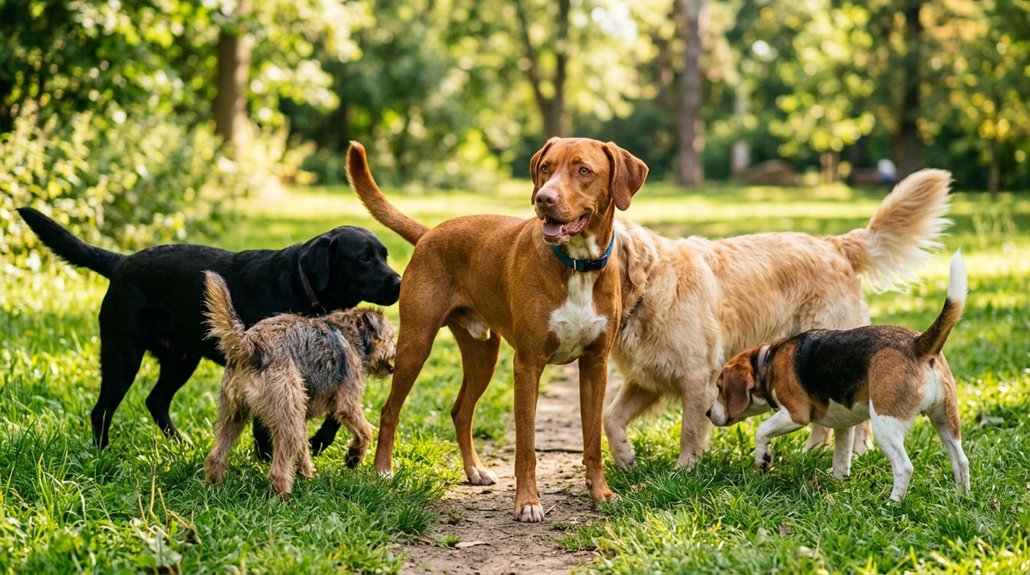
If you’re looking for dog breeds that thrive with other dogs, consider Labrador Retrievers for their friendly nature and Golden Retrievers for their gentle demeanor. Beagles are energetic pack animals perfect for lively homes, while Collies and Poodles adapt well with proper socialization and training. Matching energy levels and ensuring early exposure boosts compatibility. For a harmonious multi-dog setting, understanding sociability traits is key. Discover more insights into fostering peaceful inter-dog relationships next.
Key Takeaways
- Labrador Retrievers have a friendly, sociable nature, making them ideal companions in multi-dog households.
- Golden Retrievers integrate well with various breeds due to their gentle temperament.
- Beagles thrive in lively environments and are energetic, natural pack animals.
- Poodles flourish in active settings, promoting peaceful coexistence with other dogs.
- Collies require socialization but show intelligence and adaptability in multi-dog homes.
Top Dog Breeds for Social Households: Quick Picks
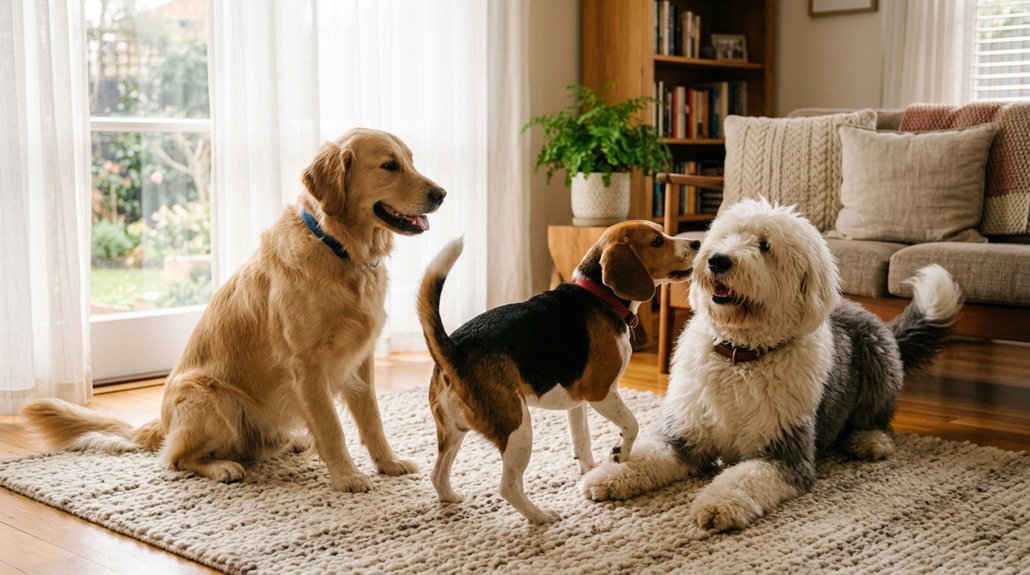
When considering dog breeds for a social household, you can’t overlook the role adaptability plays in creating a harmonious environment. Conducting dog breed comparisons is vital to finding pets with ideal compatibility. Labrador Retrievers often top the list due to their friendly and sociable nature, making them perfect for multi-pet settings. Golden Retrievers, with their gentle temperament, are similarly known for seamless integration with various breeds, including cats. Beagles, energetic and natural pack animals, thrive in lively environments, getting along well with other dogs. Collies, though requiring proper socialization, demonstrate intelligence and adaptability, essential traits in forming harmonious relationships. Finally, Poodles, celebrated for their friendliness, flourish in active settings, ensuring peaceful coexistence with diverse pets. Choose wisely for ultimate pet compatibility.
Identifying Traits for Dog Sociability
To truly understand dog sociability, one must evaluate several key traits that distinguish breeds adept at maneuvering complex social settings. Sociable breeds, like Labrador and Golden Retrievers, inherently exhibit playful and gentle temperaments, vital for fostering friendly interactions. Such dispositions allow these dogs to thrive in diverse environments alongside other pooches without aggression concerns. However, sociability isn’t purely innate. Early exposure to various animals is imperative, as it cultivates strong socialization skills. Effective behavior training, grounded in regular positive reinforcement, enhances these traits by encouraging amiable dynamics with humans and pets alike. By focusing on these factors, you can predict which breeds excel in sociable contexts, ultimately leading to harmonious and enriching multi-dog households.
Size and Energy’s Role in Compatibility Among Dogs
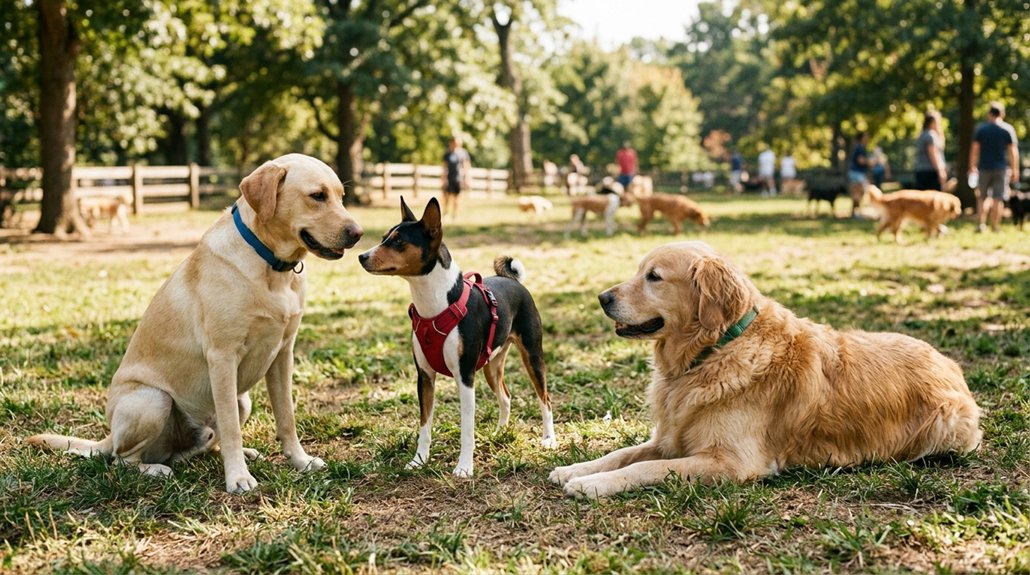
While considering compatibility among dogs, size and energy levels considerably impact how dogs interact with each other. Size dynamics play a significant role; larger breeds may unintentionally overwhelm smaller peers during play, leading to stress or fear. Similarly, energy synergy is essential for harmonious interactions. High-energy breeds like Labrador Retrievers thrive alongside similarly active companions, ensuring they have ample outlets to prevent behavioral issues.
Size and energy levels are key factors in dog compatibility and interaction.
Conversely, breeds with calmer dispositions, such as Golden Retrievers, excel in fostering harmonious environments. It’s important to account for these factors, especially in mixed breed households, as strategic selection aids in reducing territorial disputes.
- Size dynamics: Larger dogs may inadvertently intimidate smaller ones.
- Energy synergy: High-energy breeds need equally energetic companions.
- Calm breeds: Promote peaceful interactions.
- Mixed breed considerations: Careful selection enhances social harmony.
Easy Socialization Tips for Multi-Dog Homes
Socializing dogs in a multi-dog home can be streamlined with methodical approaches that create a harmonious environment. Early puppy training is essential; introduce puppies to different environments and dogs up to 16 weeks old. This foundational exposure encourages friendly behaviors. Consider enrolling your pets in structured puppy classes where they’ll engage in controlled socialization games, vital for developing social skills. As interactions unfold, watch for body language cues that may indicate nervousness or aggression, allowing you to adjust and guarantee positive experiences. Use positive reinforcement; reward good behavior to foster a cooperative atmosphere. These precise, thoughtful strategies guarantee the socialization process is effective, fostering relationships that contribute to a calm, well-balanced multi-dog household.
Best Practices for Introducing New Dogs
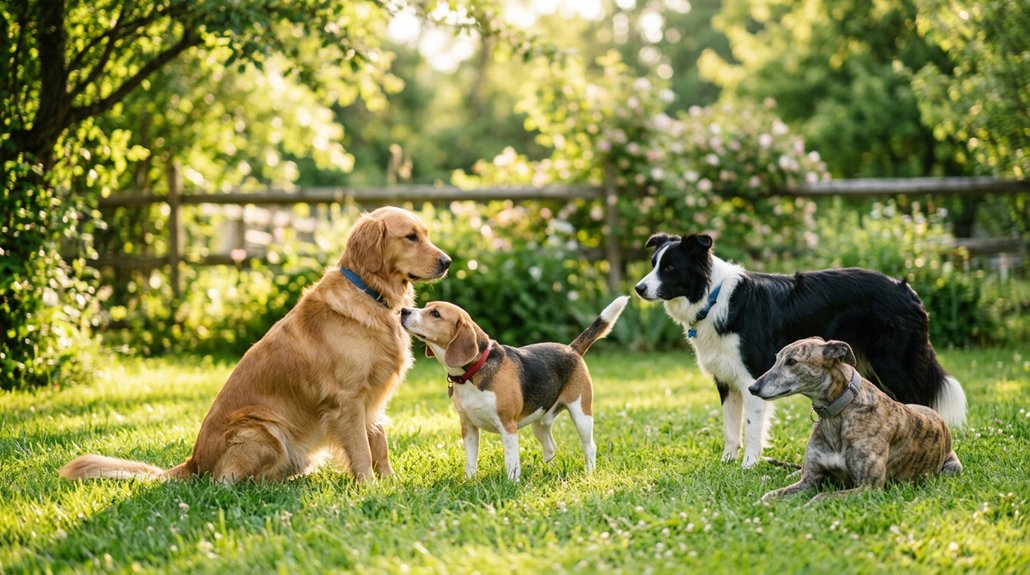
Introducing new dogs into a household requires a strategic approach to guarantee peaceful coexistence. Begin in neutral locations to minimize territorial behavior and foster a relaxed atmosphere for both dogs. To ensure safety, always use leashes during initial meetings, allowing you to maintain control and facilitate a gradual introduction. It’s essential to watch for stress signals, such as avoiding eye contact or excessive panting; these signs indicate the meeting might be overwhelming. If observed, provide breaks and reassurance.
Use neutral spaces and leashes for introducing dogs; watch for stress signals like panting.
A few best practices include:
- Choosing a neutral location for the first meeting
- Keeping both dogs on leashes for safety
- Monitoring body language for stress signals
- Introducing new pets in a controlled, quiet environment
Gradually increasing their exposure through positive interactions supports a harmonious relationship.
Frequently Asked Questions
What Dog Breed Is Most Friendly With Other Dogs?
You’ll find that Labrador Retrievers often top the list as the most friendly breed with other dogs. To enhance their sociability, incorporate socialization tips like regular doggy playdates, ensuring they thrive in varied canine company.
What Is the 3-3-3 Rule With Dogs?
The 3-3-3 rule outlines how dogs acclimate after adoption: three days to cope, three weeks to adjust, and three months to reveal their personality. Utilize dog socialization tips and understanding canine body language to ease adjustment.
What Dog Breeds Go Best Together?
You’d find compatible canine pairs with social dog breeds like Labradors and Golden Retrievers, as they typically blend well together. Bassets and Beagles also match, being both friendly and adaptable, ensuring a harmonious home with multiple dogs.
How Do You Say “I Love You” in Dog Speak?
To tell dogs “I love you,” become fluent in their symphony of wagging tails and rhythmic canine vocalizations. Notice their gentle whispers of affection through body language, expressing a language of trust and heartfelt companionship.
Conclusion
By choosing a dog breed known for sociability, such as Labrador Retrievers or Beagles, you’ll create a harmonious environment that feels almost magical among your pets. Consider size, energy levels, and temperament when fostering a multi-dog household. Don’t overlook the power of proper socialization; it’s the secret ingredient in preventing potential conflicts. So go forth and introduce new canine companions wisely—your pack will thrive like it’s the canine equivalent of a perfectly practiced orchestra!