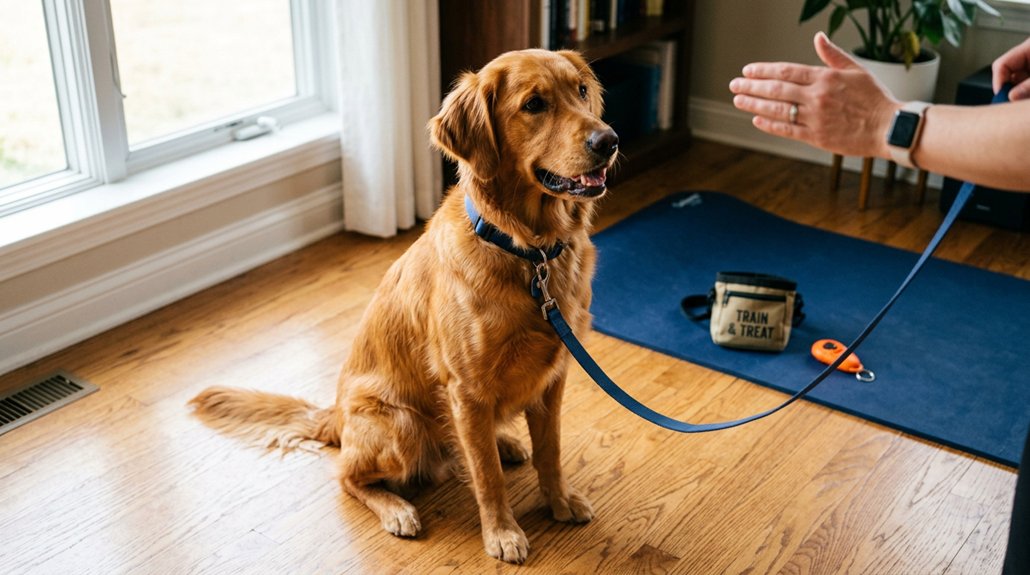
When starting your dog’s training, focus on essential commands like “sit,” “come,” and “leave it” to build a strong foundation for a well-behaved companion. Begin early, around eight weeks, to enhance safety and foster trust. Use a happy tone and rewards to reinforce name recognition and these critical commands, ensuring responsiveness and impulse control. Consistent, engaging sessions of 10-15 minutes will captivate your pup’s interest, laying groundwork for future learning and a happier, safer relationship. Discover more about effective techniques next.
Key Takeaways
- Start with name recognition to ensure your dog responds to you promptly.
- Teach “come” for enhanced safety and effective recall.
- Use “sit” to instill patience and promote controlled behavior.
- Incorporate “stay” for improved impulse control and safety.
- Introduce “leave it” to prevent dangerous interactions with undesirable items.
Why Early Training Creates Happier, Safer Puppies
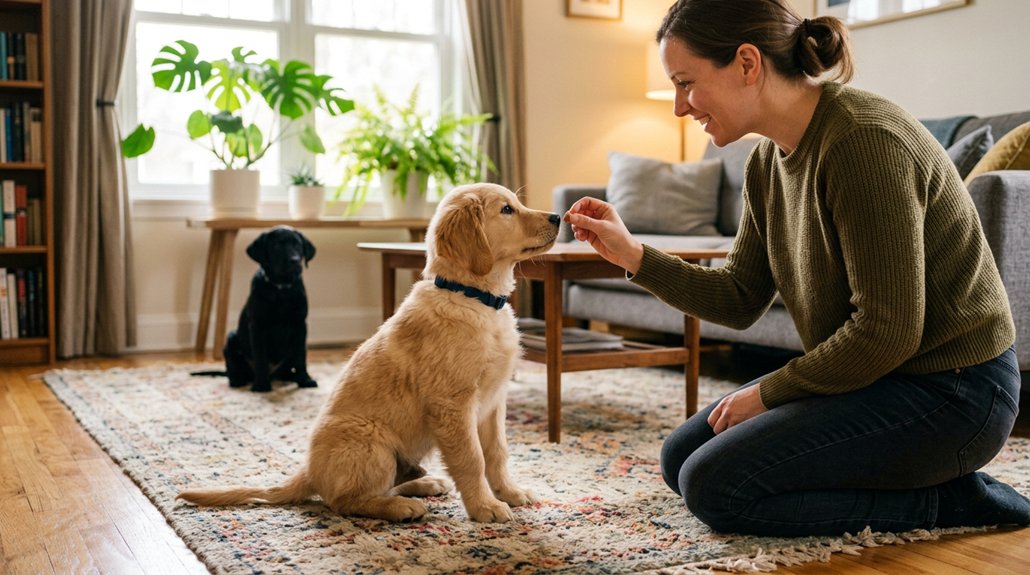
Early training is essential for raising happier, safer puppies, and starting as young as eight weeks can set the stage for a lifetime of positive behavior. By incorporating bonding exercises during these early sessions, you’re not just teaching simple commands but fostering a strong, trusting relationship with your puppy. This connection is critical for both their happiness and your peace of mind.
Training also enhances safety awareness, which is important in helping your puppy navigate the world around them. Understand that teaching safety-oriented commands early on can prevent potentially dangerous situations and create a more secure environment. Consistent, positive interactions and routines encourage mental and physical stimulation, contributing considerably to your puppy’s well-being. In turn, your puppy grows into a well-adjusted adult dog.
Essential Commands for Effective Puppy Training
When starting on the journey of puppy training, understanding which commands are fundamental can make a world of difference. Name recognition is your first step—teaching your puppy their name assures responsiveness and sets the stage for learning future commands. Command consistency is essential. “Come” is critical for safety and boosts your puppy’s confidence in various settings. “Sit” is an easy command that instills patience and controlled behavior. Commands like “stay” and “leave it” are indispensable for developing impulse control, keeping your pup safe. Training your puppy with “focus” and “heel” early on creates a solid foundation for advanced learning and strengthens your bond. Consistent practice and gentle reinforcement are key to transforming your puppy into a well-behaved companion.
Step-By-Step Guide: Train Your Puppy With Key Commands
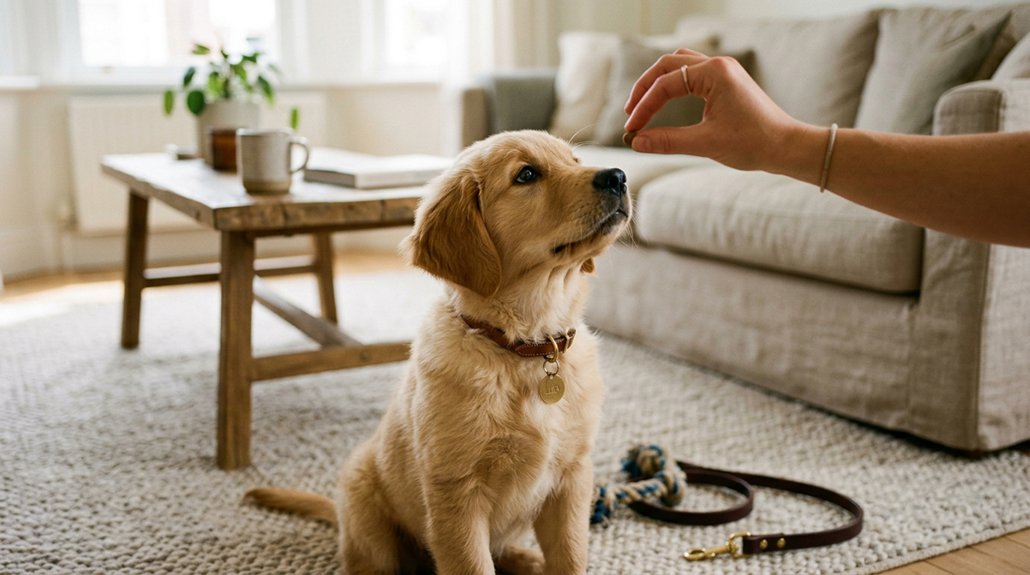
Building upon the groundwork of teaching fundamental commands, it’s important to have a structured approach for training your puppy successfully. Start with name recognition by using a happy tone and reward timing—immediately acknowledge any response. It establishes responsiveness and strengthens your bond. For the “come” command, use a motivating reward and practice in different environments. Say the command excitedly to encourage enthusiasm. Teaching “sit” involves luring them into position with a treat, rewarding immediately, and only introducing the command once they understand the action. Once “sit” is mastered, progress to “stay,” gradually increasing distance and rewarding consistently. Finally, for “leave it,” use a low-value treat and reward with a high-value treat for ignoring the initial item, reinforcing desired behaviors.
Spotting and Fixing Training Mistakes
Recognizing and correcting training mistakes early can make a significant difference in your puppy’s learning journey. Common training pitfalls such as inconsistent command usage can confuse your dog, making it harder for them to grasp essential commands like “sit” or “come.” Make sure you’re using the same verbal and physical cues consistently. Training sessions beyond 10-15 minutes often lead to your puppy losing interest. To keep them engaged, keep sessions short and focused. Overcoming distractions is vital; if you ignore them, your dog might struggle to focus in the real world. Start training in a quiet environment and gradually introduce distractions. Finally, timely positive reinforcement is key—reward promptly to strengthen desired behaviors and maintain your puppy’s motivation.
Strengthening Your Puppy’s Training Routine
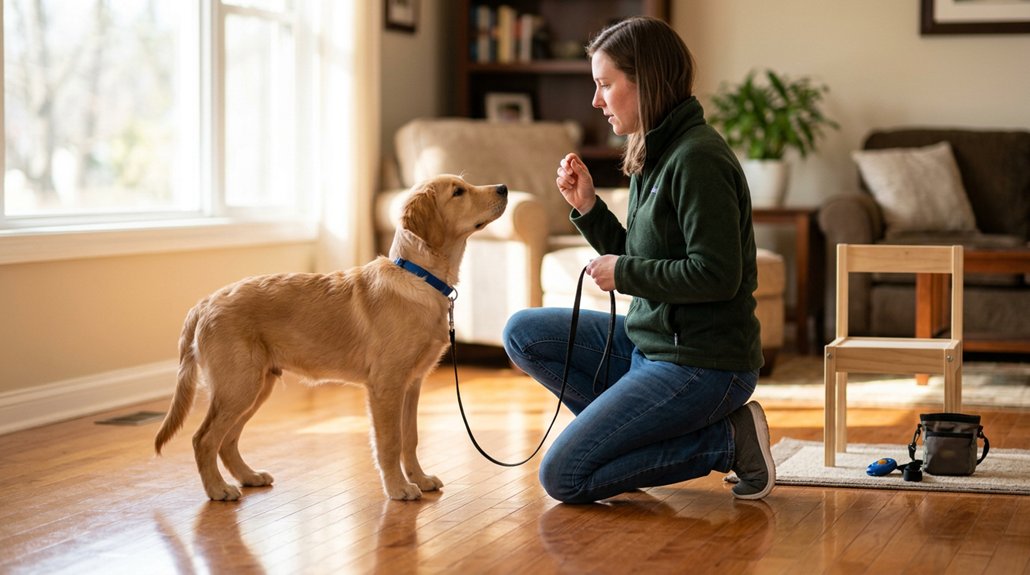
While correcting mistakes sets a solid groundwork, enhancing your puppy’s training routine guarantees lasting success. Start early—around eight weeks—establishing essential commands like “come,” “sit,” and “leave it.” Remember, training consistency is key. Keep sessions short, around 10-15 minutes, to prevent frustration and keep your puppy focused. It’s vital to reward successful command execution with positive reinforcement using treats and praise. This reinforces their understanding and responsiveness, encouraging them to repeat desirable behaviors. Practice commands in different environments to confirm adaptability and reliable performance. With patience and persistence, you’re building a trusting, communicative relationship with your puppy. Create an engaging routine that they look forward to, combining fun with effective learning, assuring your dog’s progress remains steady and enjoyable.
Frequently Asked Questions
In What Order Should I Teach My Dog Commands?
Start with basic commands like “come,” “sit,” and “stay,” using positive reinforcement to boost learning. Later, add “leave it” and “lie down.” After mastering these, progress to “heel,” “wait,” and “focus” for advanced discipline.
What Is the 3-3-3 Rule for Dog Training?
The 3-3-3 rule in dog training is your magic wand! Imagine turning chaos into harmony with positive reinforcement and command consistency. In three days, weeks, and months, your dog’ll transform, embracing new routines with wagging confidence.
What Is the 7 7 7 Rule for Dogs?
The 7-7-7 rule highlights training benefits for dog behavior by suggesting seven basic commands taught in the first seven weeks, with sessions under seven minutes. Focus on positive reinforcement and consistency to guarantee effective learning.
What Is “I Love You” in Dog Language?
In canine communication, “I love you” isn’t verbal. It’s seen in wagging tails, gentle eye contact, and cuddles. Understanding barks and soft intonations also helps you recognize their affection, creating a bond of trust and loyalty.
Conclusion
So, you’ve initiated the journey of teaching your puppy essential commands. You’ve laid the groundwork for a happier, safer pet; you’ve followed steps to instill obedience. But remember, it’s about strengthening routines, not rushing results. You can spot mistakes and correct them; you can foster patience and connection. With expertise and empathy, you create a nurturing environment where learning is a joyous adventure. Your consistent care and clear guidance pave the way for a well-trained, loving companion.