
To safely introduce a cat to a dog, create separate, secure spaces while managing initial interactions. Monitor body language for stress signals and use scent familiarization techniques to build positive associations. During face-to-face meetings, keep the dog leashed and reward calm behavior with treats. Gradually expand interactions, using barriers as needed to prevent aggressive encounters. Address high-energy behavior and reinforce calm responses to foster harmony. There’s much more to learn about ensuring smooth adjustments.
Key Takeaways
- Create a safe sanctuary for the cat with essentials and visual barriers for initial separation.
- Monitor and respond to stress signals in both pets to prevent aggressive encounters.
- Facilitate scent familiarization through scent exchanges and rewarding calm behavior.
- Conduct brief face-to-face meetings in a neutral zone, keeping the dog leashed.
- Use positive reinforcement and provide separate safe spaces to manage behavioral challenges.
Create Safe Spaces for Initial Interactions
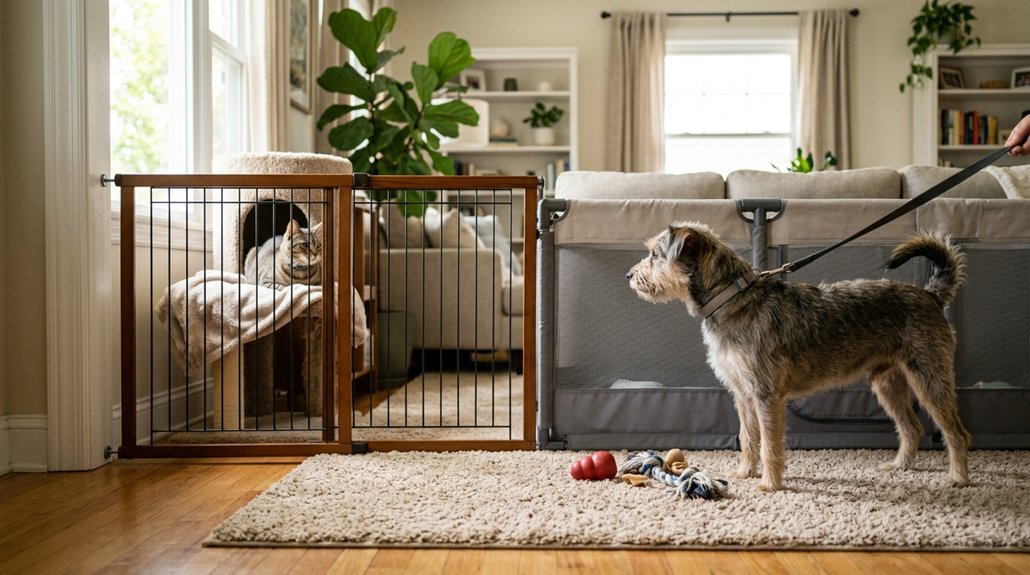
When introducing a cat to a dog, creating safe spaces for initial interactions is crucial to guarantee both pets feel secure and comfortable. Make sure the cat has a sanctuary setup equipped with essentials: a locked door, litter box, scratching post, food and water bowls, and toys. This safe retreat should be cat-proofed, removing poisonous plants, medicines, and fragile items while securing loose cords. Integrating hiding places or tunnels can help the cat feel secure and provide escape options during interactions. Maintain separation for the first 3-4 days to minimize stress and allow acclimation through scent and sound. Using baby gates or other barriers can visually separate them while enabling mutual visibility and olfactory exposure, facilitating a gradual and safe introduction.
Recognize and Respond to Pet Signals Early
Early detection of pet signals is vital for a smooth introduction between a cat and a dog. By understanding a cat’s behavior, such as pinned-back ears or swishing tails, you can identify stress signals that indicate displeasure, urging immediate action. Observing a dog’s body language, like stiffening, hard staring, or barking, reveals a strong prey drive requiring vigilant monitoring. Recognizing early signs prevents aggressive encounters, fostering a calmer integration. Continuously observe both animals to adjust interactions, especially during initial phases. Utilize barriers, like baby gates, to manage visual exposure, allowing for close monitoring. Responding accurately to each pet’s body language guarantees comfort and safety, creating a harmonious environment essential for their friendship to flourish.
Facilitate Scent-Based Familiarization

To foster trust between your cat and dog, start by placing the cat’s scented items in the dog’s space, allowing controlled exploration without direct interaction. You can reinforce scent familiarity through scent swapping by rubbing a cloth on each pet and providing it for the other to sniff, rewarding calm and curious behavior with treats. Monitor stress levels closely, ensuring both animals remain comfortable as they gradually acclimate to each other’s presence over several days.
Exchange Scented Items
An effective way to ease the initial interaction between a cat and a dog is through scent exchange, a non-intrusive approach that capitalizes on their natural reliance on smell to gather information. By swapping bedding or toys, you initiate scent familiarity between the pets, reducing anxiety while sparking their curiosity. Start by placing the cat’s scent-laden items in the dog’s area and vice versa, allowing them several days to explore these scents. It’s essential to observe their reactions closely. Reward calm behavior with treats, reinforcing positive associations with the other’s scent. To build comfort, gradually increase the duration and frequency of these scent exchanges, thereby preparing them for future direct interactions in a controlled way.
Controlled Exploration Sessions
Stepping into the domain of controlled exploration sessions, you’ll find that these carefully managed interactions are vital for facilitating scent-based familiarization between a cat and a dog. Scent recognition starts with swapping bedding or toys, allowing each pet to explore the other’s scent without direct confrontation. This gradual exposure paves the way for a harmonious relationship. Utilize items like a cat-used blanket to ease the dog into associating positive feelings with the new scent. Conduct these exchanges over several days, fostering a calm expectation in both pets. It’s important to monitor your dog’s behavior; signs of excitement or aggression suggest a need to slow down. Reinforce calmness by rewarding both animals, encouraging a peaceful atmosphere for future interactions.
Conduct Face-to-Face Meetings Successfully
Initiating successful face-to-face meetings between your cat and dog can foster a harmonious household, but requires careful management to guarantee both pets feel comfortable. First, conduct brief sessions in a neutral zone, keeping the dog leashed while allowing the cat to explore freely. Be vigilant—monitor body language closely. Reward your dog with treats and praise if calm, using positive reinforcement to encourage a relaxed demeanor. If you notice aggression or stress, separate the animals safely to prevent injury and reduce anxiety. Gradual exposure over multiple sessions, with toys available for distraction if needed, is essential in establishing mutual comfort and understanding.
Here’s a helpful overview:
| Interaction Stage | Action | Purpose |
|---|---|---|
| Meet & Greet | Brief Sessions | Assess Comfort |
| Reward Behavior | Treats & Praise | Positive Reinforcement |
| Monitor Closely | Body Language | Evaluate Stress Levels |
| Distract if Needed | Use Toys | Separate & Calm |
Common Behavioral Challenges and Adjustments
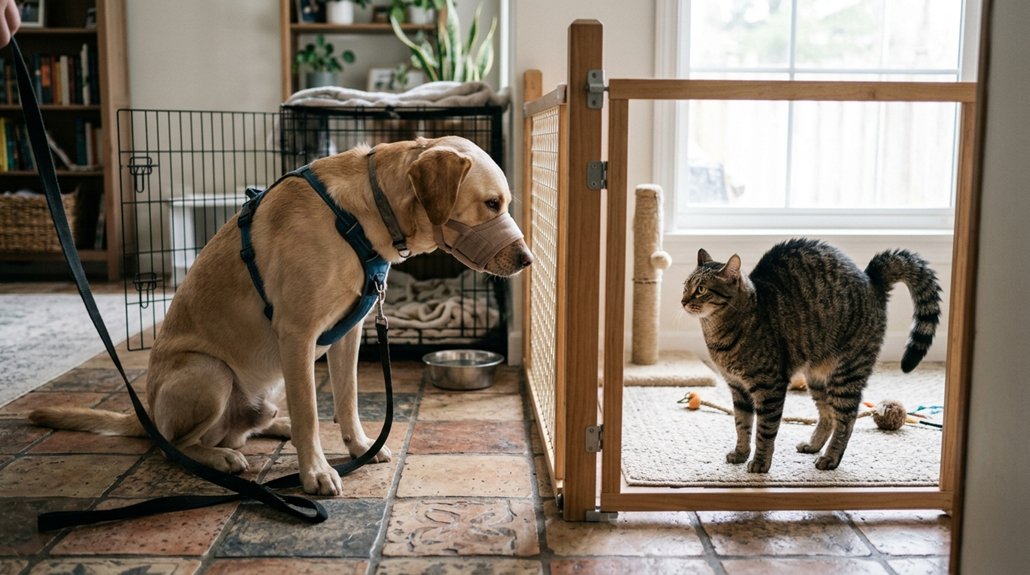
Introducing a cat to a dog, you’ll often encounter common behavioral challenges that require careful management and thoughtful adjustments. High-energy dogs can evoke fear responses in timid cats, leading to aggression or distress. Recognizing these signs—such as pinned ears or swishing tails—lets you intervene immediately, emphasizing consistent monitoring of interactions. Prey-driven dogs exhibit instinctual chasing behaviors, so keeping your dog leashed during initial introductions prevents escalation. Gradual exposure techniques, limiting initial meetings, and observing body language will adjust comfort levels and mitigate stress. Providing separate safe spaces and employing positive reinforcement guarantees both pets feel secure. These measures foster the development of a harmonious environment, facilitating healthier long-term relationships between your cat and dog.
Expanding Successful Interactions
As you begin expanding successful interactions between your cat and dog, gradually increasing their time together helps build mutual trust and ease. Start with brief, supervised meetings and slowly extend them, ensuring both pets show comfort. Reward consistency aids in reinforcing these positive encounters.
- Safety Measures: Keep the dog on a leash initially, ensuring the cat has escape routes and safe spaces.
- Positive Reinforcement: Use treats to reward both pets for calm behavior, creating positive associations.
- Monitor Behavior: Watch body language closely for signs of stress or aggression, and be ready to separate them if needed.
- Establish Routines: Manage interaction frequency and allow separate downtimes to avoid overstimulation, fostering a harmonious environment.
Frequently Asked Questions
How Long Does It Take for a Cat to Get Used to a Dog?
It can take anywhere from a few days to several months for a cat to get used to a dog. Time factors and individual temperament greatly influence adjustment periods. Monitor their interactions closely, respecting each animal’s unique pace.
What Is the 7 7 7 Rule for Dogs?
The 7 7 7 Rule, a gentle guidance for changes, helps you navigate dog behavior during introductions. Acclimate your pet over 7 days, 7 weeks, and 7 months as they gradually trade trepidation for trust and comfort.
What Is the 3-3-3 Rule of Cats?
The 3-3-3 rule for cats helps you understand cat behavior changes. Initial days involve observation and stress. Weeks bring exploration; months see total adjustment. Watch feline body language for cues, ensuring their comfort throughout this shift.
What Should You Not Do When Introducing a Cat to a Dog?
When introducing a cat to a dog, don’t rush it. Avoid punishing either pet, and always monitor interactions closely. Make sure your cat has an escape route, ensuring it feels secure and can retreat if needed.
Conclusion
Successfully introducing a cat to a dog is akin to orchestrating a symphony of epic proportions. You’ve navigated the intricate dance of scents, the subtle ballet of body language, and the nuanced chemistry of shared spaces. Each carefully executed step transforms chaos into harmony, ensuring they coexist not as nemeses but as companions. Remember, you’re not merely uniting pets; you’re crafting a peaceful, interspecies alliance, a monumental achievement that resonates through the very fabric of your home.