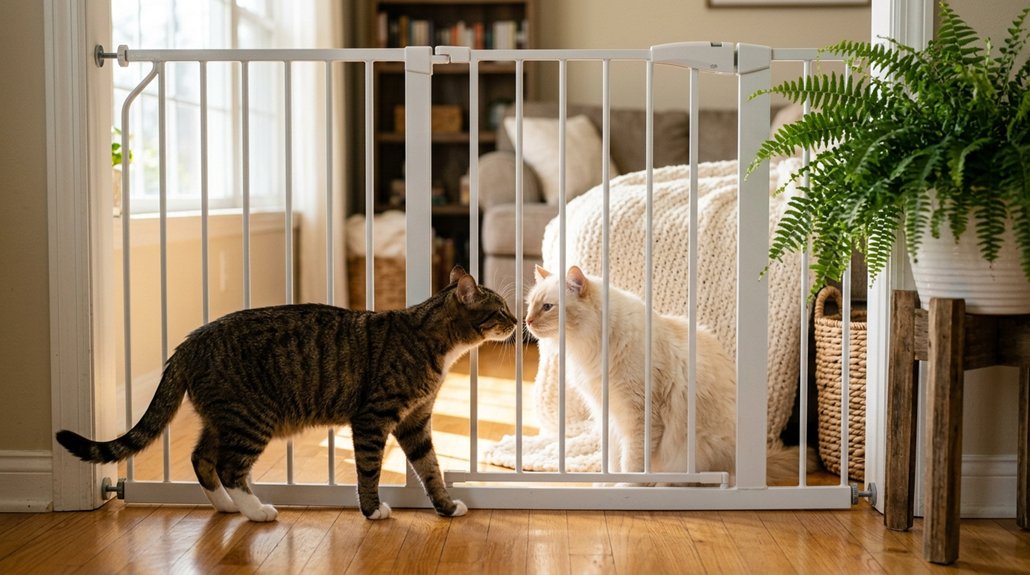
Introducing a new cat requires a systematic approach to guarantee harmony. Start by acknowledging each cat’s personality and set an introduction timeline. Establish separate base camps and use scent swapping to promote familiarity. Maintain closed-door, positive mealtimes to associate the other’s presence with good experiences. Watch for comfort signals during supervised encounters to gauge readiness. Manage solo play sessions initially, gradually integrating interactions. Discover step-by-step guidance for a smooth shift and fostering a peaceful feline coexistence.
Key Takeaways
- Introduce cats gradually by acknowledging their personalities and establishing separate base camps with familiar scents.
- Use scent swapping with items like blankets to help cats adjust to each other’s presence.
- Conduct short, supervised encounters and monitor body language to assess comfort levels.
- Create positive associations by placing feeding bowls on either side of a closed door.
- Adjust the interaction approach based on stress signals and encourage comfort through consistent routines.
Step-by-Step Guide to Cat Introduction
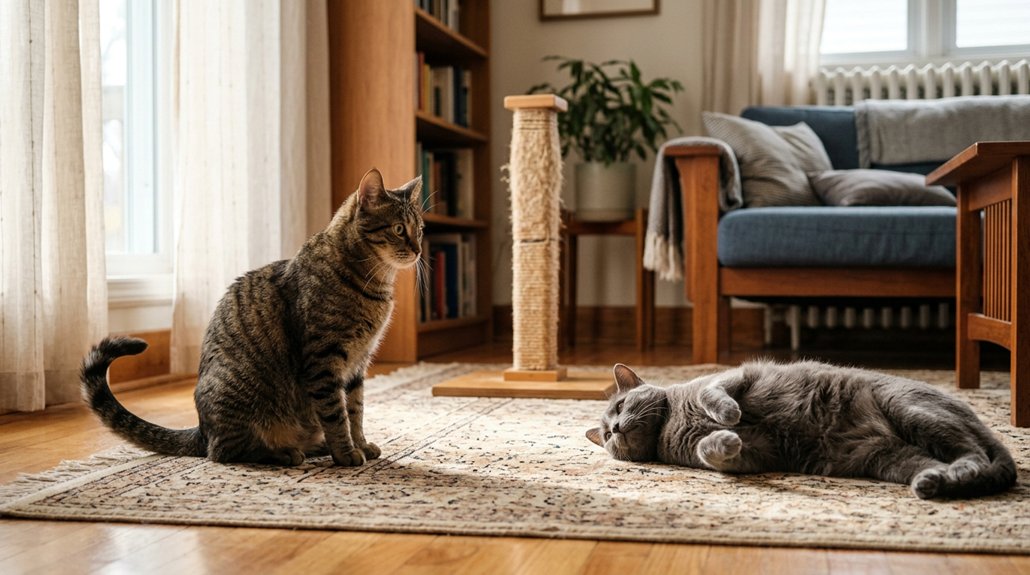
When you’re ready to start introducing a new cat to your resident feline, a systematic approach is essential to guarantee a smooth change. Begin by acknowledging each cat’s personality, setting an appropriate introduction timeline. Use scent swapping with items like blankets to familiarize them with each other without direct contact. Observe behavior cues during this period to assess their comfort levels. Gradual exposure aids in building rapport, starting with feeding them on opposite sides of a closed door. As their tolerance increases, allow visual access through a barrier, extending these sessions based on observed safety cues of calm and relaxed demeanor. Proceed to short, supervised interactions only when both cats consistently display non-aggressive behavior clues, ensuring trust and stability are maintained throughout the process.
Create a Safe Space for Each Cat
Creating a safe space for each cat involves establishing territorial boundaries by setting up a separate base camp for the newcomer with familiar scent soakers like beds and blankets. You’ll want to monitor comfort levels by observing the newcomer’s behavior, ensuring they feel secure before allowing gradual scent integration with the rest of the home. Maintain a closed door between the cats initially, reducing stress and facilitating a smooth acclimation process.
Establish Territorial Boundaries
Establishing territorial boundaries is vital when introducing one cat to another, as it effectively minimizes stress for both the resident cat and the newcomer. Start by designating a base camp for the new cat, equipped with scent-soaked bedding and blankets to encourage territorial behavior. This practice allows the newcomer to establish its presence without direct visual interaction with the resident cat. Initially, keep the base camp’s door closed to enable scent marking, essential for gradual acclimatization. Regularly exchange items like bedding or toys between territories, promoting scent familiarity.
To guarantee each cat feels secure, maintain their primary needs separately:
| Aspect | Importance |
|---|---|
| Food and Water | Avoids competition |
| Litter Boxes | Reduces territorial disputes |
| Personal Space | Encourages comfort and security |
Implementing these steps guarantees smooth integration, striking a balance between independence and cohabitation.
Monitor Comfort Levels
Providing a sanctuary for each cat is pivotal in easing the introduction process. You should set up a designated safe space with familiar items like beds and blankets for the new cat. This establishment aids in territorial comfort and helps reduce stress. Initially prevent any visual contact between the cats, allowing them to acclimate independently. Observe each cat’s body language and comfort levels within their spaces, noting stress signals or signs of relaxation to determine their readiness for future interactions. Regularly swap scents by exchanging bedding or toys, promoting familiarity without direct contact. Modify the environment by incorporating vertical spaces and hiding spots, ensuring both cats feel secure as they grow accustomed to one another’s presence.
Gradual Scent Integration
To guarantee a stress-free introduction between your cats, a separate, quiet space should be allocated for the new feline companion. This space should include essentials like bedding, toys, food, and a litter box. Gradual scent integration is vital, leveraging scent memory to ease the shift. Begin by swapping blankets or toys between your cats, allowing them to become familiar with each other’s scents. Use pheromone products to further soothe and reduce anxiety during this period.
- Promote comfort: Monitor body language and signs of relaxation.
- Foster curiosity: Allow each cat to explore the other’s space without visual contact.
- Instill consistency: Regularly swap items to maintain familiarity.
- Encourage adjustment: Proceed with visual contact only when both cats show comfort signs.
This process guarantees a seamless, harmonious introduction.
Trade Scents for Familiarity
Scent swapping serves as an integral method in introducing one cat to another by facilitating mutual recognition through scent. Cats have distinct scent preferences, making this step essential in minimizing anxiety. Begin by placing items such as blankets or toys that have absorbed the scent of one cat in the environment of the other. This allows gradual scent recognition, easing territorial tensions. Start scent swapping before the new cat arrives to help the resident cat acclimate early. Monitor behavioral cues closely, like body language or signs of stress, to determine if adjustments are needed. Gradually extend the duration these scent items are accessible to each cat, fostering comfort and familiarity, and thereby paving the way for smoother future interactions.
Introduce Cats Slowly Using Barriers
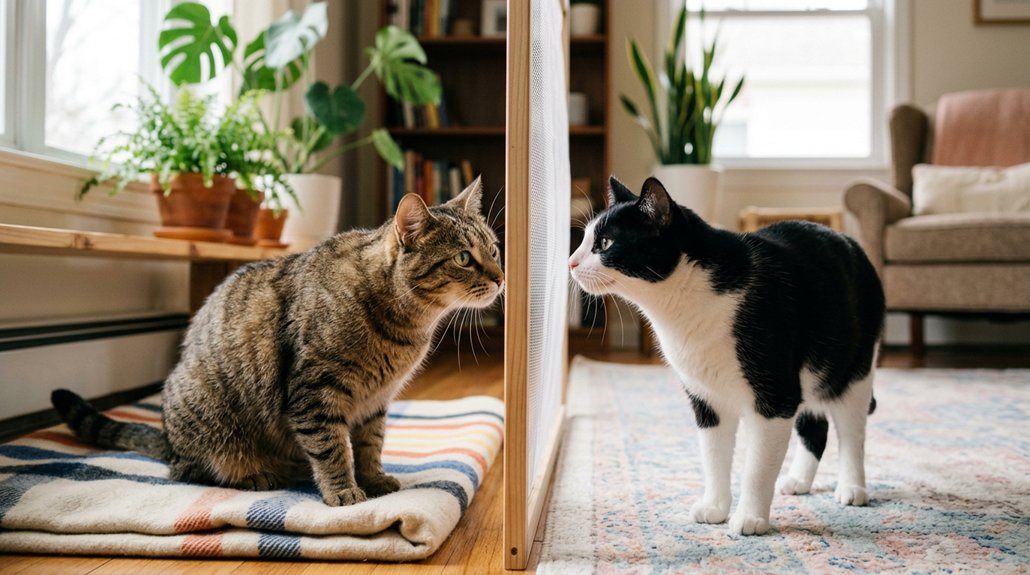
Introducing cats to each other requires patience and strategic planning. Utilizing barrier types like mesh screens or baby gates is essential for allowing visual contact without physical interaction. Begin with cautious, gradual exposure. Watch for these adjustment cues:
- Body Language: Tail flicks, ears back, and dilated pupils indicate stress signs.
- Calm Focus: A relaxed posture shows interest without anxiety.
- Playfulness: Gentle pawing through the barrier can hint at readiness for interaction.
- De-escalation: If tension arises, separate and begin anew.
Gradually increase the interaction duration as comfort grows. Use reward systems to promote positive associations, reinforcing calm behavior. Supervision tips include closely monitoring for aggression, and reintroducing barriers if necessary. With vigilance and patience, a peaceful introduction is possible.
Create Positive Mealtime Associations
Setting the stage for harmonious coexistence often starts with shared mealtime experiences. Encourage positive food behavior by placing feeding bowls on either side of a closed door. This allows each cat to associate the other’s presence with something positive—food—while avoiding direct contact. Follow a consistent feeding schedule, initially positioning the bowls far apart, gradually moving them closer as comfort levels increase. Utilize feeding times for scent recognition, allowing each cat to familiarize itself with the other’s scent.
| Observation | Action |
|---|---|
| Calm behavior | Gradually move bowls closer |
| Tension or stress | Maintain or increase distance between bowls |
| Curiosity | Proceed with introduction under visual control |
| Aggression signs | Reset process; introduce calming techniques |
| Increased comfort | Begin visual access with barriers like gates |
Monitor closely, adjusting as necessary for ideal acclimatization.
Watch for Comfort and Readiness
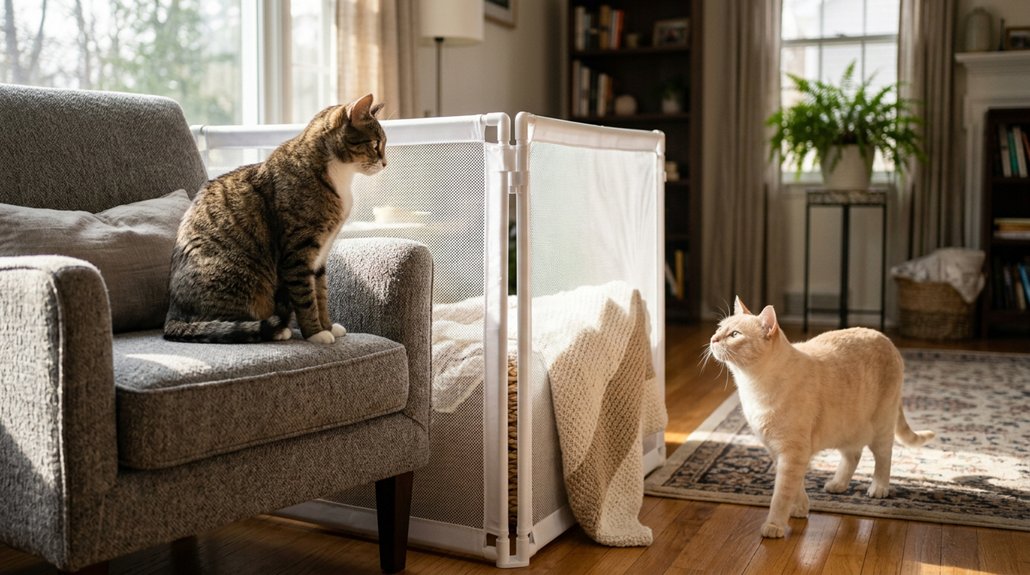
While observing interactions, it’s essential to monitor each cat’s body language closely, as this reveals their comfort and readiness for further integration. Utilize observation techniques to identify key body language cues, such as relaxed tails or ears forward. Pay attention to stress indicators which suggest whether the introduction is too much for them at the moment. Behavioral signs like grooming or casual exploring signal increasing comfort levels.
Consider these points for insight into their readiness:
- Curiosity surpassing fear: Invites exploration and acceptance.
- Low-stress feeding rituals: Highlight improved comfort levels amidst scent familiarity.
- Gradual relaxation in base camp: Marks progress in familiarization.
- Positive reactions during short, supervised encounters: A good omen for future direct interactions.
Manage Play Sessions for Smooth Cat Introduction
To facilitate a smooth introduction between cats, begin with solo play sessions to build engagement and then gradually introduce both cats using favorite toys to maintain their interest. Ascertain balanced interactions by rotating your attention between them and utilizing toys that encourage parallel play, minimizing direct competition. Closely observe their behavior for any signs of stress or aggression, and use positive reinforcement to encourage desired interactions.
Effective Play Session Strategies
Although seamless integration of two cats can be challenging, play sessions structured with care greatly aid this process. Begin by engaging one cat with interactive toys or treats, establishing a calm environment before introducing the second cat. Keep both cats’ focus on their favorite toys or food, reducing initial direct interaction and emphasizing play signals. Through thoughtful management, you can foster harmony and cooperation.
- Alternate your attention between them to maintain a balanced atmosphere.
- Opt for toys that encourage parallel play, steering away from competitive behaviors.
- Observe and adapt to constructive play signals, using them to guide session dynamics.
- Gradually decrease play intensity, ending with positive reinforcement to solidify a good experience.
These strategies can substantially streamline the acclimatization process.
Encouraging Positive Cat Interactions
If you’re looking to manage play sessions effectively, establishing an environment of positive cat interactions is paramount. Begin introducing each cat in a distraction-free setting. Use treats or toys to engage the first cat, ensuring a positive association before the second is introduced. This strategy promotes stress reduction by preventing sensory overload. Encourage parallel play with toys that support simultaneous engagement and minimize direct competition, creating a non-threatening atmosphere. Observe interactions closely for signs of aggression or stress, ready to intervene if necessary. Gradually extend the duration and intensity of play sessions, applying positive reinforcement for calm behavior. This consistent approach will help establish a routine, reinforcing pleasant interactions and facilitating a seamless introduction between the two cats.
Integrate Cats Into Daily Life for Harmony
While integrating cats into daily life for harmony can seem challenging, it’s essential to establish a structure that promotes positive interactions and minimizes stress. Incorporate shared activities and bonding experiences into their routine by ensuring both cats have:
Establishing a structured routine for cats promotes harmony and minimizes stress in daily life.
- Dedicated time for meals, play, and affection.
- Separate resources like litter boxes and food bowls to prevent territorial disputes.
- Gradual exposure to shared spaces, maintaining supervision to foster comfort.
- Familiar scents, toys, and treats during joint activities to enhance positive reinforcement.
Monitor their body language closely, and adjust routines if aggression or stress arises. Your role is to facilitate gradual integration, making changes when necessary to maintain a peaceful environment. Remember, consistency and patience are key to fostering a harmonious coexistence.
Frequently Asked Questions
How Long Does It Take for Your Cat to Get Used to a New Cat?
The time it takes for your cat to adjust can vary from weeks to months. Use structured introduction techniques and pay attention to cat behavior. A smooth changeover depends on careful monitoring and gradual integration, ensuring a positive experience.
What Is the 3-3-3 Rule for Cats?
Think of the 3-3-3 rule for cats as a gentle symphony. It’s an introduction timeline where cat behavior evolves from shyness to sociability over three days, three weeks, and three months, culminating in harmonious companionship.
What Not to Do When Introducing Cats?
Avoid common mistakes like rushing introductions, which can trigger territorial behavior. Don’t force interactions; instead, use barriers for safe observation. Never overlook distress signals, and avoid punishment; instead, use positive reinforcement to promote gentle behavior.
Which Cat Gender Gets Along Best?
“Birds of a feather flock together,” meaning female-female pairs often harmonize best due to favorable male-female dynamics. However, remember that cat personality compatibility trumps gender. Consider temperaments and energy levels to truly determine compatibility potential.
Conclusion
Successfully introducing cats requires patience and strategy. Remember, only about 50-70% of unrelated cats form amicable relationships, making gradual introductions essential. By observing feline behavior and facilitating interactions using scent exchanges and barriers, you’re setting the stage for success. Use mealtime to build positive associations and monitor play sessions closely. With time, patience, and a structured approach, you’ll foster a peaceful coexistence that integrates seamlessly into daily life, promoting a harmonious multi-cat household.