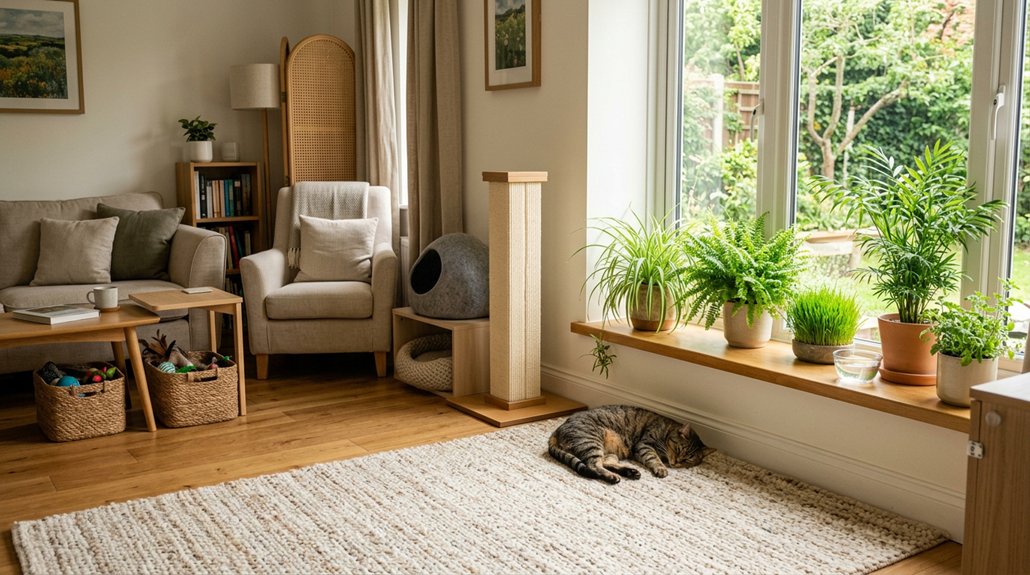
To create a cat-friendly home, integrate cozy hideaways and raised platforms for feline exploration. Use wide, shallow feeding bowls in peaceful locations, and provide multiple water sources like filtered fountains. Position litter boxes in quiet areas, separate from food, maintaining cleanliness. Facilitate play with interactive toys, and secure household hazards to guarantee safety. Regular social interactions and grooming enhance their emotional well-being. Discover more to guarantee a balance between comfort and safety for your cat.
Key Takeaways
- Create cozy and elevated hideaways for cats to explore, rest, and reduce stress.
- Use wide, shallow bowls for feeding stations and place them away from busy areas and litter boxes.
- Maintain clean litter boxes with unscented, clumping litter, one per cat plus an extra, to prevent territorial disputes.
- Rotate interactive toys and establish structured play routines to stimulate hunting instincts and reduce stress.
- Secure windows with screens and store hazardous substances to ensure a safe home environment.
A Cat-Friendly Home: Safe Spaces for Rest
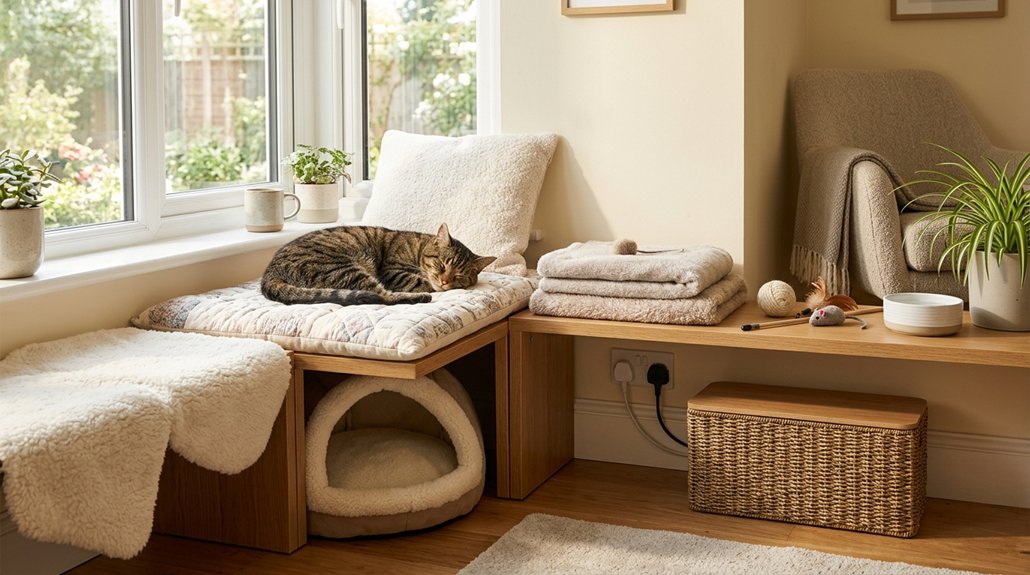
Providing a cat with a variety of safe spaces for rest is essential for its well-being. You should integrate cozy hideaways into your home, such as cluttered areas and raised platforms, to fulfill your cat’s instinctual needs for exploration and refuge. High places like cat trees not only offer enrichment opportunities but also allow your feline friend to observe its surroundings from a secure perch. Make sure to create well-defined spaces like cozy beds or hideaway boxes, accessible from at least two sides, reducing confinement and promoting comfort. Radiator beds and elevated perches cater to older cats’ needs for warmth, while ensuring easy access to climbing structures. These thoughtful considerations play a vital role in fostering a stress-free and enriching environment for your cat.
Designing Feeding Stations to Reduce Stress
To optimize your cat’s eating experience and minimize stress, choose wide, shallow bowls made of ceramic or glass to prevent whisker fatigue, ensuring your cat can eat comfortably. Position these bowls away from litter boxes and busy areas of your home to create a peaceful eating environment. Placing multiple feeding stations throughout the house, with one bowl per cat plus one extra, can greatly reduce competition and stress in multi-cat households.
Optimal Bowl Selection
Selecting the right bowls plays an essential role in creating a stress-free environment for your cat during mealtime. Start by choosing wide, shallow bowl shapes made from high-quality bowl materials like ceramic or glass. These materials are preferred due to their non-porous surfaces, which help prevent bacteria buildup, and the shape helps avoid whisker fatigue, minimizing stress.
Incorporate puzzle or slow feeders into your feeding routine. These options encourage natural hunting behaviors, engaging your cat mentally while helping to prevent overeating. Additionally, varied water sources such as filtered fountains or secondary bowls provide hydration and appeal to your cat’s fascination with moving water. Prioritizing these aspects enhances your cat’s mealtime experience by merging practical design with natural instincts.
Strategic Bowl Placement
In addition to selecting the right feeding tools, consider where you’re placing these essentials within your home. Positioning is vital for maintaining bowl hygiene and establishing an effective feeding routine. Place food and water bowls separately to prevent contamination and encourage proper hydration, as cats naturally prefer them spaced apart. Use wide, shallow ceramic or glass bowls to prevent whisker fatigue, thereby reducing stress and promoting comfortable eating sessions.
Select low-traffic, discreet areas away from litter boxes to help your cat feel secure while dining. If you have multiple cats, offer more than one feeding station—following the rule of one bowl per cat plus one extra—to minimize competition and stress. Maintain cleanliness by regularly sanitizing feeding areas, as cats are sensitive to odors and environments.
Litter Box Tips for a Clean Home
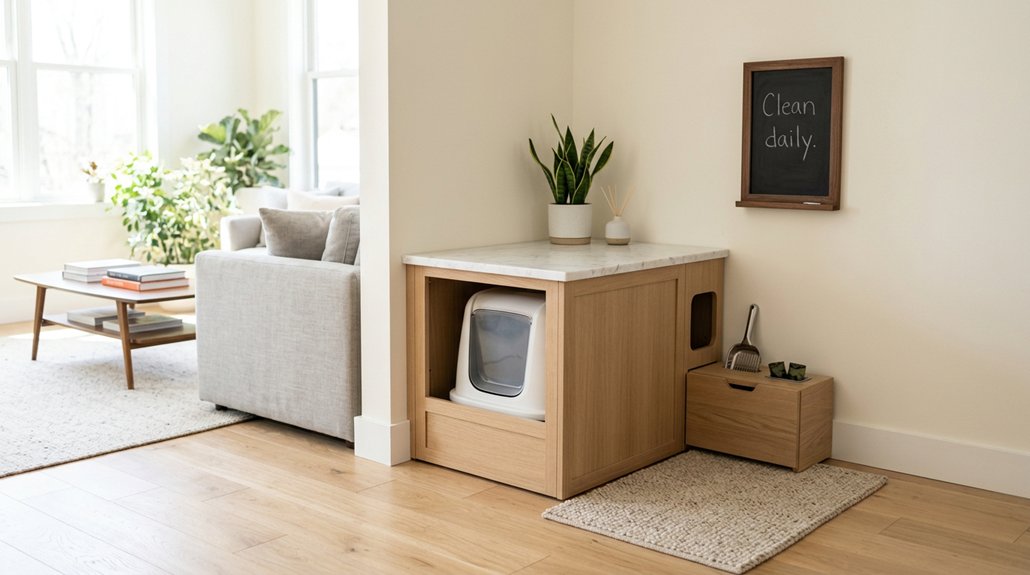
A well-maintained litter box not only fosters cleanliness but also contributes to a harmonious home environment for both you and your feline companions. Ideal litter box placement is essential; aim to position them in quiet, accessible spots away from food and water bowls to mitigate stress and promote consistent use. It’s important to respect your cat’s litter preferences; opt for unscented, clumping varieties to facilitate easy cleaning and satisfy their sensitive noses. Aim for one litter box per cat plus an extra to prevent territorial disputes. Clean them every day and change the litter weekly to avoid lingering odors. Incorporating a litter mat can effectively trap stray litter, maintaining a tidy area. By following these guidelines, you’ll guarantee a pristine, stress-free environment.
Playtime Strategies: Encouraging Exploration
When fostering a stimulating environment for your cat, incorporating playtime strategies can greatly enhance exploration and engagement. Interactive toys, such as feather wands or laser pointers, simulate hunting experiences, catering to your cat’s natural predatory instincts and promoting physical activity. To maintain novelty and engagement, rotate different toys regularly, which prevents boredom and encourages exploration. Provide vertical play areas like cat trees or shelves, offering opportunities for climbing and observation, thereby enriching the feline environment. Introduce food puzzles during playtime for mental stimulation, mimicking hunting behaviors and requiring problem-solving skills to access treats. Ascertain playtime is consistent and predictable; this structured routine builds your cat’s confidence and encourages them to explore their surroundings further.
How to Catify Your Home for Safety
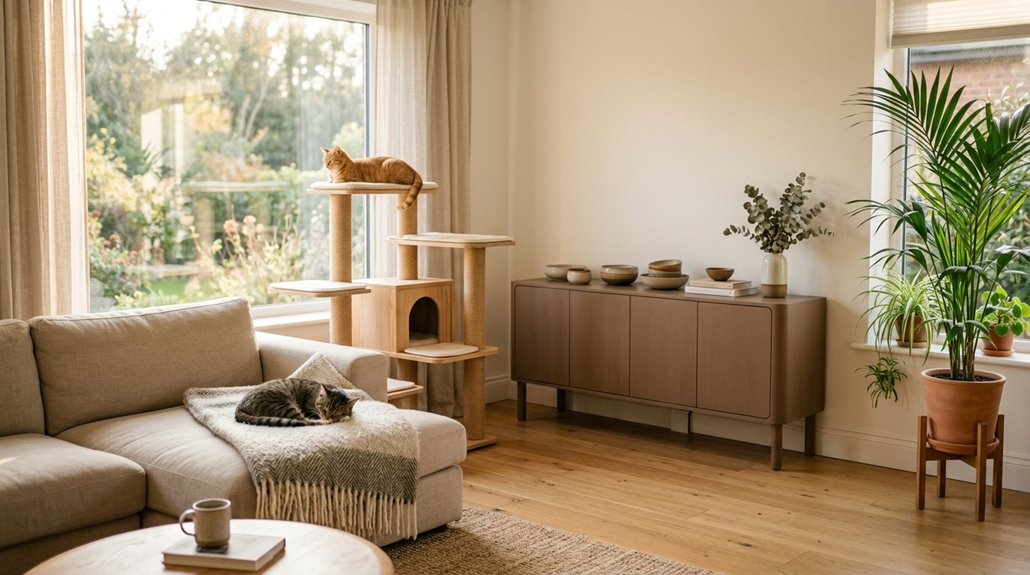
While interactive play strategies engage your cat’s natural instincts, creating a safe home environment is equally important. Cat safety begins with secure windows; install sturdy screens to prevent daring escapes while allowing fresh air circulation. Tie back long blind or curtain cords using cord tie-downs to eliminate choking hazards. For chemical safety, store household cleaners and toxic substances in cabinets with secure closures, away from curious paws. Additionally, provide one litter box and food/water station per cat, plus one extra, to minimize stress in multi-cat households. Regularly check your furniture and shelves for stability, and guarantee tall items are anchored to walls. This proactive approach helps prevent accidents from climbing cats, ensuring a safe, secure environment for your feline friends.
Maintaining a Comfortable Scent Environment
Understanding the importance of scent in a cat’s environment can greatly improve their comfort and well-being. Cats rely on scent recognition to navigate their world, so ensuring familiar, calming scents is essential. Strong-scented cleaners can overwhelm them, causing anxiety. Opt for unscented or lightly-scented litters to avoid disrupting their natural scent markings, which provides them with security.
Consider synthetic pheromones, as they replicate the comforting scents cats find reassuring. Allow your cat to maintain their scent marks; this fosters a safe and comfortable atmosphere.
Here’s a quick reference table to enhance your cat’s scented environment:
| Do’s | Don’ts | Benefits |
|---|---|---|
| Use calming scents | Avoid strong cleaners | Reduces stress |
| Lightly-scented litter | Highly-fragrant options | Maintains security |
| Synthetic pheromones | Overriding their scent marks | Provides emotional well-being |
Managing Social and Solo Time Needs
To guarantee your cat thrives, it’s essential to balance their need for interaction with periods of independence. Designing spaces with hideaways and elevated perches allows your cat to manage their social time, while regular play sessions serve as key bonding opportunities. By observing their body language and providing a mix of interactive toys and quiet spots, you can cater to both their social and solo preferences effectively.
Balancing Interaction and Independence
Recognizing a cat’s dual nature as both a social and solitary creature is crucial for creating a harmonious home environment. Acknowledge your cat’s inherent need for interactive play and incorporate regular sessions using toys that mimic prey. This practice satisfies their natural predatory instincts while fostering important social engagement with you. Understanding that each cat has individual personality traits means observing and respecting their unique social preferences. Tailor your interaction levels to guarantee your cat feels secure and respected. It’s important to consistently provide structured social interactions, mixed with periods of independent time, like grooming or petting. Doing so establishes routine, contributing to stability in their lives. By achieving this balance, you support your cat’s overall psychological health and stress reduction.
Designing Solo Spaces
While social engagement is essential, it’s equally important to guarantee your home offers solo spaces for your cat. Providing cozy hideouts and elevated perches is key to ensuring your feline friend can retreat when they need a break. These spaces allow your cat to establish a well-defined territory, fulfilling their instinctual need to hide and observe unnoticed. Incorporating multiple safe hideaways in various rooms reduces stress and anxiety, giving cats the autonomy to choose between social time and solitude.
In multi-cat households, separate solo spaces help minimize competition and foster security. Each cat benefits from having its private domain, especially in reducing territorial disputes. By balancing areas for active play and quiet relaxation, you create a harmonious environment that caters to all of their needs.
Creating Bonding Opportunities
Understanding your cat’s dual need for social interaction and solitary time is crucial for enhancing your bond. Regular play sessions with interactive toys mimic hunting simulation, satisfying their predatory instincts while reinforcing your connection through shared activities. This structured interaction is a practical method for trust building, as it allows your cat to feel secure in your company. Equally important is respecting their need for solitude; guarantee your home provides quiet, designated safe spaces for rest and recharge. Observe your cat’s preferences for social engagement and allow them to initiate interactions, which fosters mutual comfort and trust. Incorporate routine petting and grooming, essential for emotional well-being. A balanced mix of shared and solitary territories supports your cat’s complex social and individual requirements.
Cat-Proofing Your Home’s Hazards
Making certain your home is safe for your feline companion involves recognizing potential hazards and taking preventive measures to eliminate risks. A key area to address is chemical safety. Store household chemicals, like cleaners and antifreeze, securely out of your cat’s reach. These substances can be highly toxic if ingested or inhaled. Equally important is addressing electrical hazards. Protect electrical cords and wires with cord covers or tape to prevent your cat from chewing on them, which can result in dangerous electric shocks or fires. Secure appliance doors such as those on washers and dryers to prevent harmful accidents. Finally, make certain compost bins and trash cans have secure lids, and regularly inspect windows and balcony railings to prevent escapes.
Hydration Tips: Diverse Water Sources for Cats
After safeguarding your home against common hazards, it’s important to turn attention to your cat’s hydration needs, an often overlooked aspect of indoor cat care. Ensuring multiple diverse water sources can greatly enhance your cat’s water intake. Prefer wide, shallow bowls, which reduce whisker discomfort, using safe bowl materials like stainless steel. Fresh, room-temperature water can be more inviting.
| Water Source | Advantages |
|---|---|
| Filtered Water | Removes impurities |
| Water Fountains | Constant flow, cats’ favorite |
| Shallow Bowls | Comfort for whiskers |
| Multiple Stations | Accessibility, convenience |
| Daily Water Change | Keeps water fresh |
Frequently Asked Questions
How Can I Help My Cat Adjust to New Furniture?
Introduce new furniture by initially maintaining familiar furniture placement to guarantee your cat doesn’t feel too disoriented. Allow time for scent familiarity by placing your cat’s scent-marked items near the new furniture for comfort.
What Plants Are Safe to Keep in a Cat-Friendly Home?
You can safely include cat safe herbs like rosemary, thyme, and basil. Non-toxic flowers such as African violets, orchids, and spider plants are excellent choices. These won’t harm your feline friend, ensuring their safety and well-being.
How Do I Introduce a New Cat to My Current Pets?
Ah, introducing a new dictator to the existing regime! Keep them separated at first, allowing smell exchanges through doors. Monitor cat behavior closely as they meet, ensuring pet dynamics remain peaceful. Gradually, they’ll form their own political alliances.
What’s the Best Way to Transport My Cat Safely?
Guarantee safety using well-ventilated cat carriers. Secure carriers with seatbelts for stability. Acclimate your cat by placing treats inside. Travel tips include maintaining a calm environment and using pheromone sprays to reduce anxiety. Always prioritize comfort.
How Can I Reduce Shedding and Keep Furniture Clean?
To reduce shedding and keep furniture clean, regularly use grooming tools like deshedding brushes. Additionally, employ vacuum techniques specifically designed for pet hair, focusing on upholstery and crevices, ensuring efficient removal of loose fur from all surfaces.
Conclusion
Creating a cat-friendly home isn’t rocket science—it’s about blending science and love. Prioritize safe resting spaces and stress-reducing feeding stations, like a responsible pet parent. Designate litter box areas for hygiene and make playtime a quest for the feline Indiana Jones in your life. Catify your pad for safety, maintain a welcoming scent, and balance social and solo needs. Hydrate with diverse water sources and cat-proof potential hazards. You’ve got this, cat caretaker extraordinaire.