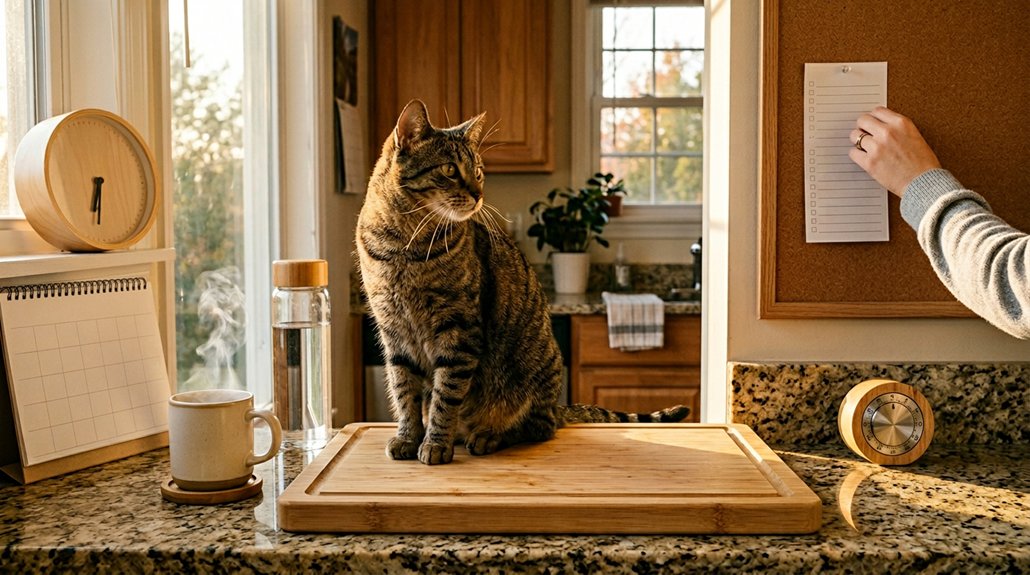
To build a daily routine with your cat, start with gentle wake-up rituals and maintain consistent feeding schedules to enhance security and trust. Engage in short play sessions to mimic natural hunting and reduce boredom. Regular grooming supports health and bonding, while cozy rest areas and soothing sounds comfort them in your absence. Evening routines with play or grooming signal downtime, improve sleep, and reduce anxiety. There’s more to explore about structuring their day effectively.
Key Takeaways
- Establish consistent feeding and play schedules to enhance your cat’s sense of security and trust.
- Incorporate short, interactive play sessions daily to mimic natural hunting behaviors and reduce boredom.
- Create cozy resting spaces and use calming music to reduce anxiety when your cat is alone.
- Implement regular grooming sessions to promote bonding and monitor your cat’s health.
- Develop a structured evening routine, including gentle play and petting, to improve sleep quality and relaxation.
Setting Up a Routine: Quick Start Guide
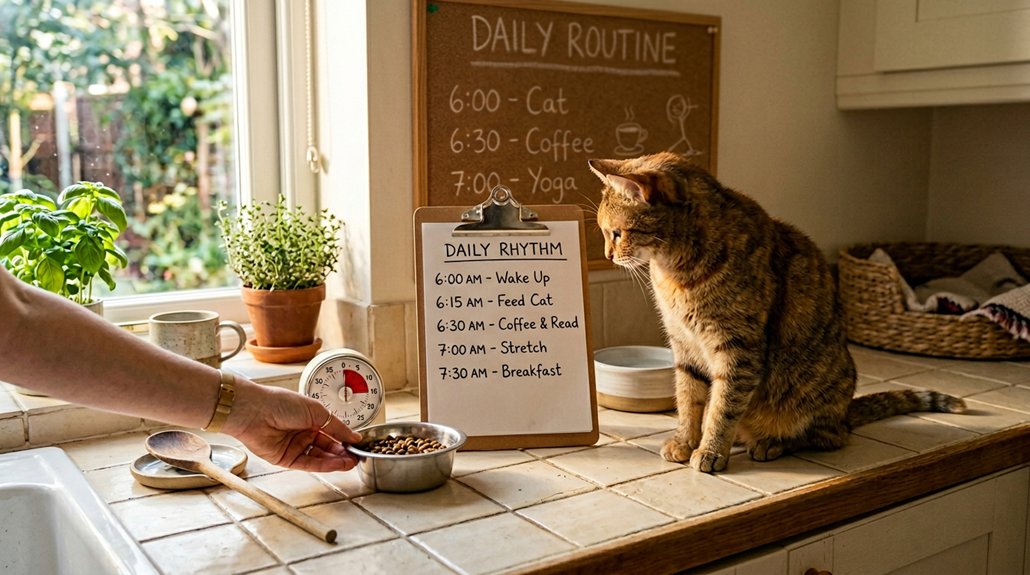
Establishing a daily routine with your cat requires understanding their natural behaviors and preferences. Begin each day with gentle wake-up morning rituals that include soft greetings and affection. This fosters a sense of safety, preparing your cat for the day ahead. A consistent feeding schedule is essential in promoting healthy eating habits. Serve meals in a calm environment, which enhances your cat’s sense of security. Following breakfast, incorporate short play sessions to mimic natural hunting behaviors, effectively engaging your cat’s mind and body. This routine helps to stimulate mental engagement and maintain a healthy lifestyle. Finally, offer regular grooming moments to minimize shedding and conduct health checks, strengthening the bond between you and your cat while keeping them comfortable.
Why Mealtime Is Key for Your Cat’s Day
During your cat’s day, mealtime consistency provides an essential sense of security and trust, supporting their mental and emotional health. Ensuring ideal hydration through regular feeding schedules promotes overall well-being, while incorporating interactive meals can strengthen your bond and stimulate your cat mentally. By maintaining these practices, you can mitigate stress and anxiety, creating a harmonious environment that reflects their natural instincts.
Consistency Enhances Security
While it might seem simple, setting a consistent feeding schedule is essential for your cat’s overall well-being. Establishing routine feeding times enhances feeding security, reduces meal anxiety, and promotes feline comfort. Predictable mealtimes allow your cat to anticipate and understand their daily food supply, fostering a stable environment. Cats naturally prefer to graze, so offering several small meals aligns with their instinctual eating behaviors.
Routine benefits extend beyond just reducing anxiety—consistent feeding schedules aid in digestive health and improve behavior management. By regulating your cat’s eating patterns, you support their overall physical and emotional health. Cleaning the litter box post-meal can further reinforce this routine, creating a hygienic habitat. Engaging with your cat during these times can strengthen the human-animal bond, enhancing their daily experience.
Hydration Encourages Health
Cats are inherently adept at masking discomfort, so ensuring they remain adequately hydrated is essential to preventing serious health issues like urinary tract complications. The hydration benefits are remarkable, given a cat’s specific dietary habits. Multiple small meals throughout the day can seamlessly integrate water sources, enhancing overall fluid intake. Feeding moisture-rich canned food twice daily effectively mirrors natural feline eating behaviors, greatly supporting hydration. Always provide fresh, clean water; it should be readily accessible at all times to promote ongoing hydration. Maintaining a regular feeding routine creates anticipation for meal times, lowering stress and fostering predictable hydration patterns. Additionally, by observing changes in eating or litter box habits, you’ll be positioned to detect health issues early, ensuring prompt intervention.
Interactive Meals Build Bonds
Elevate mealtime by introducing interactive elements, fostering deeper connections between you and your feline companion. Interactive feeding transforms a basic necessity into an engaging activity, enriching your cat’s mental and emotional landscape. When you engage with your cat, whether it’s by offering treats by hand or through engaging puzzle feeders, you’re promoting meal engagement that stimulates natural foraging behaviors and enhances overall well-being.
Moreover, consistent meal times paired with verbal interaction can reduce anxiety and reinforce a sense of security. Talking to your cat during meals cultivates trust and companionship, offering more than just nourishment. Establishing a stable routine through interactive feeding not only improves mealtime associations but also creates an environment of trust, nurturing a lasting bond with your furry friend.
Daily Play Sessions: Boosting Cat Happiness
Engaging your cat in daily play sessions is a crucial aspect of enhancing their happiness and overall well-being. The playtime benefits include improving both mental and physical health by reducing boredom and discouraging unwanted behaviors. Cat engagement through interactive toys such as wand toys, laser pointers, and treat puzzles stimulates their natural hunting instincts. This provides essential exercise and mirrors predation patterns, releasing pent-up energy and diminishing frantic “zoomies” later in the day.
Regular play strengthens the bond between you and your cat, fostering companionship and trust. Scheduled play sessions offer a critical opportunity for behavior monitoring, ensuring your cat remains healthy and content. By making playtime a consistent part of your cat’s daily routine, you’ll support their happiness and long-term health.
Creating Comfort When You’re Away
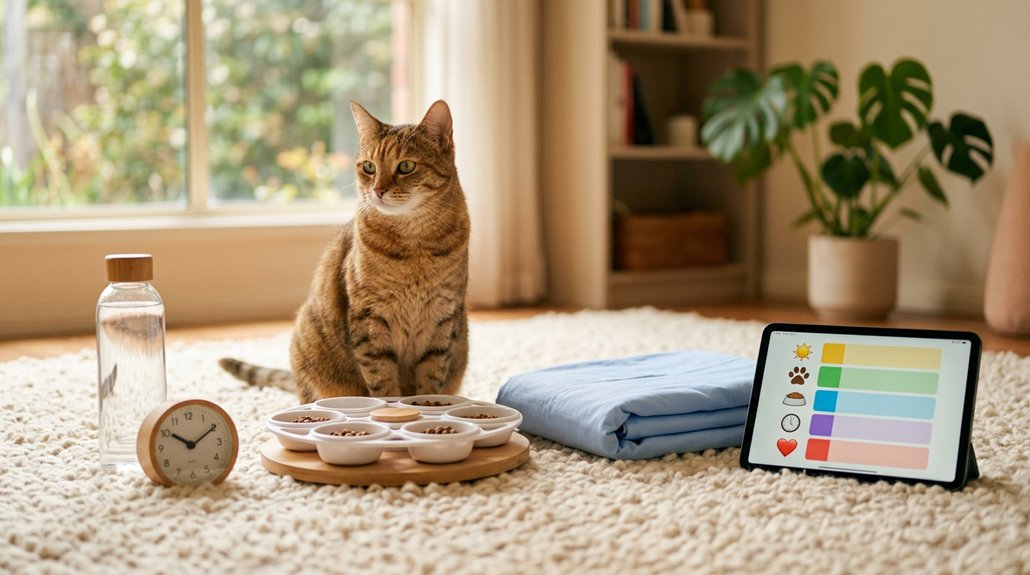
While interactive play is pivotal for your cat’s health and happiness, ensuring their comfort during your absence is equally important. Start by creating cozy spaces for resting. A familiar environment with safe retreat spots can greatly reduce anxiety. Consider the addition of auditory comfort through background sounds like calming music or a dedicated TV program for cats. Such sounds can alleviate loneliness. Introducing enrichment activities like puzzle feeders or treat-dispensing toys keeps your cat mentally stimulated, preventing boredom. Establishing a predictable routine for feeding and playtime helps your cat feel secure even when you’re not around. By preparing soothing surroundings, you can minimize stress and promote emotional well-being, making your absence easier for your feline companion.
Evening Play and Wind-Down: Better Sleep for Your Cat
To guarantee your cat achieves restful sleep, integrating a consistent evening play session of 10-15 minutes can effectively expend their daily energy. After playtime, a gentle petting or grooming routine signals it’s time to wind down, promoting a relaxing passage into the night’s rest. By establishing these predictable, soothing activities, you enhance your cat’s comfort and contribute to improved sleep quality.
Enhance Pre-Sleep Activities
As you establish a structured nightly routine for your cat, incorporating deliberate pre-sleep activities can greatly enhance their quality of rest. Implement effective playtime strategies by engaging your cat in a final 10-15 minute play session before bedtime. This releases pent-up energy, helping your cat shift to a restful state. Following play, employ winding down techniques such as gentle petting or grooming. These calming activities signal the day’s end, creating a soothing environment.
| Activity | Purpose |
|---|---|
| Play Session | Releases energy for relaxation |
| Petting or Grooming | Signals day’s end and encourages calmness |
| Consistent Routine | Offers predictability and reduces stress |
| Cuddle Time | Enhances trust and observes comfort levels |
A consistent evening routine offers security, reducing anxiety and fostering better sleep patterns.
Promote Evening Relaxation
Creating an environment conducive to relaxation is essential for your cat’s evening routine. Start with an engaging play session to help your cat release any pent-up energy. This reduces hyperactivity and shifts naturally into the next phase of your evening rituals. After play, engage in relaxation techniques like gentle petting or grooming, signaling that it’s time to wind down. Consistency is key, so maintain a predictable pattern which helps reduce anxiety.
Prepare a quiet, cozy resting area coupled with soothing background sounds to enhance their sense of security. This supportive setting aids in promoting relaxation and a sound night’s sleep. Additionally, incorporating a treat sequence before bed can further calm your cat, marking the shift to night and restful slumber effectively.
Encourage Gentle Nighttime Routines
Evening relaxation naturally leads into gentle nighttime routines that enhance your cat’s sleep quality. Conduct a final play session to let your cat expend energy, creating a perfect setup for a soothing environment. Follow with calming petting or groom your feline friend, signaling the day’s end. Consistent nighttime rituals, like offering a small treat, can bolster security. These steps help reduce anxiety, contributing to a restful night’s sleep. Always check in on their mood during the wind-down to strengthen your bond.
Here’s a table to visualize:
| Activity | Purpose | Outcome |
|---|---|---|
| Evening Play | Energy release | Better sleep quality |
| Petting/Grooming | Day’s end signal | Soothing environment |
| Offer Treat | Enhance security | Nighttime ritual |
These routines guarantee relaxation and comfort for your cat.
Daily Grooming as Part of Your Cat’s Routine
Integrating daily grooming into your cat’s routine plays an essential role in maintaining its best health. Utilizing the right grooming tools and employing effective grooming techniques reduces shedding and the formation of hairballs. This practice enhances coat health and skin condition, promoting a shinier, healthier appearance. Regular brushing isn’t just about aesthetics; it allows you to monitor your cat’s skin closely, catching potential health issues early on. Starting this habit early helps minimize resistance, ensuring your cat becomes comfortable with the process.
Moreover, these sessions are a valuable opportunity to foster bonding and trust, making your cat feel cared for. As part of their daily routine, grooming offers consistent interaction and care, contributing notably to your cat’s overall well-being.
How to Adjust Your Cat’s Routine for Life Changes
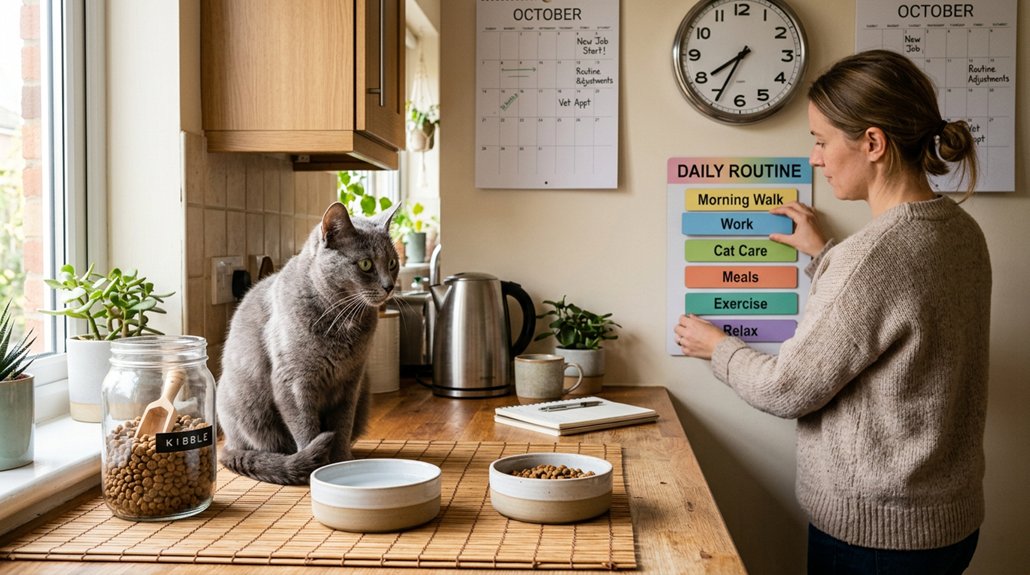
Life changes can be challenging for your cat, but by following strategic steps, you can ease their adjustment. Gradual changes to your cat’s routine, like introducing new feeding times, minimize cat anxiety. Maintain consistency in essential aspects such as feeding and litter box cleaning, as routine flexibility with these tasks may lead to stress.
| Key Elements | Tips for Adjustment |
|---|---|
| Feeding Routine | Introduce new times gradually |
| Play Sessions | Create a consistent schedule |
| New Family Members | Allow scent exchange and interactive play |
| Behavior Observation | Watch for signs of stress or discomfort |
Monitor behavior changes closely; these signs may require tweaking your cat’s routine. Offering increased attention and gentle interaction can further ease adjustments, fostering security and trust in evolving environments.
Frequently Asked Questions
What Is the 3-3-3 Rule for Cats?
The 3-3-3 rule for cats outlines their adjustment timeline: three days for stress-related cat behavior, three weeks for exploring, and three months for full integration. Understanding feline needs aids in patience, ensuring a stress-free adjustment for your cat.
What Is a Good Daily Routine for a Cat?
Start with morning cat exercise to mimic hunting, followed by a consistent feeding schedule offering high-quality food and fresh water. Engage in afternoon play for energy release, then conclude with calm bonding activities, fostering a secure environment.
What Is “I Love You” in Cat Language?
Imagine a purr so loud mountains could shake. That’s “I love you” in cat communication. Through feline affection, slow blinks, gentle purrs, and playful kneading, they’re expressing deep trust and an unspoken bond with you.
What Color Cat Is Least Desired?
Black cats are often least desired due to superstitions reflected in cat color psychology. Despite their affectionate nature, feline adoption trends reveal longer wait times for them. Advocacy and awareness campaigns aim to educate and shift perceptions positively.
Conclusion
Just as a maestro guides an orchestra, maintaining a consistent daily routine with your cat creates harmony in their life. Consider Mr. Whiskers, a cat transformed from a restless night prowler to a serene companion through structured routines. A study shows that predictable schedules reduce feline stress by 30%. By integrating meal times, play, and grooming into your cat’s day, you’re crafting a symphony of stability, ensuring your feline friend thrives in a world orchestrated by your care.