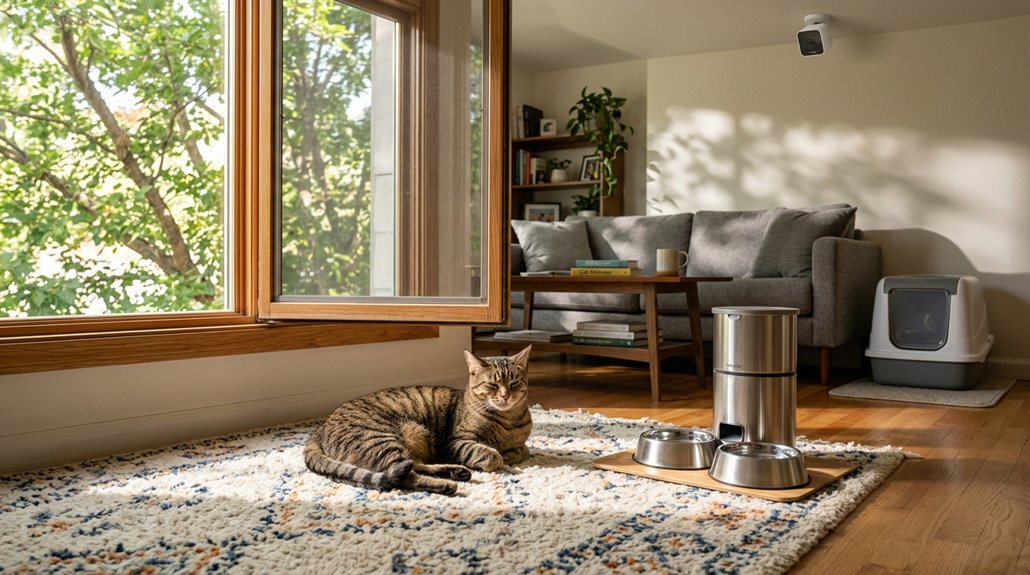
Guarantee your cat’s safety by implementing food rotation with automatic feeders and stable water sources like fountains. Secure potential hazards and provide engaging toys, climbing structures, and visual stimuli like bird feeders. Use surveillance cameras with real-time feeds for monitoring, and consider reputable pet sitters, especially for cats needing special care. Regular vet visits help maintain health. It’s essential to establish these strategies to enhance your understanding of effective cat care during absences.
Key Takeaways
- Use automatic feeders and water fountains to ensure consistent nutrition and hydration.
- Remove hazards and provide toys to maintain a safe, engaging environment.
- Install surveillance cameras for real-time monitoring and reassure your cat via two-way audio.
- Hire a reliable pet sitter through trusted platforms, ensuring compatibility and understanding of your cat’s needs.
- Schedule regular vet check-ups and update care plans to manage health effectively.
Ensuring Food and Hydration
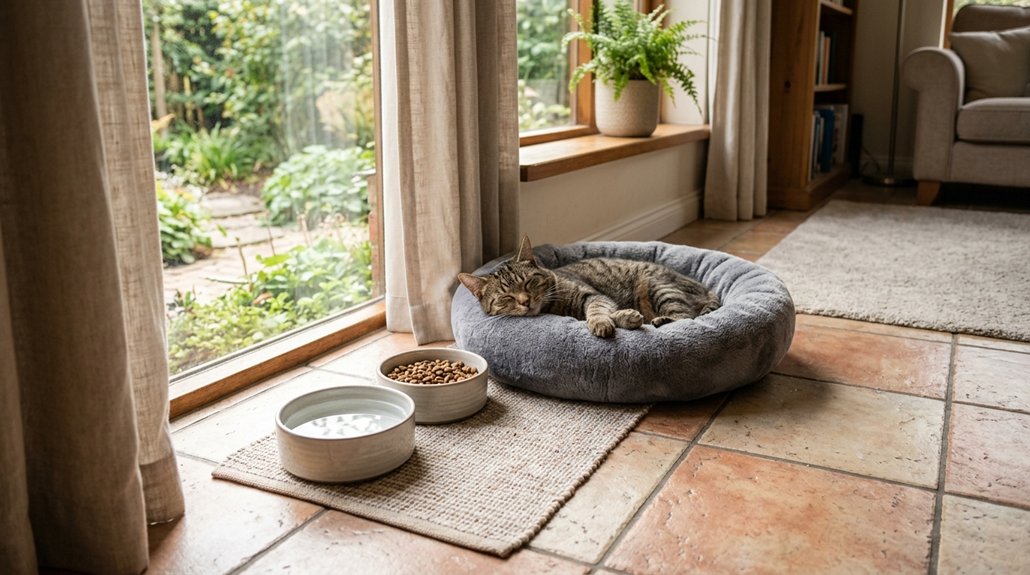
Ensuring your cat’s wellness while you’re away requires careful planning, particularly when it comes to food and hydration. Implementing food rotation strategies through automatic feeders guarantees your cat receives consistent, measured portions of dry food. This approach helps maintain their health by preventing overeating or undernourishment. Remember to leave enough food to cover your absence, aligning with the duration of your trip.
Hydration importance can’t be overstated. Daily water replacement in a sturdy bowl is essential, but for best results, consider using a water fountain. This not only provides a continuous supply but encourages increased water intake. Secure both food and water bowls to prevent spills, mitigating the risk of dehydration or hunger, and ensuring your cat remains comfortable until your return.
Arrange for Necessary Pet Supplies
A systematic approach to arranging necessary pet supplies assures your cat remains comfortable during your absence. First, verify a sufficient stock of dry and wet food, utilizing automatic dispensers for controlled portioning. Consistent hydration is critical; a water fountain provides a continuous supply and mitigates spill risks. Maintain ample cat litter for daily cleaning needs, and have an extra litter box available in case your absence is prolonged. Organize grooming routines efficiently by gathering food, litter, toys, and medications in a designated area. This streamlines your sitter’s access to essentials. Also, communicate emergency contacts, facilitating immediate assistance if issues arise. With meticulous planning, you’ll uphold quality care standards, fostering your cat’s well-being even when you’re not at home.
Create a Safe and Engaging Environment
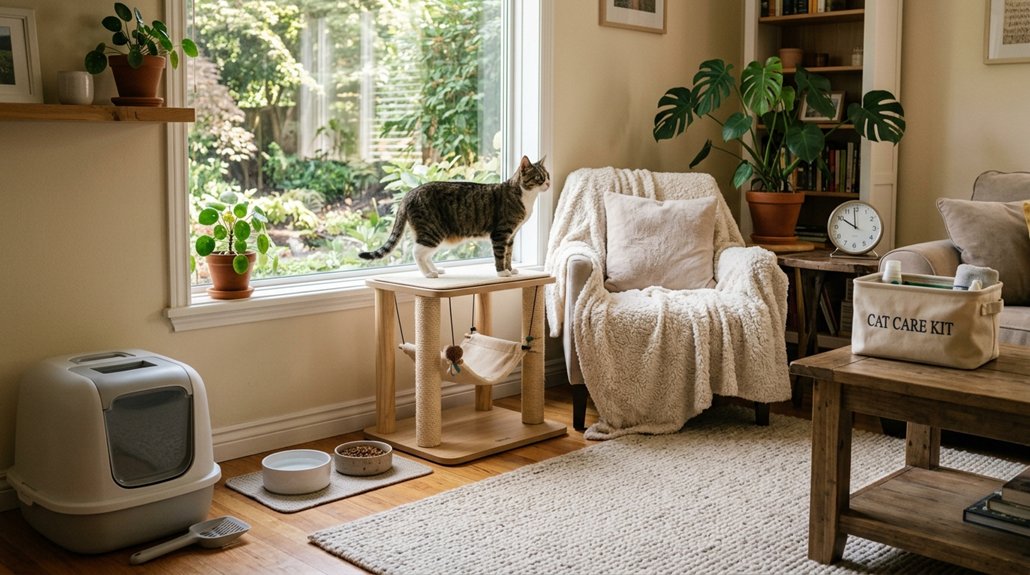
When preparing to leave your cat home alone, it’s essential to remove potential hazards by eliminating toxic plants and securing all dangerous substances out of their reach. Providing a variety of safe toys and interactive puzzles will engage your cat mentally and physically, reducing the chance of boredom. Additionally, cultivating an environment that offers vertical spaces and comfortable resting areas helps guarantee a secure and stimulating home for your feline friend.
Remove Potential Hazards
Making your home safe for your cat while you’re away involves methodically removing potential hazards. Start with a thorough hazard assessment. Conduct a safety check by securing all dangerous chemical substances, like air fresheners and insecticides, in locked cabinets to prevent accidental ingestion. Remove harmful foods such as chocolate, onions, and raisins, ensuring these toxic items are inaccessible. Relocate poisonous house plants to secured areas or temporarily place them outside. Additionally, eliminate choking hazards, such as yarn, dental floss, and small objects, from accessible areas. Cover and secure loose electric cords to prevent chewing and potential injury—use cord covers or protective sprays for added safety. Through these precautions, you can safeguard your cat’s environment effectively.
Ensure Engaging Enrichment
Effectively ensuring enriching stimulation for your cat while you’re away involves attentive planning and thoughtful arrangement. Providing a range of interactive toys, such as puzzles and scratching posts, can mitigate boredom and promote mental engagement. Establish climbing structures with cat trees or wall-mounted shelves—they cater to your cat’s innate climbing instincts and enhance their exploratory experience safely.
Consider placing bird feeders near windows to offer visual enrichment from the wildlife outside. Cardboard boxes and paper bags afford additional opportunities for hiding and play, serving multi-functional enrichment purposes. Regularly rotate toys and involve simple DIY activities, like hiding treats in a shoebox, to keep your cat’s environment dynamic. This methodical approach enriches their surroundings, maintaining their stimulation during your absence.
Utilize Technology for Monitoring
To guarantee your cat’s well-being while you’re away, consider installing pet surveillance cameras that offer real-time video feeds. These systems often include two-way audio features, allowing you to communicate with your cat and provide reassurance if needed. Accessing live feeds can help you promptly address any unusual behaviors or environmental changes, promoting a more secure and stress-free experience for your pet.
Install Pet Surveillance Cameras
Installing pet surveillance cameras is an effective method to secure the well-being of your cat while you’re away. With advanced camera features such as motion detection and night vision, you can consistently monitor your cat’s activities in real-time, making sure any unusual behavior doesn’t go unnoticed. As you set up these systems, consider installation tips to maximize efficacy and coverage within your home environment. Here’s a useful guide to follow:
- Select cameras with night vision: Guarantees visibility regardless of lighting conditions.
- Utilize cloud storage options: Review footage later to ascertain any concerning behavior.
- Adjust motion detection sensitivity: Calibrate settings to avoid unnecessary alerts.
- Position cameras strategically: Cover essential areas like feeding stations and sleeping spots.
Implementing these steps will help maintain an attentive, safe environment.
Leverage Two-Way Audio Features
Have you ever wondered how you can stay connected with your cat while you’re away? Utilizing two-way audio features can bridge that gap with precision. These devices facilitate audio interaction and real-time behavioral monitoring, enabling you to reassure your feline through verbal communication. By receiving notifications via mobile apps when sounds are detected, you’re kept updated on your cat’s environment. This technology combats separation anxiety by allowing you to offer verbal comfort.
| Feature | Benefit | Example Use |
|---|---|---|
| Audio Interaction | Reduces separation anxiety | Talk to your cat |
| Behavioral Monitoring | Detect anomalies | Respond to distress |
| Notifications | Stay informed | Noise alerts |
| Verbal Comfort | Eases stress | Calm nervous cats |
| Integration Options | Enhanced engagement | Choose tailored apps |
Access Live Video Feeds
Sometimes, pet owners worry about what their cats do when left alone, making live video feeds an indispensable tool for keeping an eye on your feline friend. Here’s a structured approach to camera recommendations and streaming options:
- Two-Way Audio Features: Opt for cameras that provide two-way audio, allowing you to communicate and calm your cat if separation anxiety arises.
- Motion Detection Alerts: Look for equipment capable of sending alerts for unusual movements, offering real-time notifications of your cat’s activity.
- Night Vision Capabilities: Verify the camera you’ve selected includes night vision to monitor your cat even in low-light scenarios.
- Built-in Treat Dispenser: Consider pet cameras with treat dispensers, engaging your cat from a distance and encouraging good behavior.
These technological enhancements provide peace of mind while you’re away.
Find Trustworthy Cat Sitters and Help
When you’re planning to leave your cat home alone, guaranteeing their comfort and safety becomes a top priority. Finding a trustworthy sitter starts by evaluating sitter qualifications through reputable platforms like Rover or Care.com, where you can read reviews and ratings. Schedule a meet-and-greet to gauge their rapport with your cat and test communication expectations. Experienced sitters with certifications are essential, as they’re equipped to handle diverse scenarios. Provide them with thorough care instructions, including your cat’s routine, dietary needs, and emergency contacts. To maintain peace of mind, regularly check in for updates, photos, and reassurance. These careful steps guarantee your cat’s well-being and create a stress-free experience for both you and your furry friend while you’re away.
Plan for Special Needs and Long-Term Solutions
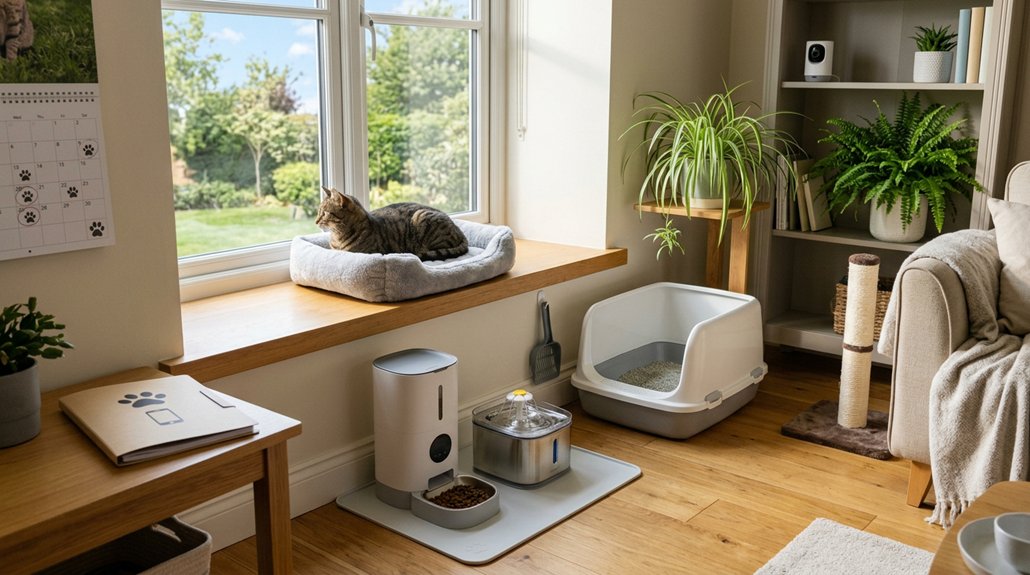
While finding a reliable cat sitter is essential, it’s equally important to address the unique requirements of special needs cats and consider longer-term solutions. Individualized care plans are vital, incorporating medication, diet specifics, and tailored enrichment. Here’s how to proceed:
- Hire a Professional Sitter: Look for someone trained in special needs care to manage medication and offer the attention your cat needs.
- Regular Vet Check-ups: Stay in touch with your vet to discuss care requirements, ensuring your cat’s health concerns are properly managed.
- Companion Adoption: If your cat is social, adopting a companion may reduce anxiety when you’re not around.
- Specialized Boarding Options: For long absences, specialized facilities can provide a supportive environment for cats with unique health challenges.
Frequently Asked Questions
What Is the 3-3-3 Rule for Cats?
The 3-3-3 rule guides you through your cat’s adjustment to new spaces: three days may show cat anxiety, three weeks to establish safety, and three months to fully settle into a trustworthy, safe environment, minimizing stress.
How to Leave a Cat Home Alone for 4 Days?
Leaving your cat is like entrusting your heart to a caretaker. Prioritize cat care: plan food preparation, guarantee water access, choose entertainment options, and implement safety measures like pet sitters and pet cameras for four days apart.
What Color Cat Is Least Desired?
You’re exploring cat color preferences, and data suggests black cats are least desired in feline adoption trends. Cultural superstitions contribute to this stigma, prompting advocacy groups to emphasize adopting based on personality over mere aesthetic considerations.
What Is “I Love You” in Cat Language?
In feline communication, “I love you” can be expressed through behaviors such as bunting, slow blinking, purring, grooming, and following you around. Each behavior reflects various aspects of trust, affection, and a cat’s social attachment.
Conclusion
Leaving your cherished cat solo starts with securing sustenance and supply support. Strategically set up a safe space that stimulates and soothes, mitigating mischief. Modern monitoring methods, like cameras, bring peace and precision. For trust and tranquility, tap into tried-and-true caretakers when needed. Plan for peculiar preferences and prolonged periods to prevent problems. With calculated caution and careful consideration, you’re crafting a calm, contented environment for your feline friend’s alone time.