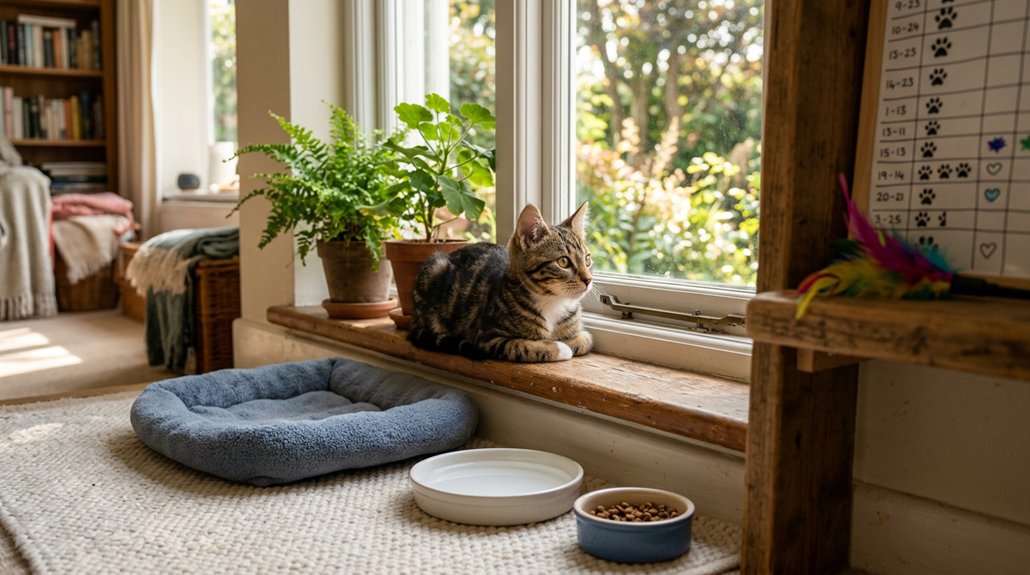
To help your kitten grow into a healthy cat, guarantee a balanced diet with at least 30% protein, following AAFCO guidelines. Regular vet visits are essential for vaccinations and tracking development. Create a stimulating environment with safe climbing spaces and interactive toys to support physical and mental health. Avoid harmful foods like chocolate and onions. Consistent routines and a varied diet lay the foundation for a healthy life. Discover more strategies for fostering your kitten’s growth and well-being.
Key Takeaways
- Ensure a balanced diet with at least 30% protein, following AAFCO guidelines, for optimal growth and muscle development.
- Schedule 3-4 nutritious meals daily until six months to support consistent growth.
- Maintain regular vet visits and essential vaccinations starting at eight weeks for preventative health care.
- Provide diverse interactive toys and climbing structures to foster physical activity and mental engagement.
- Create a safe, stimulating environment with scratching posts and cat-friendly spaces to encourage natural behaviors.
Know Your Kitten’s Diet Needs
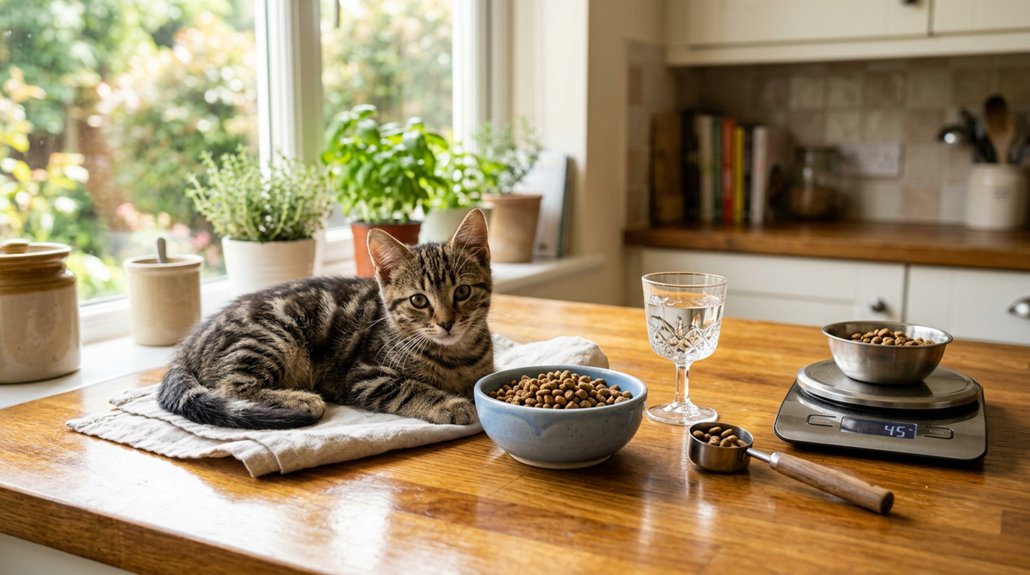
Wondering how to set your kitten on the path to healthy growth? Knowing their diet needs is essential. A reliable protein source is fundamental, as kittens require at least 30% protein to fuel rapid development, unlike adult cats who need just 26%. Opt for AAFCO-approved kitten foods, which guarantee essential nutrients for their muscle and organ health. Including both wet and dry food in your kitten’s diet is important, as wet food not only resembles their natural diet but also emphasizes the significance of hydration. Start shifting to solid food at four weeks, aiming for a full switch by eight weeks. Always avoid harmful foods like cow’s milk, onions, garlic, and chocolate to prevent health complications.
Best Feeding Practices for Growing Kittens
Proper feeding practices are essential for your kitten’s development, ensuring they receive balanced nutrition to thrive. Start with a high-quality diet that includes both wet and dry kitten food, adhering to AAFCO guidelines of at least 30% protein to support rapid growth. Introduce them to solid foods gradually at 4-5 weeks, and aim for a full changeover by 6-8 weeks. Schedule 3-4 meals daily until they reach six months, promoting consistency and balanced hunger levels.
Incorporate food variety by offering preservative-free kibble or canned options, ensuring each meal delivers essential nutrients. Avoid harmful foods like cow’s milk, onions, and chocolate. Keep treats to less than 10% of daily caloric intake to prevent obesity as they mature.
Make Your Home Kitten-Friendly and Fun
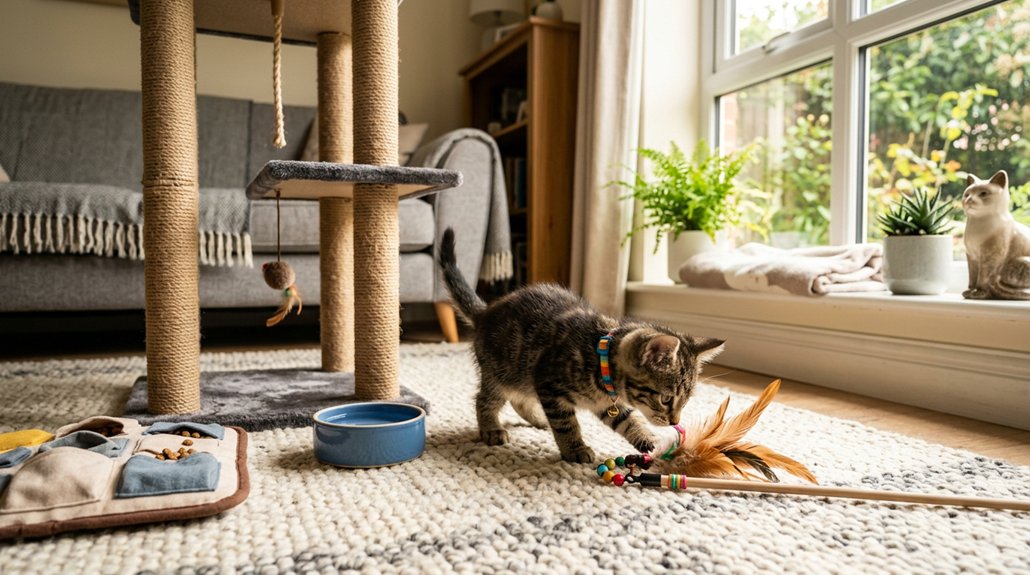
After ensuring your kitten is well-fed and healthy, it’s time to focus on making your home an engaging playground to support their physical and emotional growth. Creating kitten safe spaces will help your new family member thrive. Here are key steps:
- Vertical Spaces: Install cat trees or shelves to encourage climbing. This satisfies their natural instincts, promoting physical activity and exploration.
- Interactive Playtime: Provide toys like feather wands and balls for stimulating play and exercise. These are essential for developing physical and social skills.
- Safe Environment: Remove hazards like electric cords and toxic plants. Establish safe hiding spots, such as a cat carrier or a cozy blanket area, offering security and comfort.
Incorporate scratching posts to support natural behavior and protect furniture.
Encourage Active Play for Physical and Mental Health
While it may seem that kittens need little encouragement to play, introducing structured playtime is essential for their physical and mental health. Interactive toys that promote running and jumping greatly aid in muscle development and in maintaining a healthy weight. Be sure to include climbing spaces like cat trees or shelves to encourage natural climbing behaviors. These vertical options are vital for both physical fitness and mental stimulation. Structured play sessions mitigate the tendency for reduced activity as kittens mature, fostering lifelong fitness habits. Regular play not only prevents obesity but also strengthens your bond and enhances their social skills. Varied toys and activities keep your kitten mentally engaged, reducing behavioral issues related to boredom or lack of stimulation.
Keep Up With Health Vet Visits
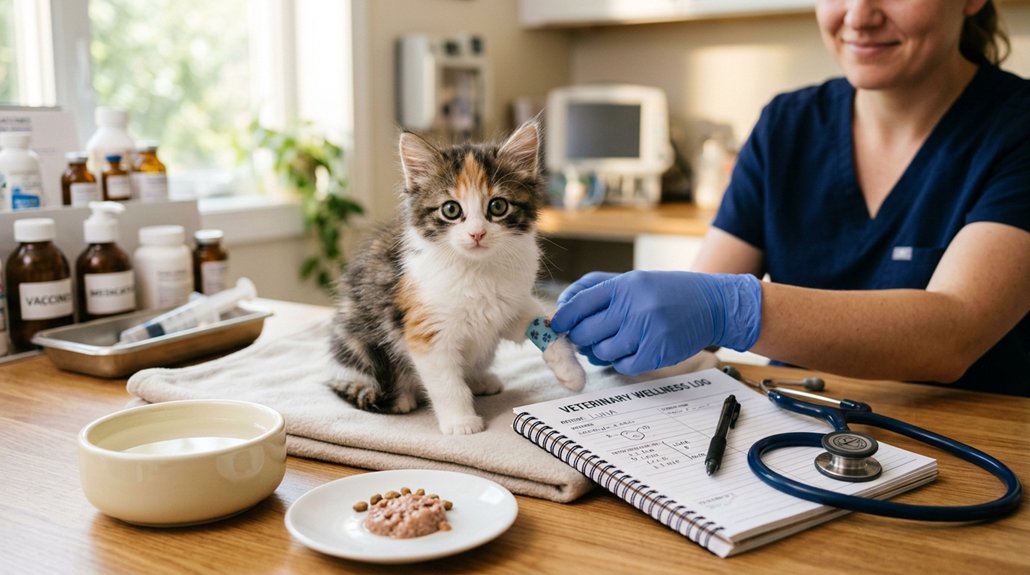
As you engage your kitten in active play to support their growth, don’t overlook the importance of keeping up with regular vet visits to guarantee they remain in peak health. Consistent health check-ups are necessary for ensuring proper preventative care. Schedule veterinarian exams every 3-4 weeks until your kitten is 16 weeks old. This allows them to receive necessary vaccinations starting at eight weeks, including:
- FVRCP – Protects against feline rhinotracheitis, calicivirus, and panleukopenia.
- FeLV – Important for protecting against feline leukemia virus.
- Rabies – Critical for protection against rabies infection.
Annual veterinary check-ups for young adult cats are equally important. Early detection of health issues during these visits can lead to better outcomes. Regular vet appointments also help establish a health baseline, making it easier to track changes as your kitten grows.
Frequently Asked Questions
What Is the 3-3-3 Rule for Cats?
The 3-3-3 rule guides you through a kitten’s emotional adjustment: three days of stress, three weeks of exploration, three months of bonding. Focus on kitten socialization and a healthy diet to guarantee a smooth change.
What Is “I Love You” in Cat Language?
Actions speak louder than words. In cat language, “I love you” is shown through slow blinks, purring behavior, and tail signals like a gentle curve. When they knead or rub against you, they’re expressing their affection too.
How to Raise a Kitten Into a Good Cat?
Focus on kitten nutrition with a balanced diet and initiate socialization techniques by exposing them to different sounds and environments. Combine regular vet visits, positive reinforcement training, and interactive play to help nurture a well-behaved cat.
Can Cats Lower Cortisol?
Ironically, lounging with a couch potato cat can indeed lead to cortisol reduction. You’ll find stress relief in their serene presence, as they expertly toggle between sleep and purr, seamlessly lowering your stress levels.
Conclusion
You’re on the brink of a remarkable journey with your kitten. With the right diet, feeding habits, and a kitten-friendly haven, you’re setting the stage for a delightful transformation. Imagine your playful companion thriving, agile and mentally sharp, all because of your diligence in fostering active play and maintaining regular vet check-ups. But are you truly prepared for the surprises ahead? Stay committed, and watch as your kitten blossoms into a healthy, vibrant cat. The adventure awaits.