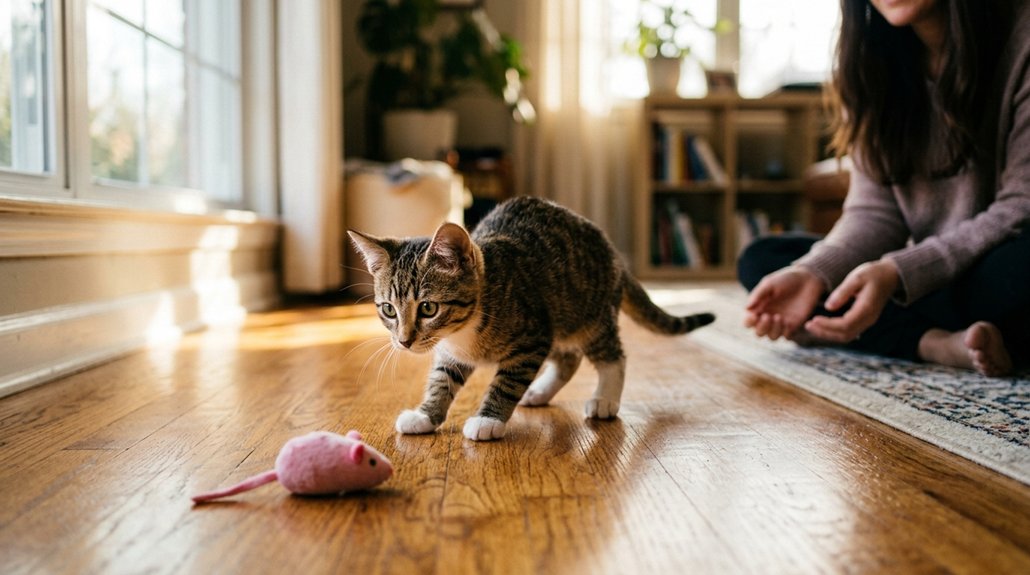
Handling a kitten that won’t listen involves patience and understanding their natural behaviors. Create a stimulating environment with climbing spaces and toys to keep them engaged. Use positive reinforcement like treats or praise to encourage good habits. Redirect misbehavior with toys and scratching posts, and use deterrents where needed. Consistent routines and playtime help manage energy and reduce misbehavior. Address any health concerns promptly. Discover more to enhance harmony with your kitten.
Key Takeaways
- Use positive reinforcement, like treats or praise, to reward good behavior immediately upon occurrence.
- Implement clicker training for clear and consistent cues associated with desired behaviors.
- Redirect misbehavior to appropriate activities using interactive toys to engage them positively.
- Create a cat-friendly environment with safe exploration areas and vertical spaces for climbing to satisfy natural instincts.
- Monitor health and behavioral changes, consulting a vet if persistent issues arise, to rule out underlying conditions.
Understanding Why Kittens Misbehave
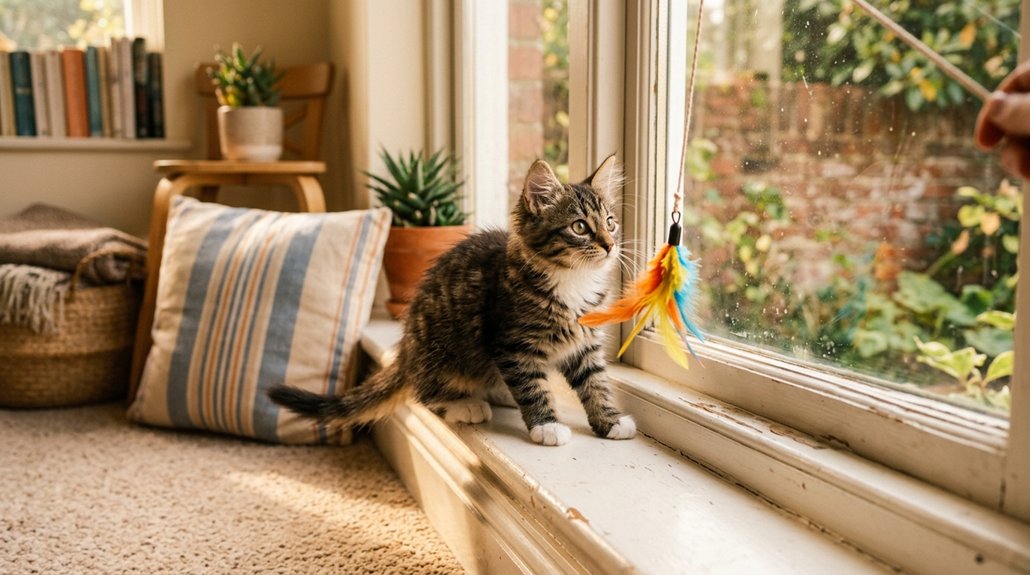
Although it may be frustrating when kittens misbehave, it’s important to understand that their antics are part of a natural exploration and learning process, not intentional defiance. This period of kitten exploration involves testing boundaries and discovering new behavior triggers. Kittens often scratch furniture or avoid the litter box due to a lack of training or environmental influences. Misbehavior usually signals boredom or inadequate mental and physical stimulation, suggesting that more engaging playtime is needed.
To guide your kitten’s development positively, consistent guidance and positive reinforcement are essential. Reward good behavior and redirect unwanted actions to help them learn acceptable habits. Also, consider that health issues might be underlying causes, so regular vet visits guarantee potential problems are swiftly addressed, maintaining your kitten’s overall well-being.
Creating a Cat-Friendly Environment
To help your kitten channel its energy positively, start by setting up a cat-friendly environment with safe exploration areas and active play zones. Investing in climbing spaces like cat trees or shelves allows your kitten to satisfy their need for height safely. Don’t forget to rotate engaging toys and place scratching posts near furniture, ensuring they’ve outlets for natural behaviors while keeping your home intact.
Designing Safe Exploration Areas
Creating a safe exploration area for your kitten means fostering an environment that encourages curiosity while guaranteeing safety and comfort. By setting clear exploration boundaries and providing safe toys, you’ll create a nurturing space for your kitten to thrive. Here’s how to do it:
- Vertical Space: Provide cat trees and shelves for climbing, satisfying their natural instincts safely.
- Secure Barriers: Use baby gates or playpens to confine exploration to safe zones, keeping hazardous areas off-limits.
- Engaging Toys: Ascertain the area includes safe, stimulating toys and scratching posts, directing attention towards appropriate activities.
- Hazard Control: Eliminate toxic plants and secure loose items to prevent choking or injury, ensuring a safe environment.
These steps help your kitten explore within set boundaries confidently and joyfully.
Encouraging Active Play Zones
When setting up a kitten’s play areas, focus on creating dynamic environments that harness their natural instincts. Designate specific zones featuring climbing structures, scratching posts, and a variety of interactive games for sensory enrichment. Wand toys, ball tracks, and different textures stimulate curiosity and provide essential outlets for energy. Rotate toys regularly to maintain interest and prevent boredom-related behaviors like scratching furniture. Position these play zones in safe, accessible locations where you can supervise your kitten to guarantee their well-being.
Make sure every item is non-toxic and kitten-safe, allowing your furry friend to explore freely without encountering hazards. By providing an engaging, enriching space, you’re encouraging your kitten to channel their spirited energy positively, helping them become a well-adjusted, happy pet.
Implementing Secure Climbing Spaces
As you enhance your kitten’s play zones, consider implementing secure climbing spaces to further support their adventurous spirit. Proper vertical play promotes kitten safety and satisfies their natural curiosity. Here are some ways to create a safe and stimulating environment:
- Provide Sturdy Cat Trees: Select structures with solid perches for safe climbing, giving your kitten a chance to explore heights securely.
- Install Shelves or Platforms: Position these at various heights to enrich vertical play, ensuring your kitten remains captivated while being safe.
- Use Durable Materials: Opt for sturdy materials that withstand playful antics and minimize the risk of accidents or injuries.
- Reassess and Rearrange: Constantly evaluate and modify climbing spaces, incorporating areas near windows to keep your kitten engaged and curious about the outdoors.
Using Positive Reinforcement
When your kitten displays good behavior, like choosing a scratching post over the couch, be ready with a treat or gentle praise to make the connection immediate and meaningful. This kind of positive reinforcement, combined with consistency, helps your kitten understand what actions earn rewards, strengthening their willingness to repeat those behaviors. Remember, it’s essential to maintain a supportive and engaging environment to guide your kitten toward consistent, desired conduct.
Reward Desired Behaviors Immediately
A critical step in ensuring your kitten becomes a well-behaved companion is to reward desired behaviors immediately, using positive reinforcement. Ensuring proper reward timing is essential. Always give the treat or praise right after your kitten performs the desired action. This strengthens the connection between the behavior and the reward, making it more likely for your kitten to repeat the action. Here’s how you can effectively use positive reinforcement:
- Reward Timing: Be prompt with your rewards to bolster strong behavior associations.
- Treat Selection: Use high-value treats that your kitten adores, increasing motivation.
- Praise: Combine treats with verbal praise for a double reinforcement effect.
- Clicker Training: Introduce a clicker to provide a consistent reinforcement cue before a reward.
Patience and consistency are key to success.
Encourage Use of Scratching Posts
You’ll find encouraging your kitten to use scratching posts greatly benefits both them and your furniture. Understand their scratching preferences—whether they favor vertical or horizontal surfaces—and select posts accordingly. Effective post placement is key; strategically position them in areas where your kitten often plays or rests, ensuring they’re easily accessible. Entice them with catnip or toys around the post to spark interest. Utilize positive reinforcement by offering treats or praise immediately when your kitten uses the post. This reinforcement helps build a strong, positive association. Regularly redirect your kitten from furniture scratching with calm guidance towards the designated post. Trim their claws consistently to mitigate damage. Implement these strategies with empathy and patience, and you’ll see improvement and happier outcomes.
Consistency Strengthens Positive Associations
Consistency is the cornerstone of effective kitten training, fostering solid positive associations that shape desirable behaviors over time. Here’s how to enhance habit formation using communication cues and positive reinforcement:
- Use Clear Cues: Always use the same commands and rewards. This consistency helps your kitten understand what’s expected and supports steady habit formation.
- Immediate Rewards: Reinforce desired behaviors like using the scratching post, with immediate treats or praise. It strengthens the association between action and positive reinforcement.
- Routine Reinforcement: Establish regular training sessions. A structured routine helps your kitten stay engaged and comprehend expected behaviors persistently.
- Celebrate Progress: Monitor and reward small successes to reinforce good habits. Acknowledging these milestones motivates and strengthens your bond through consistent communication.
Redirecting Attention With Toys and Activities
Engaging your kitten with interactive toys and stimulating activities is a powerful way to redirect its attention from unwanted behaviors. Wand toys can captivate your kitten, steering it away from climbing furniture or scratching curtains. Introducing interactive puzzles or climbing structures provides mental challenges that keep your kitten occupied, minimizing misbehavior borne out of boredom. If your kitten starts misbehaving, distract it promptly with a noise or specific toy to refocus its energy on play. Incorporate playtime rewards, encouraging engagement with suitable toys instead of off-limits areas in your home. Regularly rotating toys and creating a dynamic environment helps sustain its interest, preventing trouble-seeking. This mindful approach nurtures positive play habits and reinforces good behavior, ensuring a contented and well-behaved kitten.
Managing Scratching and Clawing
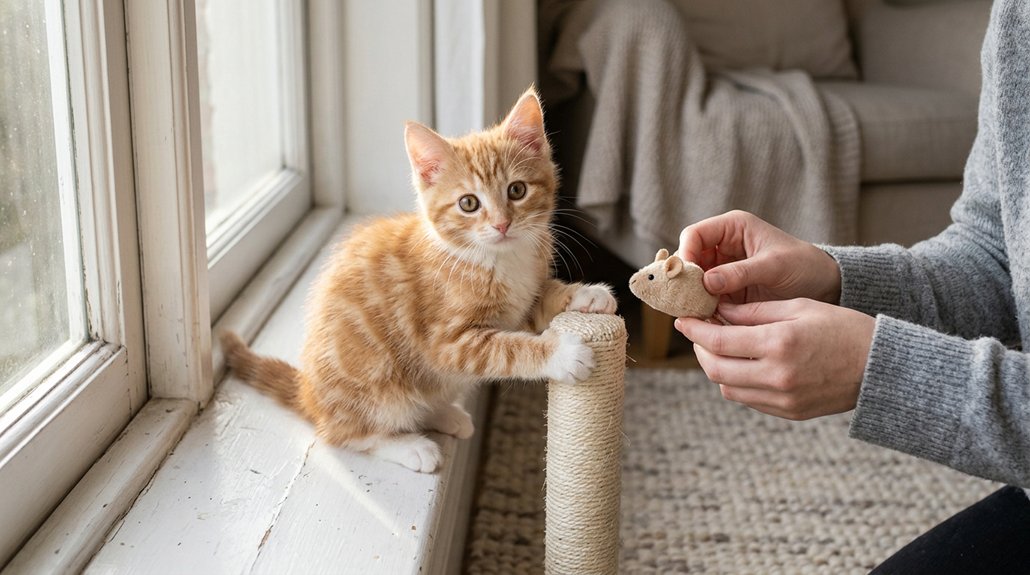
Managing your kitten’s scratching and clawing can feel challenging, but with the right strategies, you’re well-equipped to guide better behavior. Start by redirecting them to scratching posts and enhance this with some irresistible catnip or treats. Don’t forget to trim their claws regularly and use deterrents like double-sided tape to help protect your furniture while making your home a safer haven for everyone.
Redirect to Scratching Posts
When dealing with a kitten that’s making your furniture its favorite scratching spot, redirecting their focus to scratching posts can be a game-changer. Understanding kitten scratching habits is vital. The scratching post benefits are immense, providing an outlet for their natural behaviors and saving your furniture. Here’s how to guarantee success:
- Place posts wisely: Position them in your kitten’s usual hangouts. This makes them an appealing alternative to your couch.
- Use enticements: Sprinkle catnip on the posts to naturally attract them and encourage positive use.
- Offer variety: Provide vertical, horizontal, and angled styles to suit different preferences.
- Guide and reinforce: Gently direct them to the post and reward with treats to establish good habits.
Consistently following these steps guarantees your kitten learns where to scratch.
Trim Claws Regularly
Redirecting your kitten’s scratching to posts is just one part of the overall strategy for keeping your home free from claw damage. Equally important is regular claw trimming to support nail health and prevent unwanted damage. Aim to trim your kitten’s claws every 2-4 weeks based on their growth and activity level. Use specialized cat claw clippers or grinders to guarantee a clean cut and to avoid splitting. It’s crucial not to cut too close to the quick–consult a vet if you’re unsure. If your kitten resists, start by gently handling their paws frequently and reward progress with treats. Regular trimming greatly reduces injury risks and keeps furniture safe, while assuring your furry friend’s comfort and well-being.
Apply Deterrents Smartly
Although your kitten’s natural tendency to scratch is simply instinctive behavior, there are smart ways to deter such actions without resorting to punishment. Use deterrent methods to guide them away from inappropriate scratching surfaces while understanding their needs.
Here’s how you can manage scratching effectively:
- Water Spray: Light spritzes from a water bottle function as an immediate deterrent, steering them away from harmful clawing.
- Diverse Scratching Posts: Place multiple posts in various materials and locations to cater to their scratching instincts properly.
- Double-Sided Tape: Apply this to furniture; the unpleasant texture discourages unwanted scratching.
- Enticing with Catnip: Sprinkle some on scratching posts to attract your kitten, providing a positive outlet for their scratching behavior.
Adopt these techniques for a harmonious relationship with your furry friend.
Solving Litter Box Challenges
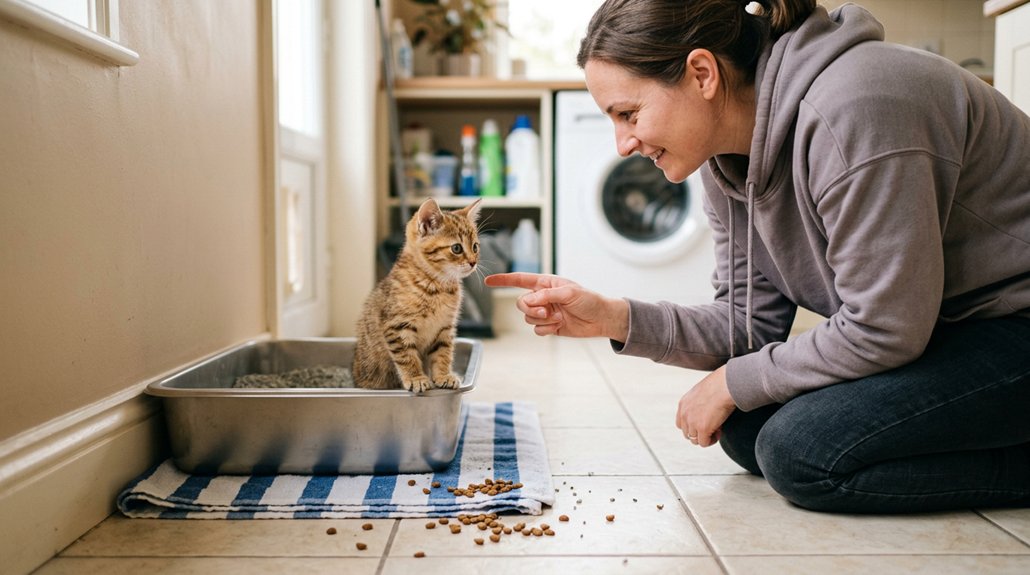
Ever wondered why your kitten might avoid using the litter box? It’s often about finding the ideal litter box location and discovering their specific litter preferences. Guarantee the box is in a quiet area, away from foot traffic, to reduce stress. Clean it daily to prevent them from seeking alternative spots. Experiment with high-quality, unscented litter that’s gentle on their paws. If issues continue, a vet visit might be necessary to rule out health concerns.
Here’s a quick guide:
| Factor | Solution | Outcome |
|---|---|---|
| Box Location | Quiet, low-traffic area | Reduces stress |
| Cleaning Frequency | Daily | Encourages regular use |
| Litter Type | Unscented, paw-friendly | Increases comfort |
| Experimentation | Gradual testing of litter types | Finds preferred option |
| Health Check | Veterinary consultation if needed | Spots potential health issues |
Gradual changes can aid adaptation, guaranteeing their comfort.
How to Curb Chewing and Biting?
Understanding the nuances of litter box preferences can greatly enhance your kitten’s comfort, but ensuring harmony at home doesn’t stop there. Addressing chewing and biting is key. If your kitten nips or scratches, immediately cease interaction to underscore biting consequences. Redirect their energy by offering alternative chewables like designated cat toys and edible treats.
Use the following strategies to curb unwanted behavior:
- Immediate Disapproval: Withdraw attention if they bite to indicate the action isn’t acceptable.
- Redirection: Introduce toys and scratching posts to replace destructive habits.
- Alternative Chewables: Provide safe, appropriate items to satisfy natural chewing urges.
- Deterrent Solutions: Apply bitter-tasting deterrents on household objects to discourage undesired chewing.
Consistency and patience will guide your feline friend to better choices.
Prohibiting Jumping on Surfaces
Tackling the habit of jumping on surfaces involves establishing and maintaining clear limits for your energetic feline. Start by setting jumping boundaries using deterrent methods like placing double-sided tape or cookie sheets on surfaces you want to protect. These create unpleasant sensations, discouraging your kitten from jumping there. Redirect their attention to acceptable outlets such as cat trees or scratching posts. Interactive playtime‘s essential for burning off capricious energy, reducing the need to leap on prohibited areas out of boredom.
Consistency’s vital: always respond immediately with a firm “no” or gentle scolding when your kitten hops onto an off-limits surface. Also, eliminate temptations by keeping food or enticing items out of reach. By following these steps, you’ll help your kitten learn where not to tread.
Developing a Calm Nighttime Routine
When establishing a calm nighttime routine for your kitten, consistency is key to signaling that it’s time to wind down. Implementing effective nighttime rituals and calming techniques can make this shift smoother for both you and your furry friend. Here’s a guide to help:
- Interactive Play: Engage in interactive play sessions in the evening to expend your kitten’s excess energy, helping them be more relaxed at bedtime.
- Create a Cozy Space: Set up a quiet, comfortable sleeping area with familiar bedding or toys to provide a sense of security.
- Dim the Lights: Gradually dim the lights before bedtime to mimic a natural night cycle, signaling it’s time to rest.
- Minimize Stimulation: Avoid loud noises or fast movements close to bedtime to guarantee a peaceful shift to sleep.
Handling Health Concerns
If your kitten’s behavior suddenly changes, it might be hinting at an underlying health issue that needs attention. Health monitoring is essential; keep an eye out for signs such as reluctance to use the litter box or changes in their responsiveness to sounds, which could indicate hearing issues or infections. These behaviors shouldn’t be ignored, as early intervention can prevent minor issues from becoming severe.
Regular vet consultations are important to maintaining their overall health and addressing any concerns. Discuss any unusual behaviors, such as aggression or shyness, with your vet. They can help determine if these are health-related concerns or if behavioral training is necessary. By actively monitoring and consulting with professionals, you’ll guarantee your kitten receives the best care possible.
Frequently Asked Questions
How Do You Discipline a Kitten That Doesn’t Listen?
You can discipline a kitten by using positive reinforcement. Reward desirable behaviors with treats and affection. Distract them from misbehaving using effective distractions like interactive toys, ensuring consistent guidelines for a stress-free, engaging environment.
What Is the 3-3-3 Rule for Kittens?
The 3-3-3 rule for kittens is like planting seeds of trust: three days of quiet observation, three weeks of familiarization, and three months blossoming into behavior cues. Embrace kitten training with empathy to nurture confident companionship.
What Is a Red Flag Behavior in Cats?
You’ll notice red flag behaviors like inappropriate elimination, excessive aggression, or persistent destructive actions. Recognize these behavioral warning signs, and consult your vet, as they might signal stress or a possible underlying health issue.
Do Cats Forgive You for Yelling at Them?
Cats don’t forgive yelling the way dogs might. Curiously, 70% of cat communication involves nonverbal cues. Employ positive reinforcement instead, using treats or toys to encourage behavior and strengthen your bond, ensuring trust and understanding.
Conclusion
Steering through the whirlwind of kitten antics can feel like walking a tightrope. Remember, patience is your guiding star. In this journey, you’re both student and teacher, shaping a harmonious bond. By fostering understanding, crafting an engaging environment, and redirecting with gentle intention, you’ll transform chaos into calm. Embrace each challenge as a stepping stone toward a purring partnership. Trust your instincts, and soon, your mischievous furball will become a cherished companion.