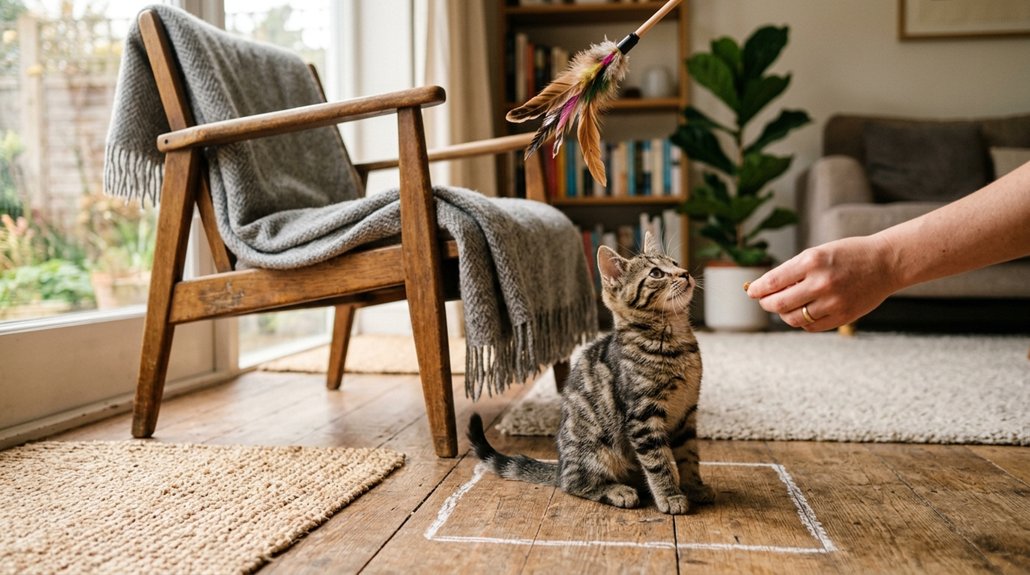
To teach a kitten good behavior early, focus on socialization from day one and use positive reinforcement. Create a safe environment with cozy spots and interactive toys to stimulate curiosity. Establish consistent litter box and feeding routines, involving all household members for uniformity. Use treats and clicker training, rewarding successful behaviors promptly. Redirect unwanted actions gently towards suitable activities. Engage in interactive play and bonding exercises. Discover how these techniques make all the difference in your kitten’s development.
Key Takeaways
- Start socialization early by introducing new people, sounds, and sights gradually to prevent anxiety.
- Use positive reinforcement with high-value treats and clicker training to encourage good behavior.
- Engage in interactive play using safe toys to fulfill hunting instincts and bond.
- Consistently use phrases like “No” for corrections and redirect behaviors to suitable activities.
- Maintain a calm and secure environment with dedicated spaces for resting and exploring.
Understanding Kitten Behavior: The Basics
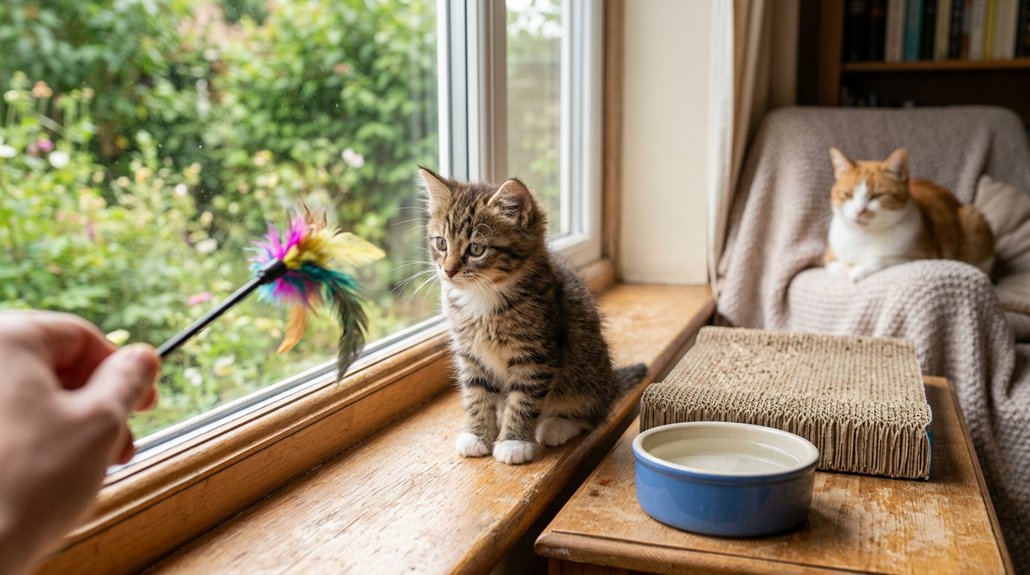
As you begin the journey to teach a kitten good behavior, understanding their inherent traits is essential. Recognize that kittens are naturally independent and possess a territorial nature. They communicate through body language and vocal cues, so observing these helps you pick up on their comfort cues and signals. With strong predator instincts, kittens engage in playful behaviors that often mimic hunting. Direct this energy towards safe toys rather than human hands to foster appropriate play. The socialization importance can’t be overstated; expose them to new experiences gradually during their critical period to prevent future anxiety. Use gentle corrections to guide them, always respecting their individuality. By understanding these basics, you’ll create a harmony between their wild instincts and your home environment.
Create a Safe and Stimulating Environment
When creating a safe and stimulating environment for your kitten, it’s essential to provide the basics that cater to both their comfort and innate curiosity. Ensuring your kitten’s safety and happiness begins with simple yet effective safety measures. Provide a cozy bed, accessible litter box, and bowls ready for nourishing meals. Environmental enrichment plays an important role in your kitten’s development. Incorporate a variety of toys and opportunities for interactive play that stimulate their natural instincts.
- Encourage a secure space by speaking softly and handling your kitten with love to foster trust.
- Promote feelings of safety by maintaining a calm environment, especially during their significant socialization period.
- Invest in climbing structures and snuggling sessions to strengthen emotional bonds and support their exploratory nature.
Start Early: Socializing Your Kitten From Day One
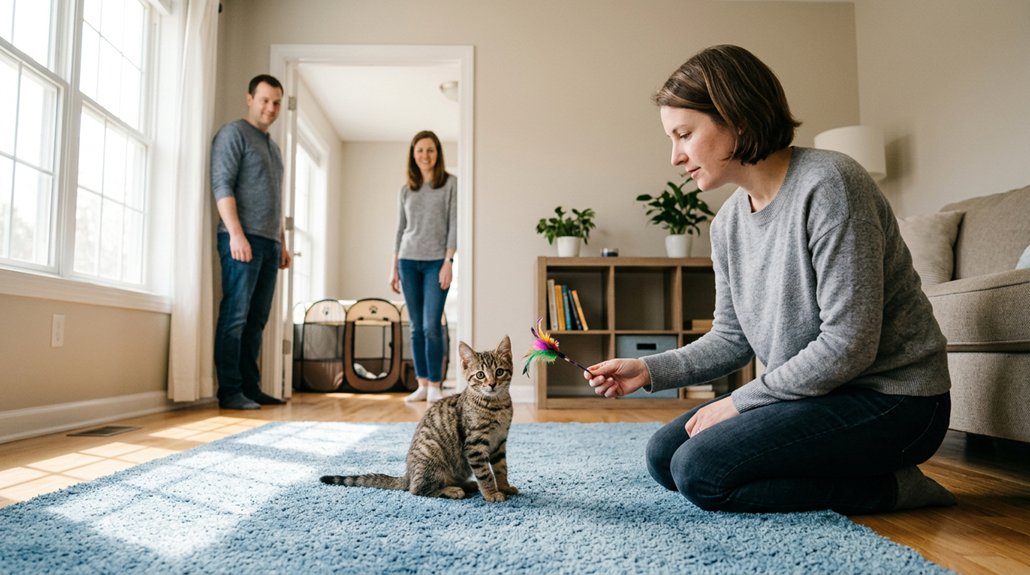
Although welcoming a new kitten into your home is certainly delightful, starting their socialization from day one is essential for raising a well-adjusted feline companion. The critical window for kitten exposure spans up to 14 weeks, making it vital to introduce them to new people, sounds, and sights early on. You can prevent future fear and anxiety by gradually integrating these elements into your kitten’s life. Engage in socialization games and use positive reinforcement—like treats and praise—to reward calm behavior, fostering trust and comfort. Aim for new experiences weekly; these don’t need to be overwhelming but should be stimulating. Daily handling is key, ensuring your kitten adapts to various situations comfortably, setting the foundation for positive lifelong behaviors.
Master Litter Box Training From the Start
To guarantee successful litter box training from the beginning, place it in a quiet, consistent location and choose unscented litter to prevent aversion. Establish a routine by gently placing your kitten in the box after meals, naps, and play sessions, and reward them with treats and praise for using it. Focus on positive reinforcement and quickly clean up any mishaps with an enzymatic cleaner to foster healthy habits without fear or anxiety.
Choose Appropriate Litter
One vital step in teaching your kitten good behavior is mastering litter box training right from the start. Begin by selecting an appropriate litter box size. It’s important to choose one that’s easily accessible and comfortable for their petite stature. Coupling this with unscented litter can be beneficial, too. Kittens have sensitive noses, and strong scents can lead to aversion, deterring them from using the litter box. Locate the box in a quiet, consistent spot to guarantee your kitten feels secure and can access it without stress. Using positive reinforcement like treats and praise creates positive associations.
- Appropriate litter box size boosts accessibility and comfort.
- Unscented litter reduces aversion risk.
- Quiet, consistent location fosters a safe environment.
Establish Consistent Routine
When establishing a consistent routine for your kitten, the most fundamental aspect is to master litter box training from the start. Place the litter box in a quiet, consistent location, making it easily accessible to encourage frequent use. Introduce the kitten to the litter box after meals, naps, and play sessions. Consistency in timing helps your kitten learn this is the designated bathroom area. Pick unscented litter to avoid aversion, ensuring comfort with a box appropriate for their age. Treat selection is vital when reinforcing positive behavior—use rewards that your kitten loves after successful visits. Promptly clean any accidents without punishment to sidestep negative associations. Remember, nurturing their instinct to bury waste leads to a well-adjusted and confident kitten.
Reward Successful Use
Successfully teaching your kitten to use the litter box hinges on a consistent reward system. Every time your kitten uses the litter box after meals, naps, or playtime, offer reward treats to reinforce natural instincts. This positive reinforcement encourages your kitten to repeat the behavior, fostering good habits. By consistently rewarding successful use, you create an association between the litter box and a pleasurable outcome, which is pivotal in shaping their understanding.
Remember to:
- Celebrate small victories: Every successful use is a learning opportunity.
- Be patient: Growth happens with time and practice; maintain consistency.
- Ensure the litter box accessibility: Make it easy for your kitten to find and enter throughout the day.
With compassion, evidence-based strategies, and patience, you’ll master litter box training from the start.
Positive Reinforcement: Training With Treats
Although training a kitten might seem challenging at first, positive reinforcement through treats is a proven method to encourage good behavior effectively. Implement clicker training by selecting high-value treats to shape behaviors. Treats like Meaty Tender Sticks from SHEBA® enhance motivation and make training enjoyable. Ascertain your approach is grounded in patience and consistency. Utilize portions of their meals to prevent overfeeding and tailor training intensity to your kitten’s comfort. Immediate rewards, given within three seconds, strengthen action-reward connections. This fosters a secure environment and optimizes learning through positive associations. Remember, every good behavior should lead to praise and a tasty treat to create a confident and well-behaved companion.
| Method | Treat Type | Timing |
|---|---|---|
| Clicker Training | High-Value Treats | Immediate |
| Meal Portions | Prevent Overfeeding | Consistent |
| Praise and Treat | Meaty Tender Sticks | Within 3 sec |
Introduce Handling: Making Your Kitten Comfortable With Touch
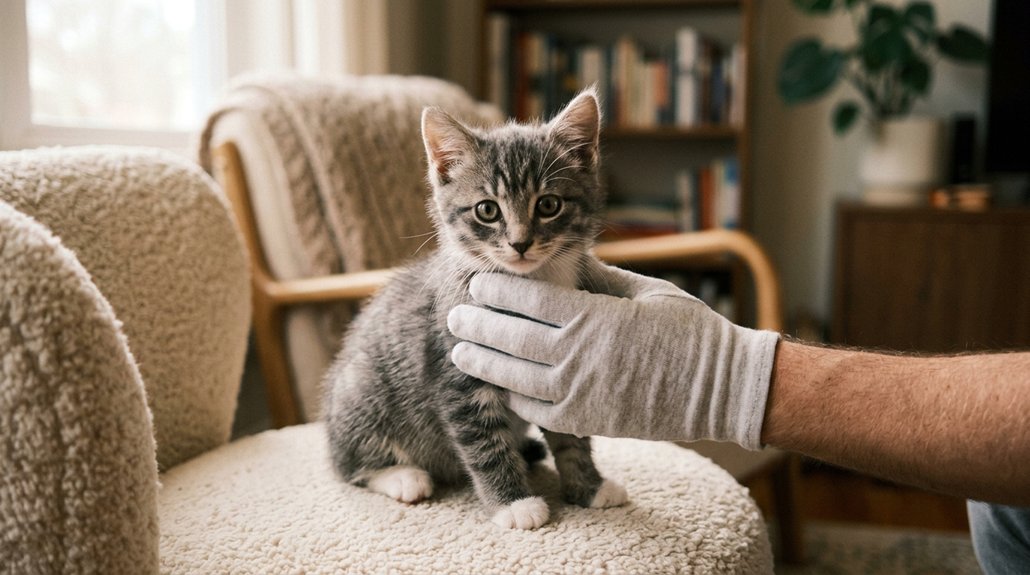
As soon as your kitten arrives home, start building a foundation for comfort with touch by introducing gentle handling in a calm manner. Use kitten handling techniques like soothing voices and gentle strokes to create positive associations with being touched. Gradually hold your kitten in different positions, starting close to your chest before exploring other holds. Remember to use treats and praise to reinforce these positive experiences.
Start building comfort with touch immediately by using gentle handling and positive reinforcement to create positive associations for your kitten.
- Consistency is key: Regularly incorporate handling into your interactions to establish safety and calmness.
- Respect boundaries: Watch for signs of discomfort and allow breaks, building trust over time.
- Pair touch with rewards: Elevate positive feelings by pairing handling with treats or playtime.
Stick to a Consistent Routine for Successful Training
Creating a consistent routine is pivotal for your kitten’s successful training. Establishing feeding schedules not only builds security but also reinforces litter box habits. Right after meals, place your kitten in the box to encourage proper use. Training times should be brief, ideally under 15 minutes, to cater to their short attention spans while keeping them engaged. Incorporate command consistency by practicing commands during mealtime or playtime—these common moments create opportunities to instill good behavior. Involve all household members in maintaining consistent expectations, as this prevents confusion and firmly establishes the kitten’s manners. This routine not only fortifies training but nurtures a trusting and strong bond between you and your feline companion, promoting harmonious coexistence within your home.
Redirect Unwanted Behaviors Gently
When your kitten exhibits unwanted behaviors, it’s essential to redirect their energy gently and consistently. Encourage the use of appropriate alternatives, such as scratching posts instead of furniture, reinforcing these choices with treats and praise. Remember to use positive verbal cues and avoid encouraging negative habits, ensuring all household members are on the same page for effective communication.
Consistent Behavioral Corrections
Even though your kitten is full of energy and curiosity, establishing a framework for guiding their behavior is vital early on. Embrace the power of behavior correction by using consistent phrases like “No” or “Play nice” every time undesired behaviors arise. This training consistency helps your kitten make the connection between actions and expectations. Redirect them towards suitable activities, like using a scratching post rather than your furniture. Ignoring them briefly after a reprimand sends a clear message without harshness.
It’s important to employ gentle deterrents, such as a water spray or a loud noise, making sure you don’t instill fear or anxiety in your kitten. Success lies in consistency, patience, and love.
- Mindful Guidance: Reinforcing desirable behaviors gently.
- Consistent Phrasing: Promote comprehension over time.
- Compassionate Corrections: Prevent fear-based responses.
Use Positive Reinforcement
Harness the power of positive reinforcement to effectively shape your kitten’s behavior. Evidence shows that using techniques like clicker training, combined with well-timed rewards, encourages your kitten to repeat desirable actions. Start by offering treats and praise immediately after your kitten demonstrates calm behavior, especially around new stimuli. This timing is essential—it forms positive associations, boosting their confidence in social situations. When your kitten displays unwanted behaviors, like biting, gently redirect them to engaging toys rather than using hands and feet. This approach prevents undesirable habits from taking root. Consistent use of clear verbal cues further helps your kitten discern acceptable behaviors. By applying these strategies, you don’t just teach; you build a nurturing connection with your feline friend.
Encourage Appropriate Alternatives
Building on the foundation of positive reinforcement, gently guiding your kitten toward appropriate alternatives is key to managing natural but undesirable behaviors. Introduce scratching posts and designated toys to redirect their instinctual scratching and biting. Use consistent phrases like “No” or “Play nice” to reinforce acceptable actions without resorting to harsh punishment. Engage their natural hunting instincts by playing with feather wands and balls, reducing the likelihood they’ll target your hands or feet.
Ignoring your kitten after unwanted behaviors signals that such actions result in a loss of attention. Always remember to praise or treat them when they choose:
- Scratching posts over furniture
- Designated toys instead of fingers
- Engaging with you positively during playtimes
This nurtures positive associations and encourages repetition of good behaviors.
Interactive Play: Techniques for Building Trust and Bonding
Explore the world of interactive play to transform your relationship with your kitten into one filled with trust and affection. Start with bonding activities using wand toys and laser pointers to mimic hunting instincts. These playtime strategies not only fulfill their natural behavior but also boost physical activity. Always stick to toys to prevent bad habits, making sure your kitten learns boundaries early on. Switch between “air games” and “land games” to help your kitten discover what excites them most, building confidence with each session. Regular interactive play forges strong bonds, creating shared experiences. Wrap up with treats or gentle handling to guarantee a calm shift, reinforcing a positive routine and providing a sense of security and love.
Frequently Asked Questions
What Is the 3-3-3 Rule for Kittens?
The 3-3-3 rule for kittens involves three days of stress, three weeks of exploring, and three months to fully settle. Use kitten training and positive reinforcement during these stages for a compassionate, evidence-based approach to behavior adjustment.
What Is a Red Flag Behavior in Cats?
Oh, your cat’s an abstract artist, turning furniture into art? That’s called inappropriate scratching—a red flag. Pair it with excessive meowing or litter box avoidance, you’ve got fear aggression or health issues needing your compassionate intervention.
What Is “I Love You” in Cat Language?
Cats say “I love you” through purring signals and tail language. A soft purr shows contentment, while a high or gently waving tail indicates affection. When your cat kneads or bunts, they’re also expressing their love.
What Is the Naughtiest Age for Kittens?
The naughtiest age for kittens is the 3 to 6 month window. It’s a whirlwind of playful mischief and kitten antics, testing boundaries as they learn. Harness this energy with patience and playful guidance.
Conclusion
Nurturing a kitten into a well-behaved companion is like sculpting a masterpiece—patience and technique are key. By understanding their behavior, crafting a safe haven, and starting socialization early, you lay a strong foundation. Mastering litter box training, using positive reinforcement, and handling them gently guarantees your kitten grows with trust. Maintaining consistency and redirecting unwanted behaviors guides them smoothly. Remember, interactive play isn’t just fun; it’s a bridge to a lifelong bond.