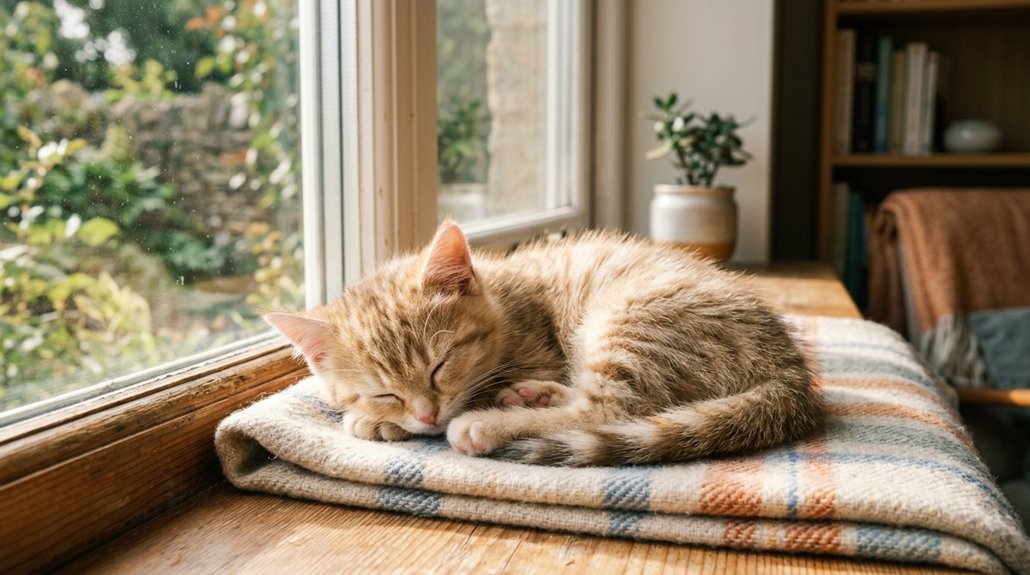
Ensuring your kitten’s ideal sleep schedule involves recognizing their need for 16-20 hours of sleep daily in 78-minute cycles. Set up a quiet, dimly lit, cozy sleeping environment with familiar items like a favorite blanket. Establish a consistent bedtime routine, including playtime and a final meal. Encourage independent sleep by allowing exploration of their sleeping area. Understanding their crepuscular nature will further help in managing nighttime activity. To fully support your kitten’s growth, further insights await.
Key Takeaways
- Ensure kittens get 16-20 hours of sleep daily for growth and development.
- Provide a quiet, dimly lit environment for the kitten’s nap times to minimize disturbances.
- Establish a bedtime routine with 10-15 minutes of play to expend energy before sleep.
- Schedule the last meal close to bedtime to encourage sleepiness and relaxation.
- Allow the kitten to explore and settle into its sleeping area independently for self-settling.
Know Your Kitten’s Sleep Needs
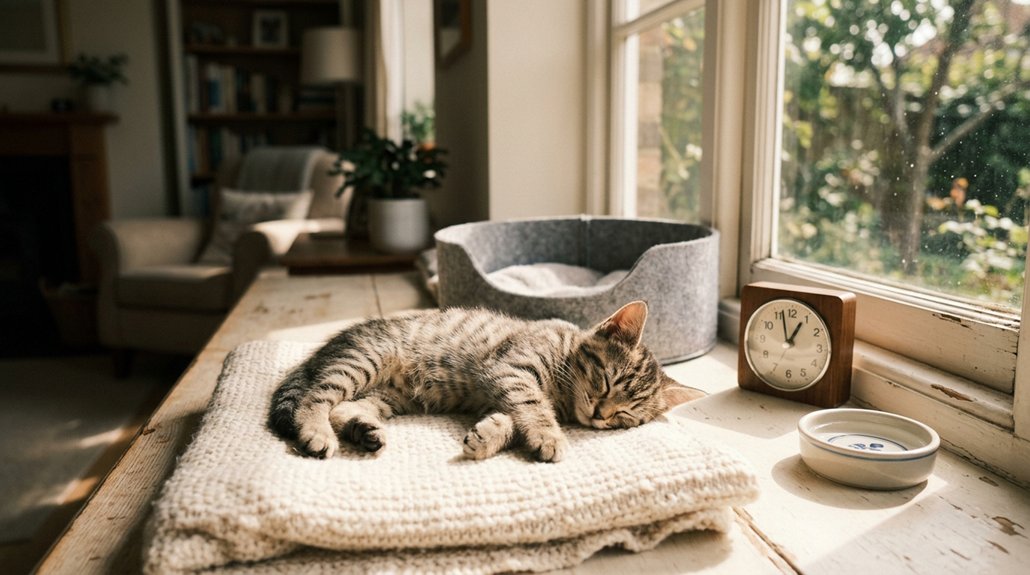
Understanding a kitten’s sleep needs is vital for their ideal development. Kittens require between 16 and 20 hours of sleep daily, mainly in 78-minute increments interspersed with active bursts. These kitten sleep patterns support essential growth and neurological development. As crepuscular animals, they’re most active at dawn and dusk, influencing their rest cycle. It’s important to provide them with ideal napping spots, such as quiet, secure areas where they won’t be disturbed, to facilitate restful sleep. While kittens can adapt to sleeping alone for up to eight hours, they often prefer initial companionship, easing their shift. Implementing a bedtime routine with pre-sleep play and a meal greatly helps regulate their sleep schedule, promoting healthier sleep habits.
Set Up the Perfect Sleep Environment
To optimize your kitten’s sleep patterns and guarantee they receive the restorative rest necessary for their growth, creating an ideal sleep environment is key. Establish a cozy bedding space with soft, high-sided beds to simulate a nest, offering security akin to their natural settings. Select a quiet location, free from drafts and away from foot traffic, thereby enhancing the kitten’s comfort and minimizing disturbances. Essential items such as food, water, and a litter box should be nearby to meet their overnight needs seamlessly. A dimly lit environment will aid navigation and foster a sense of security. Gradually introduce the kitten to their new sleep area with familiar objects, like a blanket from their previous habitat, ensuring a comforting adjustment.
Establish a Bedtime Routine
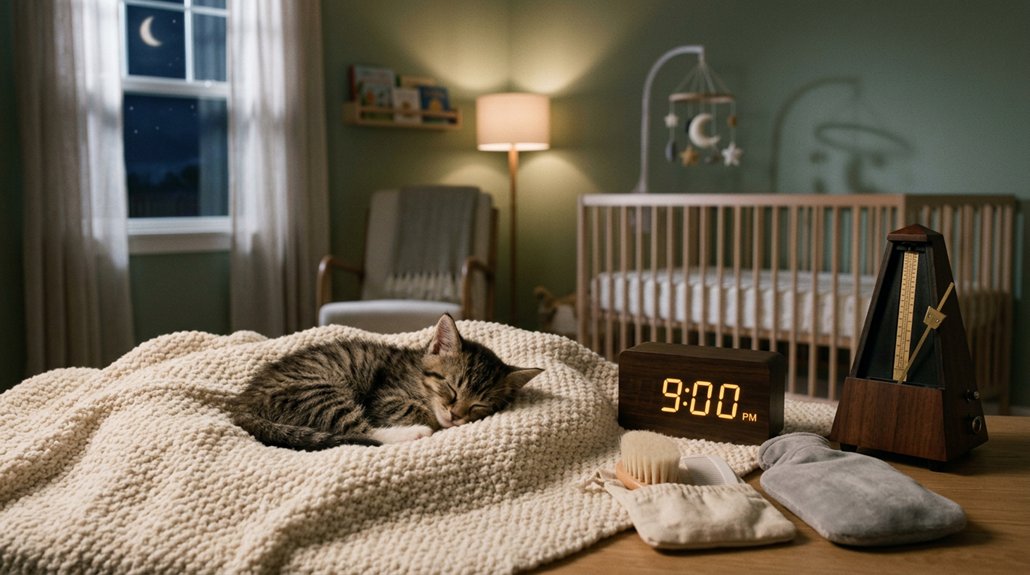
While fostering healthy sleep habits, establishing a bedtime routine for your new kitten is crucial. Research shows that consistent routines are essential for developing sleep associations, making your kitten’s adjustment smoother. Here’s a structured approach:
- Kitten Playtime: Engage in a 10-15 minute play session before sleep. This helps expend energy, leading to a more restful night.
- Meal Timing: Offer the last meal near bedtime. The digestive process naturally induces sleepiness.
- Create Comfort: Place familiar comfort items, like a favorite blanket, within their sleeping space. Combined with a dark or dimly lit environment, these items signal relaxation and security, fostering a favorable sleep atmosphere.
Adhering to these steps guarantees your kitten adapts successfully, maintaining consistent, restorative sleep patterns.
Encourage Independent Sleep
Determining the best way to encourage independent sleep in your kitten involves carefully designed strategies grounded in both pet psychology and consistent behavior reinforcement. Begin by creating a cozy sleeping area equipped with a comfortable bed featuring high sides and soft blankets, essential for establishing a secure nighttime adjustment. Comfort objects, such as a familiar blanket from their previous environment, are critical in bolstering the kitten’s sense of security.
Implement a bedtime routine emphasizing pre-sleep playtime; this tires the kitten, naturally promoting solitary rest. Gradually reduce nighttime attention, allowing your kitten to learn self-settling. It’s important to allow the kitten to explore and settle into its designated sleeping space independently during initial nights, fostering a much-needed sense of comfort and autonomy in new surroundings.
Managing Nighttime Wakefulness: Help Them Settle In
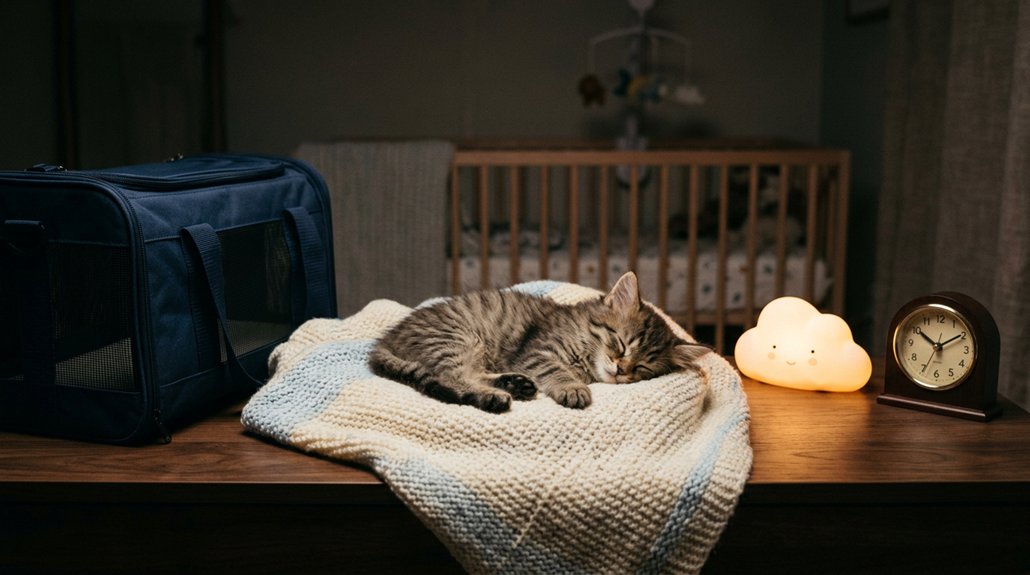
To address your kitten’s nighttime wakefulness effectively, establish a consistent evening routine that might include a brief play session and a small meal. Incorporating calming sleep aids, like a cozy bed with a familiar blanket, can enhance their sense of security and aid their shift into restful sleep. Remember, patience is key as your kitten adjusts, and these strategies are research-supported to promote a tranquil nighttime environment.
Establish Consistent Evening Routine
An effective way to manage a new kitten’s nighttime wakefulness involves establishing a consistent evening routine that promotes sleepiness and security. By integrating playtime engagement and adjusting meal timing, you can guide them gently into restful sleep. Here’s a recommended approach:
- Playtime Engagement: Engage your kitten in a 10-15 minute interactive play session just before bedtime. This will tire them out and promote natural sleepiness.
- Meal Timing: Schedule their last meal close to bedtime. The digestion process can help induce sleepiness, facilitating a more settled night.
- Create a Comforting Environment: Dim the lights in their sleeping area and introduce familiar objects, like a favorite blanket, to guarantee they feel secure and comfortable in their new environment.
Maintaining this routine establishes predictability, enhancing their sleep habits over time.
Utilize Calming Sleep Aids
While managing your kitten’s nighttime wakefulness, utilizing calming sleep aids can greatly facilitate their shift to a settled sleep pattern. Scientific studies support offering a small amount of food treats before bed to enhance sleepiness. This approach leverages the natural post-meal lethargy seen in felines. Additionally, the strategic incorporation of pheromone diffusers in your kitten’s sleeping area can create a serene atmosphere by mimicking comforting maternal chemical signals. This not only reduces anxiety but also promotes deep, undisturbed sleep. Implementing a brief 10-15 minute play session further assists in expending residual energy, encouraging relaxation. The combination of these aids with gradual lighting reduction and familiar objects creates an all-encompassing, calming bedtime routine adaptable to your kitten’s unique needs.
Syncing Your Routine With Your Kitten’s Needs
- Kitten Playtime: Conduct play sessions timed with their energy peaks, particularly at dawn and dusk.
- Meal Timing: Serve the final meal before bedtime to facilitate digestion and enhance sleep.
- Bedtime Routine: Dim lights and reduce noise to establish a restful environment.
This routine nurtures a balanced sleep pattern, essential for their growth.
Kitten Sleep Problems: Common Challenges and Solutions
Many kitten owners encounter common sleep challenges, which can disrupt not only the kitten’s rest but also yours. A prominent issue is their nocturnal behavior, waking frequently during nighttime hours when they’re most active. Recognize that adjusting your expectations is essential, as kittens naturally require 16-20 hours of sleep for proper growth. Stress and anxiety triggers, often from new environments, may further disturb their patterns. To mitigate these disruptions, establish a consistent bedtime routine with activities like a 10-15 minute play session, followed by their final meal. Familiar items from their previous home can comfort and ease adjustments. Consider safe alternatives like a secure crate or playpen to limit nighttime antics without sacrificing their need for adequate rest.
Frequently Asked Questions
What Is the 3-3-3 Rule for Kittens?
The 3-3-3 rule involves kittens taking three days to adjust to new surroundings, three weeks to bond, and three months to develop routine behaviors like kitten sleep patterns and nighttime routines, ensuring long-term security and comfort.
Where Should a Kitten Sleep on the First Night?
On the kitten’s first night, guarantee they sleep in a warm, quiet, confined area with essentials nearby. This environment prioritizes kitten safety, fosters comfort, and minimizes anxiety, promoting a secure shift into their new home.
Is It Okay to Ignore a Kitten at Night?
It’s okay to ignore a kitten at night, as demonstrated when Luna, a new kitten, adjusted within days. Understanding nighttime behaviors and fostering independence helps manage kitten separation anxiety, recommended by animal behaviorists for smoother adjustments.
What Is the Best Sleeping Arrangement for a New Kitten?
Create a sleeping environment that offers warmth and security, ideally in a small, enclosed area. Comfort essentials should include a cozy bed in a draft-free zone, aiding in restful sleep and supporting the kitten’s overall well-being.
Conclusion
Understanding your kitten’s sleep needs might seem challenging, but trust that setting a routine benefits both of you. You may worry about disrupting your own sleep, but remember, this initial investment pays off in a well-adjusted, independent kitten. Stick to expert-guided strategies, establish a comforting environment, and watch as your kitten becomes more attuned to your lifestyle. With consistency and patience, you’ll foster a harmonious home, proving that your efforts are truly worthwhile.