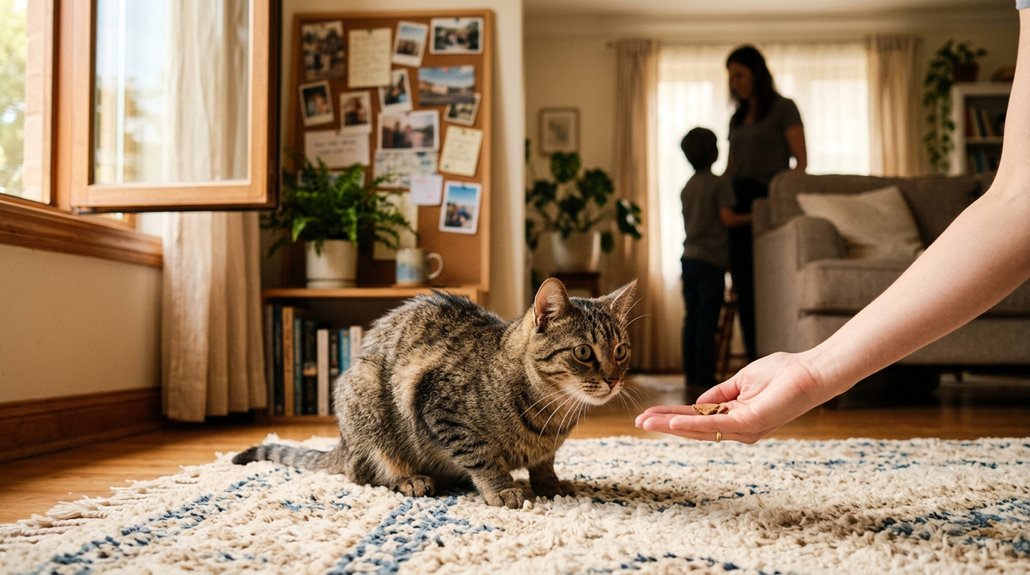
Expect your cat to take several days to a month to adjust to a new home. Initial stress manifests as hiding or loss of appetite, especially in unfamiliar environments. To ease this adjustment, keep your cat indoors for at least two weeks and provide a safe space with familiar items. Observe changes in behavior, as acclimation duration varies. If you’ve noticed signs of stress, don’t worry—there are proven strategies that can foster a smoother adjustment.
Key Takeaways
- Cats typically adjust to new homes within a period of several days to a month.
- The initial three weeks are crucial, known as the Rule of 3 for acclimation.
- Initial stress and anxiety may manifest as hiding or a loss of appetite.
- Providing familiar items and a quiet room aids the adjustment process.
- Patience and monitoring are essential for identifying stress signs and ensuring smooth acclimation.
Understanding Initial Stress and Anxiety in Cats
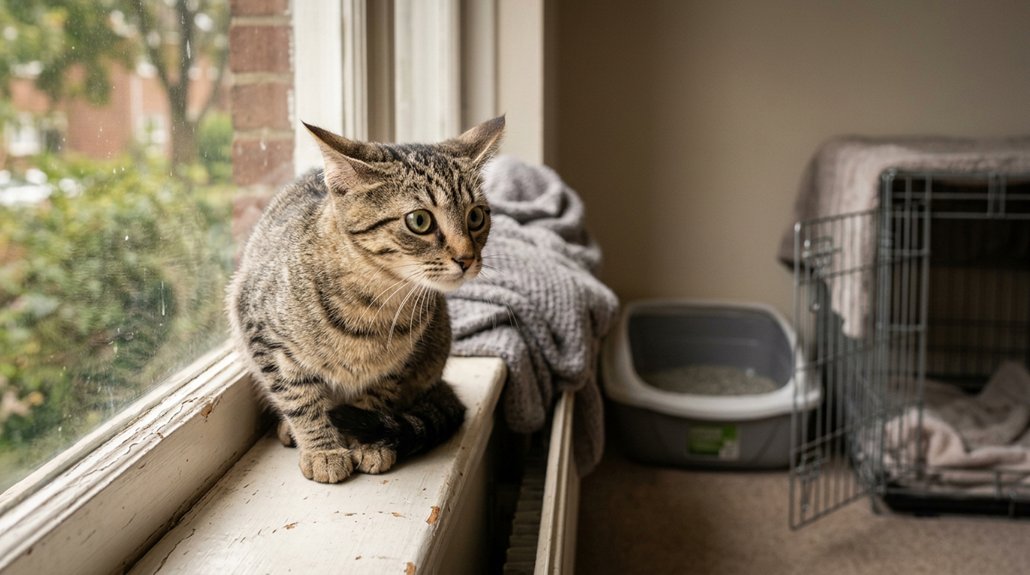
In understanding initial stress and anxiety in cats, it is crucial to recognize that these feelings often manifest through behaviors such as hiding, loss of appetite, or reluctance in exploring their new environment. Stress triggers, including unfamiliar spaces and stimuli, instigate anxiety signs like vocalization or defensive body language, particularly within the first few days. As a cat guardian, you should be aware that adjustment durations vary; typically spanning from several days to a month. Acquainting yourself with these responses allows you to discern between normal adaptation behaviors and potential health issues. Effectively identifying anxiety signs early on helps in facilitating a calming presence, reassuring your feline companion. Additionally, providing familiar items during this phase can greatly mitigate these stress triggers, enhancing their overall adjustment experience.
Tips for a Smooth Adjustment Process
A smooth adjustment process for your cat hinges on creating an environment that fosters safety and security. Initially, keep your cat indoors for at least two weeks to promote acclimatization. Use adjustment techniques, like starting in a quiet room filled with familiar items to reduce anxiety. Gradual introduction is paramount; slowly expand its access to the home once it shows comfort signals such as exploring or purring. Essential resources—food, water, and a litter box—should be nearby to ease the change. Monitor your cat’s behavior rigorously during this period, watching for signs of stress like hiding or refusal to eat. After this phase, encourage gradual exploration to help your cat build confidence and establish its territory effectively.
The Rule of 3 for Cat Acclimation
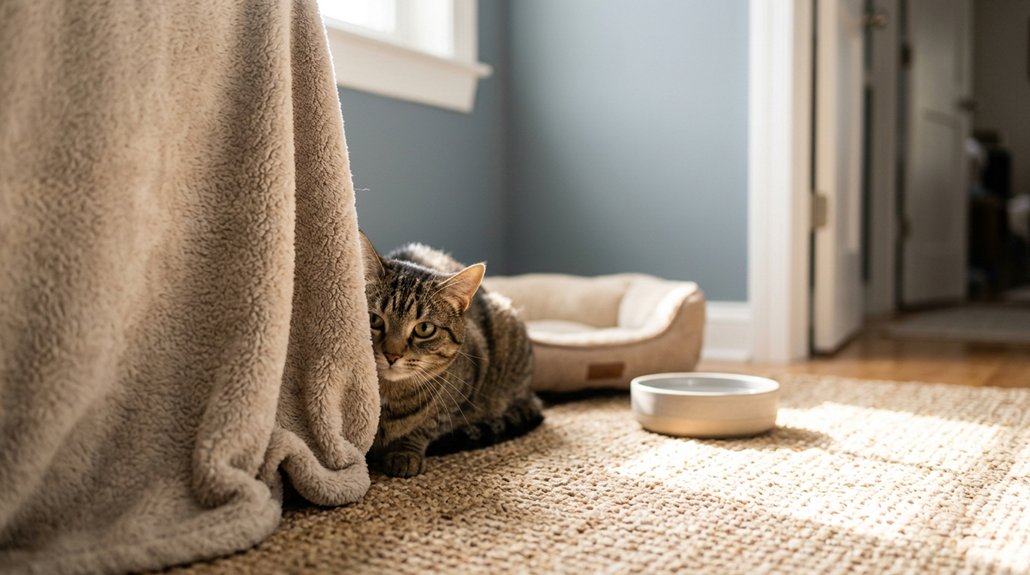
Three weeks represent a pivotal period for a cat’s acclimation to a new home, widely known as the Rule of 3. By managing expectations, you facilitate a smoother adjustment process. The first three days should involve keeping the cat in a ‘safe room’ where it can begin gradual introductions to its new environment. It’s essential to observe cat behavior, providing consistent routines and comforting items, such as familiar blankets or toys.
| Week | Focus | Key Actions |
|---|---|---|
| 1 | Safety | Use a ‘safe room’ |
| 2 | Routine | Establish consistent patterns |
| 3 | Interaction | Encourage exploration |
Expect varying behavioral changes as the cat acclimates during this structured period, ensuring adaptation becomes apparent. Patience is vital for seamless changes, promoting well-adjusted pets long-term.
Signs Your Cat Is Settling In Well
Monitoring signs that your cat is settling in well after the initial acclimation phase is integral to ensuring their well-being in a new home. Purring behavior when you stroke your cat indicates comfort and trust, revealing their adjustment progress. Additionally, exploration patterns provide insight. As your cat gains confidence, you’ll notice increased exploration of various areas within your home. This behavior marks a significant shift in their comfort and adaptability. Engaging positively with family members through play signifies security and a sense of belonging. Observing relaxed body language, such as exposed bellies or laid-back postures, further confirms their comfort level. Consistent grooming, eating, and playing are also telltale signs of a well-adjusted feline confidently settling in their new environment.
Addressing Adjustment Struggles and Support Strategies

When introducing a cat to a new environment, any reluctance to eat, increased hiding, or defensive behavior may signify challenges in their adjustment process. Behavioral problems often stem from unfamiliar environmental triggers that disrupt their routine and sense of security. To alleviate these struggles, consider the following support strategies:
- Establish a calm environment: Minimize noise and unfamiliar scents to help your cat feel safe.
- Provide familiar items: Use blankets or toys with your cat’s scent to create comforting familiarity.
- Monitor behavior closely: Identify any persistent signs of stress, such as excessive vocalization or escape attempts.
- Create a secure space: Ascertain your cat has an accessible, quiet area to retreat when overwhelmed.
These approaches can help mitigate stress and promote smoother acclimatization.
Extra Tips When Moving Older Cats
Although moving can be challenging for any feline, older cats, in particular, require extra attention and care during this change. They thrive best in a familiar environment. It’s crucial to maintain their usual routines and provide cherished items like blankets and toys. This continuity can lessen stress, evident in hiding or loss of appetite. Gradual introduction to their new space is recommended. Begin by confining them indoors for two to four weeks. This confinement period guarantees they acclimate safely. Alterations such as litter box location should be handled with care. Refrain from abrupt changes that might disorient them. Understand that older cats take longer to adapt, displaying behavioral changes later than younger counterparts. Patience is essential.
Frequently Asked Questions
Do Cats Have a Hard Time Adjusting to a New Home?
Yes, cats can struggle with adapting. Stress factors impact their comfort. Provide safe spaces, use familiar scents, and guarantee gradual exposure to new environments. Patience and understanding their behaviors are essential for a smooth change and adjustment.
What Is “I Love You” in Cat Language?
In cat communication, “I love you” manifests through feline behavior like slow blinking, purring, head rubbing, grooming, trilling, and chirping. Each sign indicates trust and affection, as your cat integrates you into its social group.
What Is the 3 3 3 Rule for Cats Moving?
The 3 3 3 rule helps you understand cat behavior during the adjustment period to new environments. “Patience is a virtue.” Initial feline anxiety decreases over three days, weeks, and months as your cat acclimates and gains confidence.
How to Tell if a Cat Is Adjusting to a New Home?
Identify a cat’s adjustment by observing behavior: reduced stress signs, gradual comfort with new safe spaces, and familiar scents. Positive feeding habits, consistent playtime routines, and natural exploration of hiding spots indicate successful acclimatization.
Conclusion
Steering your cat’s shift to a new home may seem like a walk in a very peculiar park, but with patience and understanding, you’ll guide them to purr-fection. By observing the Rule of 3, allowing their quirks to flourish, and keeping an eye on their subtle signals, you’ll arm yourself with the knowledge to support their journey. Remember, even if they’re dragging their paws a bit, time and empathy will transform your abode into their true kingdom.